Mark Carney rose to international prominence in 2026 after publicly challenging U.S. President Donald Trump, arguing that middle powers should coordinate to defend sovereignty. Prediction markets briefly gave Carney about 14% odds for the 2026 Nobel Peace Prize, though there is no public sign he is on the Nobel Committee's confidential shortlist. Time has listed him among 2026's 100 most influential people, and he is a top contender in markets for Time's Person of the Year. Observers say his Davos speech and European support have turned his message into a tangible diplomatic force.
Mark Carney's Confrontation With Trump Sparks Nobel Rumors and Time Person of the Year Buzz
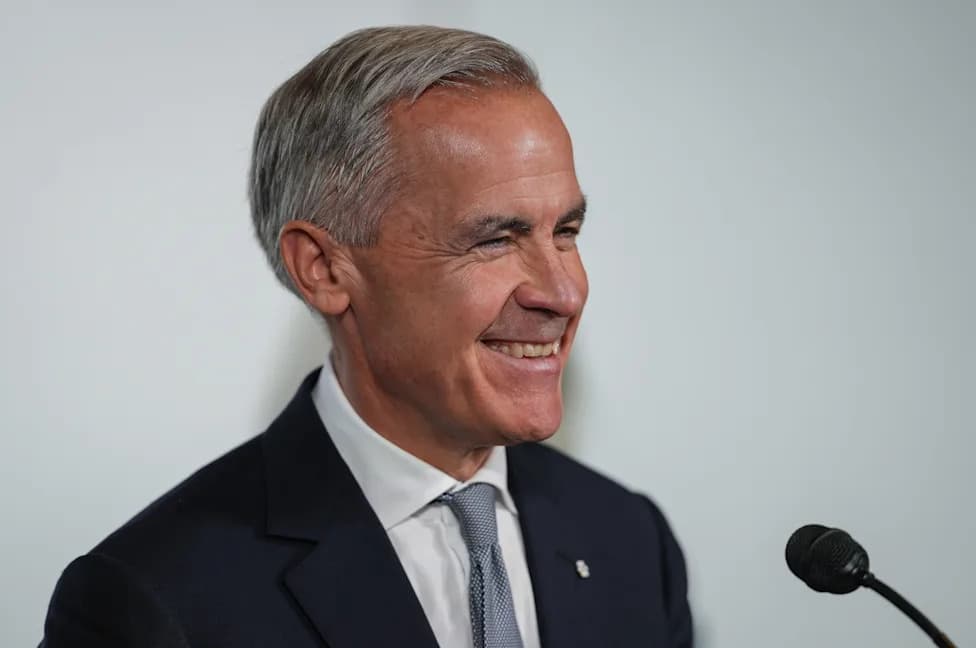
Canada Prime Minister Mark Carney laughs when asked if Canada will apologize to the U.S. for the sake of a trade deal, during an announcement about funding for oceans protection, in North Vancouver, British Columbia, Canada, Tuesday, Sept. 29, 2026. (Darryl Dyck/The Canadian Press via AP)(Darryl Dyck/The Canadian Press via AP)
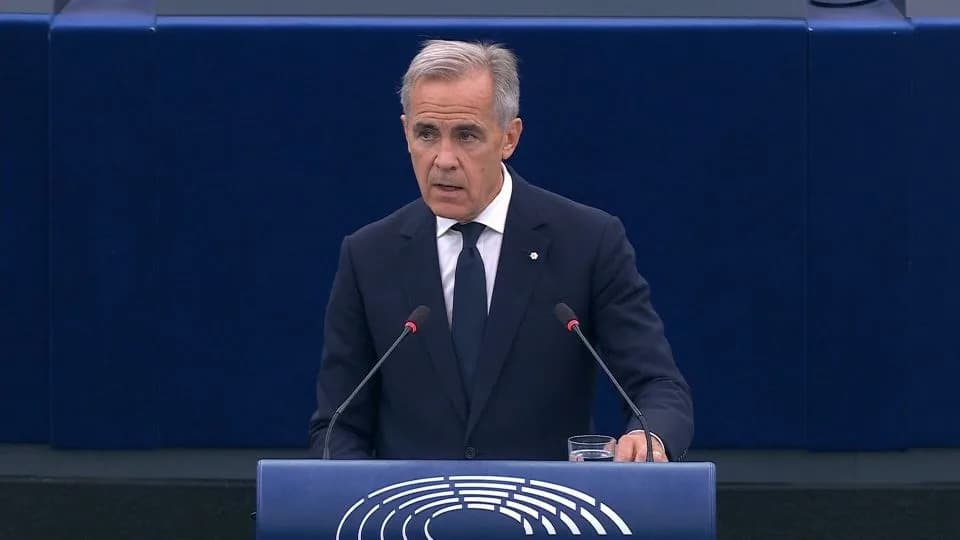
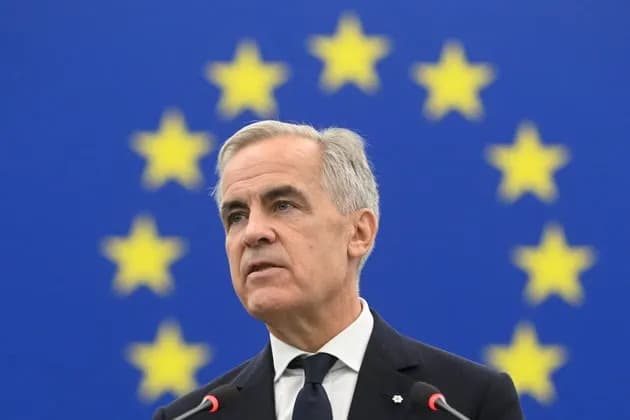
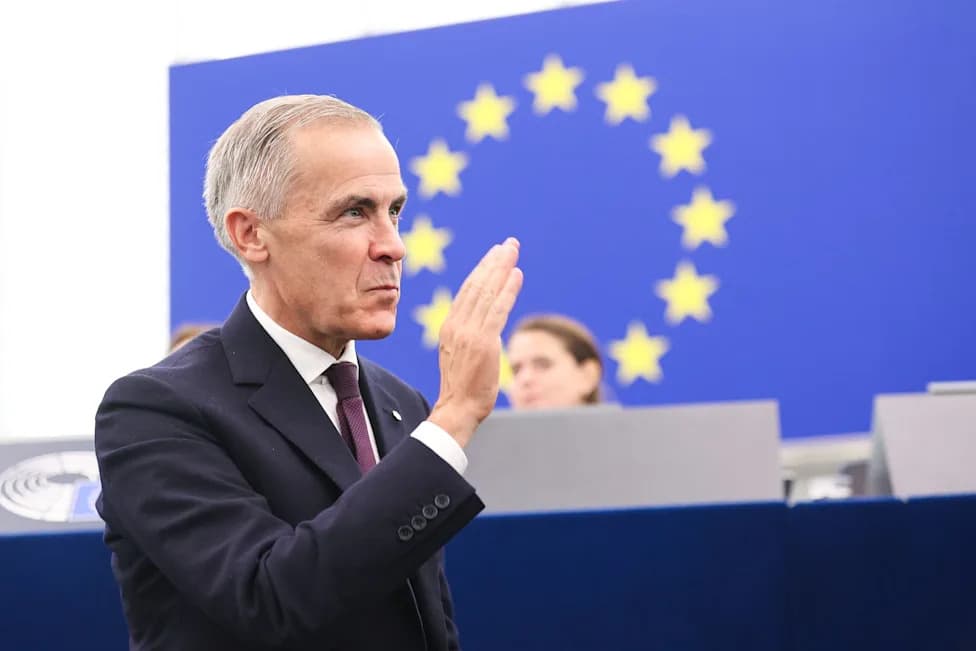
Mark Carney's high-profile pushback against U.S. President Donald Trump propelled the Canadian leader onto prediction markets and into international conversations about major honors in 2026. Supporters say his argument—that middle powers should band together to protect sovereignty as great powers use economic and military leverage—has boosted his global stature and drawn standing ovations from audiences in Davos and the European Parliament.
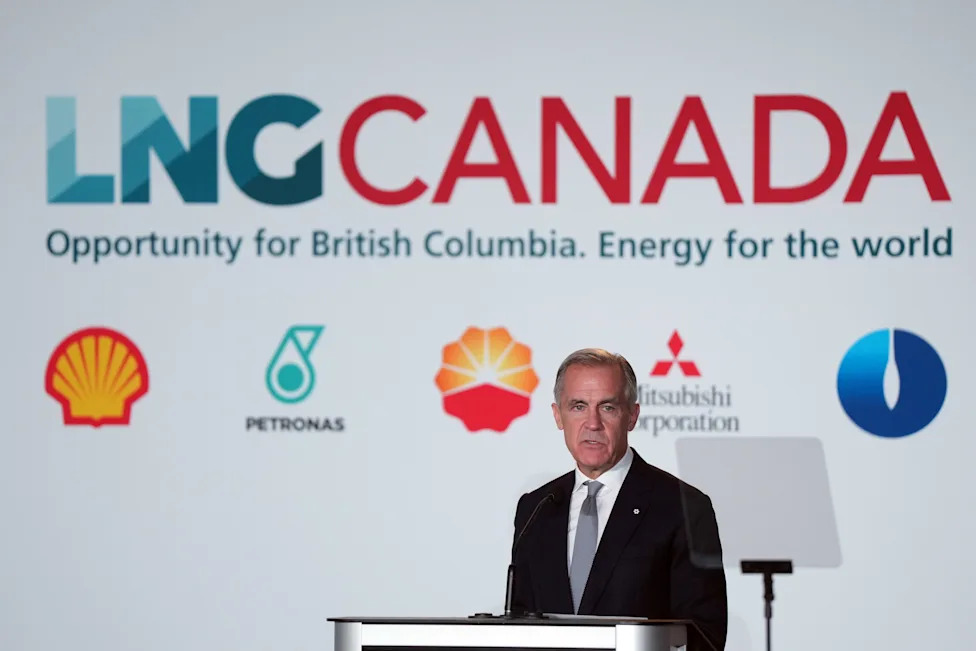
Prime Minister Mark Carney speaks after LNG Canada said it will go ahead with the Phase 2 expansion project at its LNG terminal in Kitimat, B.C., during an announcement in Vancouver, on Tuesday, Sept. 29, 2026. (Darryl Dyck/The Canadian Press via AP)(DARRYL DYCK/The Canadian Press via AP)
Prediction Markets, Nobel Talk and Time Honors
OnKalshi, a U.S.-based prediction market, traders briefly gave Carney roughly a 14% chance of winning the 2026 Nobel Peace Prize before his odds retreated, a reminder of how speculative such wagers can be. There is no public evidence that Carney is on a confidential Nobel shortlist; the prize will be announced Oct. 9 in Oslo. Separately, Time has already named Carney one of its 100 most influential people of 2026, and he ranks highly in markets for Time's Person of the Year, which will be revealed Dec. 10.
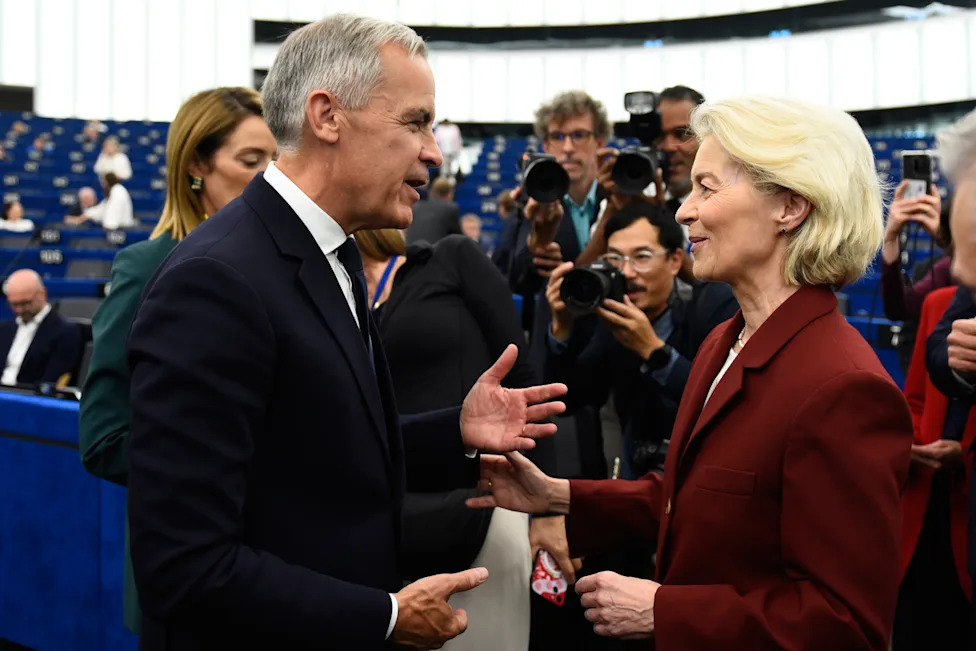
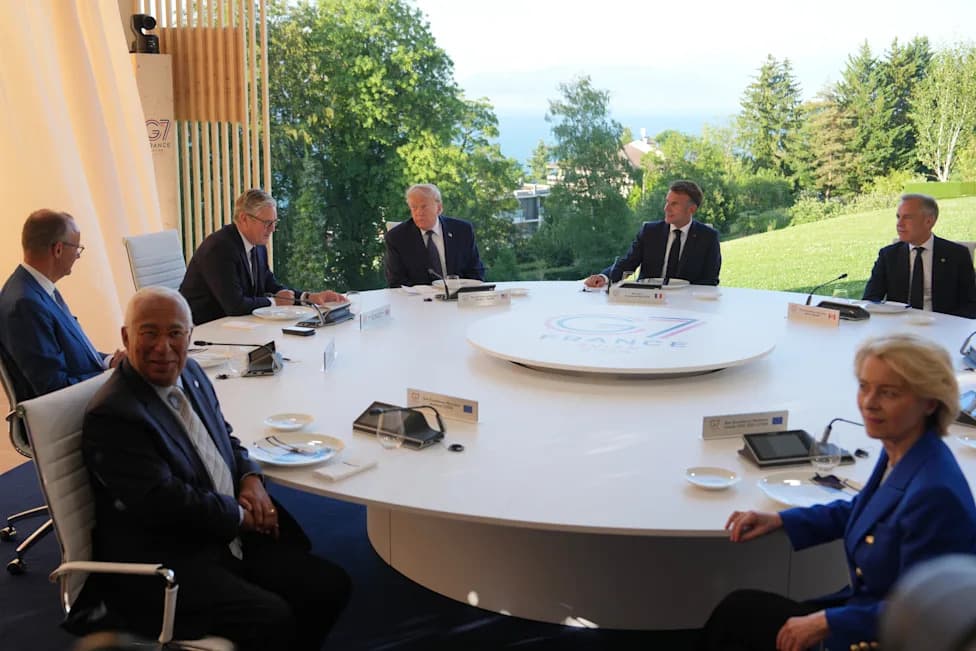
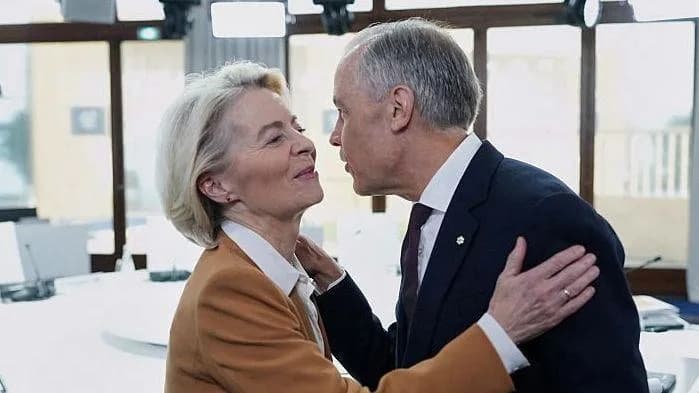
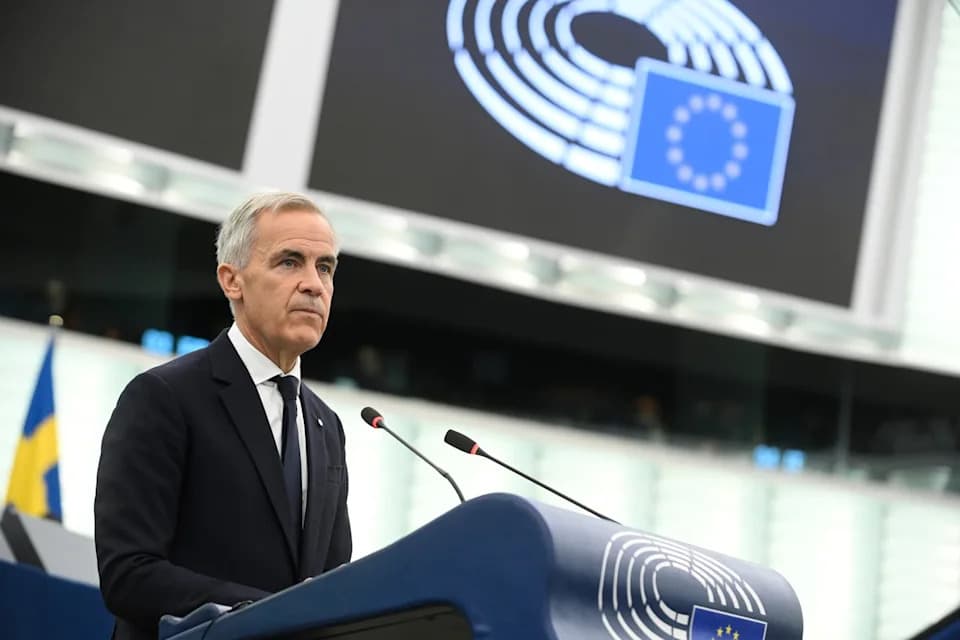
FILE- Canada's Prime Minister Mark Carney, front left, speaks with European Commission President Ursula von der Leyen at the European Parliament in Strasbourg, eastern France, Sept 17, 2026. (AP Photo/Pascal Bastien, File)(AP Photo/Pascal Bastien)
Carney's Message: Middle Powers Must Unite
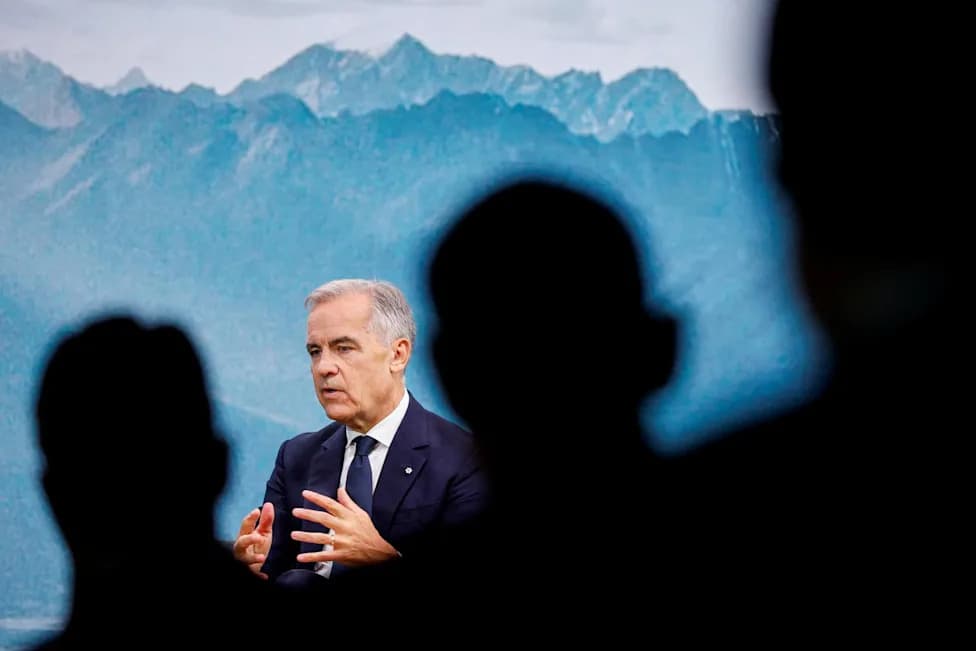
Carney argues that the postwar international order is under strain and unlikely to simply return, urging middle powers to form practical coalitions to defend sovereignty and norms rather than waiting for a restoration of old systems. "We are in the midst of a rupture, not a transition," he told the World Economic Forum in Davos in January, a speech that earned a standing ovation and substantially raised his profile.
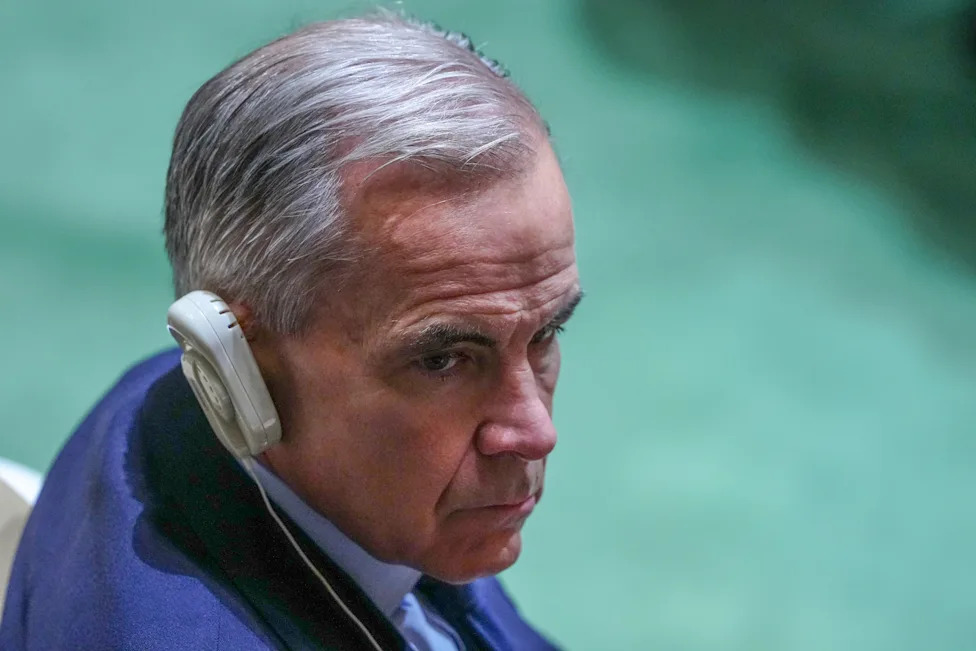
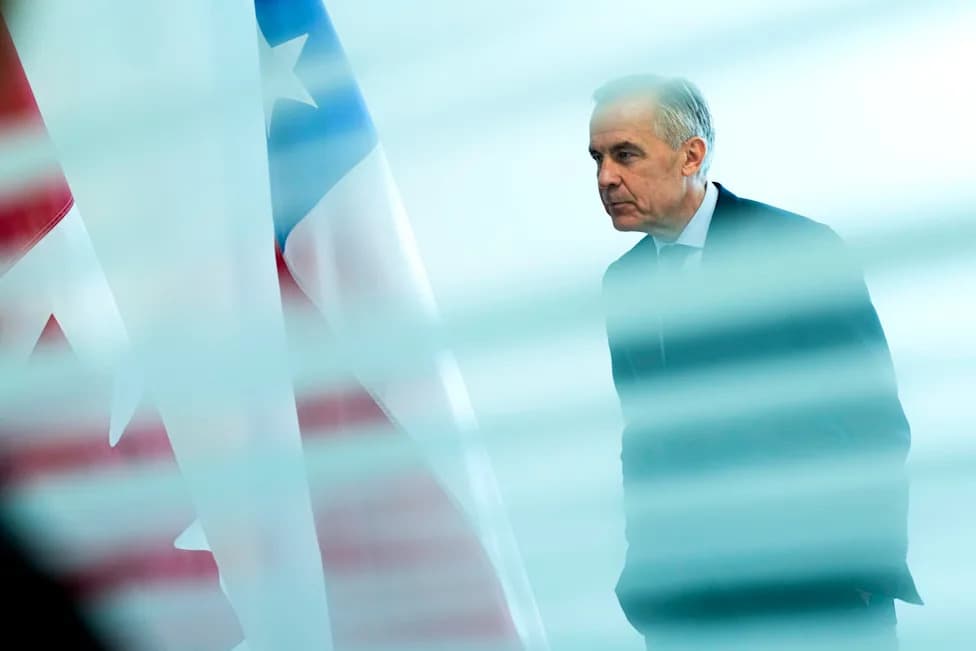
Canada's Prime Minister Mark Carney waits to listen to President Donald Trump speak to the United Nations General Assembly, Tuesday, Sept. 22, 2026, at the UN headquarters. (AP Photo/Julia Demaree Nikhinson)(AP Photo/Julia Demaree Nikhinson)
Trade War and Political Fallout
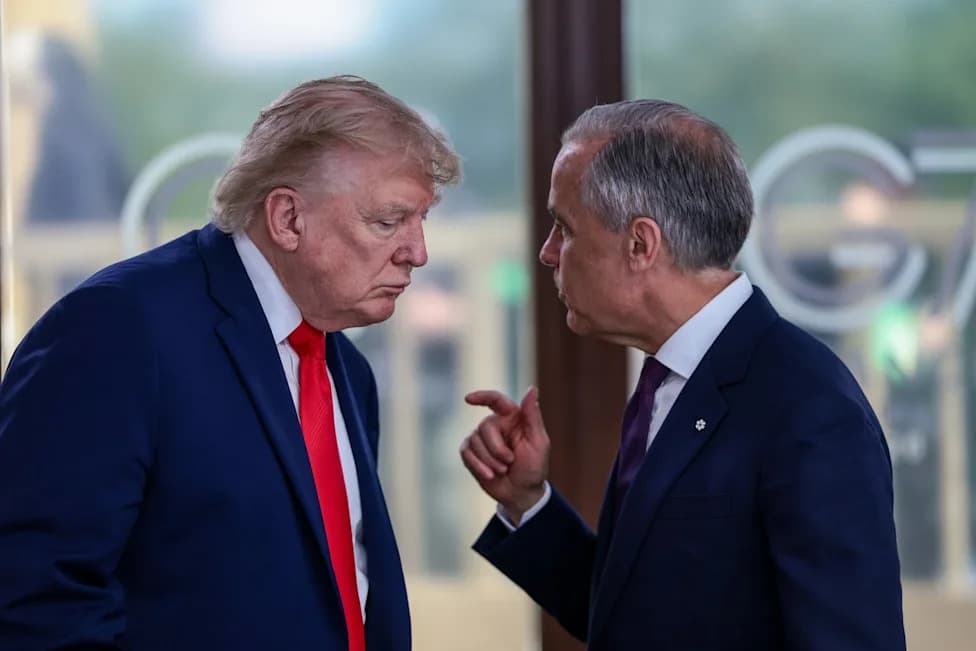
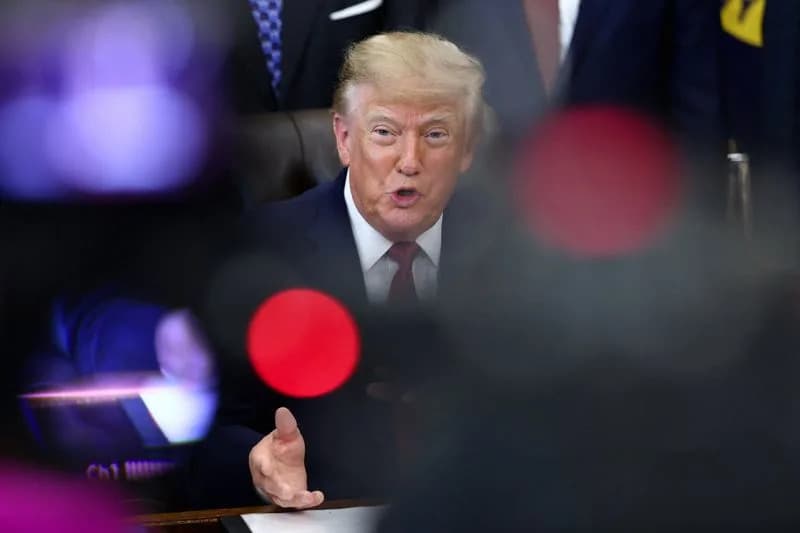
The heightened profile comes against the backdrop of an escalating Canada-U.S. trade dispute. The U.S. has imposed 50% tariffs on billions of dollars of Canadian goods, and Canada has retaliated. President Trump has warned Canadian leaders to "fall in line" or face consequences "far WORSE" than existing tariffs. Observers say a Nobel or Time honor for Carney would further strain Canada-U.S. relations.
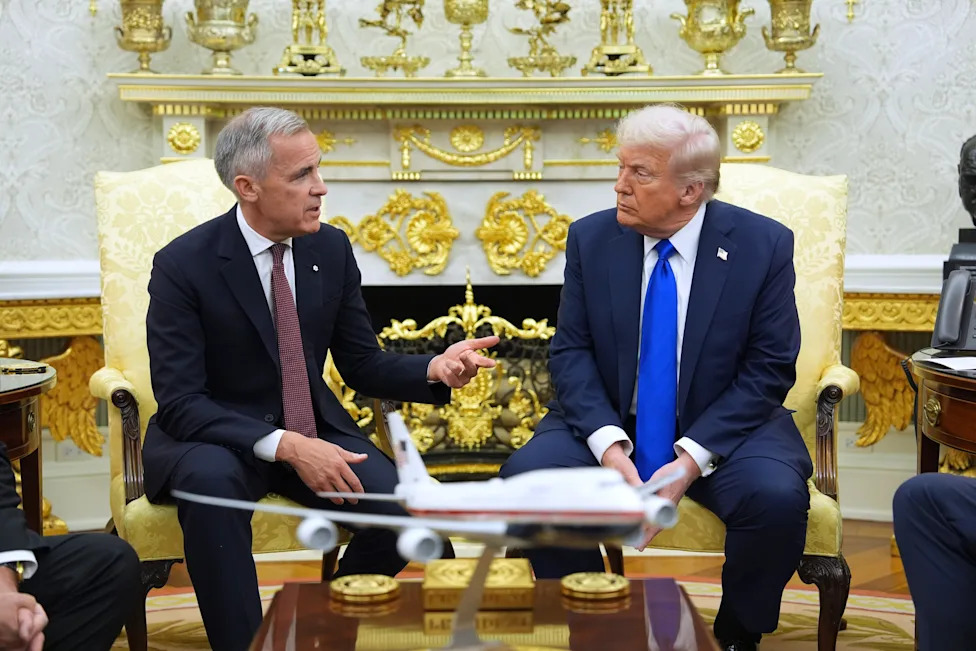
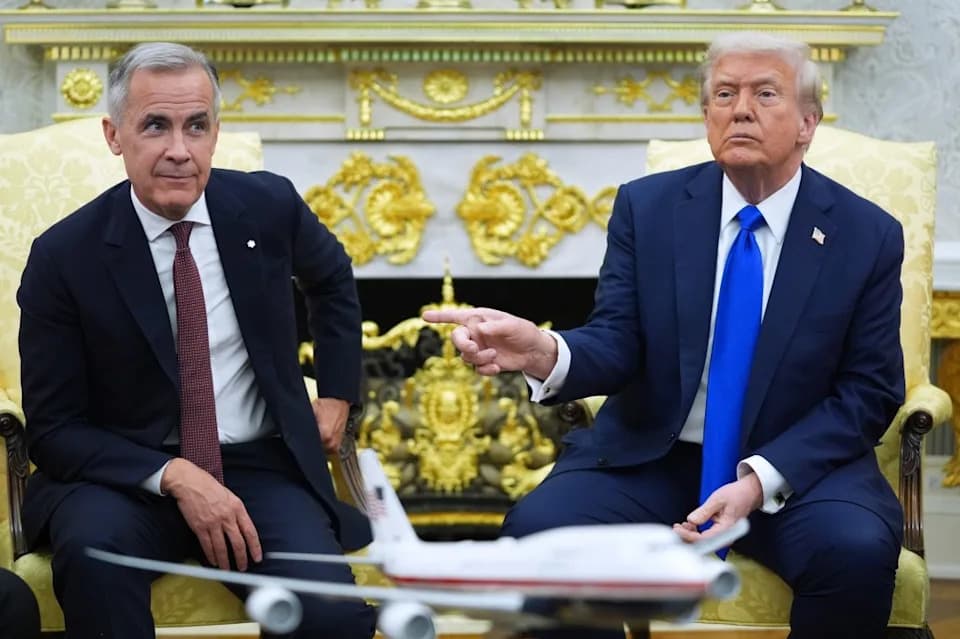
FILE - Canadian Prime Minister Mark Carney speaks during a meeting with President Donald Trump at the White House, Oct. 7, 2025, in Washington. (AP Photo/Evan Vucci, File)(AP Photo/Evan Vucci)
"President Trump would be furious, of course," said Daniel Béland, a political science professor at McGill University. "If this ever happens, I would love to be a fly on the wall of the Oval Office to see the president's face when he learns about it."
International Response
European lawmakers gave Carney another ovation this month after European Commission President Ursula von der Leyen suggested exploring the possibility of Canada becoming the EU's first associate member. Public intellectuals and commentators including Scott Galloway and Fareed Zakaria have lauded Carney for offering a diplomatic "language and a path" for countries seeking alternatives to unilateral pressure from larger powers.
The optics also drew an unusual anecdote: Venezuela's 2025 Nobel laureate, María Corina Machado, presented her Nobel medal to President Trump at the White House in January; the Nobel Committee clarified the award remains Machado's. Analysts say Trump would be displeased whoever wins the Nobel; if it were Carney, ties with Canada could become more strained.
What Comes Next
Carney remains a leading voice in debates about how democracies respond to assertive great-power behavior. Whether prediction-market chatter translates into formal awards is uncertain, but the attention has already translated into diplomatic momentum and media recognition. Key dates to watch are the Nobel announcement on Oct. 9 and Time's Person of the Year reveal on Dec. 10.
Help us improve.