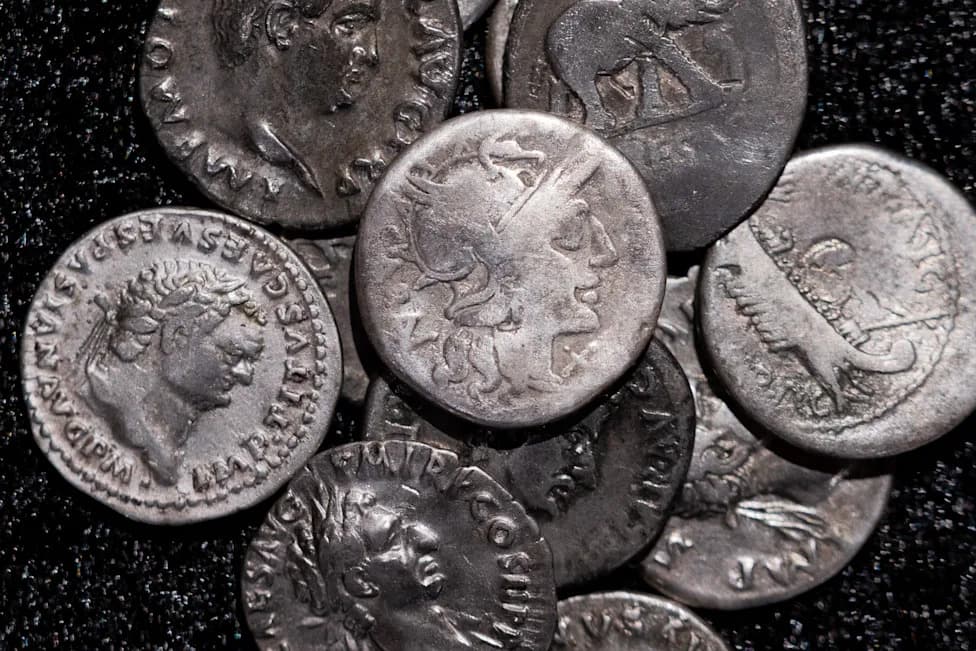
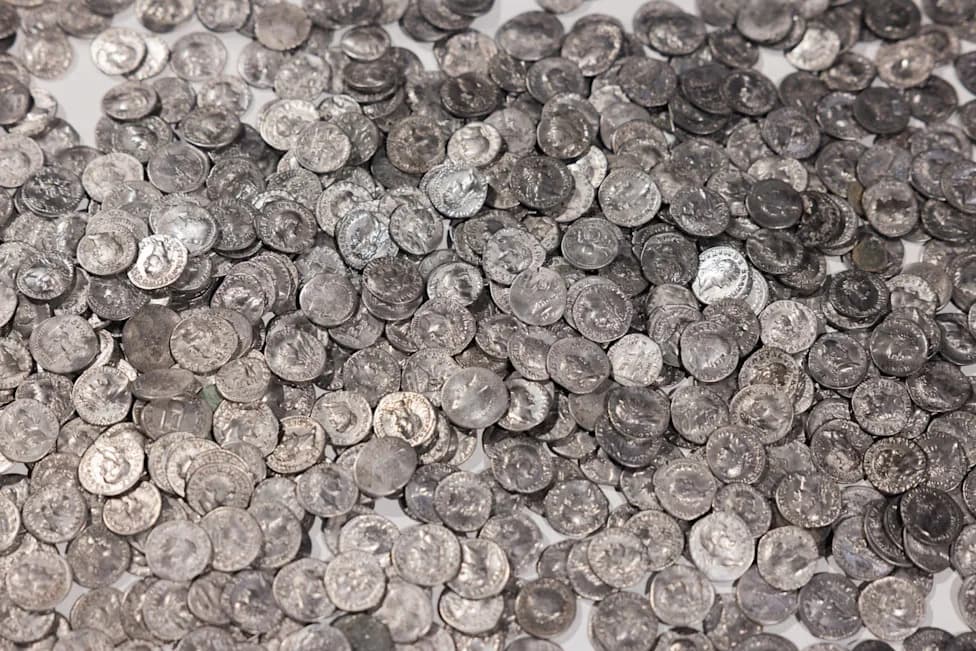
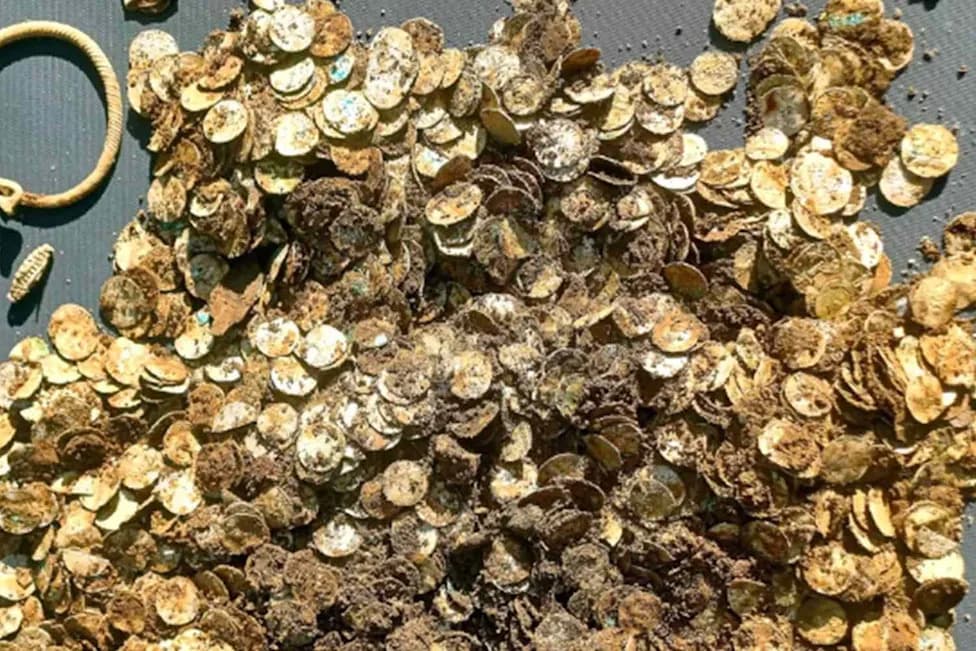
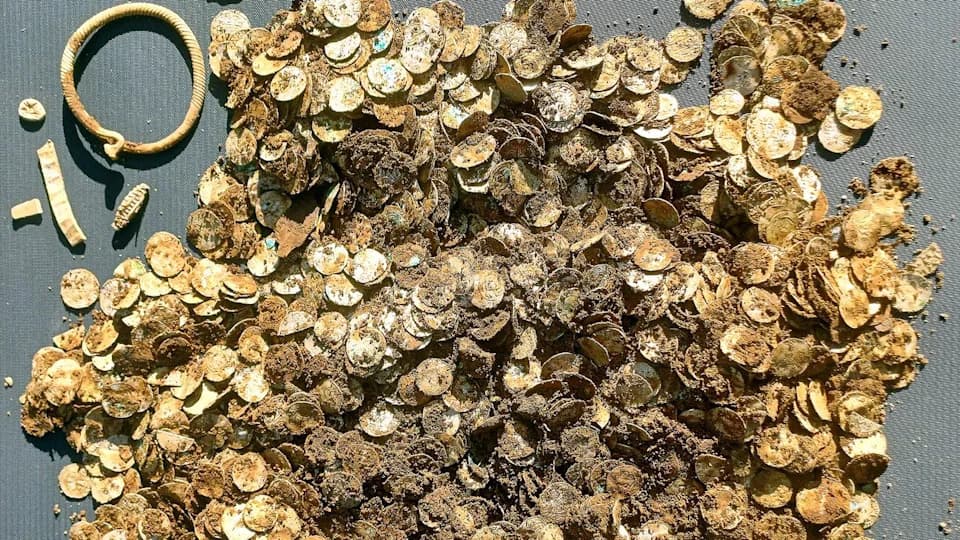
An amateur detectorist near Cologne discovered 934 Roman silver denarii (3.1 kg), the largest hoard from Emperor Hadrian’s reign found in present-day Germany. The coins range from 148 BC to AD 124/125, showing centuries of circulation and suggesting the hoard was buried in the second quarter of the 2nd century AD. X-rays of a soil block revealed fragments of a ceramic container and straw padding, indicating the coins were stored in a vessel. The hoard now belongs to North Rhine-Westphalia and will be displayed in Bonn from March 2027.
934 Silver Denarii Unearthed Near Cologne — Germany’s Largest Hoard From Hadrian’s Reign
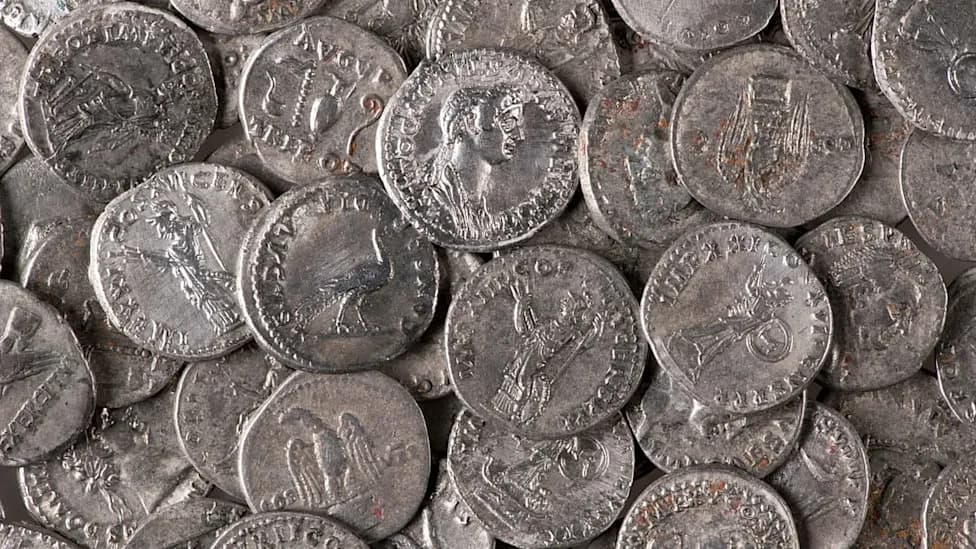
Denarii detectives: Mystery surrounds discovery of Germany's largest Roman coin hoard
An amateur metal detectorist from the Rhineland made what he called "probably the find of his life" when his device first beeped and revealed a Roman silver coin. He kept digging: at 15 coins the detector was still sounding, and a professional excavation soon uncovered a far larger treasure.
What Archaeologists Found
Excavations recovered a total of 934 silver denarii weighing 3.1 kilograms. The Rhineland Regional Authority (LVR) describes this as the largest known hoard dating to the reign of Emperor Hadrian discovered within present-day Germany. Globally, only a few larger Hadrianic hoards are known.
Dates, Circulation and Significance
The coins span an extraordinary chronological range: the oldest dates to 148 BC (the Roman Republic) while the most recent were struck in AD 124/125. More than 270 years separate the earliest and latest pieces, illustrating how long Roman coins could remain in circulation. Researchers believe the hoard was likely buried in the second quarter of the 2nd century AD — during Hadrian’s reign — suggesting some coins were already centuries old when interred.
How and Why It Was Buried
Conservators received a block of soil containing many of the coins; X-rays showed fragments of a ceramic container and straw remains. The evidence suggests the denarii had been stored in a vessel cushioned with straw and deliberately buried, probably for safekeeping. Archaeologists infer the owner may have died before revealing the cache’s location.
Historical Context
Hadrian (AD 76–138), one of the so-called "Five Good Emperors," governed from AD 117 until his death. He emphasized consolidation over expansion, travelling widely and commissioning public works such as Hadrian’s Wall in Britannia. His reign also saw significant unrest, including the Bar Kokhba revolt in Judaea (AD 132–135).
Value and Rarity
Putting a direct modern value on the hoard is difficult. For context, a legionary at the time earned about 300 denarii a year, roughly half of which went for food and equipment; accumulating an equivalent sum in disposable pay would have required several years of near-total saving. The collection’s size, chronological spread and preservation make it an important find for understanding Roman economy and circulation patterns.
Ownership, Reward and Display
The coins legally belong to the federal state of North Rhine-Westphalia. Under local treasure laws, the finder is due a reward. Some of the coins were shown to the public in Bonn in September, and the full hoard is scheduled to be included in the permanent archaeological exhibition at Bonn’s LVR-LandesMuseum from March 2027.
Finder: "This was something much bigger," he said when he realised the scale of the discovery.
Help us improve.