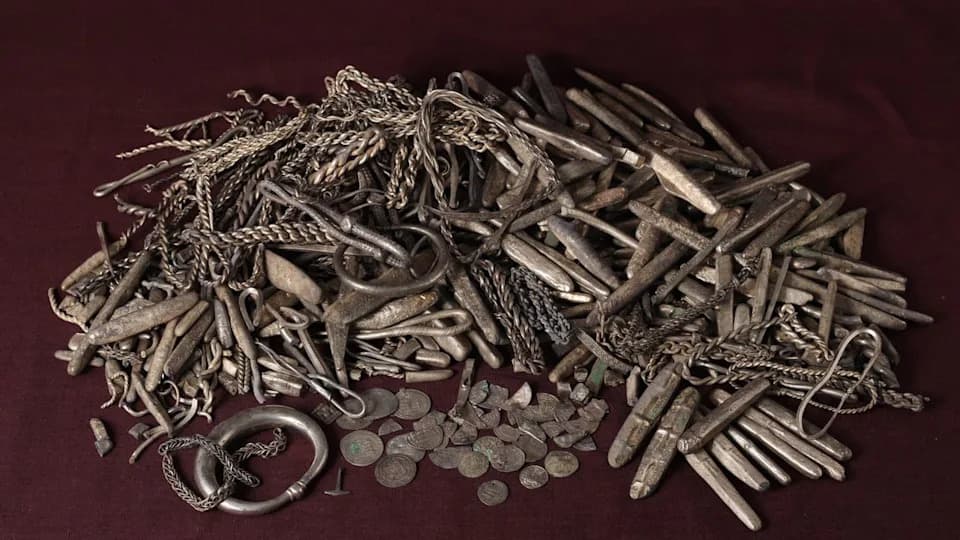
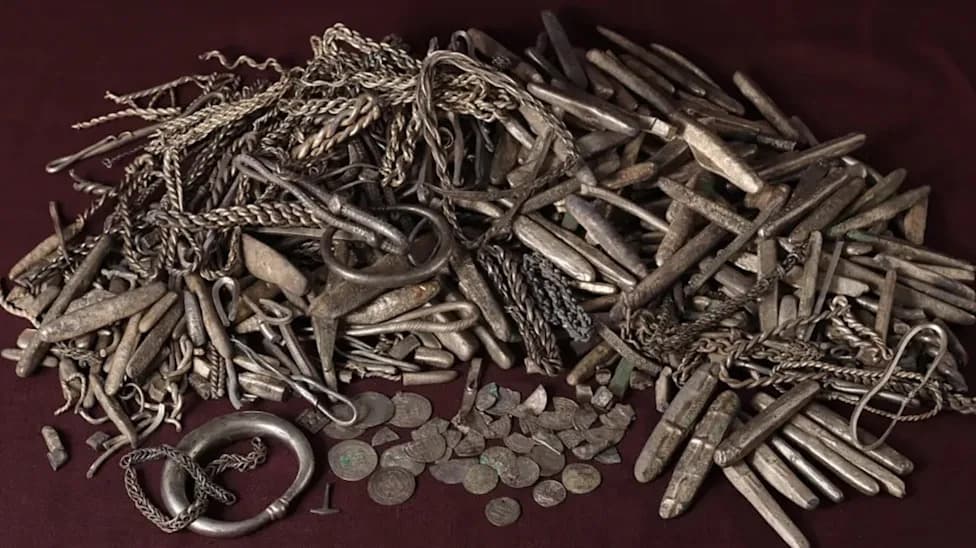
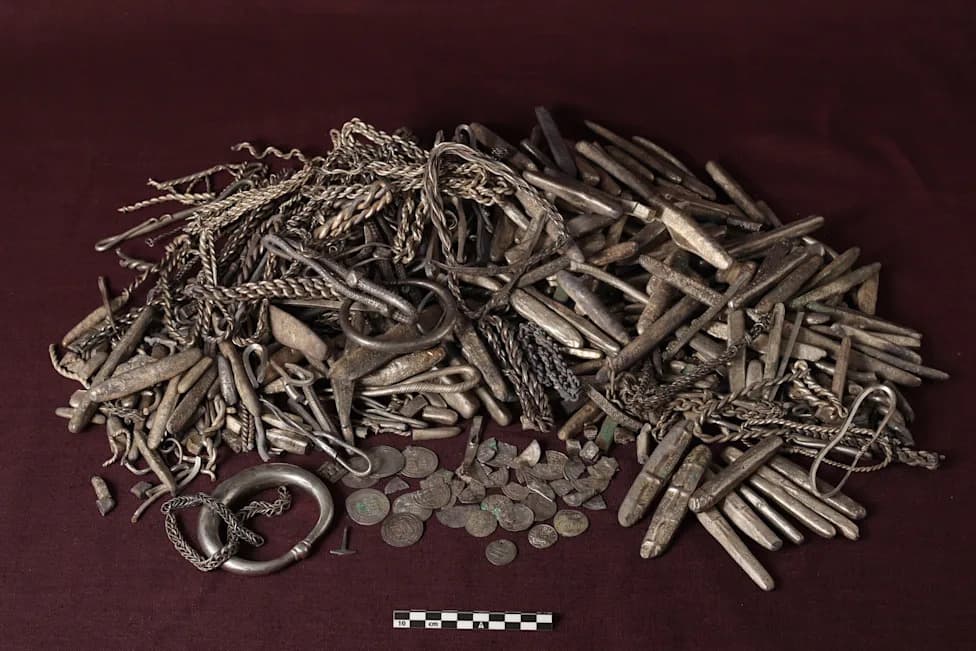
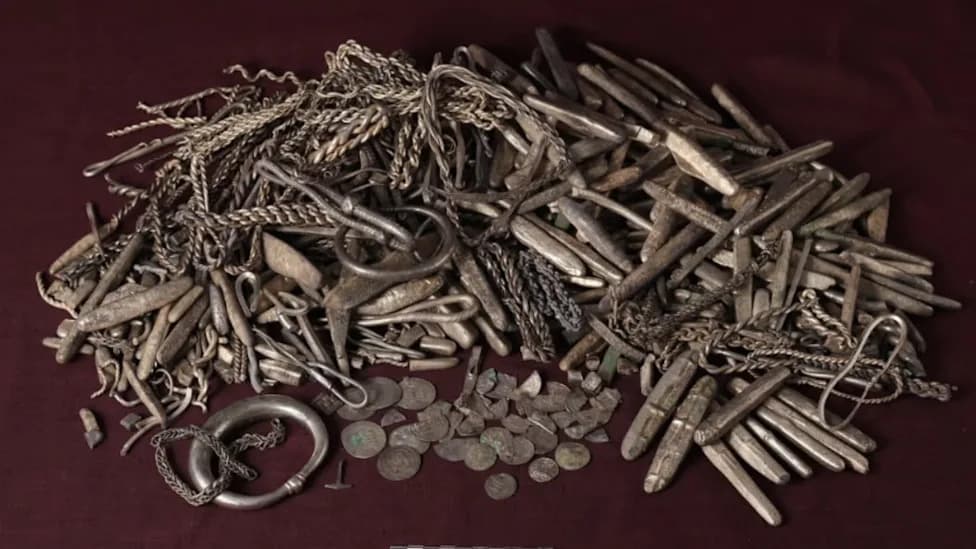
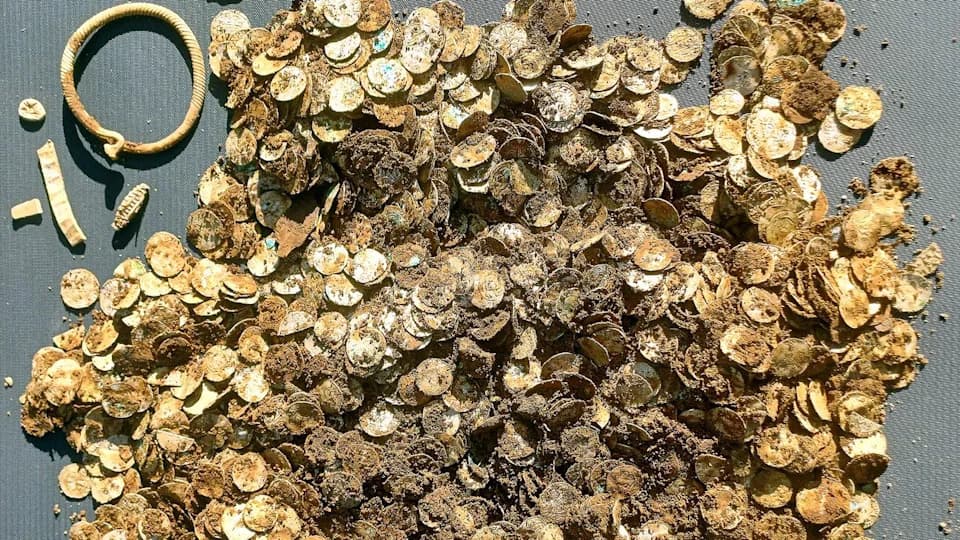
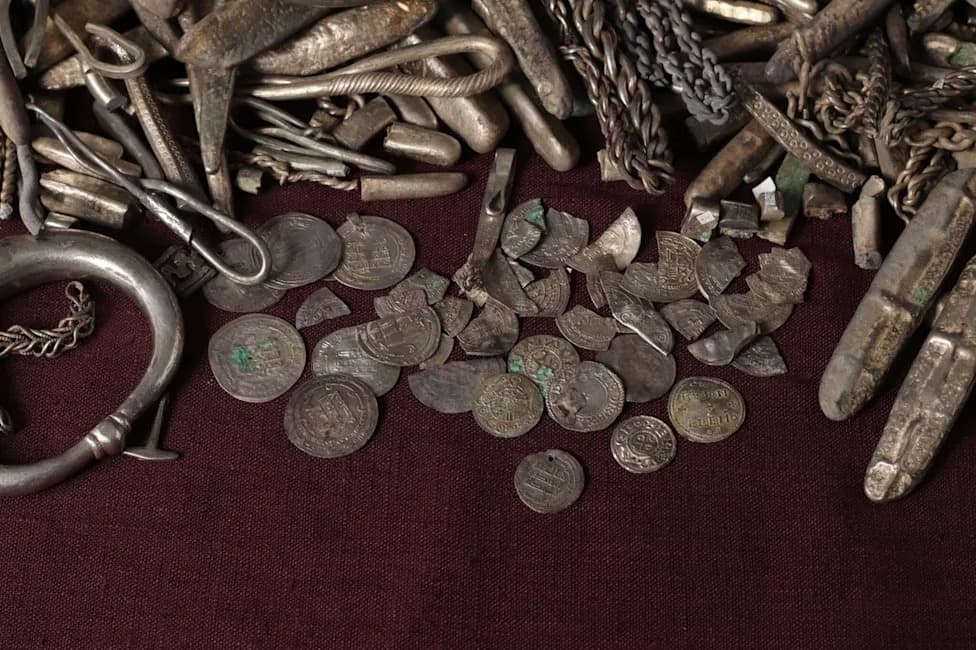
The Rebild hoard — about 18.5 kg and nearly 700 objects — is the largest Viking‑Age silver cache ever found in Denmark. Buried in a clay vessel and dated to the 10th century, roughly 320 items were recovered intact while the rest were fragments. Dominated by bars, jewellery and clipped silver rather than coins, the deposit highlights a weight‑based system of value; it also contains Arab dirhams and Anglo‑Saxon pennies, including two minted under King Edward the Elder (899–924).
Homeowner Unearths Denmark’s Largest Viking‑Age Silver Hoard — 18.5 kg and Nearly 700 Artifacts
Homeowner unearths largest Viking silver hoard ever found in Denmark: ‘Biggest surprise of my life’
A routine gardening job in Rebild, northern Denmark, turned into one of the country's most significant archaeological discoveries when a homeowner found what experts now identify as the largest Viking‑Age silver hoard ever recovered in Denmark. The cache weighs about 18.5 kg — almost three times the mass of the previous largest Danish Viking hoard — and contains nearly 700 individual objects buried in a clay vessel and dated to the 10th century.
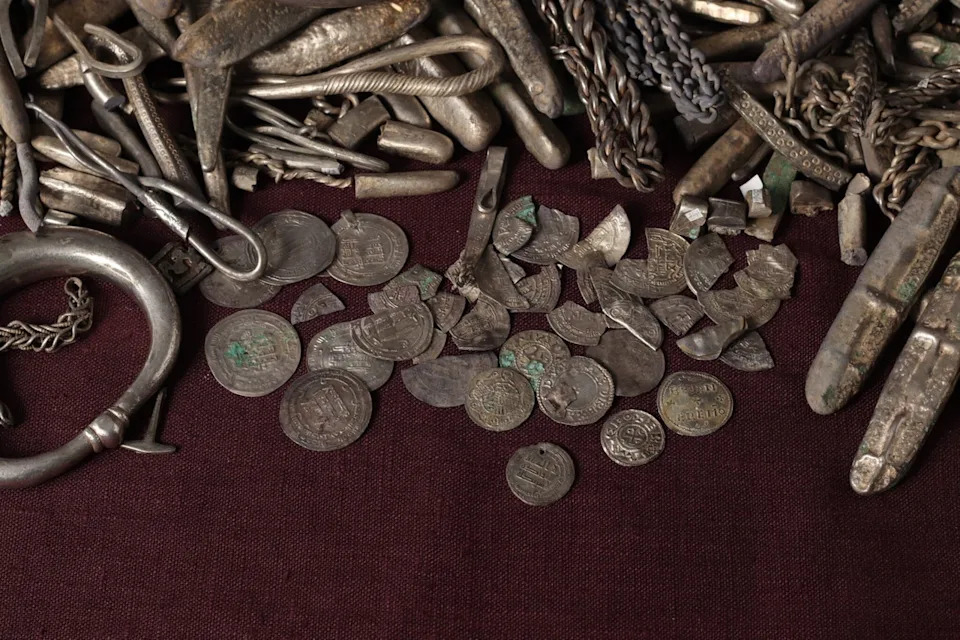
Viking Age silver hoard unearthed at Rebild (Museum of Northern Jutland)
How It Was Found
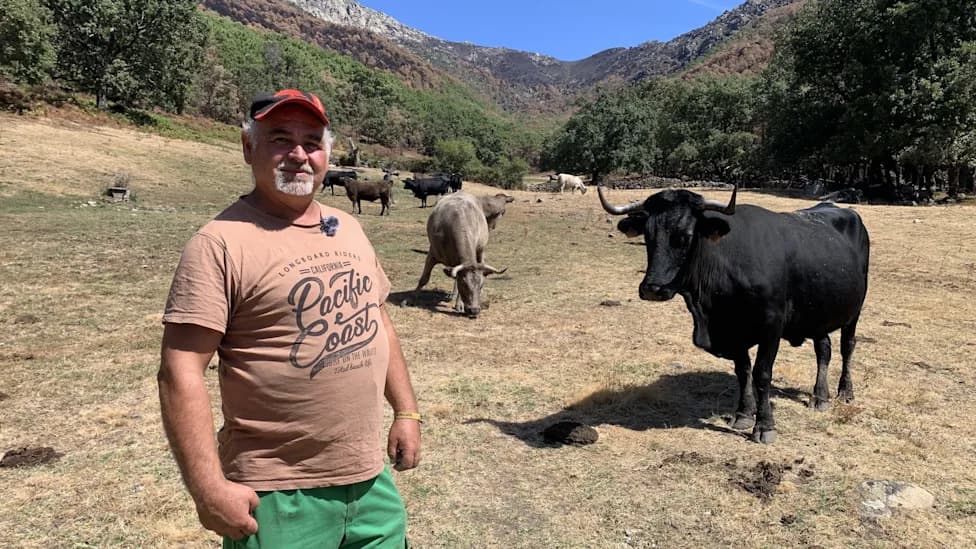
"It should've just been a few hours of hard gardening work removing stubborn grass, stones and gravel for a new tiled terrace, but it turned out to be the biggest surprise of my life," the homeowner, who asked to remain anonymous, said. "After half an hour of digging, my grip hit something that made a strange sound. At first I thought it was old iron, or fence wire and some potsherds, but when I started digging with my hands, I was able to fish one metal object after another out of the ground."
The Find
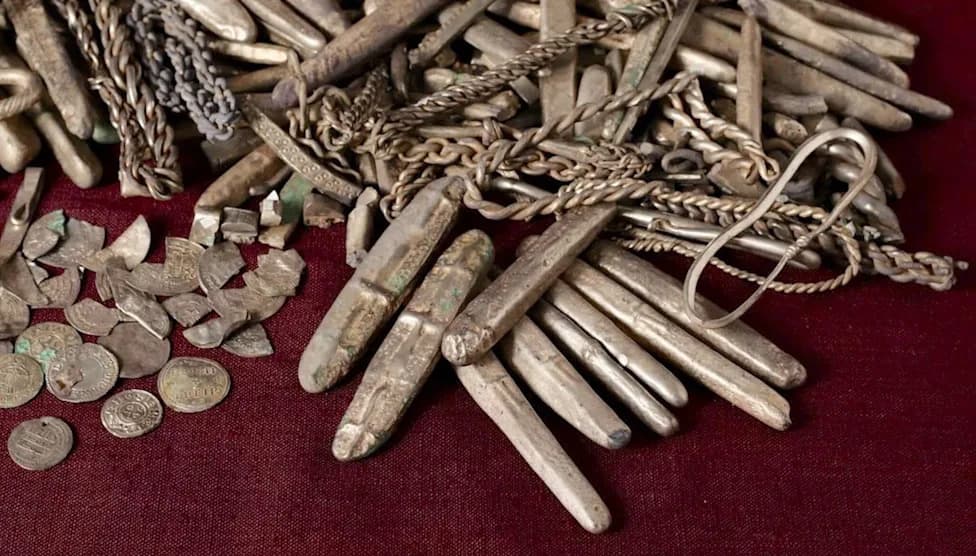
Archaeologists from the Museums of North Jutland inspected the site and report that nearly 320 of the more than 700 objects were recovered intact inside their original clay container; the remainder were found as fragments scattered in the surrounding soil. The deposit includes silver bars, bracelets, silver clips, roughly 50 coins, and a small Thor's hammer amulet that probably served as a protective charm.
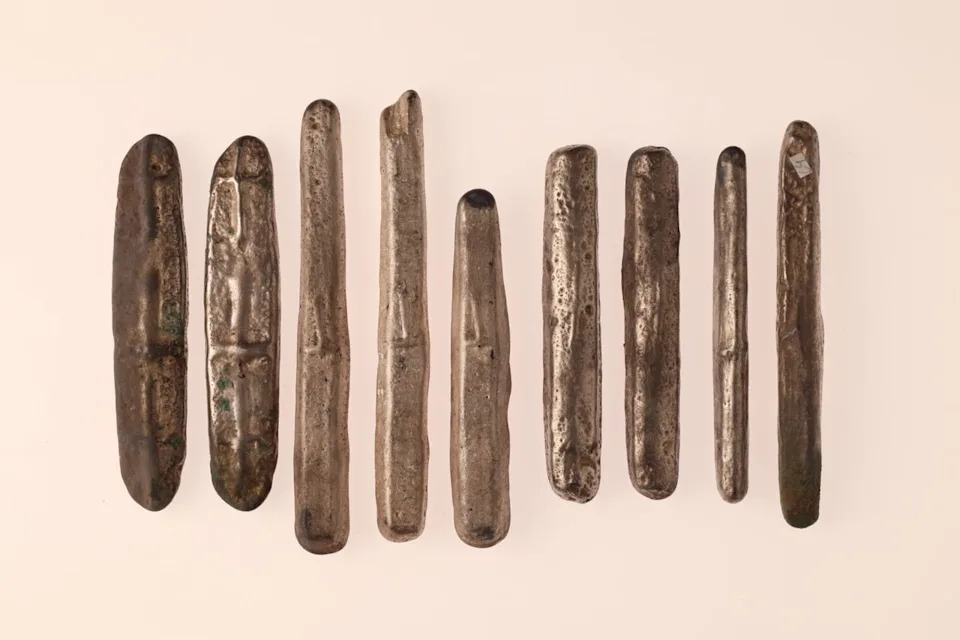
Silver fragments clustered by weight (Museum of Northern Jutland)
Notably, one of the silver bars bears a runic engraving read as "hutu," which researchers suggest could be a personal name, an ownership mark, or another type of identifier. The hoard also contains foreign coinage — Arab dirhams and Anglo‑Saxon pennies — two of which were minted during the reign of King Edward the Elder (899–924), providing an important chronological anchor for the burial.
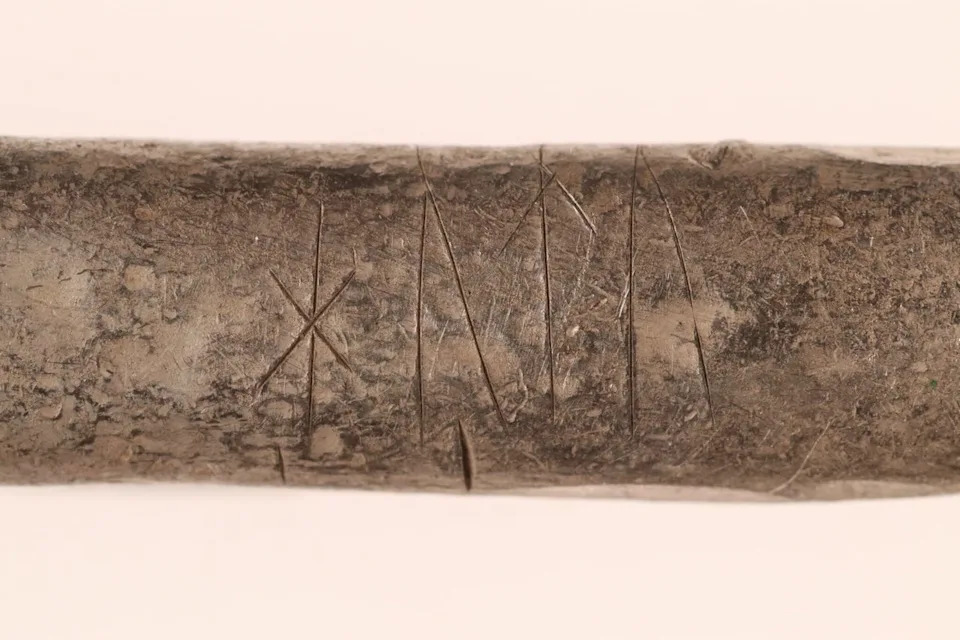
Runes engraved on silver bars (Museum of Northern Jutland)
Economic Significance
Unlike many Viking hoards where coins make up a large share of the weight, the Rebild find is dominated by bars, jewellery and clipped silver. Archaeologists observed that many of the pieces cluster around specific weight groups. "The treasure does not only consist of beautiful objects. Most of them are part of a structured value system by weight," said archaeologist Torben Sarauw from the Museums of North Jutland. This pattern reinforces evidence that, during the Viking Age, silver functioned as a form of wealth and payment measured primarily by weight rather than face value.
Broader Connections
The presence of Arab dirhams and Anglo‑Saxon coins highlights Denmark's extensive trade and cultural connections during the Viking Age, linking Scandinavia with the Islamic world to the east and with England and western Europe to the west. "The silver was hidden in Rebild, but it points to a much larger world," Dr. Sarauw said. The find underscores that the Rebild area participated in wide-ranging economic networks across the Baltic, the North Sea and beyond.
Why It Matters: The Rebild hoard is not only remarkable for its size but for the light it sheds on Viking‑Age economic practices, craftsmanship and long‑distance trade. Museums and researchers will continue studying the objects to better understand their origins, uses and the people who concealed them.
Help us improve.