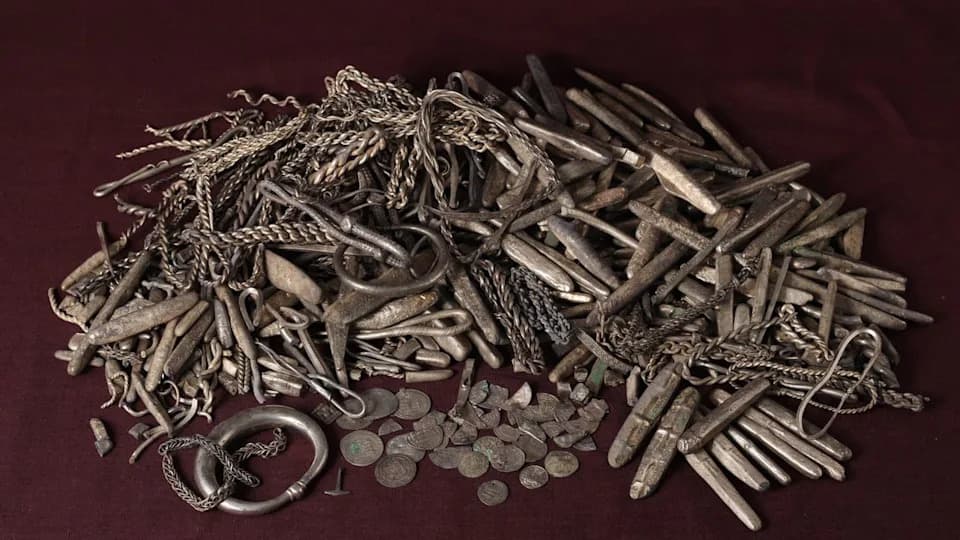
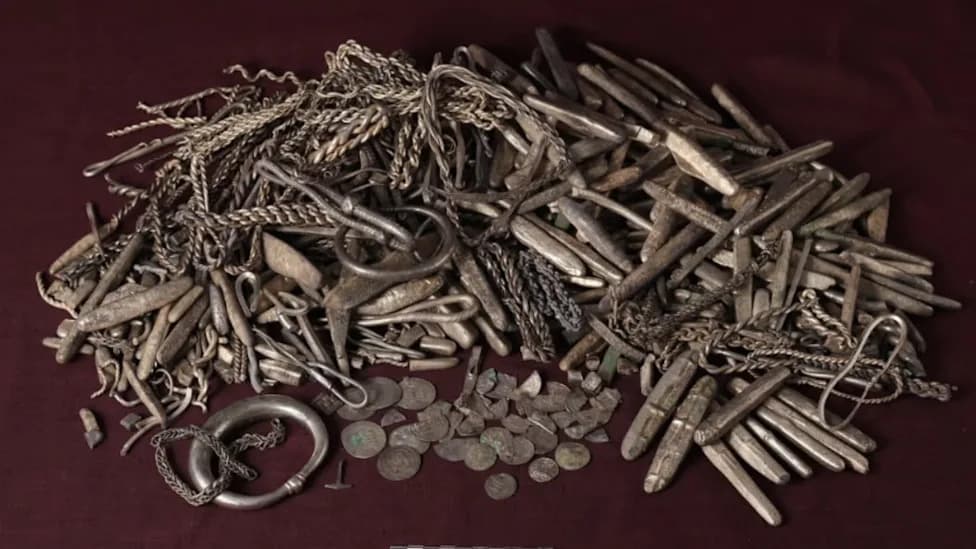
A Rebild homeowner in northern Denmark unearthed what experts call the country\'s largest Viking silver hoard while clearing ground for a terrace. Archaeologists recovered about 700 items (over 40 pounds), roughly 320 of them inside a pottery vessel, and dated the deposit to the 10th century. The hoard includes 47 coins (two English pennies from King Edward the Elder), Arabic dirhams, bracelets, runic silver bars and a Thor\'s-hammer amulet — offering rare insight into the Viking silver economy and long-distance connections.
Backyard Dig Uncovers Denmark's Largest Viking Silver Hoard — 700+ Pieces From 10th Century
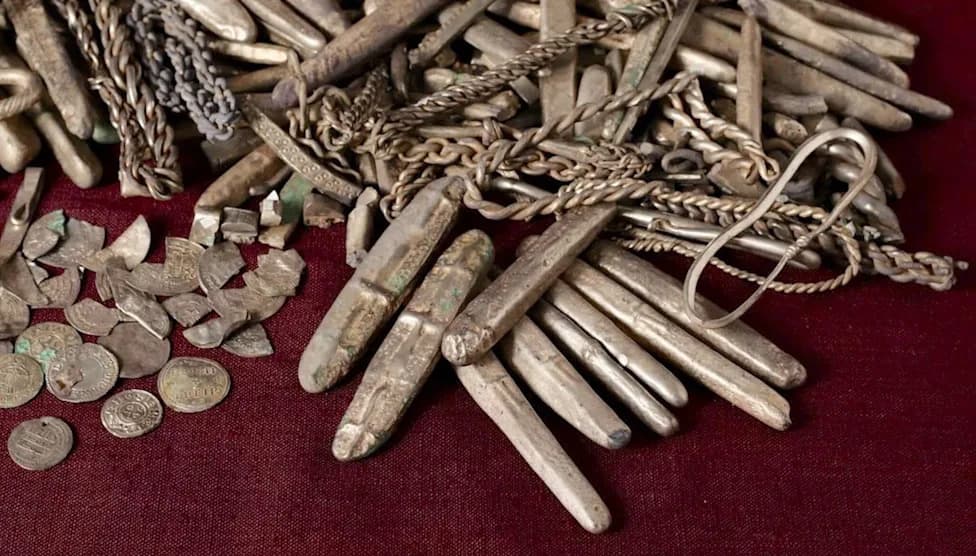
Photo Credit: North Jutland Museums
A homeowner in Rebild, northern Denmark, expected an ordinary afternoon clearing ground for a new terrace. Roughly 30 minutes into the work, the soil yielded a surprise: what archaeologists now say is the largest Viking silver hoard ever recovered in Denmark.
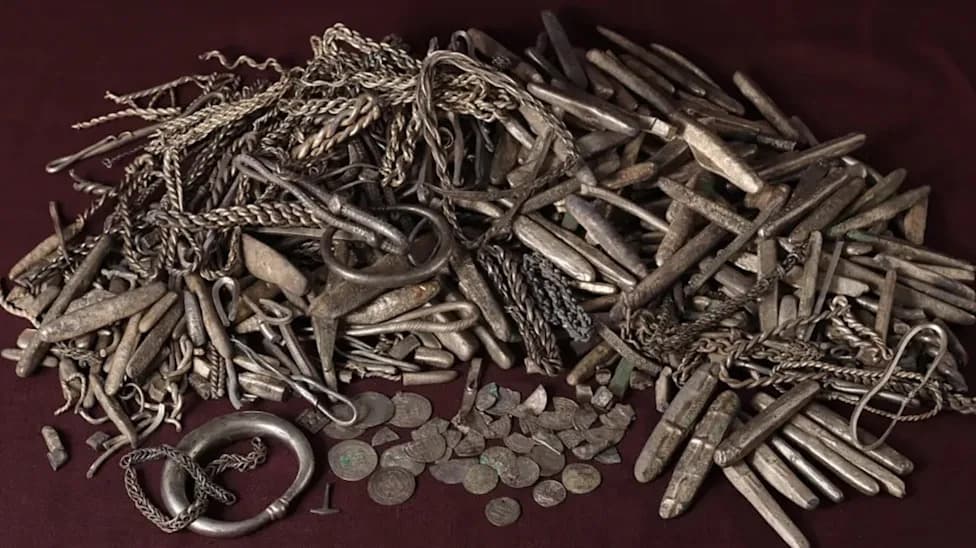
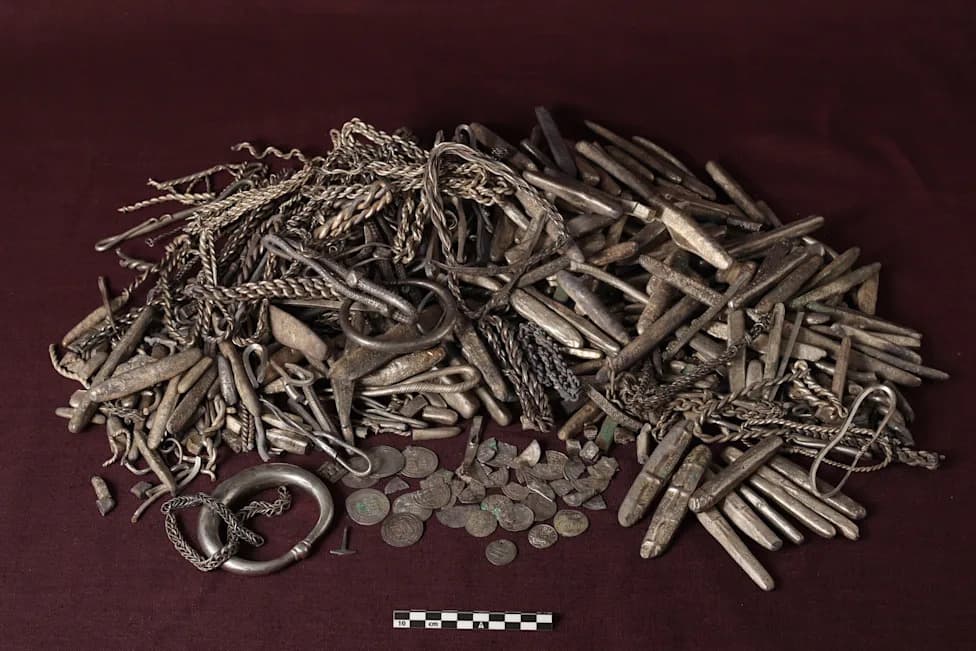
The cache contains about 700 items weighing more than 40 pounds (over 18 kilograms). Experts date the deposit to the 10th century. Approximately 320 pieces were recovered from inside a pottery vessel, with the remainder found nearby in the same spot.
What Was Found
The assemblage includes:
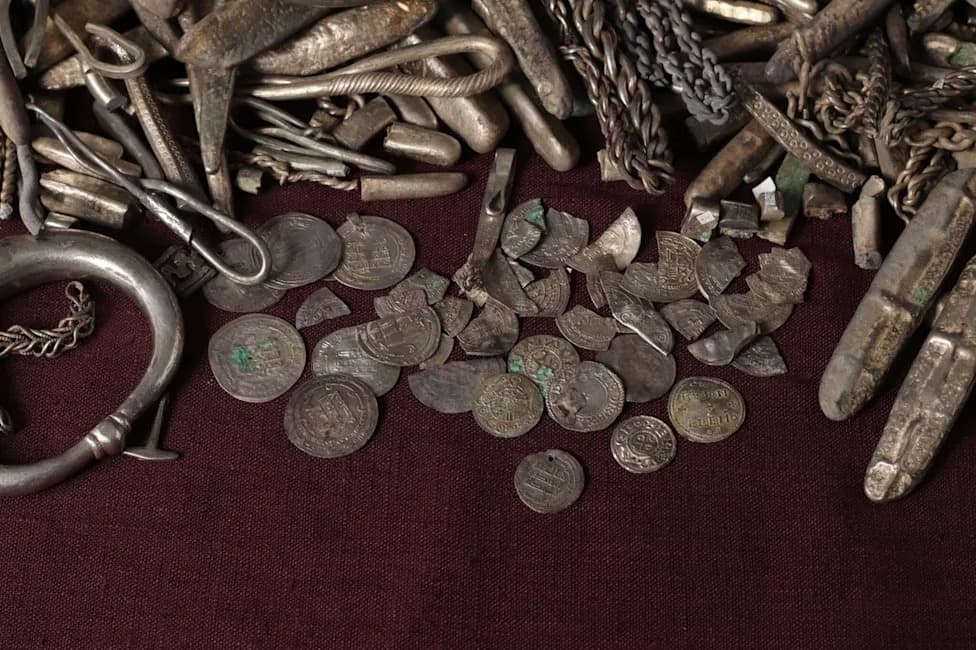
- 47 coins and coin fragments, including two English silver pennies struck during the reign of King Edward the Elder (899–924).
- Arabic-inscribed dirhams, indicating trade and contacts that extended eastward.
- Bracelets, silver bars and ingots — one bar bears runic marks that may include the sequence "hutu," possibly a personal name or ownership mark.
- A small Thor's-hammer amulet, consistent with Viking-era protective jewelry tied to the Norse god Thor.
Why It Matters
During the Viking Age (roughly 800–1050), silver often functioned as weighed bullion rather than just coinage. The National Museum of Denmark has described silver as "the most important precious metal of the Viking Age." Finds like this provide rare, direct evidence of how wealth circulated: used for trade, payments and long-term storage.
"This is an exceptionally important Viking Age silver hoard," said Torben Sarauw, head of cultural heritage at North Jutland Museums, to the Art Newspaper. "It provides a rare insight into the Viking Age silver economy, where silver functioned not only as coinage but also as weighed bullion used for trade, payments and storing wealth."
University of Oxford archaeologist Jane Kershaw, writing in The Conversation in 2025, described the era as "often described as an 'age of silver,'" and argued that the pursuit of silver helped drive Scandinavian expansion during the Viking centuries.
Regional Context
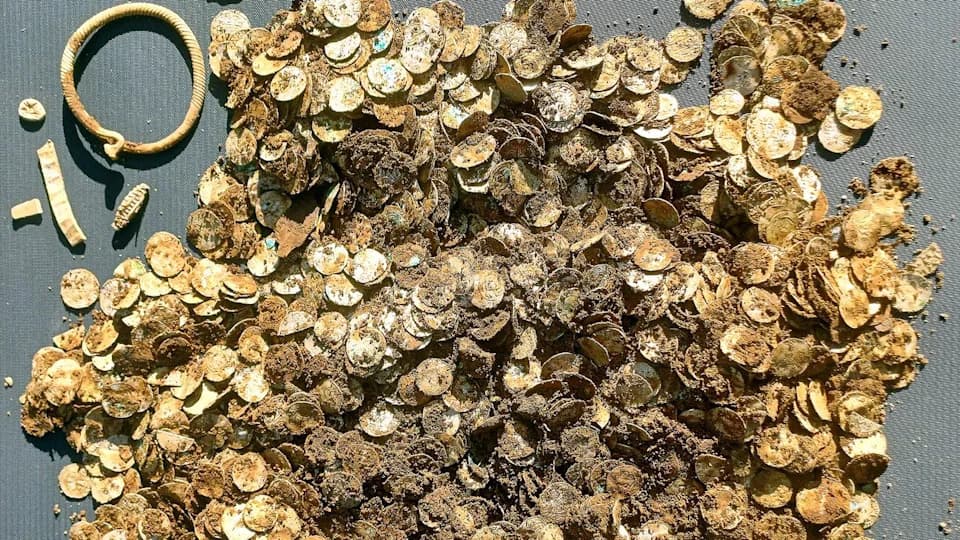
The Rebild hoard joins a string of recent discoveries across Scandinavia and Europe that illuminate the movement of wealth and connections of the Viking world. Recent related finds include hobbyists in Norway uncovering 19 silver pieces and the country's largest Viking coin hoard, pipeline crews finding a large prehistoric gold hoard wrapped in linen, and Danish archaeologists reconstructing puzzling Iron Age artifacts to test old theories.
Taken together, these discoveries reinforce how objects and landscapes can preserve traces of the past for centuries and how chance finds by non-specialists continue to reshape our understanding of the Viking Age.
Help us improve.