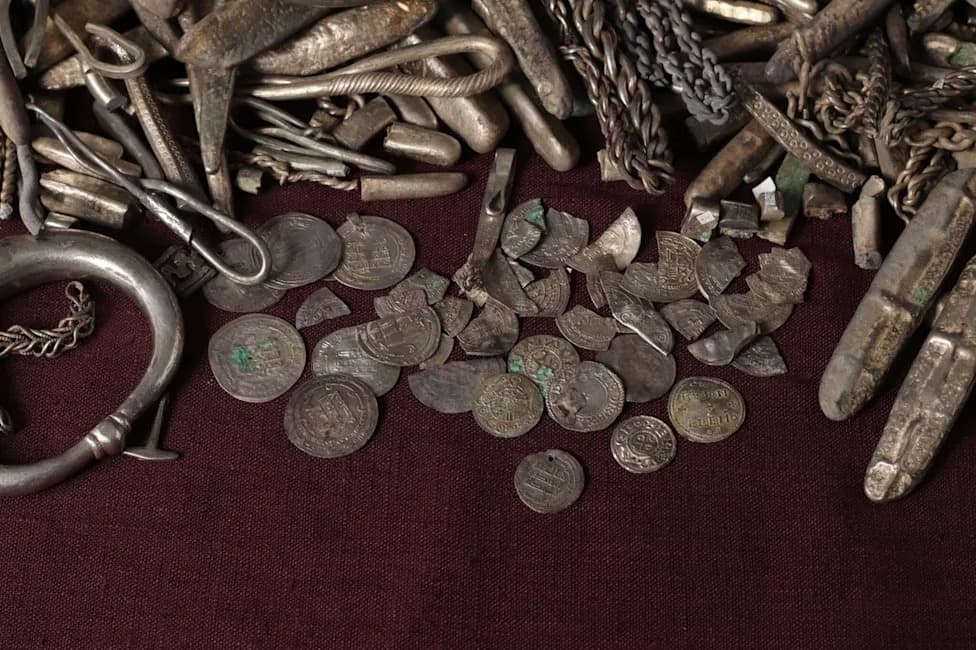
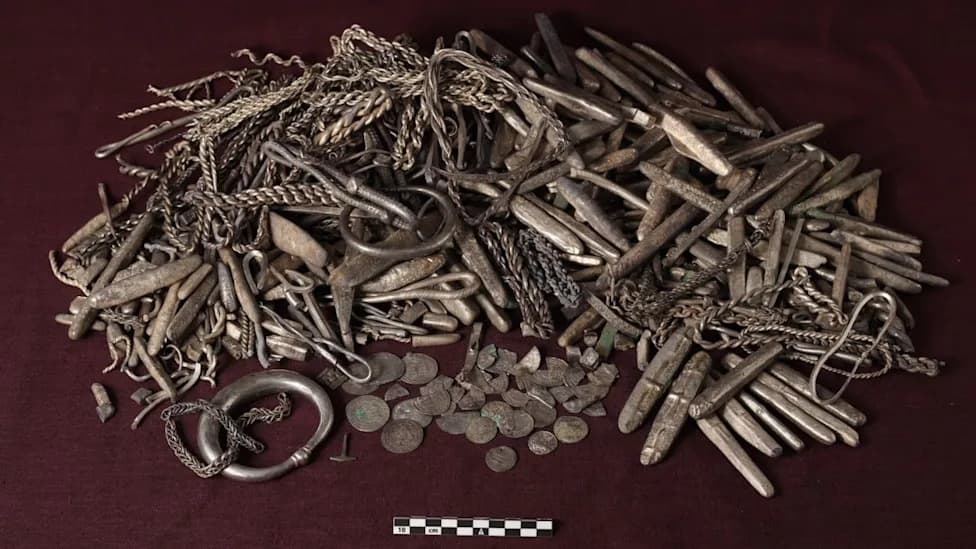
A homeowner in Himmerland, northern Denmark, discovered what North Jutland Museums describe as Denmark's largest Viking Age silver hoard while renovating a backyard terrace. Archaeologists recovered roughly 700 objects — including silver ingots, bracelets, coins and a Thor's hammer pendant — totaling more than 40 pounds, with about 320 pieces inside a clay vessel. Dated to the 10th century, the hoard bears runic inscriptions and a mix of pagan and Christian symbols. Under Danish law the find belongs to the state; the homeowner is eligible for a reward. Together with nearby gold arm rings found earlier in 2026, the discovery is reshaping views of Himmerland's role in Viking Age trade and politics.
Danish Homeowner Unearths Country's Largest Viking Silver Hoard During Patio Renovation
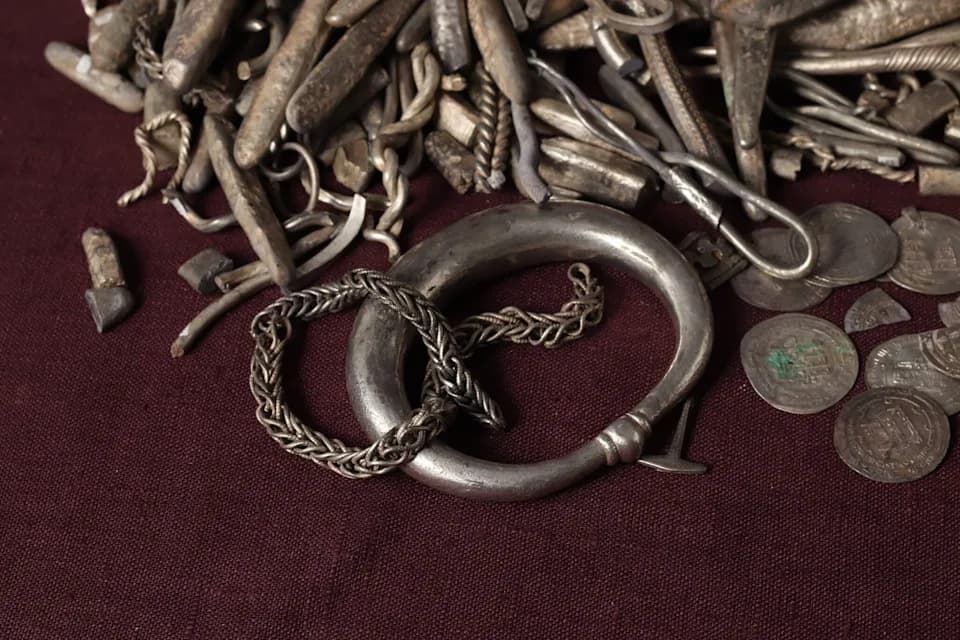
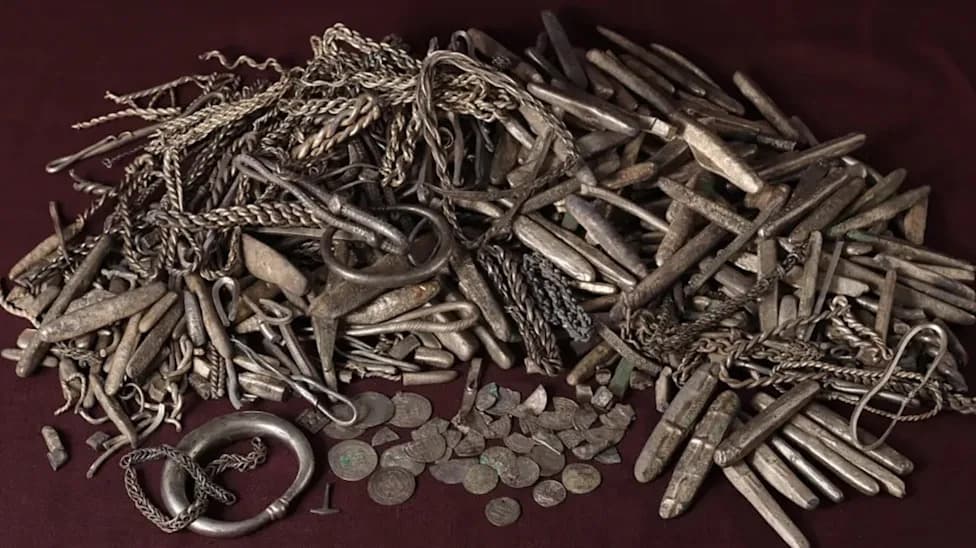
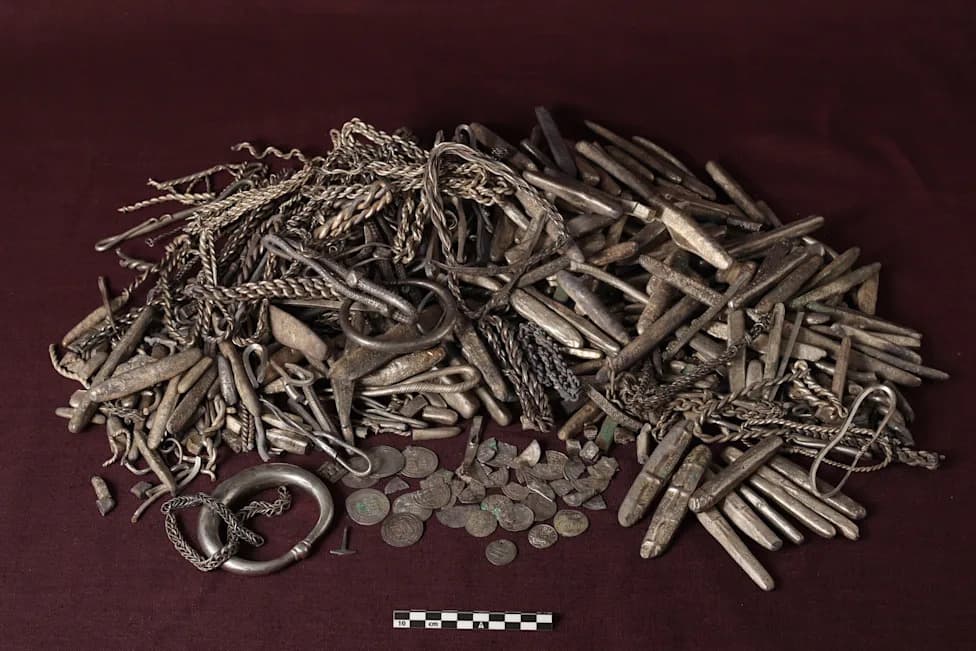
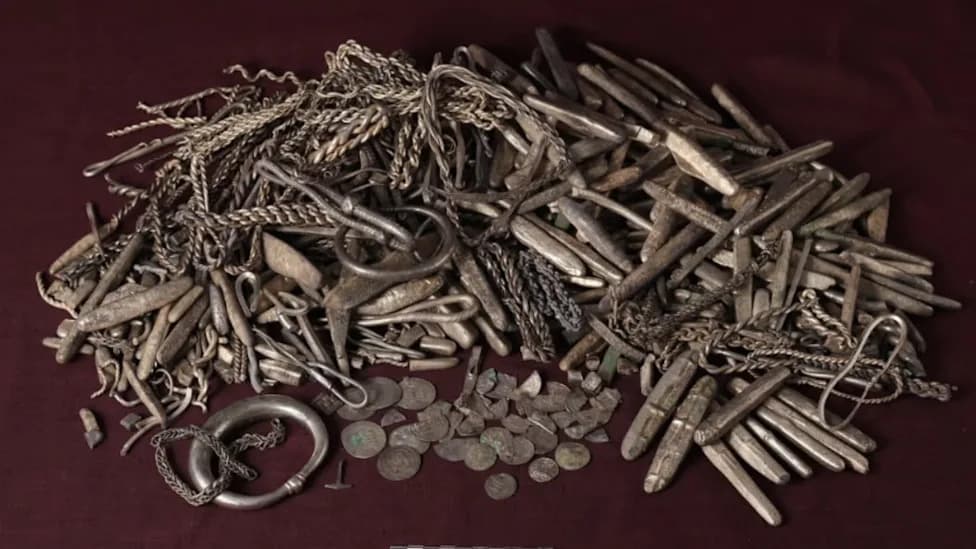
A homeowner discovered about 40 pounds of buried Viking Age treasure in their backyard, including silver ingots, bracelets, coins, a small Thor's hammer, and various pieces of cut silver. (Nordjyske Museer)
A routine backyard renovation in Himmerland, northern Denmark, turned into a landmark archaeological discovery when a homeowner found what North Jutland Museums say is the largest Viking Age silver hoard ever recovered in the country.
Discovery
The homeowner, who asked to remain anonymous, was preparing the ground for a new tiled terrace when they struck "something that made a strange sound." What began as "just a few hours of hard gardening" quickly became "the biggest surprise of my life," the individual recalled. While digging, they pulled from the soil one metal object after another — jewelry, coins, and silver bars.
What Was Found
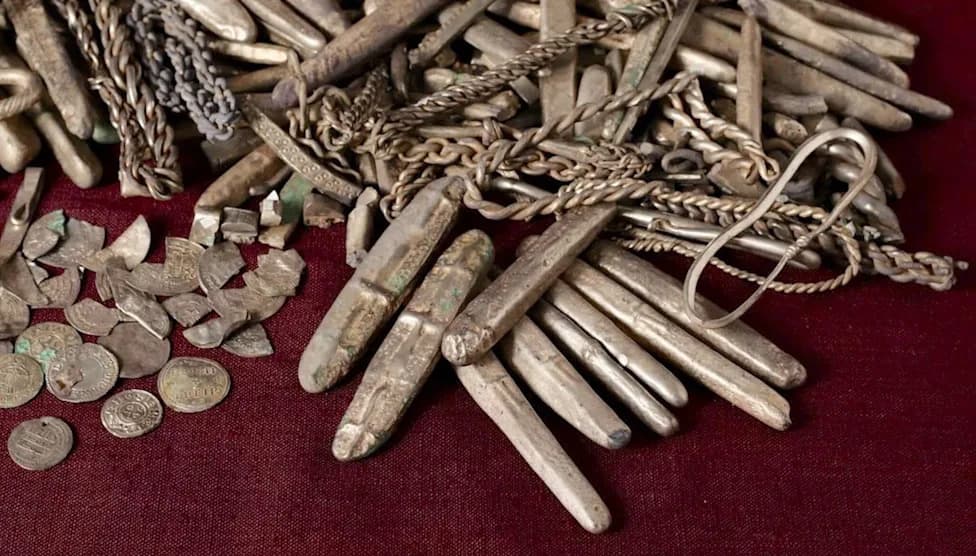
Archaeologists recovered roughly 700 objects and fragments totaling more than 40 pounds (about 18 kilograms) of silver. The assemblage includes silver ingots, bracelets, coins, a small Thor's hammer pendant and numerous pieces of cut silver. Approximately 320 items were contained within a clay vessel; the remainder lay scattered in surrounding soil.
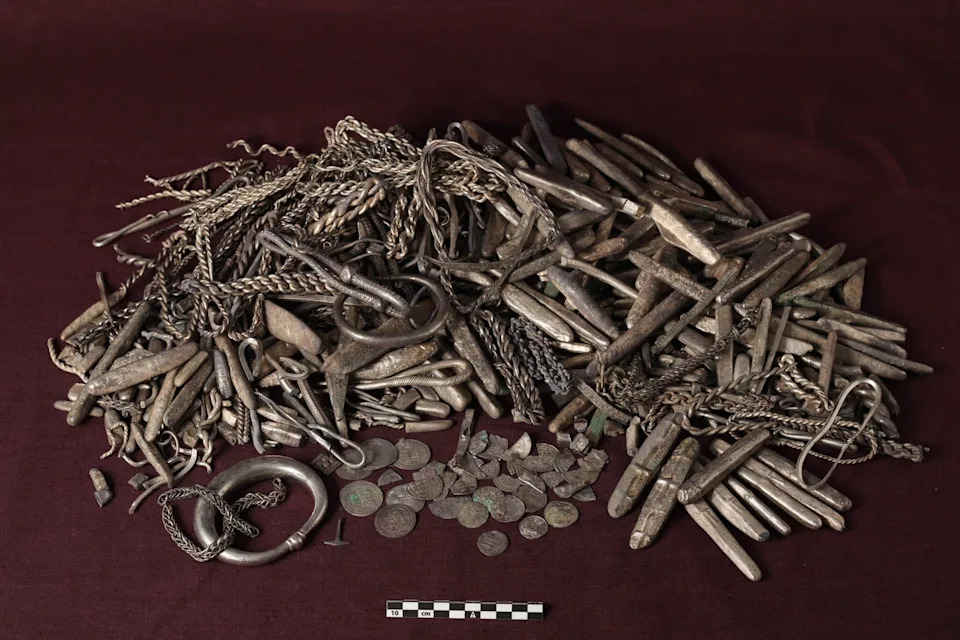
A simple home renovation turned into a major historical discovery as a Danish homeowner found a large hoard of Viking Age silver. (North Jutland Museums)
Dating and Significance
Experts have dated the hoard to the 10th century, squarely within Denmark's Viking Age. The discovery surpasses the previous Danish record — a 14-pound hoard found in Terslev — and is exceptional both for its size and the variety of objects.
"It contains an unusually large number of silver ingots," Torben Sarauw, head of cultural heritage at North Jutland Museums, told Fox News Digital. "One ingot bears runic inscriptions that may have been intended to protect the treasure, while others are marked with Thor's hammers and Christian crosses."
Sarauw said the mix of pagan and Christian symbols, together with runic markings and the sheer quantity of silver, makes the hoard unique. Although the original owner's identity is lost to time, the scale of the find suggests they were extremely wealthy and likely connected to extensive trade networks and political power.
Context And Legal Notes
It was common in the Viking Age to bury hoards during times of uncertainty; the owner may have intended to retrieve the cache and never returned. Under Danish law, objects found on private land belong to the state. The homeowner will not keep the artifacts but is eligible to receive a financial reward for reporting the find.
Sarauw also noted that archaeologists discovered six Viking Age gold arm rings in the same area earlier in 2026. Taken together, these finds and other local discoveries suggest Himmerland may have been a more prominent political and economic center during the Viking Age than previously understood.
Location: Himmerland, North Jutland, Denmark
Date Announced: Statement from North Jutland Museums, Aug. 31
Estimated Age: 10th century (Viking Age)
Help us improve.