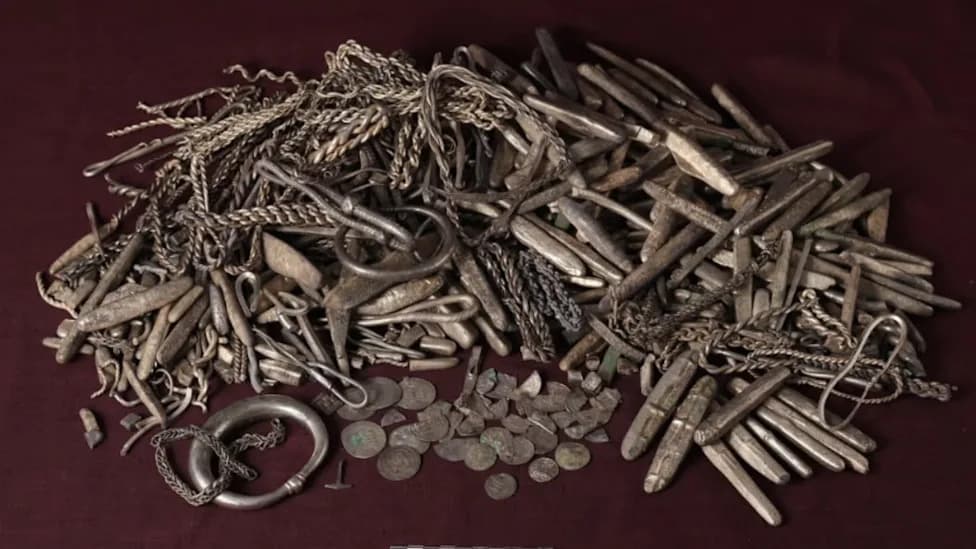
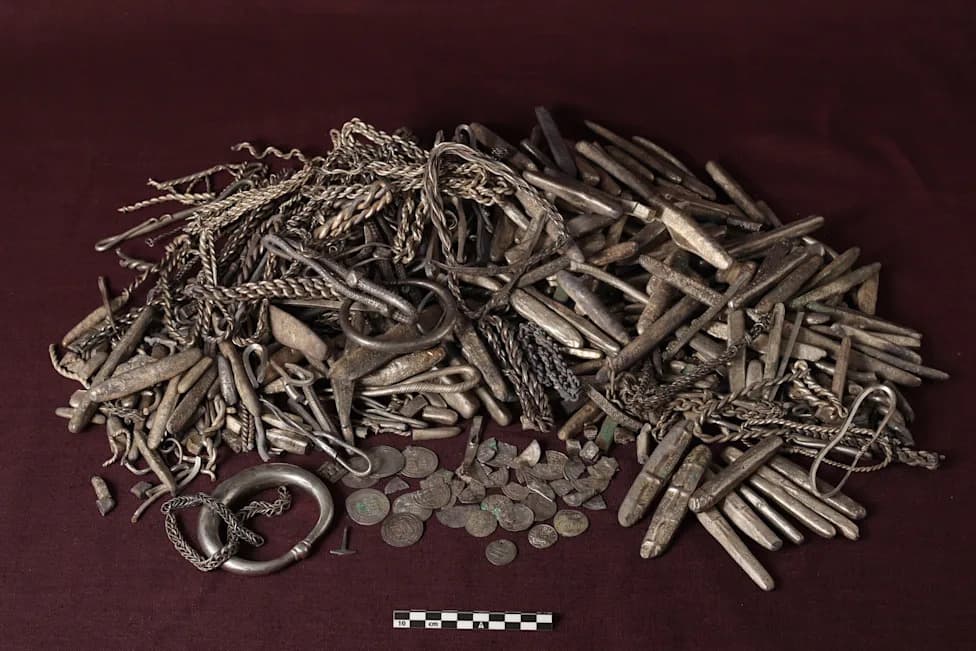
A gardener in Rebild, Denmark, uncovered the country’s largest Viking Age silver hoard while digging for a terrace: roughly 700 items weighing over 40 pounds. About 320 objects (around 14 pounds) were still inside their original clay pot; the collection includes jewelry, silver bars and 47 coins from Anglo-Saxon and Arabic mints. Two coins date to the reign of Edward the Elder (899–924 CE), placing the hoard in the 10th century. The silver is sorted into measured weight groups, showing deliberate storage of wealth; the National Museum of Denmark is now assessing the find under danefæ law.
Stubborn Grass Reveals Treasure: Gardener Unearths Denmark’s Largest Viking Silver Hoard
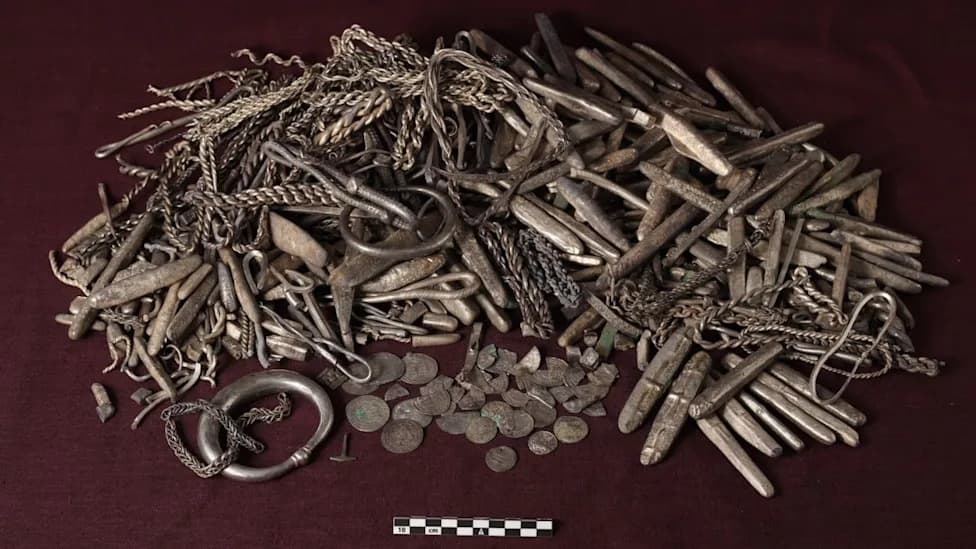
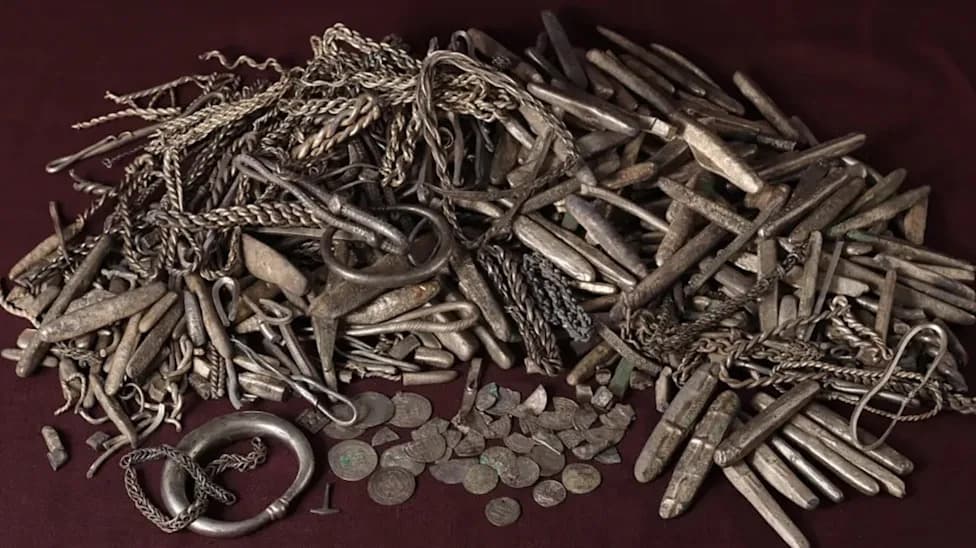
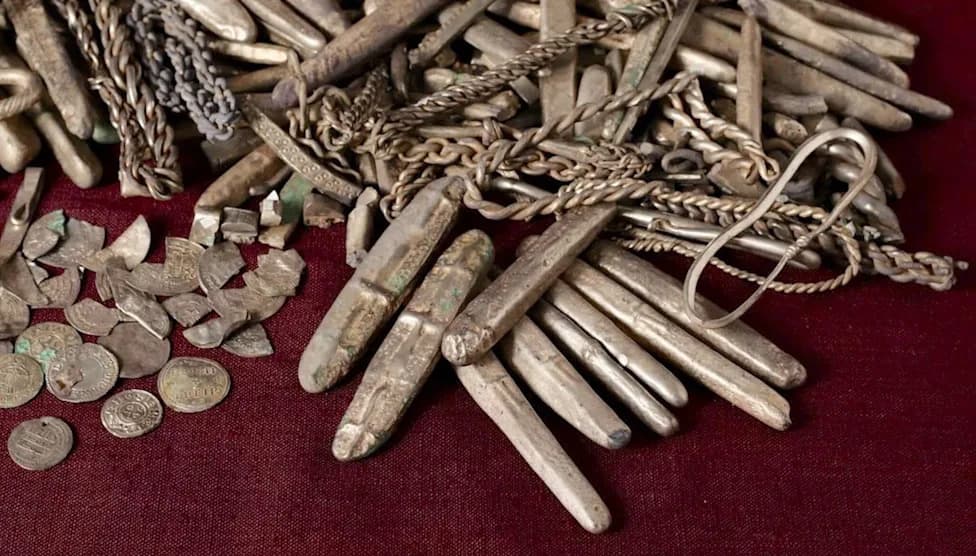
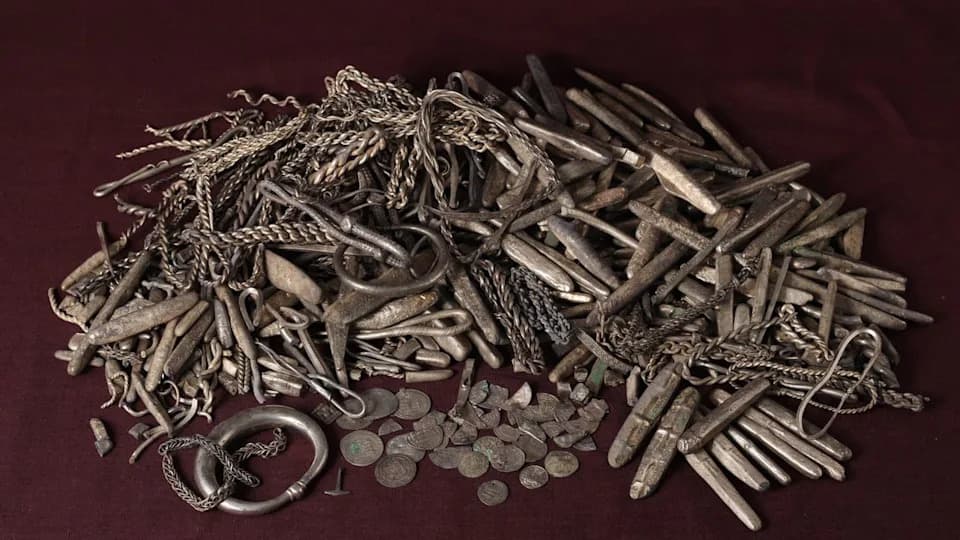
The hoard includes jewelry, silver bars, and a miniature Thor's hammer.
A homeowner in Rebild, northern Denmark, discovered the country’s largest known Viking Age silver hoard while clearing a patch of "stubborn grass" for a new terrace. After about 30 minutes of digging, the anonymous gardener struck metal and soon exposed a trove of roughly 700 objects — jewelry, coins, silver ingots and a small Thor's hammer — with a combined weight of more than 40 pounds.
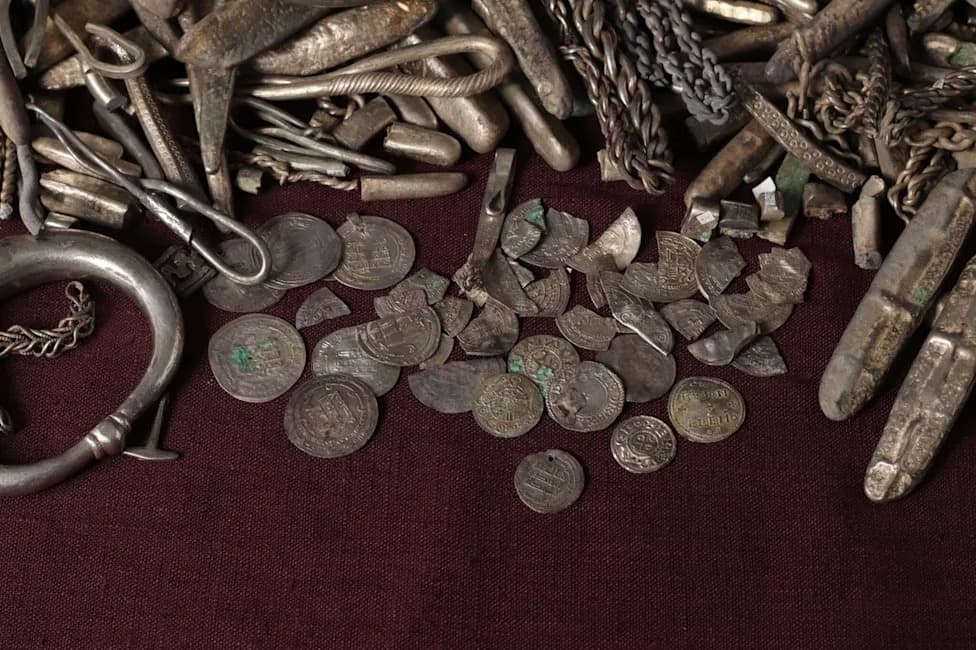
Archaeologists who inventoried the find reported that roughly 320 items, weighing about 14 pounds, remained inside their original clay pot. The hoard contains 47 complete coins and numerous fragments, but the majority of pieces are jewelry, solid bars and cut silver intended as bullion.
Coins, Dates and Provenance
The coins in the Rebild hoard come from a range of mints, including Anglo-Saxon pennies and Arabic dirhams. Two of the Anglo-Saxon coins were struck under Edward the Elder (reigned 899–924 CE), which places the deposition at least in the 10th century. The geographic spread of coinage highlights the wide trade and contact networks of the Viking Age.
Organised Wealth
Researchers noted that the silver objects and bars fall into distinct weight categories, suggesting the hoard was deliberately organised into measured units of value rather than being a random assortment. That pattern offers rare, direct evidence of how silver functioned both as portable wealth and as a medium of exchange during the Viking Age.
"This is a find of great importance for our understanding of the Viking Age in Denmark," said archaeologist Torben Sarauw of the Museums of North Jutland. "Not just because of its size but also because the treasure clearly shows how silver functioned as wealth and a means of payment in the Viking Age. It's like finding a safe from the Viking Age."
The objects are currently being examined and conserved at the National Museum of Denmark. Under Denmark’s danefæ law — which states that historically valuable finds automatically pass to the state — the homeowner is unlikely to receive a large financial reward for the discovery.
Beyond its immediate material value, the Rebild hoard promises to shed light on Viking-era economics, trade routes and hoarding practices when specialists complete cataloguing and analysis.
Help us improve.