The Um Rank hoard in Holzthum began with 38 gold solidi reported by detectorists in 2018 and, after INRA excavations from 2020–2024, grew to 141 coins dated 362–402 C.E. The assemblage notably includes 17 coins from Nicomedia and many from Antioch, suggesting long‑distance movement of currency, likely by soldiers. Several coins show plating or double‑layer construction and are slated for metallurgical analysis. Luxembourg purchased the hoard for roughly $322,000, though the motive for its burial remains unresolved.
Luxembourg Hoard: Metal Detectorists Unearth 141 Roman Gold Coins — A 1,600‑Year Mystery
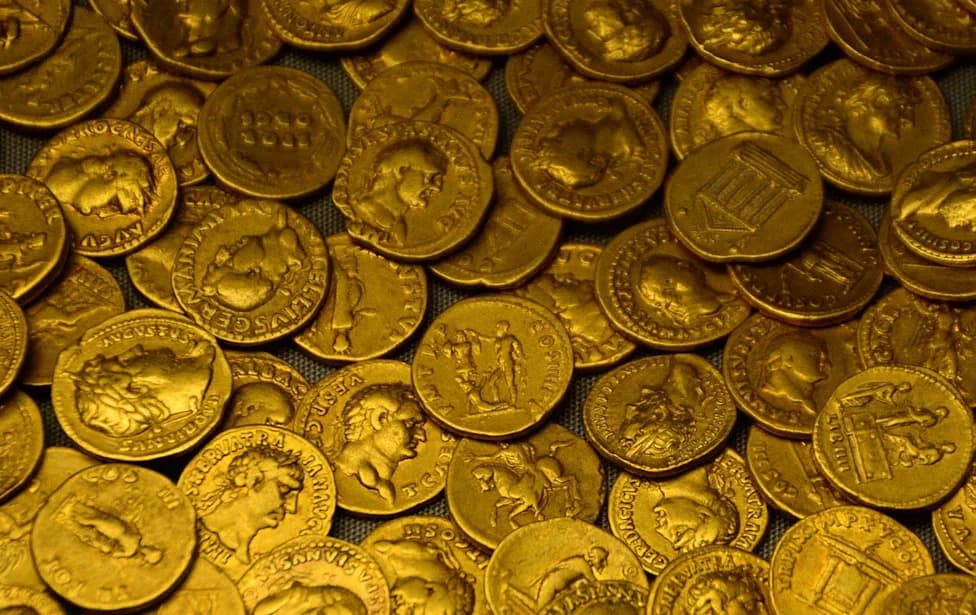
Detectorists Found a Roman Gold Coin MysteryRobert Alexander - Getty Images
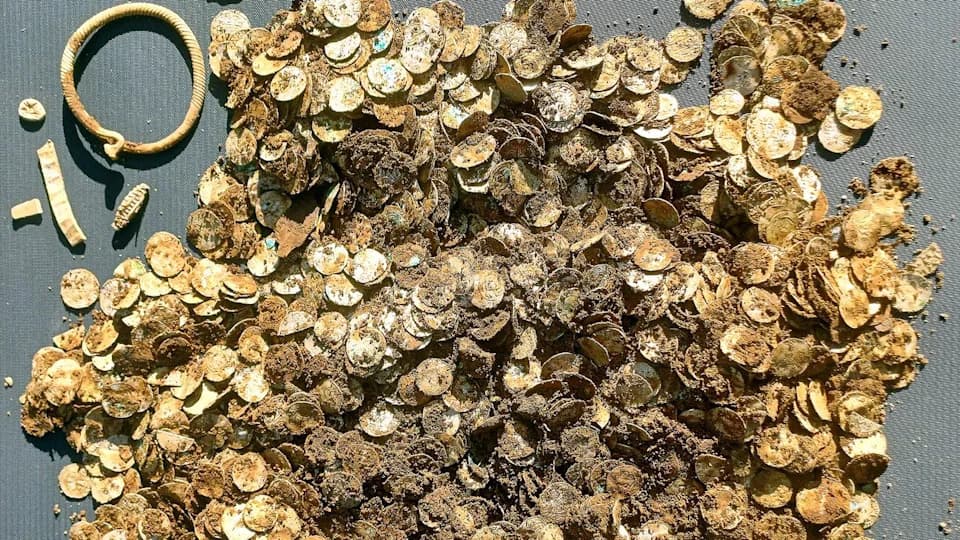
In 2018 two hobbyist metal detectorists working at the previously surveyed Um Rank site in Holzthum, northern Luxembourg, reported finding 38 gold coins. Their discovery prompted an official investigation by the National Institute for Archaeological Research (INRA) in September 2019 and full excavations carried out between 2020 and 2024. Those digs exposed a late Roman stone watchtower, an aburgus, and ultimately revealed a hoard of 141 pure gold solidi dating to the late fourth and very early fifth centuries C.E.
Numismatists David Wigg‑Wolf, David Weis and Lynn Stoffel examined the hoard and dated the coins to 362–402 C.E. The assemblage includes specimens struck at nearly every Roman mint active during that span and depicts almost every contemporary emperor, with the notable exceptions of Magnus Maximus and his son Flavius Victor. Unusually, 17 coins — more than a tenth of the hoard — were struck at Nicomedia, the Anatolian mint at modern İzmit, a proportion not paralleled in comparable western hoards.
The team reported several curious examples among the coins. Two fragmentary plated pieces of the RESTITVTOR REIPVBLICAE type appear to include at least one likely imitation by stylistic analysis. Other coins display metal irregularities: one shows a dark sheen suggesting elevated tin or silver, while another reveals a bent edge and a double‑layer construction that implies it was cut from two bonded metal strips. The researchers plan further metallurgical tests to clarify these anomalies.
Coins from Antioch are also well represented, and the overall mint mix suggests long‑distance movement of currency, likely carried west in soldiers' purses as troops redeployed. Many coins were minted in 364–367 C.E., a period when Valentinian I was proclaimed emperor in Anatolia, paid accession donatives in gold, and marched west to defend the Rhine frontier from Trier, roughly 50 kilometres from Holzthum.
Despite the hoard's size and value, researchers found no contemporary documentary evidence of a local crisis, battle or recorded upheaval that would explain an urgent burial. The deposit may reflect military pay circulation or ad hoc concealment by an individual who never returned; the exact motive for burying such a large stash remains unresolved. Based on rarity and preservation, Luxembourg's Ministry of Culture acquired the hoard for the state for approximately $322,000.
“There are no specific historical situations or events with which the depositions and non‑recovery for the Holzthum hoard can be directly connected,” the researchers concluded in a recent study published in Schweizer Münzblätter. “The hoard post‑dates the usurpation of Eugenius, and the political and military situation in the region was stable into the early fifth century… the situation only changed with [later invasions].”
Ongoing numismatic and metallurgical analyses aim to map the coins' journeys, confirm alloy compositions, and deepen understanding of why this remarkable cache lay buried for some 1,600 years.
Help us improve.