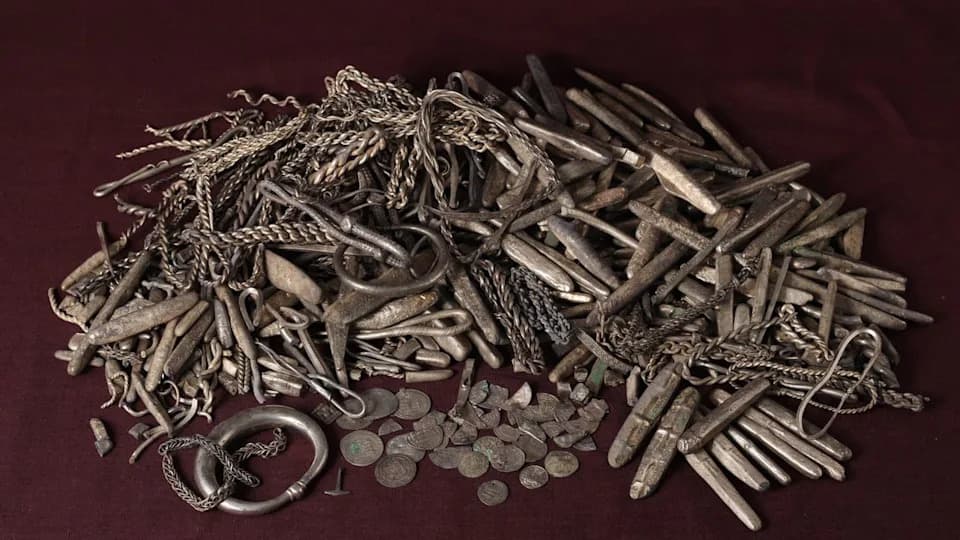
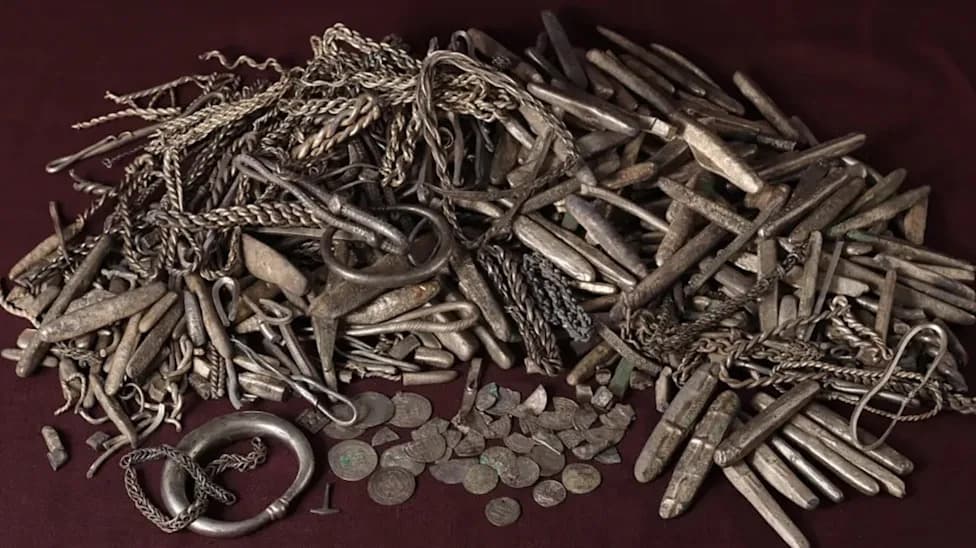
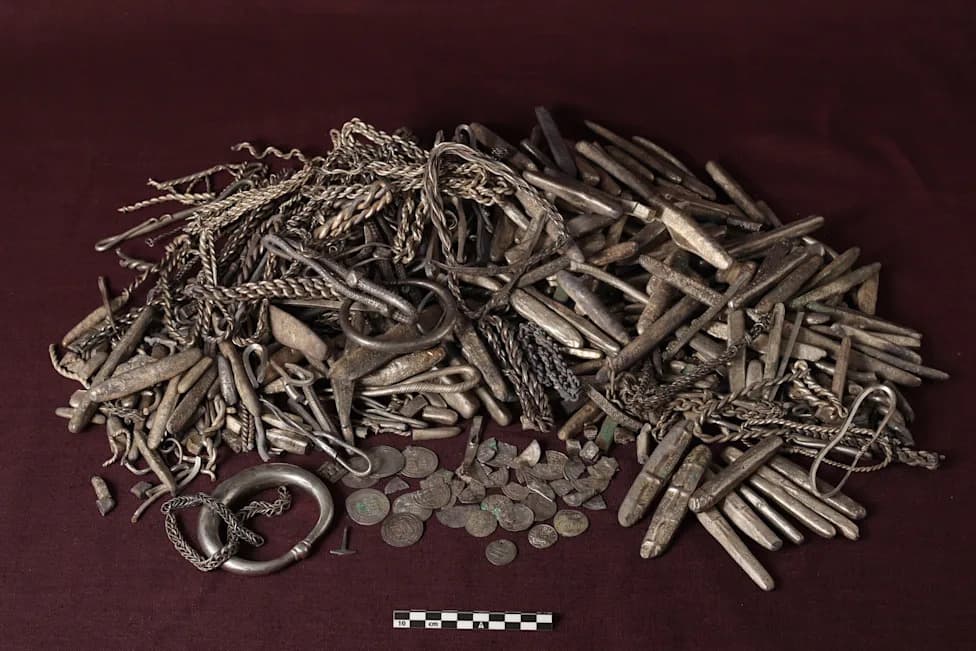
A homeowner in Rebild Municipality, Denmark, discovered a Viking silver hoard weighing over 40 pounds (about 18 kg) while building a terrace. The cache — roughly 700 pieces and more than 1,000 years old — is the largest Viking Age silver find recorded in Denmark. Items include silver bars, Anglo-Saxon and Islamic coins, jewelry and a miniature Thor's hammer pendant. Experts say the hoard reveals how Vikings used silver as both wealth and a weight-based means of payment and will shed new light on medieval trade networks.
Homeowner Uncovers Denmark’s Largest Viking Silver Hoard While Building a Terrace
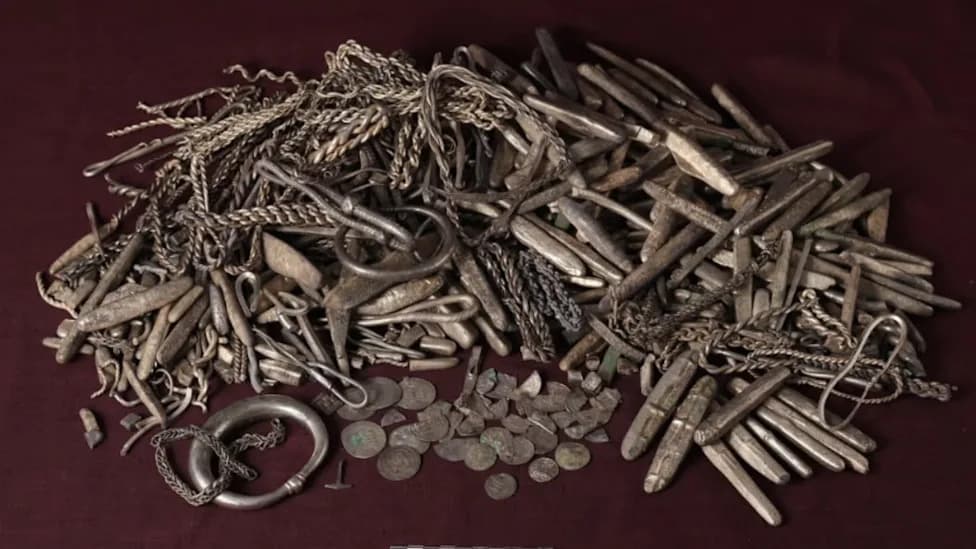
Image Credit: nordjyskemuseer / Instagram.
A routine day of gardening turned into a once-in-a-lifetime archaeological discovery when a homeowner in Rebild Municipality, Denmark, uncovered a massive Viking hoard while digging to build a terrace. The anonymous finder reported the cache to local authorities, and experts from the North Jutland Museums (Nordjyske Museer) quickly began cataloguing the find.
What Was Found
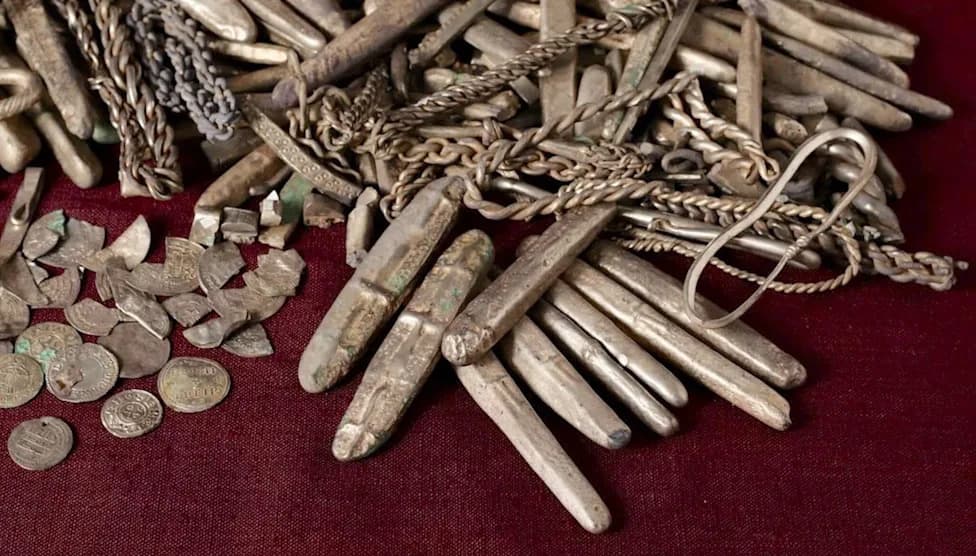
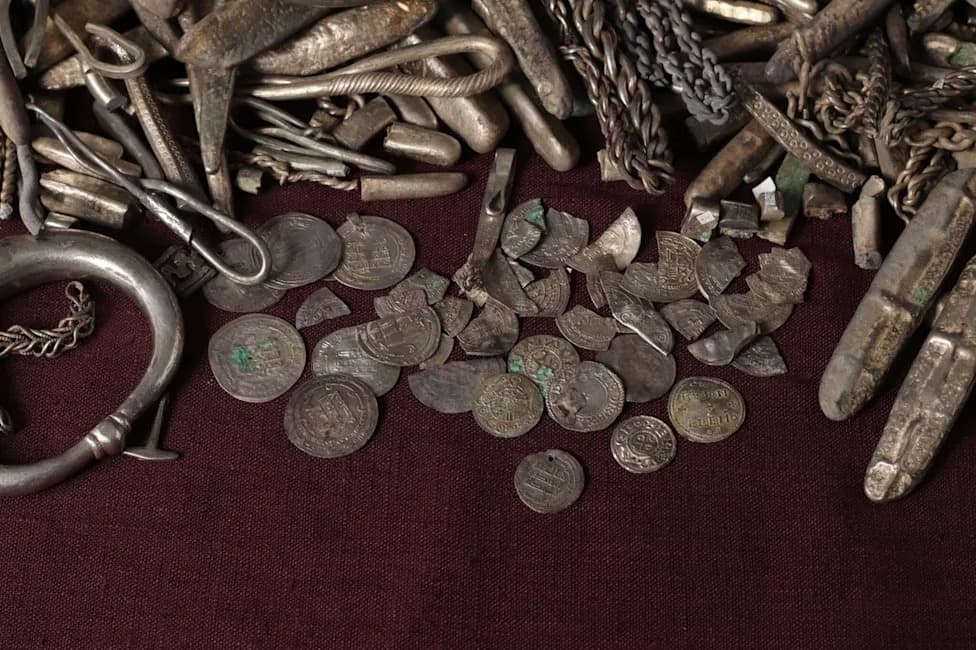
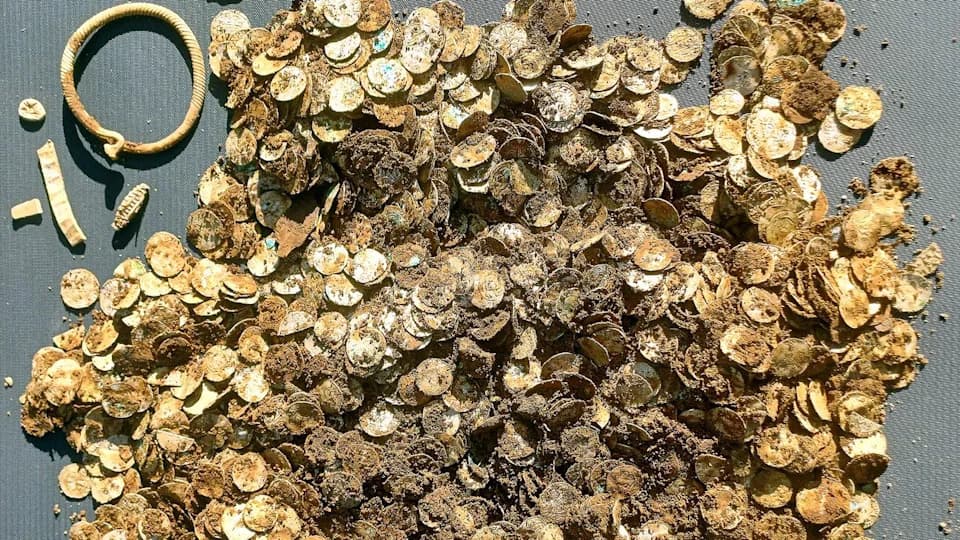
The deposit weighs more than 40 pounds (about 18 kilograms) and contains roughly 700 silver objects, making it the largest Viking Age silver hoard ever recorded in Denmark. Recoveries include silver bars, coins, jewelry, and a small pendant shaped like Thor's hammer — a potent symbol of Norse identity.
“This is a find of great importance for our understanding of the Viking Age in Denmark,” said Torben Sarauw, head of cultural heritage at Nordjyske Museer. “Not just because of its size, but also because the treasure so clearly shows how silver functioned as wealth and a means of payment in the Viking Age. It's like finding a safe from the Viking Age.”
Coins and Connections
The hoard contains a variety of coin types, including Anglo-Saxon silver pennies and coins of Islamic origin, underscoring the wide geographic reach of Viking trade and exchange networks. Many of the pieces appear to be valued by weight rather than by face value, a practice that sheds light on contemporary economic systems.
Why It Matters
Museums and archaeologists say the discovery will provide new data about commerce, wealth storage, and cross-cultural contact during the Viking Age. Because many objects are well preserved, specialists can date and trace their origins, improving our understanding of how Scandinavians accumulated and used silver as both currency and status objects across medieval Europe.
Next Steps: Conservators and researchers at Nordjyske Museer are carefully cleaning, cataloguing and analyzing the hoard. The museum shared the discovery on Instagram, highlighting its significance for regional and international Viking studies.
Help us improve.