Archaeologists at Kibyra in southwest Turkey have restored nearly 2,000‑year‑old marble statues of Emperor Hadrian and Empress Sabina found at the site's Monumental City Gate. The Hadrian statue, carved from Afyon‑Iscehisar marble, stands about 2.14 metres tall and is dated to around 130 CE; its cuirass bears lion and eagle motifs. Excavations beginning in 2025 recovered four large figures and about 20 fragments; the finds will be conserved and displayed at the Burdur Museum. Researchers say the sculptures likely toppled and shattered in the earthquake of 417 CE.
Rare 2,000‑Year‑Old Statues of Emperor Hadrian and Empress Sabina Restored at Ancient Kibyra Gate
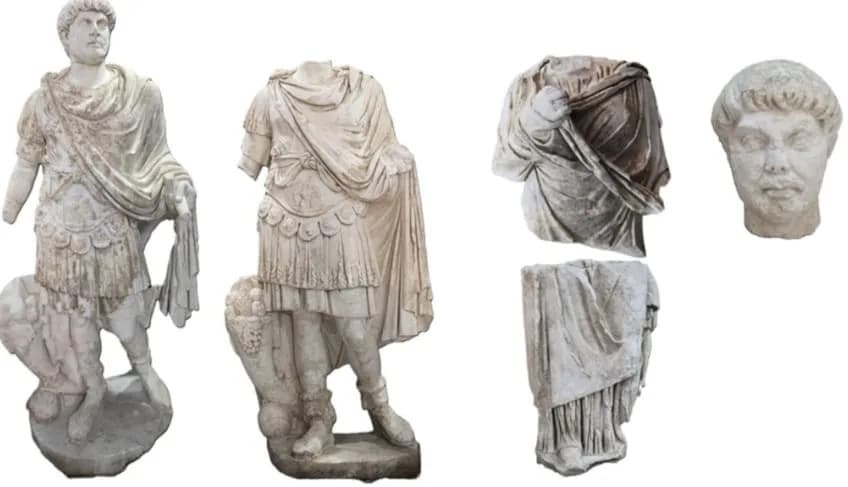
Statues of Roman Emperor Hadrian and his wife, Sabina, found in Kibyra, Turkey, September 11, 2026. (photo credit: Turkish Council of Higher Education (YOK))
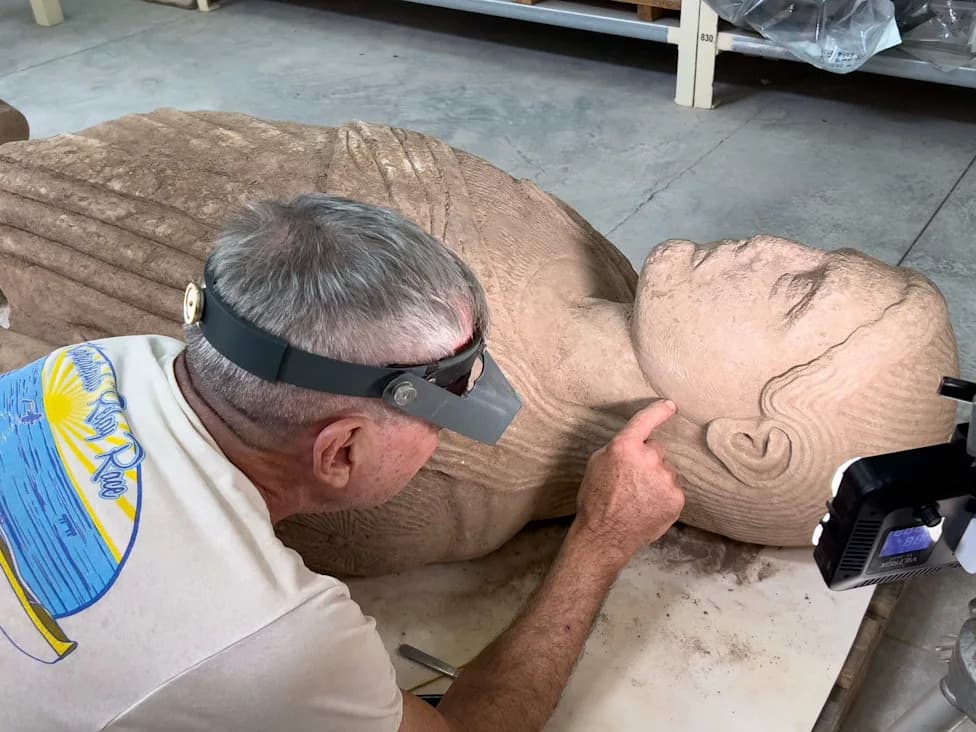
Turkish archaeologists have restored nearly 2,000‑year‑old marble statues of Roman Emperor Hadrian and his wife, Empress Sabina, after they were excavated at the Monumental City Gate of ancient Kibyra, officials said in late August. The finds — part of a larger gate excavation led by Burdur Mehmet Akif Ersoy University (MAKU) — shed new light on imperial imagery and urban display in Roman Anatolia.
The Discovery and Dating
Excavation director Dr. Sukru Ozudogru reported that the portraits are stylistically dated to around 130 CE, during the middle of Hadrian's reign, and may have been commissioned in anticipation of an imperial visit — a common Roman practice. The restored Hadrian statue stands about 2.14 metres tall and is carved from high‑quality marble sourced from the Afyon‑Iscehisar region.
What the Sculptures Show
Hadrian's figure is shown in military dress. Ornamental details on the cuirass include carved motifs of a lion and an eagle, symbols that reinforce the emperor's authority and martial image. The statue of Empress Sabina was restored to the same approximate height but remains incomplete; archaeologists hope to recover missing fragments in future seasons.
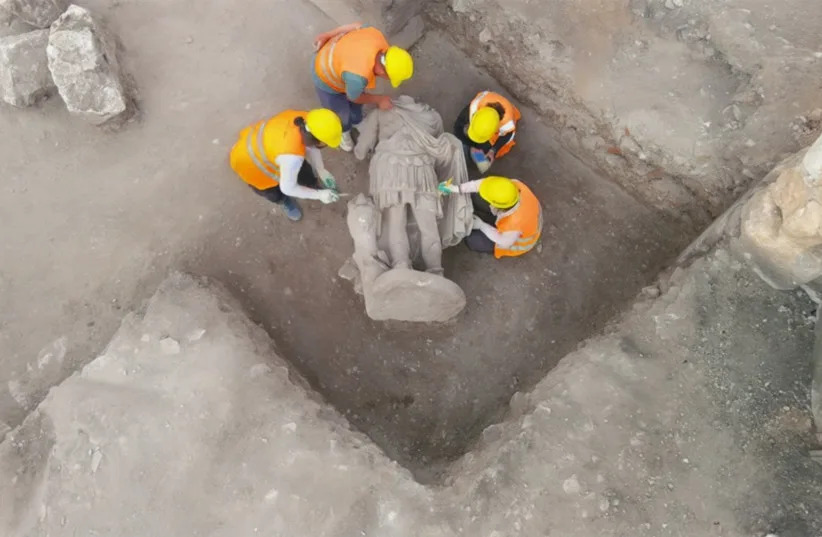
Statues of Roman Emperor Hadrian found in Kibyra, Turkey, September 11, 2026. (credit: Turkish Council of Higher Education (YOK))
Context and Additional Finds
The Hadrian and Sabina figures were among four large statues recovered on the upper portion of the gate. Other finds include a roughly 1.86‑metre armored emperor statue, a female statue whose upper and lower halves were discovered separately, and a 30‑centimetre male head fragment. In total, excavations across Kibyra have turned up about 20 statue fragments — arms, legs and feet — as well as earlier notable discoveries including busts of Serapis and statues of Asclepius (2019–2020).
"These works help us better understand Anatolia's layered history and the interaction between civilizations through time," said Erol Ozvar, president of the Turkish Council of Higher Education (YÖK).
Site Work and Next Steps
Systematic work on the collapsed gate began in 2025. Teams have moved, catalogued and classified roughly 2,500 stone blocks so far; Ozudogru expects one more season to complete the excavations of the gate before full restoration and redesign of the structure can proceed. After conservation, the statues will be carefully transported to the Burdur Museum for public display.
Significance: The Hadrian portrait is an unusually clear imperial likeness for Anatolia, making it an important piece for studies of Roman provincial art, imperial cult, and urban representation in the eastern Roman world.
Help us improve.