Panthera deployed 300+ custom camera traps across an area the size of Cape Verde in western Tanzania, collecting over 150,000 images that document the region’s wildlife. The survey produced the first Tanzanian record of a rare serval morph and early regional records of aardwolves, bat-eared foxes and springhares. At the same time, the cameras revealed concerning declines in lion populations in Ugalla and Luganzo-Tongwe. The data—collected with PantheraCams and a satellite-informed grid refined on the ground—supports population monitoring and targeted conservation action with partners such as TAWA and TAWIRI.
Over 300 Custom Camera Traps Across Cape Verde–Sized Area Reveal Rare Wildlife Records and Declining Lions in Western Tanzania
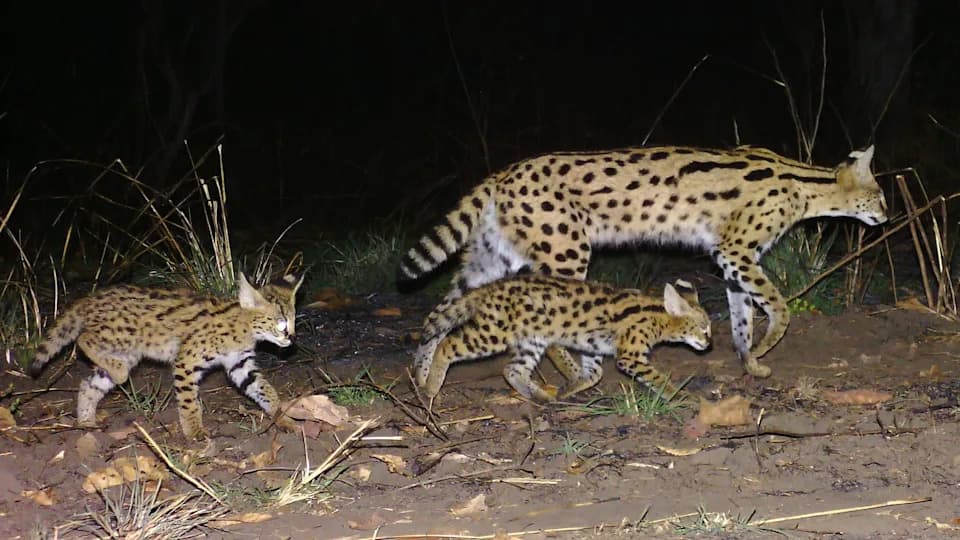
A serval mother and kittens walk past Panthera's camera trap in western Tanzania. These cats display the typical serval coat pattern. | Credit: Paolo Strampellli / Panthera
A network of more than 300 custom camera traps deployed across an area roughly the size of Cape Verde in western Tanzania has generated over 150,000 images, producing both exciting first records and worrying conservation signals.
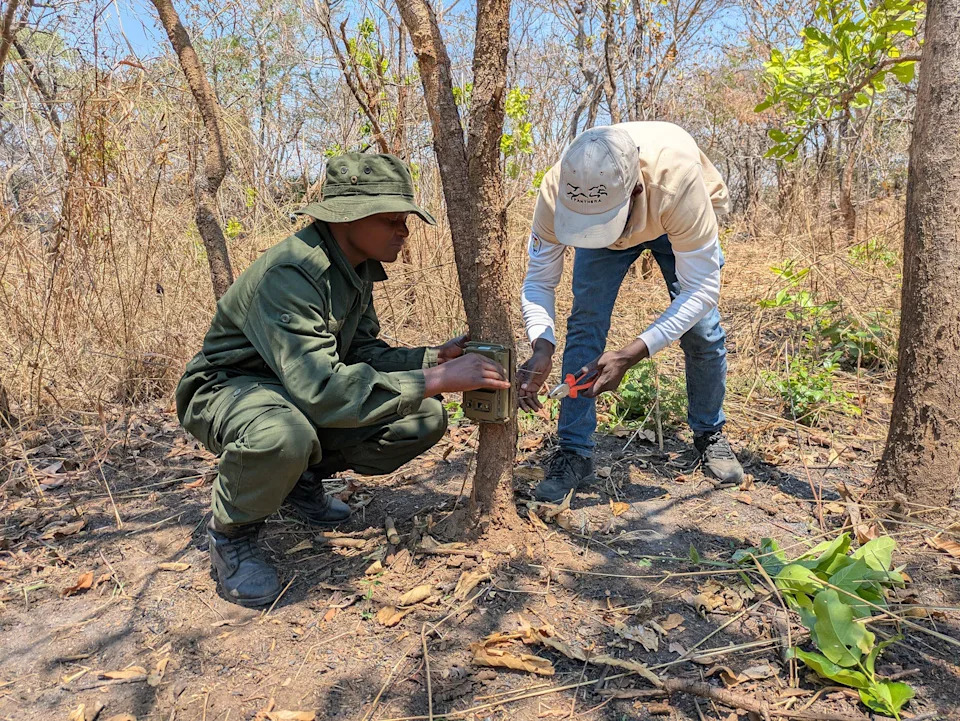
Panthera field scientists set up camera traps in western Tanzania | Credit: Paolo Strampellli / Panthera
Notable Discoveries
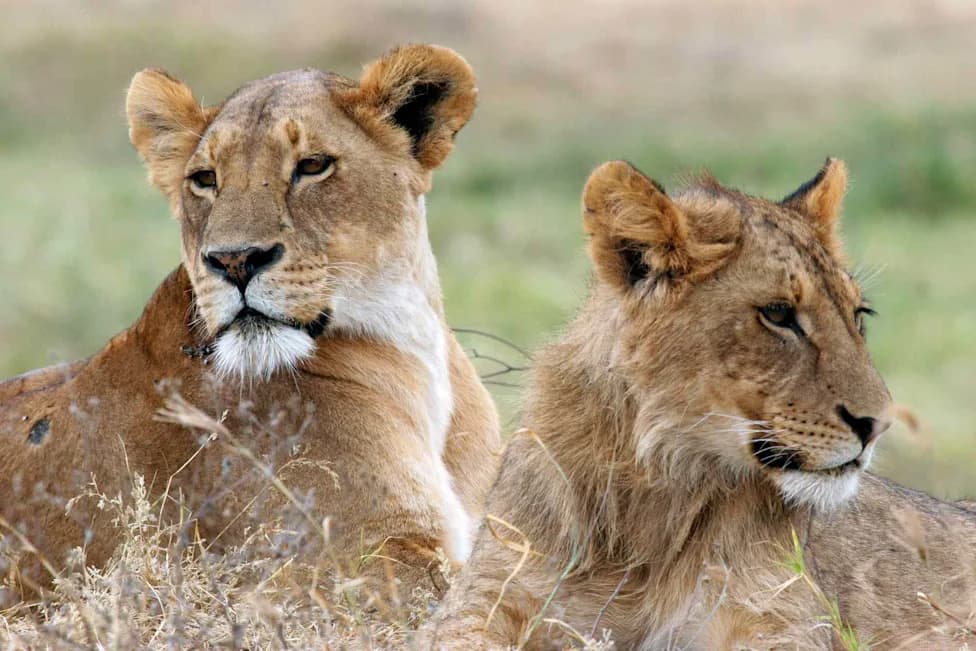
The image set includes the first documented serval with a rare morph coat pattern in Tanzania, along with some of the earliest regional records of aardwolves, bat-eared foxes and springhares in the country's western region. At the same time, the cameras recorded evidence of declining lion numbers in Ugalla and the Luganzo-Tongwe Game Reserves—an alarming trend for a keystone species.
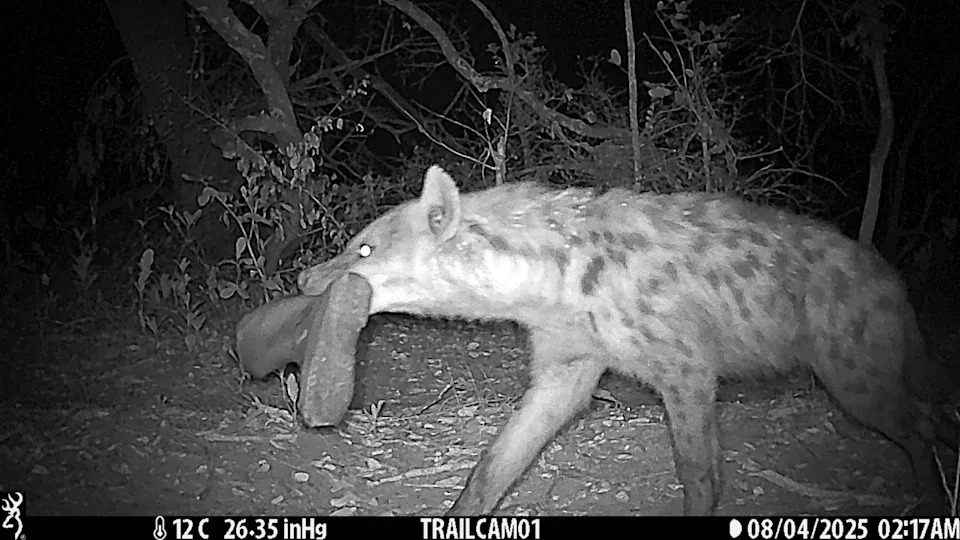
A hyaena boot thief, western Tanzania | Credit: Paolo Strampellli / Panthera
Camera Technology and Site Selection
Panthera designed and used its in-house PantheraCams, which are built specifically to meet wild-cat monitoring requirements. The team begins remote planning with satellite imagery to produce a grid of preliminary camera sites spaced to meet the assumptions of the statistical models they intend to run. Field teams then refine those positions on the ground, selecting exact trees and adjusting placement to follow likely animal movement pathways.
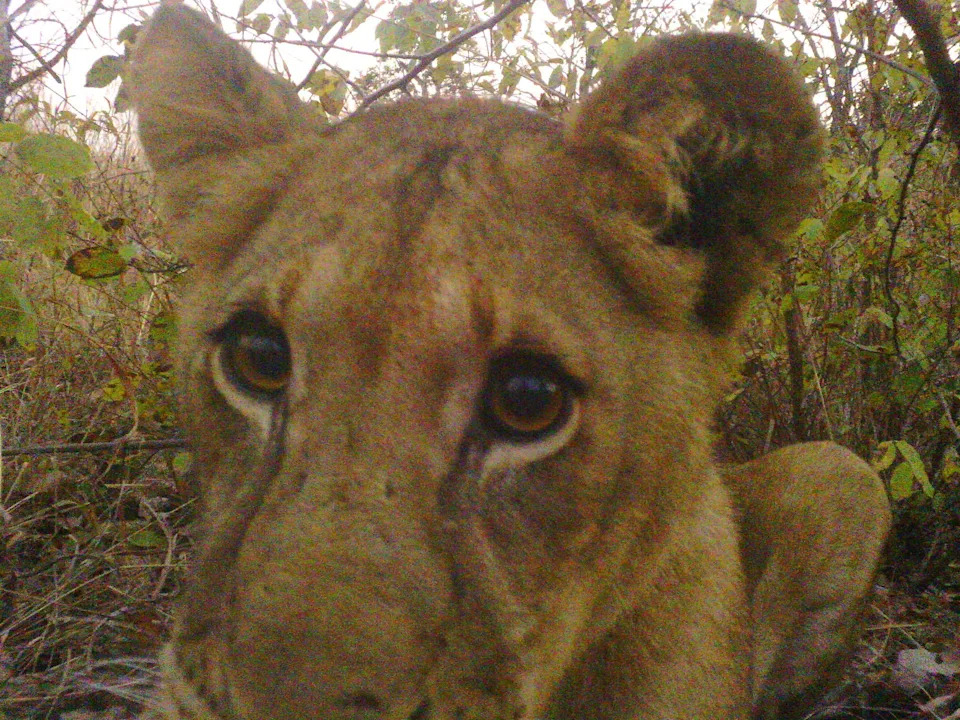
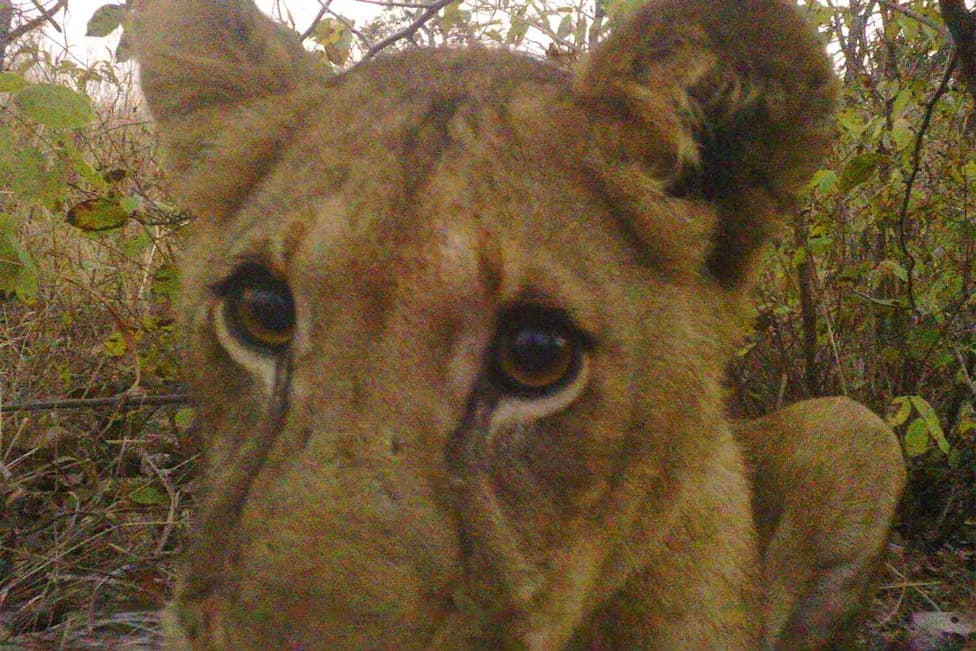
A lion cub inspects Panthera's camera trap in western Tanzania | Credit: Paolo Strampellli / Panthera
"We try to 'think like a lion'—prioritizing habitat features, movement pathways and game trails to maximise captures," said lead scientist Paolo Strampelli.
Fieldwork and Durability
Deployment is labour-intensive: teams usually spend about two weeks installing units, perform a mid-survey check roughly two weeks after deployment, and retrieve cameras after about three months. PantheraCams are engineered to endure heat, sunlight and humidity, and the teams report only occasional losses—typically from interactions with large wildlife such as elephants and spotted hyenas.
Conservation Impact
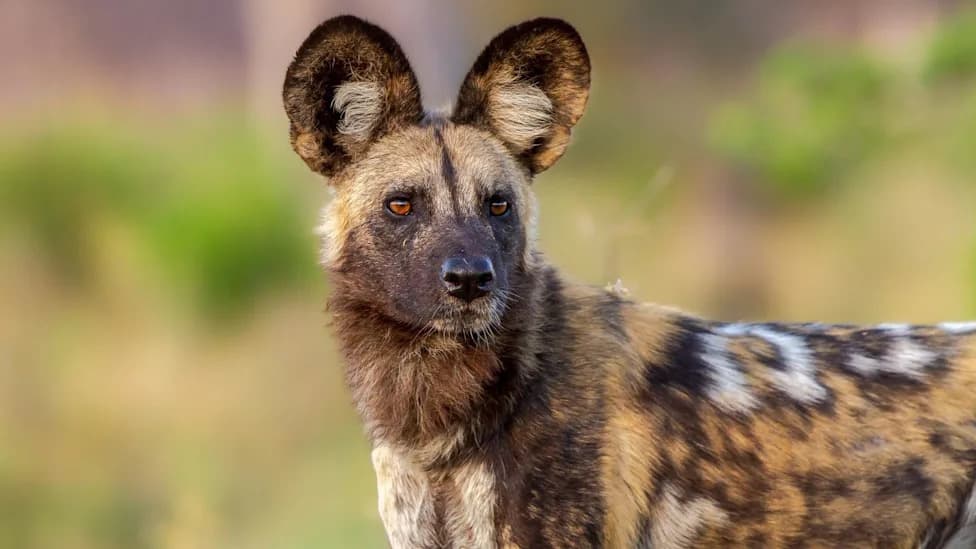
The imagery provides actionable data for Panthera and Tanzanian partners, including TAWA and TAWIRI, enabling population and density estimates for key species (lions, leopards), monitoring of threatened species (African wild dogs), mapping of broader mammal diversity, and documentation of human activity to identify threat hotspots and guide management interventions.
Photographs and field credits: Paolo Strampelli / Panthera
By combining custom hardware, satellite-informed planning and careful field placement, Panthera’s camera-trap programme is producing a rich baseline of evidence that is informing conservation strategies across western Tanzania.
Help us improve.