High-resolution GPS tracking in Namibia and Botswana indicates that male African lions often approach spotted hyenas, while hyenas typically move away—challenging the view that hyenas primarily follow lions for scavenging. The study by Dr. Nancy Barker, published in Frontiers in Ethology, analyzed four years of data from 17 lions and 14 hyenas, supplemented by camera traps and observations. Results are preliminary due to sample size, and researchers plan to expand the approach to other carnivores.
New GPS Study Shows Male Lions Often Track Hyenas, Challenging Long‑Held Assumptions
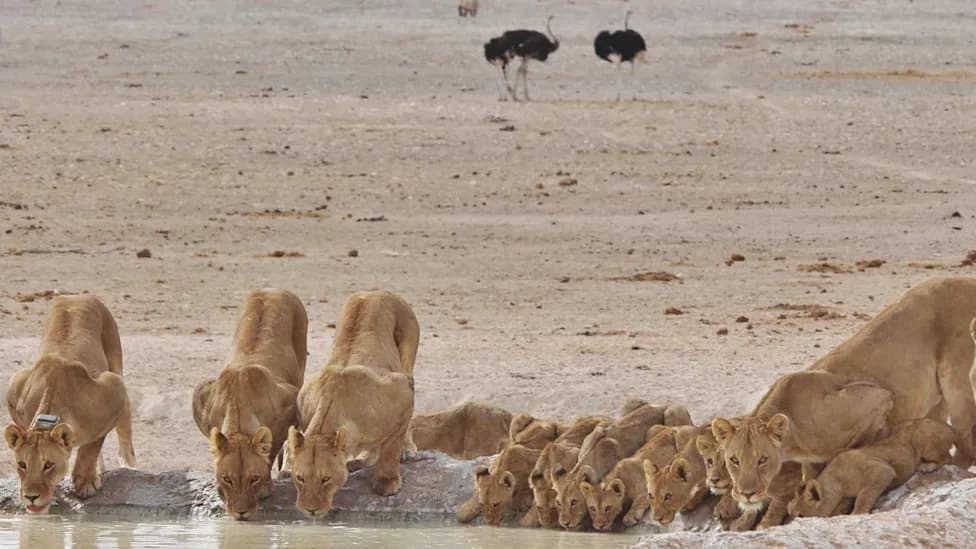
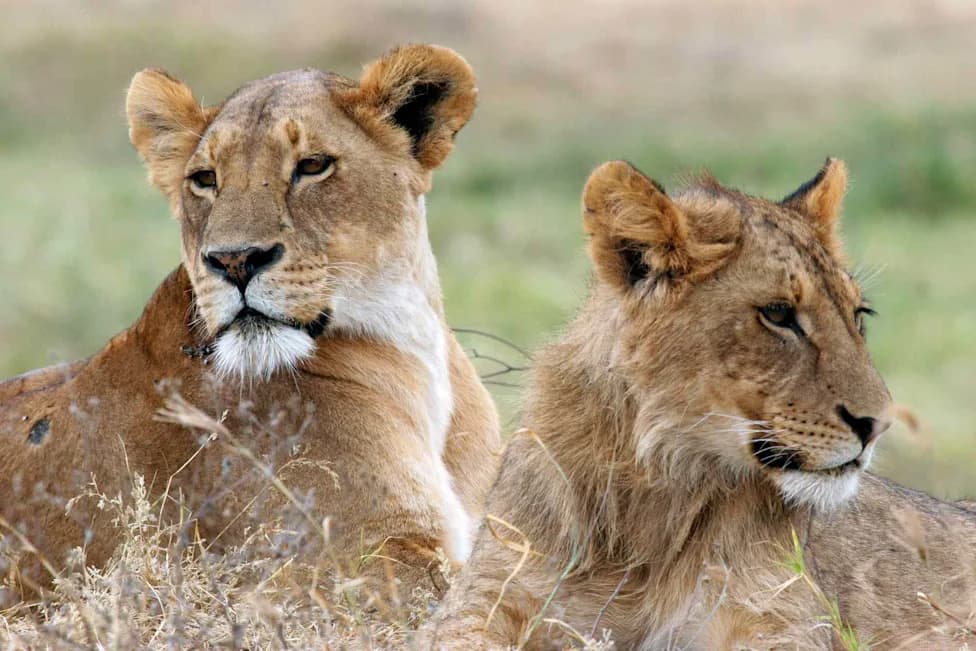
Lionesses and cubs from one of the prides Barker worked with at Etosha National Park; the collared lioness is visible on the left.
New GPS-tracking data from Namibia and Botswana overturns a common assumption about lion–hyena interactions: instead of hyenas routinely following lions to scavenge, male African lions frequently move toward spotted hyenas while the hyenas typically withdraw.
The study, led by ecologist Dr. Nancy Barker of the University of KwaZulu‑Natal and published in Frontiers in Ethology, combined high-resolution GPS collars with camera traps and direct behavioral observations to examine how these large carnivores negotiate space and risk.
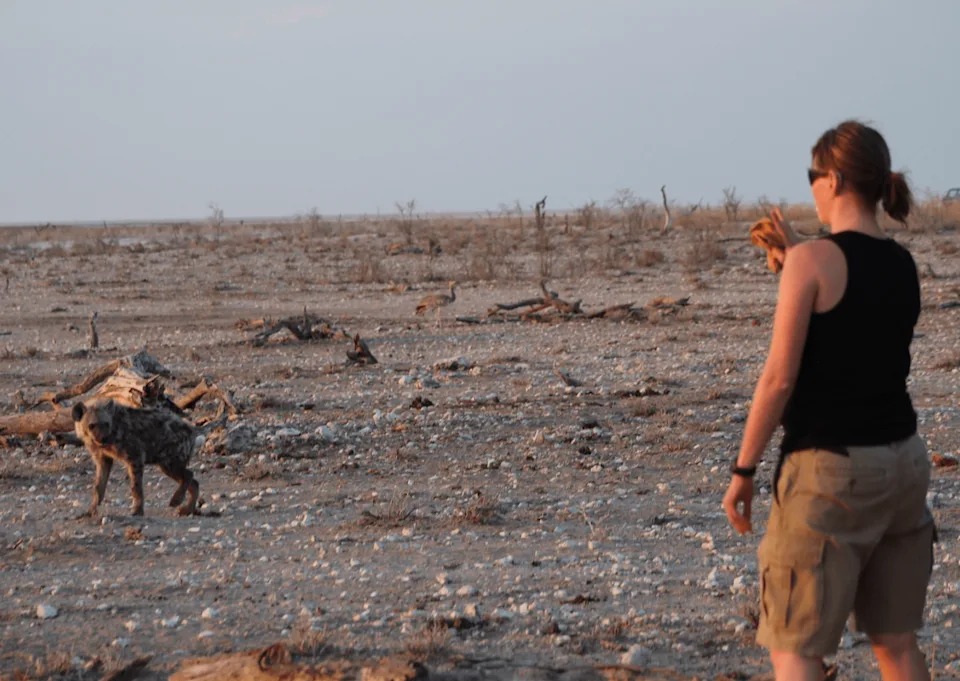
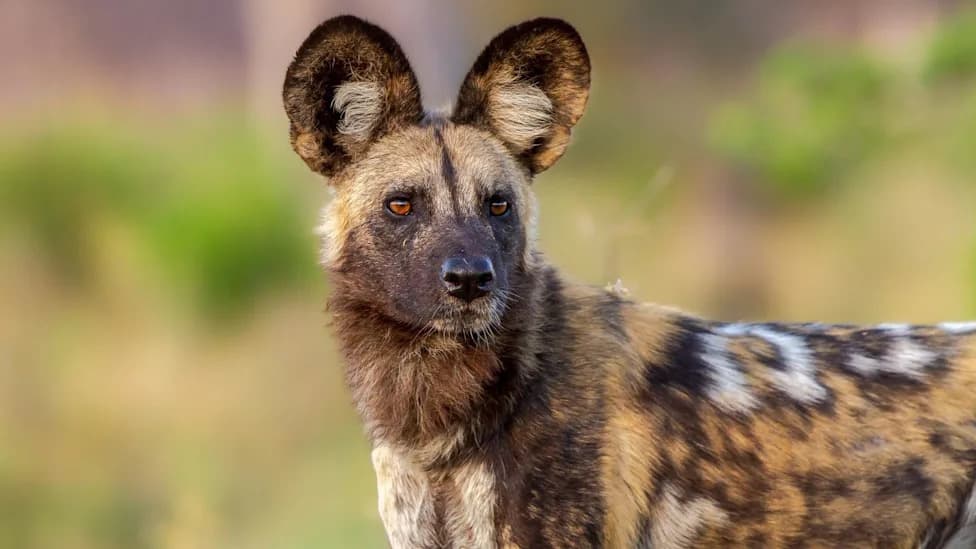
A young spotted hyena at Etosha National Park scopes Barker out. At the time, Barker was setting up a bait station to immobilize and collar the matriarch of the hyena clan. Image: Dr. Nancy Barker.
How the Research Was Conducted
Barker and colleagues fitted GPS collars to socially high‑ranking African lions and spotted hyenas at Etosha National Park (Namibia), and tracked lions in the Linyanti Conservancy and Chobe National Park (Botswana). The dataset spans four years and includes movement records from 17 lions and 14 hyenas.
The collars recorded location fixes every five minutes during peak activity periods. From these data the team identified 23 simultaneously tracked pairs (including 10 lion–hyena pairs) and classified movement directions for paired animals, enabling analysis of thousands of encounters. Camera-trap footage and field observations provided behavioral context.
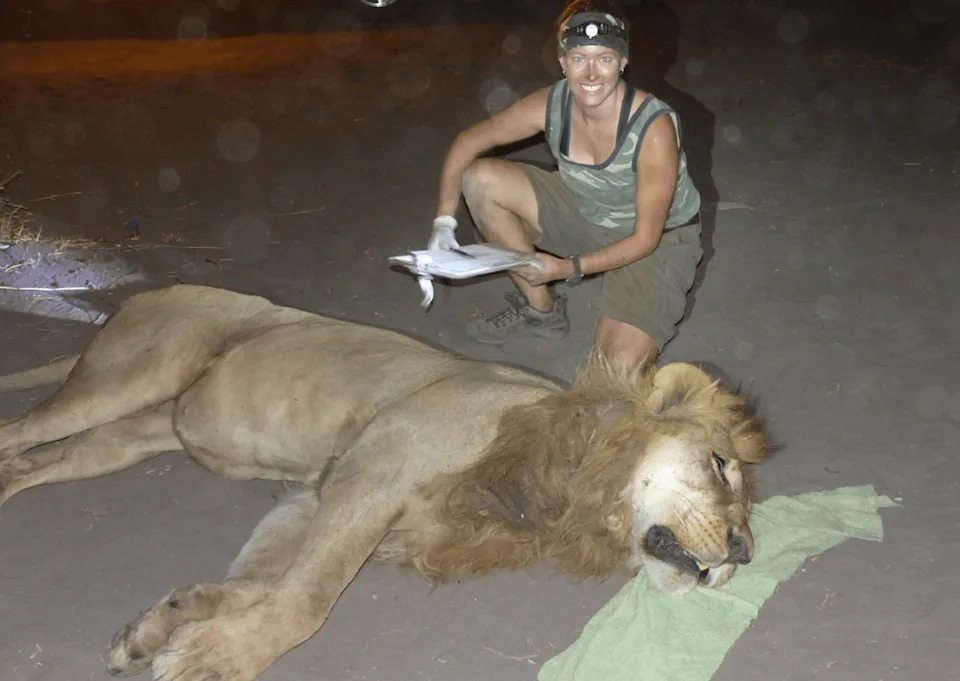
Dr. Nancy Barker with an immobilized adult male lion from a pride in the Chobe-Linyanti floodplains. Barker took morphological measurements, identification photographs, and blood, tissue and faecal samples before fitting each collar.Image: Dr. Nancy Barker.
Key Findings
“Our GPS collar data shows that African lions and spotted hyenas leave a clear, measurable signature in the way they move around one another,” Barker said. “Spotted hyenas consistently move away from lions, while male lions tend to move toward hyenas.”
Male lions showed a clear tendency to approach spotted hyenas, whereas hyenas generally retreated. Female lions (lionesses) exhibited less consistent behavior; their responses varied depending on which pride members were present, suggesting social context matters.
Limitations and Next Steps
Barker cautions that the sample size is limited and some results should be interpreted as emerging trends rather than definitive conclusions. She hopes to expand the approach to include other carnivore species and larger sample sizes to link movement patterns to fitness outcomes such as survival and reproduction.
This study refines our understanding of interspecific dynamics among large African carnivores and highlights how high‑resolution movement data can reveal unexpected behavioral patterns in the wild.
Help us improve.