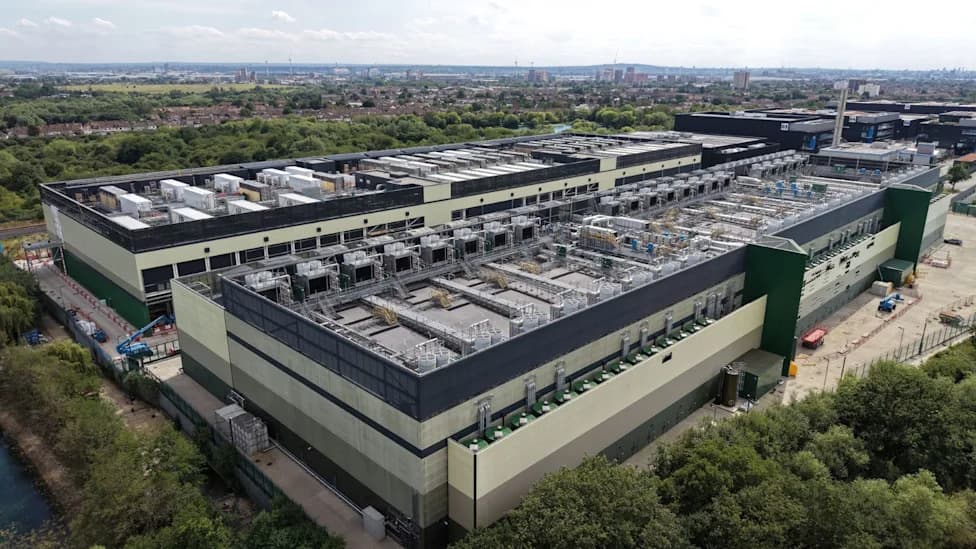
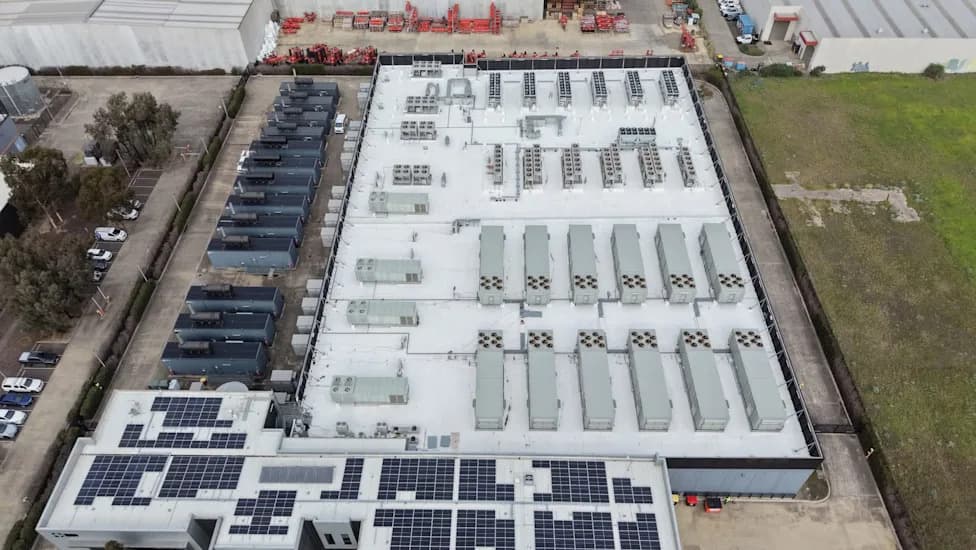
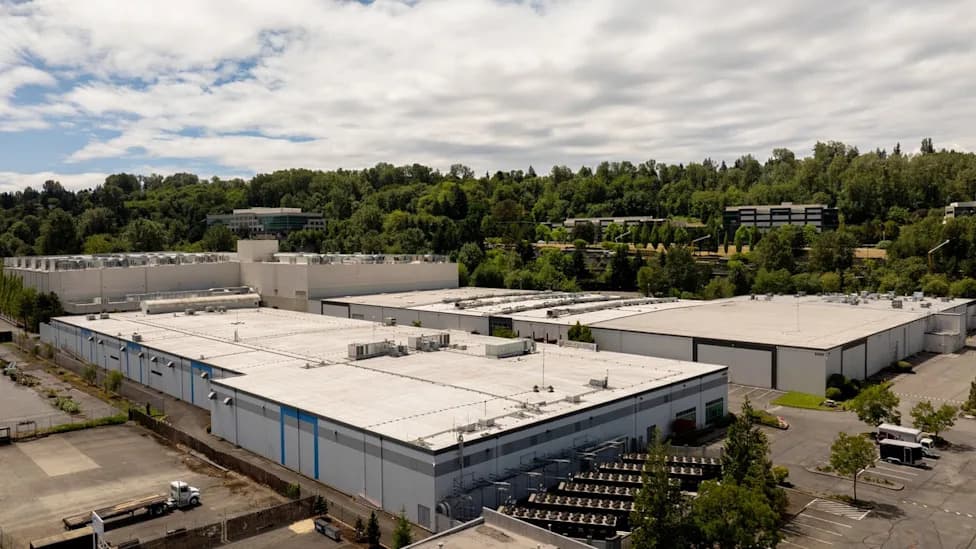
Advocates allege datacenter developers are dividing emissions into multiple "minor" permits to avoid stricter federal reviews and pollution controls, a tactic critics call "lego permitting." High-profile examples include Amazon and Duke Energy’s North Carolina proposal involving 649 diesel generators and New Mexico’s Project Jupiter, where two microgrids together would have exceeded hazardous-pollutant thresholds. Community pushback, legal challenges and regulatory scrutiny have delayed or blocked some plans, while experts warn the practice obscures cumulative pollution and harms vulnerable communities.
Datacenter Developers Accused of 'Lego Permitting' to Sidestep US Air-Pollution Rules

Protesters gather outside the New Mexico environment department in Santa Fe to voice opposition to the Project Jupiter datacenter.Photograph: Susan Montoya Bryan/AP
Environmental advocates say some datacenter developers are exploiting loopholes in the U.S. air-permitting system to avoid stricter reviews, pollution controls and public scrutiny. By splitting proposed emissions into multiple “minor” sources, developers can sometimes evade a more rigorous “major source” permitting process that would trigger detailed review, monitoring and possible emissions mitigation.
How Permitting Works—and What’s at Stake
Under the Clean Air Act, projects that qualify as a "major" source of air pollution must undergo a more stringent permitting review to evaluate cumulative impacts on local air quality. That review can require pre-construction monitoring and the installation of pollution controls such as scrubbers. Advocates argue that fragmenting emissions across multiple minor permits undermines these protections and reduces transparency for communities near proposed facilities.
High-Profile Cases
North Carolina — Amazon and Duke Energy
In North Carolina, Amazon and utility Duke Energy proposed backup power for a hyperscale datacenter involving 649 diesel generators. The companies submitted separate permit applications and avoided a consolidated major-source review, despite the site being in a low-income community already burdened by industrial pollution. Advocates cite permit filings that attribute nearly 250 tons per year combined of nitrogen oxides, carbon monoxide and volatile organic compounds to the projects. Amazon’s filings also propose roughly 98 tons per year of particulate matter and 6.4 tons per year of hazardous air pollutants including benzene and formaldehyde.
New Mexico — Project Jupiter
Developers of Project Jupiter in New Mexico proposed two natural-gas “microgrids,” one on each side of the facility, and submitted two separate minor permits. Each microgrid’s hazardous-air-pollutant estimate fell just under the federal minor-source cap of 25 tons per year (about 20.2–24.2 t/yr each), but together they would have emitted as much as ~44 tons per year—well above the threshold that would require major-source review. After community opposition and regulatory pushback, the developer withdrew the application in April; new plans are stalled in court.
Frederick, Maryland, And Other Examples
Documents show four datacenters on a single campus in Frederick—including one by Amazon—operating under separate minor permits while a single master developer oversees the site. Advocates describe other cases where developers stagger minor-permit requests so cumulative emissions match or exceed major-source levels, making it difficult for residents to assess total exposure.
Voices From Regulators And Advocates
"They want to fly under the radar," said Michael Koerber, a retired deputy director of the EPA’s Office of Air Quality Planning and Standards and volunteer with the Environmental Protection Network. "The more attention they have, the more difficult it gets to get the permit."
Cheryl Vetter, a former EPA official, noted the law permits divided permits in limited circumstances—such as when separate companies pollute the same location—but not when all polluting activities are under common control. The legal definition of “adjacent” can be contested and has been central to several disputes.
Health, Equity And Legal Pushback
Advocates and public-health experts warn that diesel generators and other backup systems emit particulate matter, nitrogen oxides and hazardous air pollutants that worsen heart disease, cancer and respiratory illnesses—especially in communities already overburdened by industry. Legal challenges, community protests and state interventions have stalled or blocked some projects, but advocates say stronger oversight and clearer rules are needed to prevent what they call “lego permitting.”
Company responses: Amazon said it "appropriately applied for and obtained an air permit" and that separate permits reflect actual ownership and operational structures. State regulators in North Carolina noted some generators were described as temporary and asserted operational separation, while advocates say documents raise questions about control and leases that regulators did not verify.
Bottom Line
The debate centers on whether permitting rules are being applied in ways that protect community health and ensure transparent, cumulative assessment of emissions. Advocates urge regulators to require more rigorous verification of ownership, control and adjacency so communities receive full scrutiny of large datacenter projects' pollution impacts.
Help us improve.