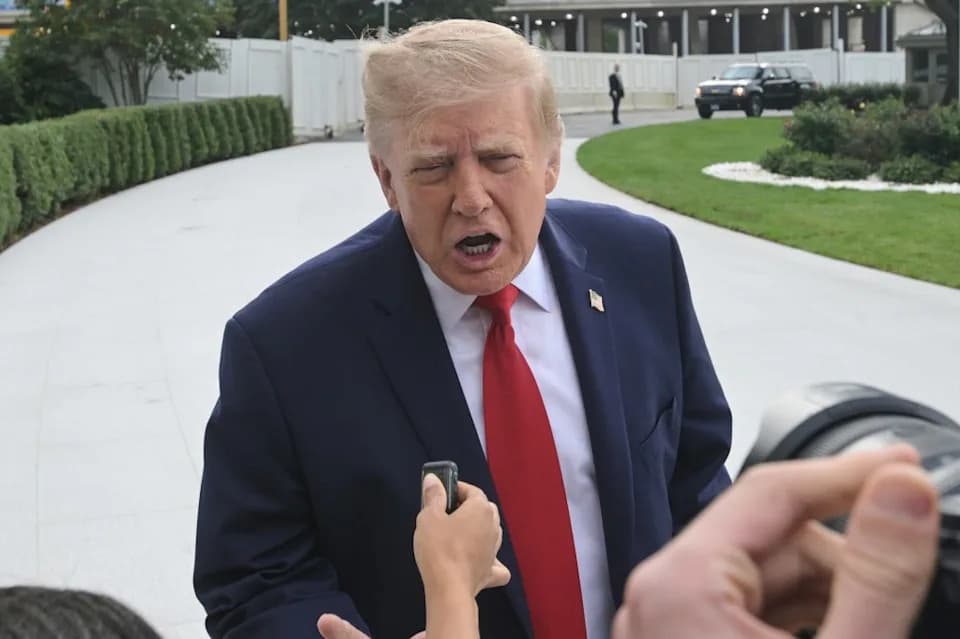
After a decade of tracking Donald Trump's statements, the author lays out 15 lessons about the scale, patterns and consequences of his falsehoods. Trump repeats and recycles claims, increases falsehoods during political crises, and often signals fabrications with stock tropes and inaccurate numbers. The piece highlights media challenges in keeping up, a subset of supporters who value his disruption, and the real-world harms — from Covid-19 deaths to the January 6 attack — caused by persistent deception.
I Spent 10 Years Fact-Checking Donald Trump — 15 Lessons on Lies, Media and Democracy
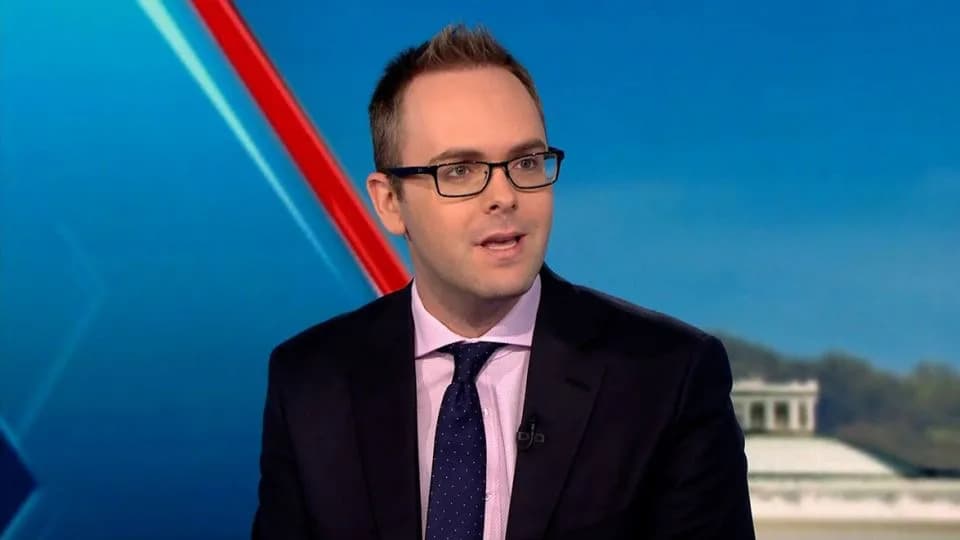
Daniel Dale on the show "CNN Right Now" in 2019. - CNN
Ten years ago, as the Washington correspondent for the Toronto Star, I began what I expected to be a small side project: cataloguing and correcting falsehoods from then-underdog presidential candidate Donald Trump. I assumed he would lose in 2016. He did not. Over the next decade his falsehoods became a defining feature of his public life and of modern political discourse.
By two months before the 2020 election I had recorded more than 8,500 false or misleading claims since September 2016 and had to stop trying to fact-check every single statement in real time; the volume made it physically unsustainable. After a pause in 2021, Trump returned to the political spotlight and the pattern of repeated falsehoods continued. Since joining CNN in 2019 as a fact-check reporter, I have spent hundreds of hours separating fact from fiction. Below are 15 lessons drawn from that decade of reporting.
15 Lessons From a Decade of Trump Fact-Checking
1. No public figure lies like Trump. Dishonesty exists across Washington, but Trump’s frequency, breadth and brazenness are exceptional. Saying "they all lie" minimizes how singular his pattern of mendacity has been.
2. He lies more when he’s in trouble. Major surges of falsehoods coincided with political crises: the 2018 midterms, the 2019 Ukraine scandal and impeachment, the 2020 Covid-19 pandemic, and the 2020 election aftermath. Often he increases falsehoods even when dishonesty helped create the original problem.
3. He fabricates trivial and personal anecdotes. Trump invents small, attention-grabbing details — fake phone calls from the Boy Scouts, a non-existent Michigan "Man of the Year" award, or exaggerated crowd descriptions — that serve no obvious policy purpose but satisfy a compulsion to make things up.
4. Repetition is a practical advantage for fact-checkers. Many of his false claims are recycled. The first time a claim appears requires research; by the 10th or 100th repetition the debunking is often routine and much faster to produce.
5. He telegraphs many fabrications with stock tropes. Stories featuring unnamed admirers calling him "sir," burly men moved to tears, or critics coming to beg tend to be invented. These tropes consistently cast him as dominant and are common in fabricated accounts.
6. Numbers are a frequent weak point. Polls, inflation figures, investment data, gas prices, crowd sizes and other statistics are often wrong or misleading in his statements. Even when an accurate number would reflect well on him, he sometimes prefers an inflated or inaccurate figure.
7. He amplifies conspiracy theories he picks up elsewhere. Many outlandish claims he promotes were borrowed from others, and he often appears to believe them — a dangerous trait for someone with access to expert advice.
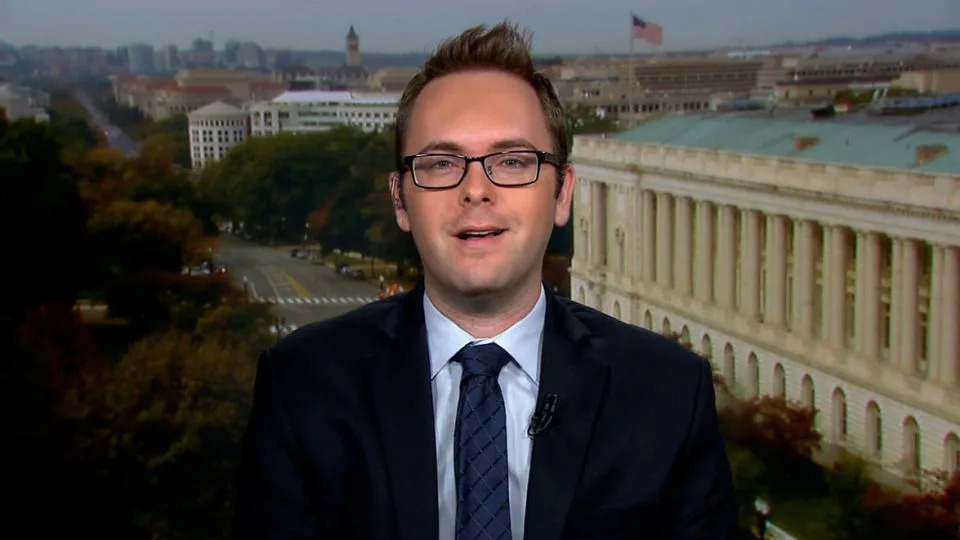
Daniel Dale speaks to CNN's Brian Stelter during an October 2016 show of "Reliable Sources." - CNN
8. He seldom acknowledges fact-checks. Aside from blocking me on Twitter in 2017, Trump rarely accepts correction publicly. He may note critics have corrected him and then immediately repeat the same false claim, often dismissing the correction.
9. His staff increasingly defend falsehoods. Early on, aides avoided defending obvious inaccuracies. Later, loyalists routinely insisted he was right even when demonstrably wrong, eroding norms that once made bald defenses politically costly.
10. Media coverage often fails to call out falsehoods forcefully enough. Pro-Trump outlets rarely correct him, but many neutral organizations have also too often reported his claims without adequate context. The sheer volume of falsehoods can turn what should be front-page corrections into background noise.
11. "Flood the zone" works. The strategy — as Steve Bannon put it, to "flood the zone with sh*t" — has proven effective: when newsrooms are asked to respond to an unending stream of falsehoods, many lies enter public discourse unchallenged.
12. Many Americans still care about truth. Polling across his career shows roughly twice as many Americans view him as not honest and trustworthy as view him as honest. While some voters dismiss corrections, millions actively seek and use factual reporting.
13. Some supporters admire the lying as disruption. On reporting trips to Trump-friendly areas I repeatedly heard supporters say they liked that he rattled the establishment — even if that included lying. There is a subset of his base that values the disruption his rhetoric causes.
14. Rhetorical style can create an illusion of honesty. Trump’s blunt, insult-driven, teleprompter-free style convinces some people he is "authentic" and therefore truthful, even when many of his statements are false. That dynamic is common among populist figures who trade on perceived authenticity.
15. The lies have real and dangerous consequences. Falsehoods have led to concrete harms: the January 6 Capitol attack was fueled by election lies; downplaying Covid-19 likely cost lives; journalists, judges and election workers have faced threats and harassment after being targeted. Cumulatively, these lies have degraded public debate and harmed democratic institutions.
After a decade of this reporting, separating fact from fiction remains essential. Even if corrections reach only part of the public, accurate reporting matters: millions rely on it to hold power to account and to protect public health and democratic norms.
Help us improve.