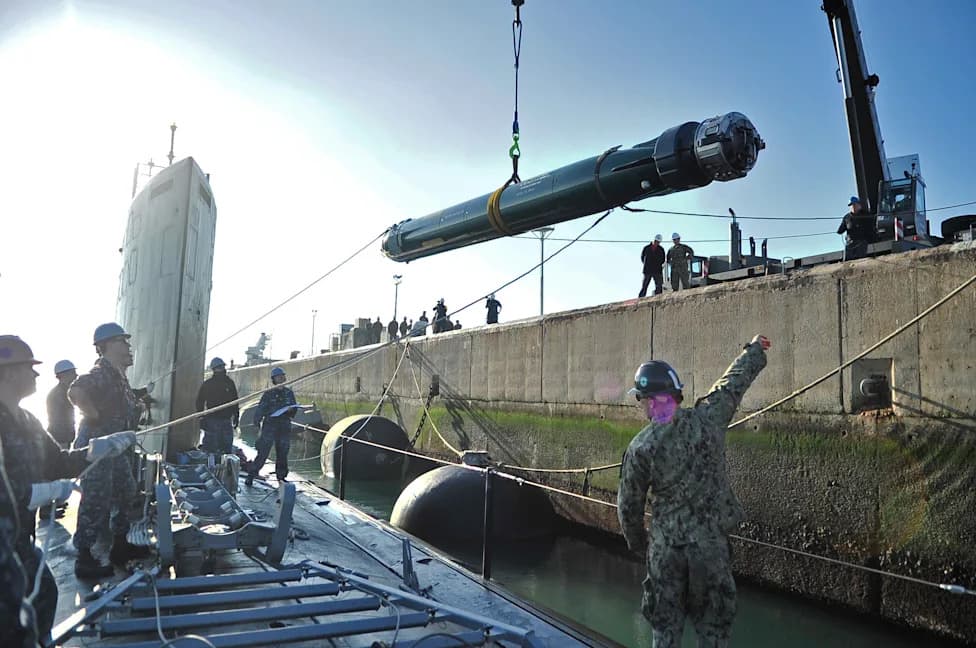
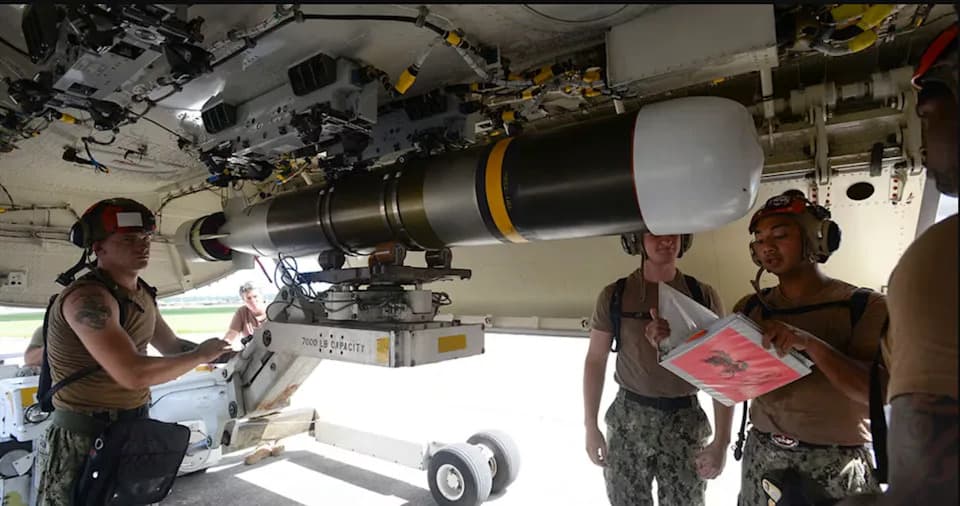
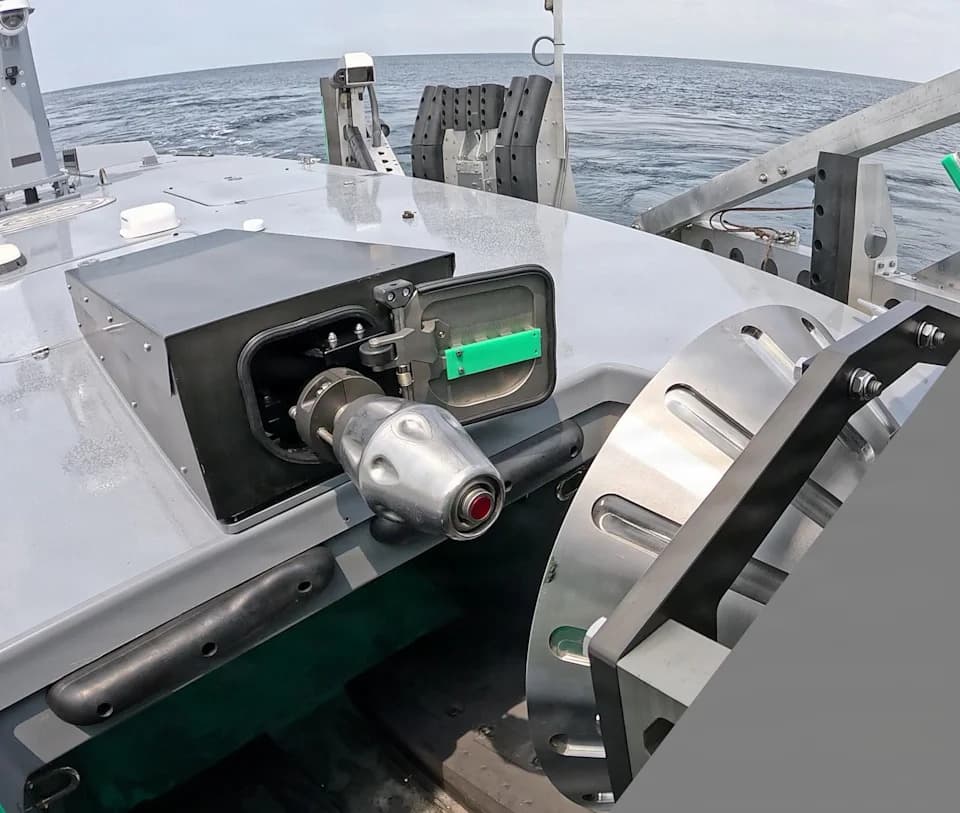
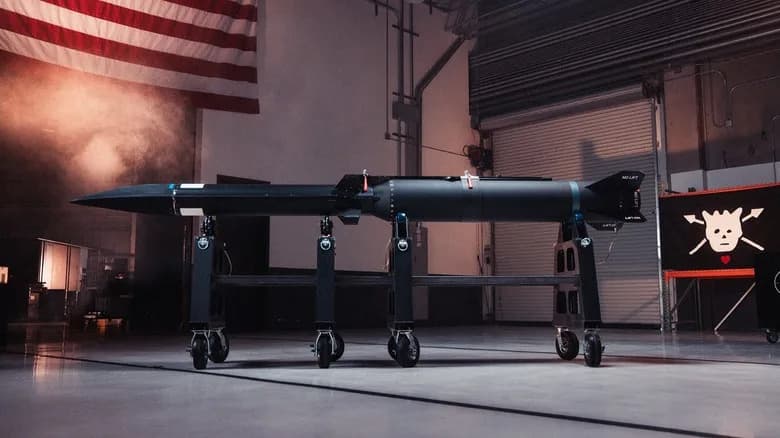
The U.S. and U.K. navies successfully fired a U.S. Mk 48 heavyweight torpedo from the Royal Navy's uncrewed XLUUV XV Excalibur in a proof‑of‑concept test at BUTEC, Scotland, on September 13. Project Broadsword — approved in February 2026 and executed within seven months — validated mechanical, electrical and software integration and demonstrated allied weapons interchangeability. Engineers mounted the roughly 3,700‑lb (1,680 kg) torpedo externally on a bespoke cradle because Excalibur lacks internal tubes. The U.S. Navy plans follow‑on work under Project CUTLASS using the Anduril Dive‑XL to advance payload integration, C2 architectures and tactical employment.
Historic First: U.S. Mk 48 Torpedo Fired From U.K. Uncrewed Submarine XV Excalibur
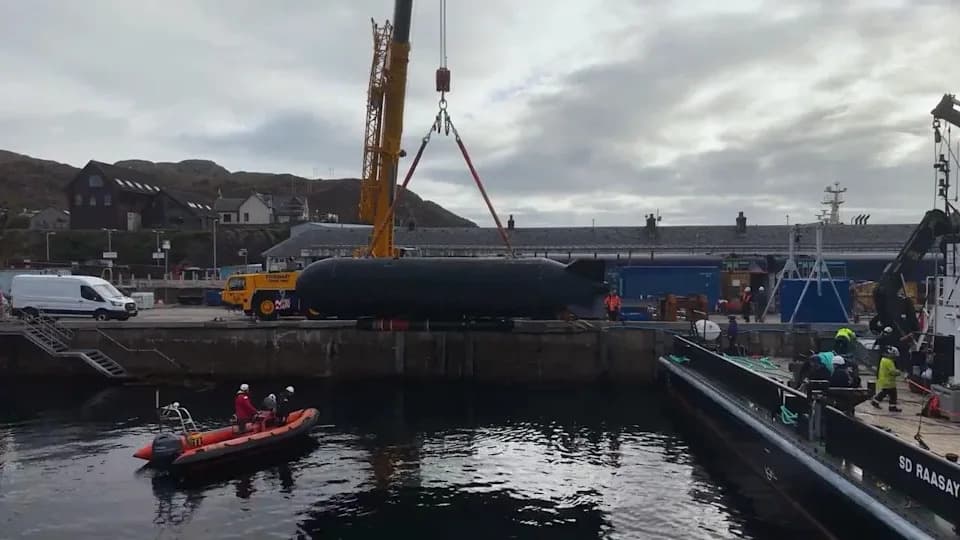
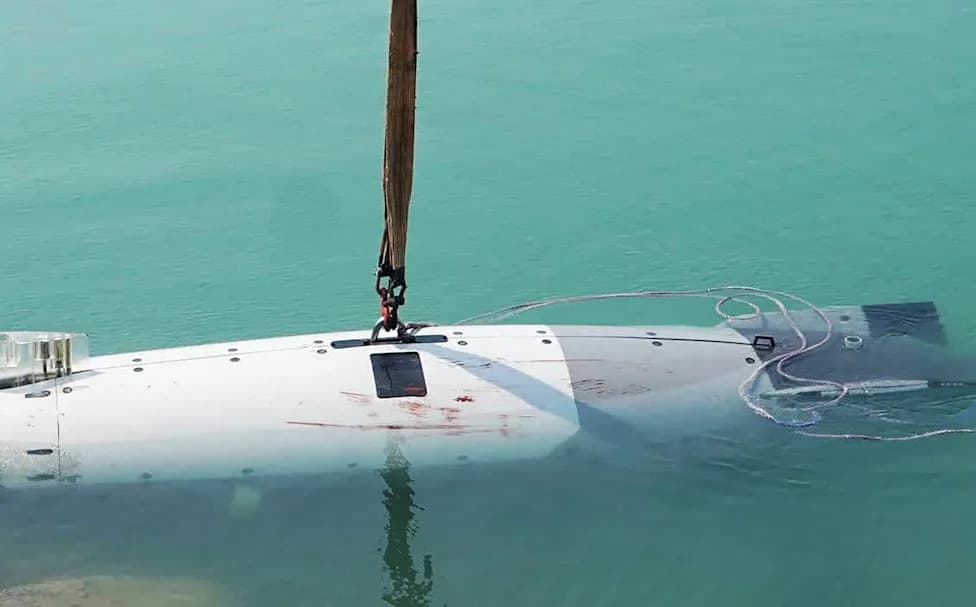
The XV Excalibur with the Mk 48 heavyweight torpedo attached . | Credit: U.S. Navy
The U.S. Navy and the British Royal Navy have for the first time successfully launched a U.S. Mk 48 heavyweight torpedo from the Royal Navy's uncrewed Extra‑Large Uncrewed Underwater Vessel (XLUUV), XV Excalibur. The proof‑of‑concept firing took place on September 13 at the British Underwater Test & Evaluation Center (BUTEC) in Scotland, according to an official release.
Adm. Daryl Caudle, Chief of Naval Operations: "This successful test marks a historic first for allied undersea warfare. Proving that we can seamlessly launch a U.S. heavyweight torpedo from a Royal Navy autonomous underwater vehicle validates our shared vision for true interchangeability. By integrating weapons, payloads, and mission architectures across allied platforms, we are increasing the flexibility, scale, and combat power of our combined forces and ensuring they are ready to meet the strategic demands of tomorrow."
The launch was carried out under AUKUS Pillar 2 — the trilateral U.S.-U.K.-Australia initiative to accelerate advanced defense technologies such as artificial intelligence, quantum computing and autonomous undersea systems to maintain a strategic edge in the Indo‑Pacific. The U.S. Navy said the trial validated mechanical, electrical and software integration of an American kinetic payload onto a British autonomous vessel, demonstrating weapons interchangeability between allied forces.
Project Broadsword: Fast Track From Approval To Trial
Designated Project Broadsword, the effort received approval in February 2026 from the Department of the Navy Rapid Capabilities Office (DONRCO) and was executed in collaboration with OPNAV N97, the Royal Navy, the Defense Innovation Unit (DIU), Naval Undersea Warfare Center (NUWC) Keyport and several industry partners. The program moved from approval to live trials in just seven months — a rapid timeline that underscores the urgency placed on expanding uncrewed undersea capabilities.
About The Weapon And The Vessel
The Mk 48 is a heavyweight torpedo used for both anti‑submarine and anti‑surface warfare. Weighing roughly 3,700 pounds (about 1,680 kg), it is designed to engage deep‑diving submarines and high‑performance surface ships and is typically launched from manned submarines. Project Broadsword marks the first confirmed instance of a Mk 48 being launched from an uncrewed, autonomous submarine.
XV Excalibur is the Royal Navy's XLUUV, built to operate autonomously or under remote control with no crew aboard. In 2025 the Royal Navy demonstrated Excalibur's long‑distance control by operating it in UK waters from a command centre roughly 10,000 miles away in Australia. Because Excalibur lacks internal torpedo tubes, engineers mounted the roughly 2‑ton Mk 48 externally in a bespoke cradle under the hull for this trial.
Next Steps: Project CUTLASS And Wider Implications
Following Project Broadsword, the U.S. Navy said it will press ahead with Project CUTLASS. Using the Anduril Dive‑XL platform, the next phase will tackle advanced payload integration, command‑and‑control architectures, and tactical employment scenarios to further mature uncrewed undersea capabilities.
The launch highlights the rapid rise of autonomous warfare systems — platforms that can collect and process data and carry out complex tasks with reduced human involvement. These systems span unmanned air, ground and sea vehicles, robotic weapons, and AI‑assisted command‑and‑control. Earlier this month, there were reports that an autonomous NATO strike drone used an Nvidia Jetson Orin Nano to independently identify and strike targets; such accounts underscore the ethical, legal and operational questions that accompany faster adoption of lethal autonomous systems.
Implications: The successful integration of an American kinetic payload onto a British XLUUV is a tangible step toward interoperable allied platforms. It expands options for distributed maritime strike and undersea operations, while also emphasizing the need for robust command, control and safety measures as autonomous systems take on more complex roles.
Help us improve.