Salk Institute researchers are testing soybean varieties bred and edited to grow deeper, more vertical roots that could improve drought resilience and sequester additional carbon in soil. An $18 million Bezos Earth Fund grant supports multi‑state field trials — including at the University of Illinois — to measure root depth, soil carbon accumulation and crop yields. Early lab work identified 347 genes tied to root traits and estimates one hectare of deep‑rooted soybeans could store about one extra metric ton of CO2 per year; field results are expected this fall.
Deep‑Rooted Soybeans Could Lock Carbon Underground and Improve Drought Resilience, Researchers Say
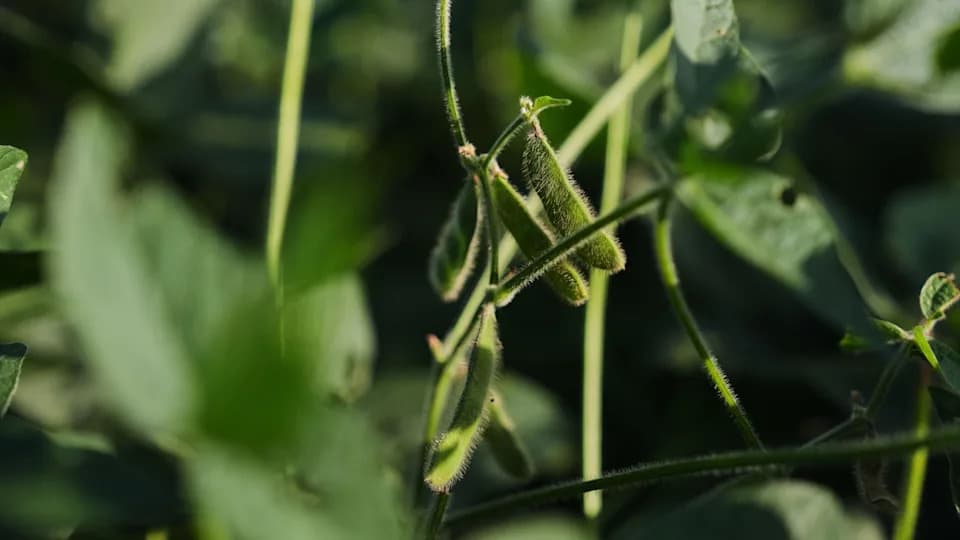
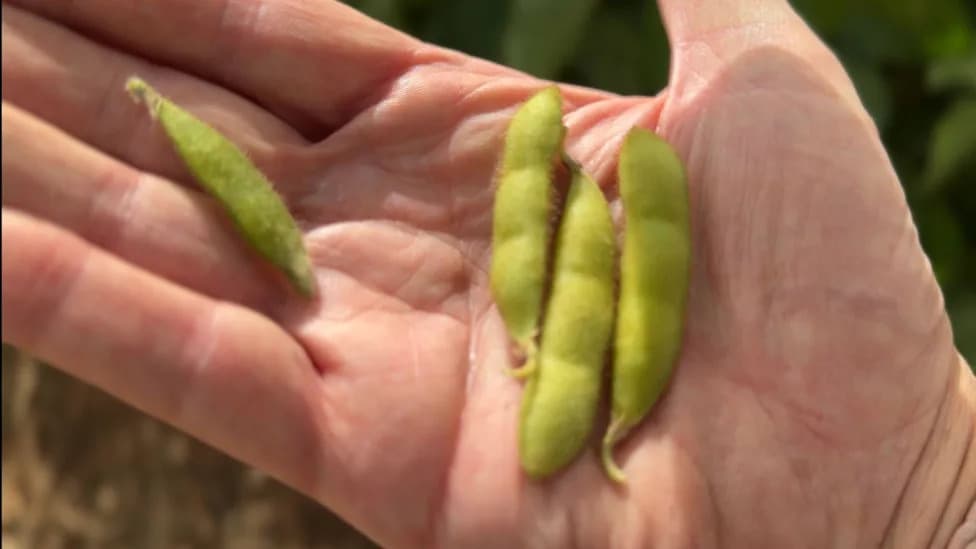
Close-up of fuzzy green soybean pods growing on a plant stem surrounded by leaves.
CHAMPAIGN, Ill. — Ashish Rajurkar, a research scientist, crouches in a soybean field and lifts a heavy clod of soil to reveal roots that grow almost straight down rather than spreading laterally. These deeper, more vertical root systems are the focus of new work by scientists at the Salk Institute for Biological Studies, who are testing whether such roots can help crops survive drought and store more carbon in agricultural soils.
Field Trials Backed by an $18 Million Grant
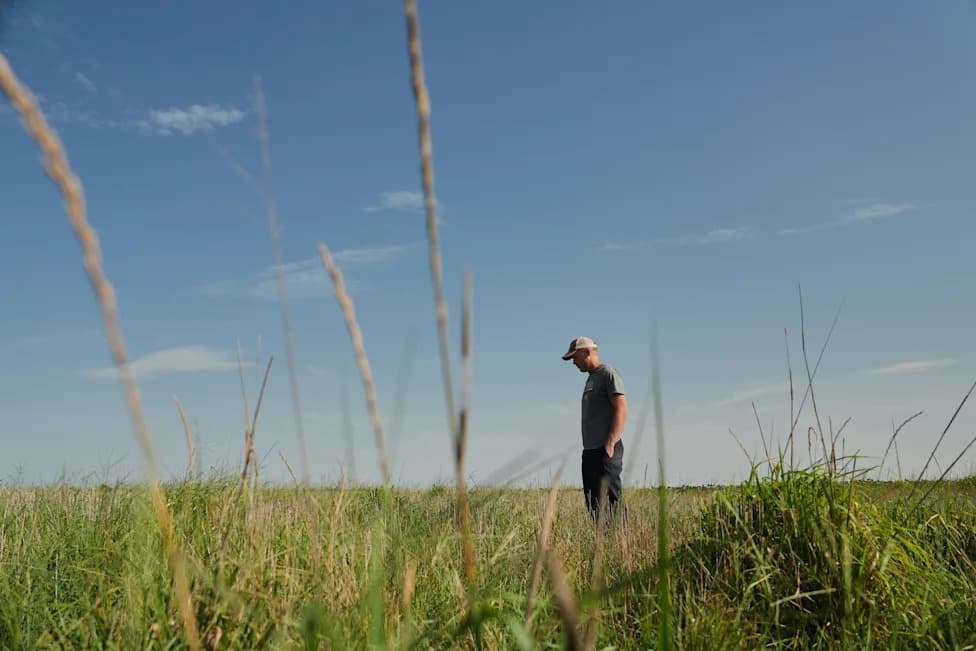
An $18 million grant from the Bezos Earth Fund will fund multi‑state field trials designed to test how deeper‑rooted soybeans perform under real farm conditions. Trials are under way or planned in Illinois, Missouri, Kansas and Iowa, including a test site at the University of Illinois Urbana‑Champaign where plants grow beneath a movable canopy that simulates different rainfall scenarios.
What Researchers Will Measure
Using underground cameras, sensors and soil sampling, researchers will measure root architecture, soil carbon accumulation and how plants respond to drought and other climate stresses. Key questions include how much additional carbon these roots can sequester, how long that carbon remains stored underground, and whether deeper rooting can be achieved without reducing yields.
From Genomes to Roots
Over six years, Salk scientists assembled a genomic "encyclopedia" of hundreds of crop varieties, including soybeans and sorghum. After identifying 347 genes linked to root development and carbon storage, they used breeding and genome editing to produce lines with roots that penetrate farther into the soil and in some cases develop larger overall root systems.
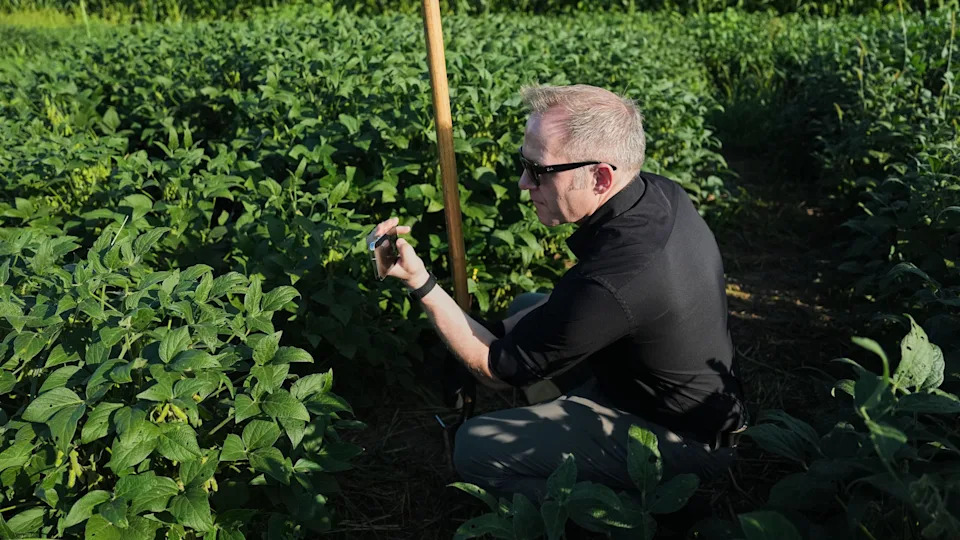
Man in sunglasses crouching in a soybean field, photographing plants with a smartphone.
Wolfgang Busch, director of Salk's Harnessing Plants Initiative, said the work responds to a pressing need: it will become harder to grow enough food for a growing population under changing climate conditions.
How Deeper Roots Could Help
- Improved Drought Resilience: Deeper roots can access moisture below the surface layer, helping plants survive dry spells and stabilizing yields.
- Carbon Storage: Roots deposit carbon deeper in the soil, where it may be less likely to return to the atmosphere during tillage or decomposition. Early lab estimates suggest one hectare of deeper‑rooted soybeans could sequester roughly one additional metric ton of CO2 per year.
- Slower Decomposition: Increasing suberin, a cork‑like polymer in roots, can slow decomposition of root tissues and help carbon persist longer in soil.
- Less Nutrient Runoff: Larger root systems may capture more nitrogen and other fertilizers, reducing runoff that causes algal blooms and low‑oxygen zones in waterways.
Uncertainties and Adoption Challenges
Despite promising laboratory results, researchers caution that field performance remains uncertain. Trade‑offs between root traits and above‑ground yield are not fully known because traditional breeding has rarely prioritized root systems. Salk's trials aim to quantify those trade‑offs under working farm conditions.
Translating seed technology into widespread farm use also faces social and economic hurdles. Rapid uptake typically requires clear, immediate benefits for farmers and interest from large seed companies. A 2025 modeling study co‑authored by Busch suggested that deeper‑rooted versions of soybean, corn, cotton and canola could remove roughly one gigaton of CO2 per year by 2040 if broadly adopted in countries that grow genetically modified crops, but that scenario depends on fast, large‑scale adoption.
Andrew Bovarnik of the United Nations Development Programme warned that farmers' decisions are shaped by seed companies, commodity buyers, government subsidies, trade rules and access to finance. He urged a systems perspective: adoption, land use, soil management and crop purpose all determine the ultimate climate benefit.
Busch emphasized the urgency of the work and the need for rapid funding and testing. "It's a race against time," he said, noting that crop and seed development can take many years even with strong support.
Initial field results were expected this fall; researchers will publish data as trials progress and assessments of carbon retention, yield, and drought resilience become available.
Help us improve.