Researchers at the Australian Grains Genebank analyzed germination tests from 3,861 stored seed lots of six tropical crops held at −20 °C and 15% humidity. Mung beans showed the greatest longevity — one batch retained ≥90% germination after 45 years — while pigeon pea and adzuki bean declined much faster (adzuki ~17.4 years average). Observed lifespans were far shorter than prior theoretical predictions, prompting calls for more frequent testing, active regeneration, and data sharing among genebanks to safeguard global crop diversity.
Which Tropical Seeds Survive the Longest? New Tests Reveal Doomsday Vault Limits

The Svalbard Global Seed Vault, outside Longyearbyen on Spitsbergen, Norway. (JUNGE, HEIKO/Stringer/AFP/Getty Images)
Global seed banks are often depicted as the planet's insurance policy — a backup to restore crops after catastrophe. New empirical data from the Australian Grains Genebank (AGG) shows that many tropical crop seeds stored under frozen conditions lose viability far sooner than earlier theoretical models predicted.
Researchers at the AGG tested real-world germination outcomes for 3,861 stored seed lots representing six tropical crops stored at 15% relative humidity and −20 °C (−4 °F). The collection included sorghum (Sorghum bicolor), common bean (Phaseolus vulgaris), mung bean (Vigna radiata), soybean (Glycine max), pigeon pea (Cajanus cajan), and adzuki bean (Vigna angularis). Some samples dated back to the 1960s, allowing multi-decade comparisons.
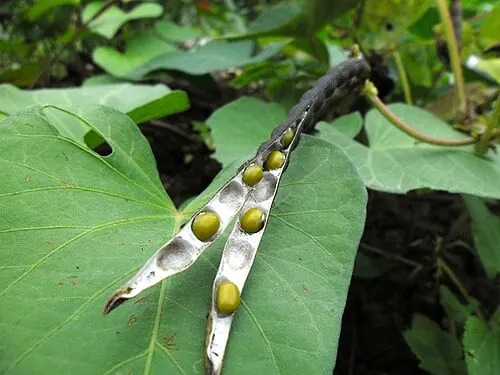
Mung beans growing in their pods. (Earth100/Wikimedia Commons/CC BY-SA 3.0)
Key Findings
Mung beans proved the most resilient. Several mung bean lots retained high viability across decades; one batch showed at least 90% germination after 45 years in storage. Common bean and soybean batches also retained substantial viability in many cases.
Pigeon pea and adzuki bean decayed faster. Pigeon pea samples performed poorly overall: after an average of 36 years in storage, only four pigeon pea lots retained viability above 85%, indicating many lots will need replenishing. Adzuki beans had the shortest observed average longevity (about 17.4 years).
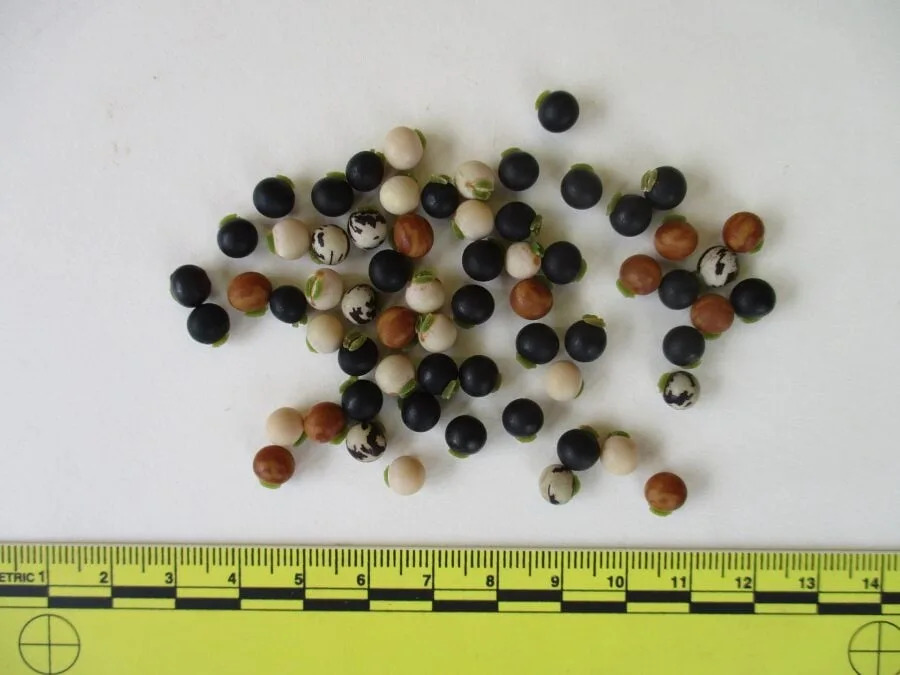
Pigeon peas from the Ereke market in Buton Island, Indonesia. (David E Mead/Wikimedia Commons/CC0)
Why This Matters
These observed lifespans are much shorter than earlier theoretical predictions that suggested very long intervals between checks — for example, previously estimated monitoring intervals were on the order of centuries or millennia (roughly 2,901 years for sorghum and 2,075 years for mung bean). The AGG team, led by seed physiologist Katherine Baum, warns that using such extreme, infrequent monitoring intervals is risky because some species can fall below commonly used viability thresholds within 20–40 years even under optimal frozen storage.
Germination Tests Are a Practical Proxy, But Not the Whole Story. Germination percentage in controlled tests is a widely used indicator of seed viability in genebanks, but it does not guarantee that seedlings will mature into fully productive crops in field conditions. Genebanks use germination as a practical metric for deciding when to regenerate accessions (grow out and collect fresh seed).
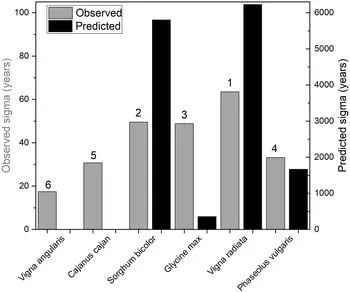
The study's observed longevity estimates against prior predicted estimates. (Baum et al.,Plant Genetic Resources, 2026)
Recommendations
The authors recommend more frequent viability testing and active regeneration programs, along with continued data sharing among genebanks to refine predictive models for seed longevity. Maintaining and replenishing seed lots on appropriate schedules is essential to ensure seed banks remain robust resources for future restoration and food security.
Publication: The study appears in Plant Genetic Resources. The dataset and findings improve our empirical understanding of seed survival and will help guide global conservation strategies for plant genetic resources.
Help us improve.