The Warwickshire trial by Corteva produced a healthy harvest of gene-edited soybeans after researchers removed a gene that delays flowering, enabling the plants to mature and set seed before the season ends. Edited lines outperformed conventional varieties in early observations, suggesting soya could be grown commercially in parts of the UK. Gene-editing can achieve such changes faster than traditional breeding, but regulatory and public-acceptance issues will shape next steps.
Gene-Edited Soybeans Thrive in Warwickshire Trial — Could Reduce UK Soya Imports
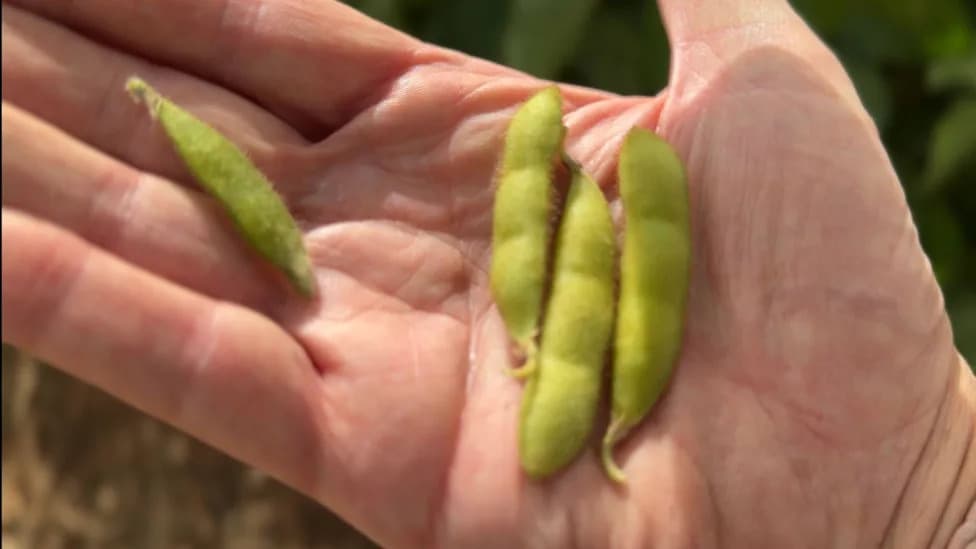
Soya beans could be successfully grown in the UK as a trial takes place in Warwickshire [BBC]
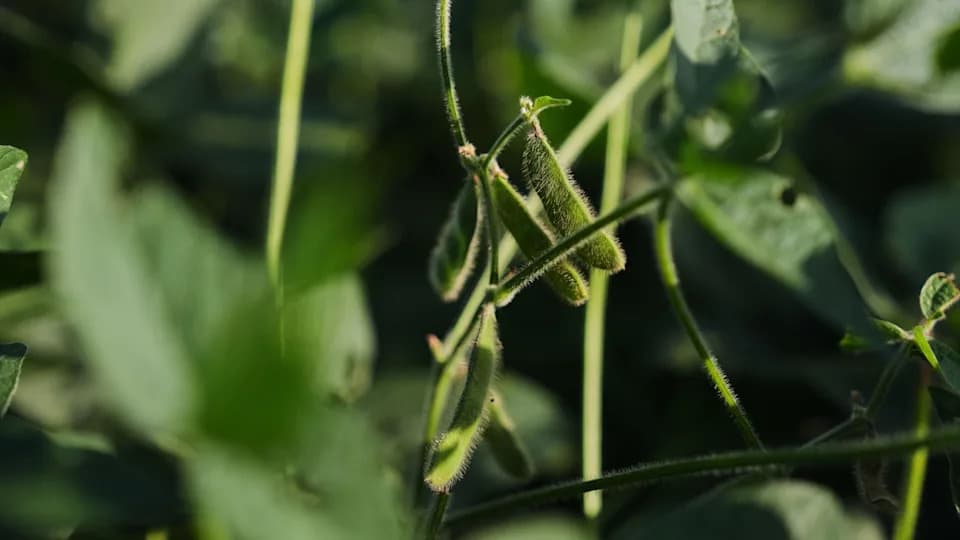
Gene-edited soybeans have produced a healthy harvest in a trial near Warwickshire, suggesting the crop could one day be grown commercially in parts of the UK. The trial was led by US agricultural company Corteva, which tested lines modified to flower earlier so they can mature and set seed within the British growing season.
UK farmers currently rely heavily on imported soya for animal feed because the country's cooler climate typically limits domestic production. In the Warwickshire trial, researchers removed a gene that suppresses early flowering, giving plants extra time to form beans before the end of the season. The edited lines were grown side-by-side with conventional varieties for direct comparison.
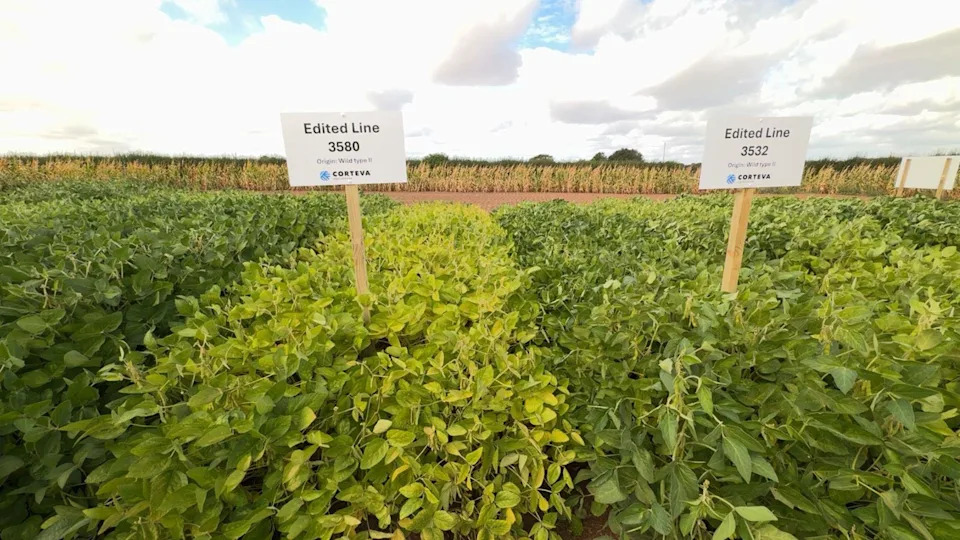
The trial is being carried out by the US agricultural company Corteva [BBC]
Results So Far
Compared with standard varieties, the gene-edited plants developed more vigorously and are entering the yellowing stage that indicates a shift of energy from leaves to seeds. Prof Eric Holub of the University of Warwick said the edited line is "putting all of the energy it's been putting into green leaves in the summer and it's now converting it into seeds," calling the result "really exciting" under local conditions.
Gene-Editing vs. Traditional Breeding and GM
Corteva researchers note the same outcome may be achievable through conventional plant breeding, but gene-editing can reach that result much faster and more precisely. Unlike older genetically modified (GM) approaches that often introduced genes from other species, modern gene-editing typically makes targeted changes to the plant's own genome—such as disabling a gene that delays flowering.
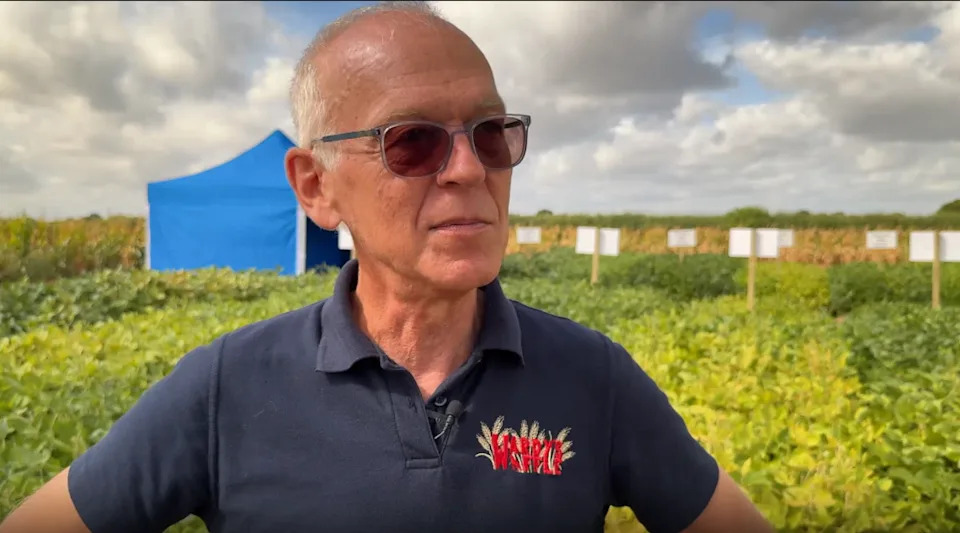
Prof Eric Holub from the University of Warwick said the research was "exciting" [BBC]
Dr Nancy Podevin, Corteva's genome-editing policy lead, said: "This sometimes frightens people saying, 'are you going fast, are you cutting corners'. We're not cutting corners, we're just being more efficient."
Implications and Uncertainties
A successful domestic soya harvest could reduce reliance on imports for animal feed and provide farmers with another rotational crop. Researchers are also exploring whether a warming climate could make parts of the UK more suitable for soya in future seasons.
However, regulatory questions remain. The trial is taking place in Britain in part because the UK's post-Brexit rules have taken a more permissive approach to certain forms of gene-editing than many European countries. Any future alignment between UK and EU regulations could influence how gene-edited crops are developed and deployed in Britain.
For now, the Warwickshire results are an early but promising sign that targeted gene edits could help adapt crops to regional climates. Further trials, yield data and regulatory decisions will determine whether gene-edited soya becomes a practical, scaled option for UK farmers.
Help us improve.