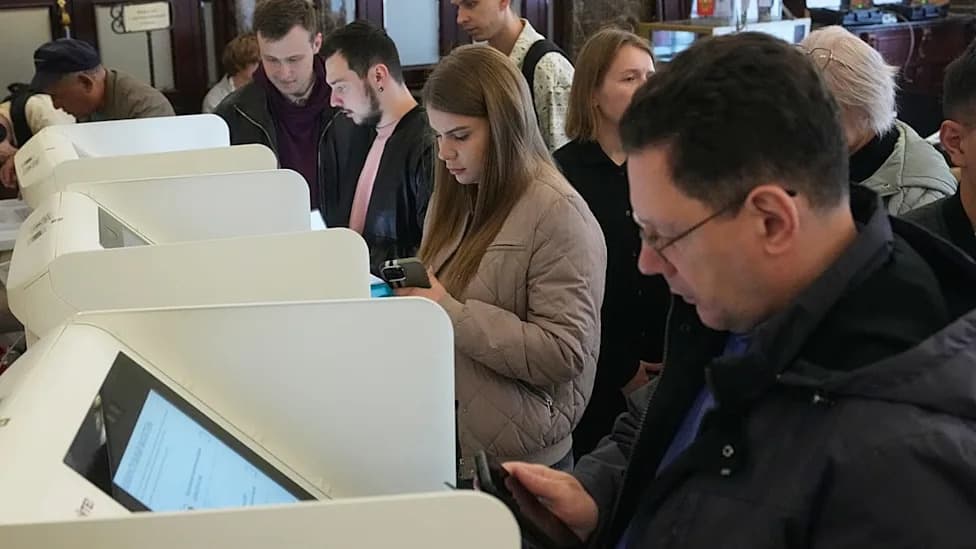
The first day of Russia's three-day parliamentary election was marred by electronic voting terminal failures at multiple Moscow polling stations, forcing some voters to use paper ballots and causing delays. Telegram channels SOTA, Astra and Rus News reported widespread glitches, with notable problems at Polling Stations 787 and 2133. Analysts say the vote is expected to preserve United Russia's supermajority while the Kremlin tightens restrictions on tolerated opposition.
Electronic Voting Terminals Fail Across Moscow on First Day of Duma Election
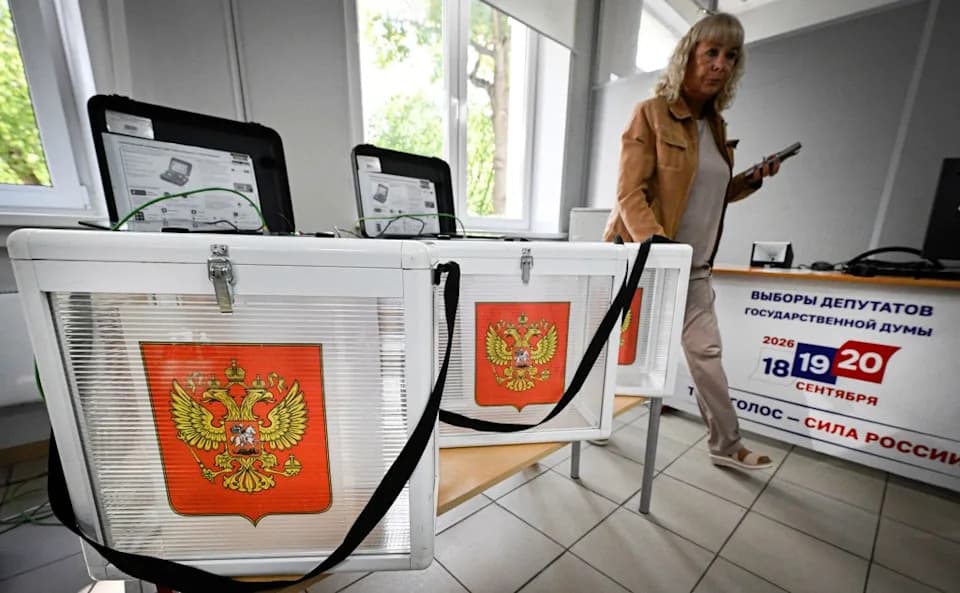
A member of a local electoral commission inspects a polling station in central Moscow on Thursday.
Electronic voting terminals at multiple Moscow polling stations malfunctioned on the first day of Russia's three-day parliamentary election, local reports said. In several locations election officials were unable to reboot devices and voters were redirected to paper ballots, creating delays and confusion.
What Happened
Russian Telegram channels including SOTA, Astra and Rus News reported simultaneous failures and glitches at a number of electronic voting machines across the capital. Some devices displayed an error message reading, "voter not found, please contact the precinct's election commission chairperson," according to the Astra channel. At other stations machines produced intermittent errors or were taken out of service entirely.
Notable Incidents
At Polling Station No. 787 officials attempted to reboot terminals before directing voters to paper ballots; SOTA published an image of a printed notice taped to a machine that said, "TEG not working, only paper ballots." SOTA later reported that the machines at station 787 were functioning again by Friday afternoon. At Polling Station 2133, terminals were reportedly out of service for more than an hour, causing a temporary bottleneck as voters and commission members adjusted to paper voting procedures.
The Telegram channel Rus News posted video that it said showed voters milling around nonfunctional machines and reported that a voter was ejected after repeatedly requesting a paper ballot and being told none were available.
Context
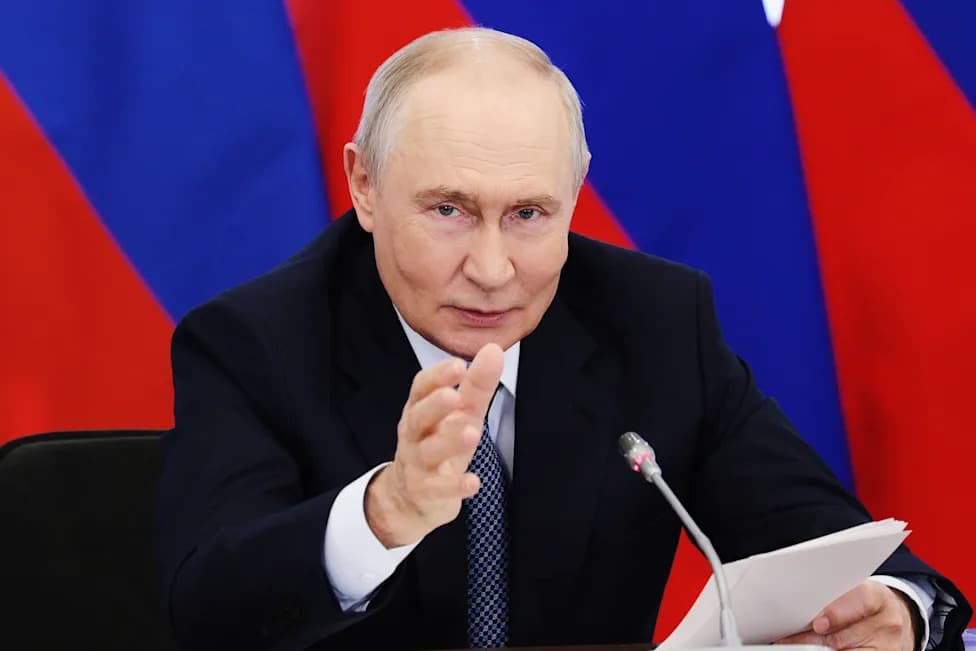
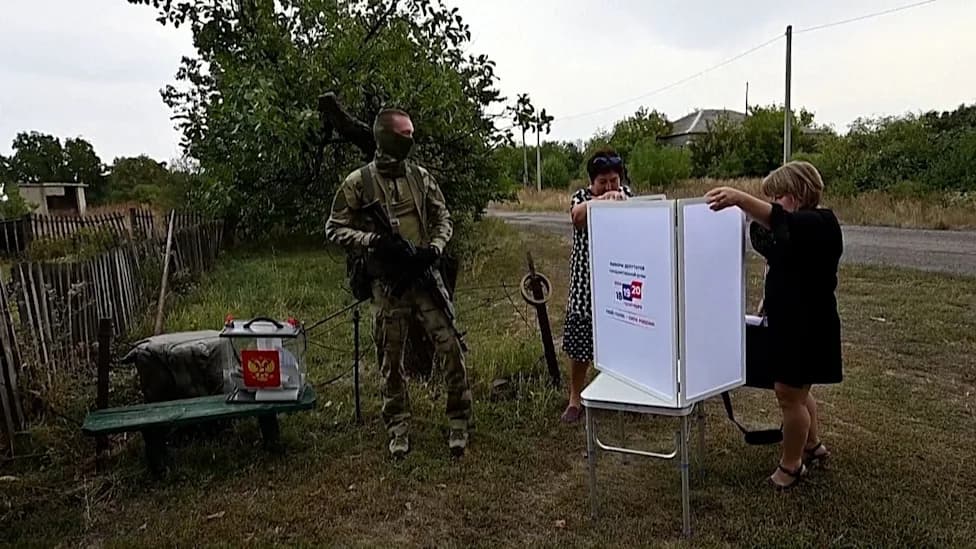
The three-day vote, which runs through Sunday, will fill all 450 seats in the State Duma—half by nationwide party lists and half by single-member constituencies. The ruling United Russia party, aligned with President Vladimir Putin and currently holding 310 seats, is widely expected to retain its supermajority. The anti-war party Yabloko was barred from contesting this election by Russia's Supreme Court.
"The Kremlin no longer sees a need to preserve even the appearance of political choice," said Sasha Slobodov, an analyst with ACLED (Armed Conflict Location & Event Data Project), describing restrictions on the country's limited, Kremlin-tolerated opposition.
What This Means
While the overall outcome of the election is broadly anticipated, the widespread reports of technical failures raise questions about election administration and voter experience during a high-profile vote that critics say will further consolidate Kremlin control. Newsweek has contacted the State Duma for comment.
Sources: Telegram channels SOTA, Astra, Rus News; ACLED analyst statement to Newsweek; Newsweek reporting.
Help us improve.