The Trump administration has redirected most unaccompanied children with new immigration court cases to Texas, where many ORR shelter sites operate without state licenses and legal representation rates are especially low. Analysis from bklg.org shows nearly 80% of such children in July and over 90% in August were moved to Texas, totaling about 925 children. Advocates warn ORR’s pursuit of up to 3,000-bed surge facilities and a 90-day activation timeline heighten fears of mass internal apprehension and expedited deportations.
Trump Administration Redirects Most Unaccompanied Children To Texas, Raising Fears Of Mass Deportation
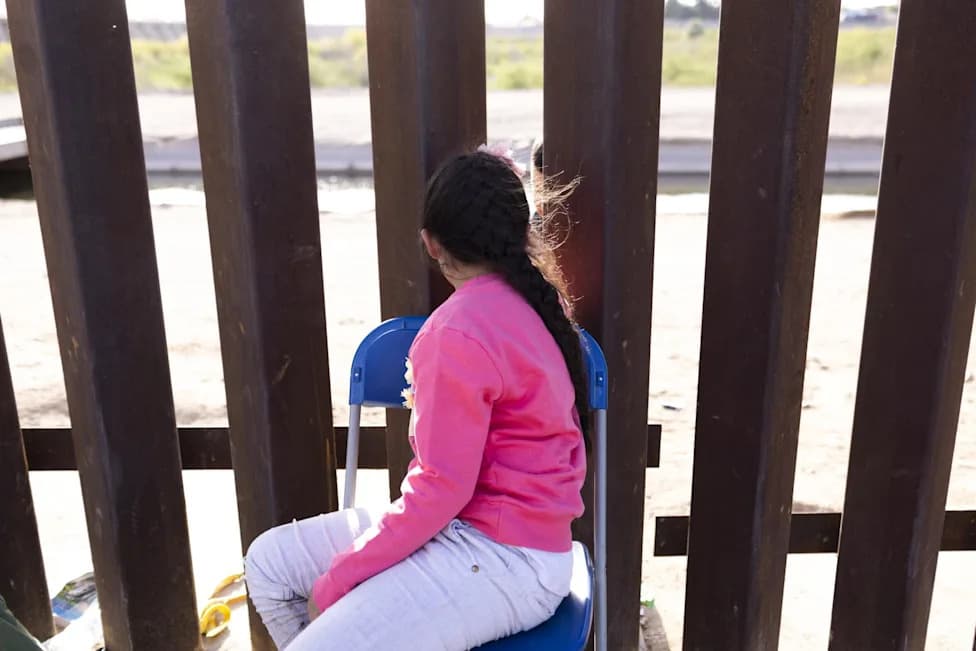
A migrant child seeking asylum waits to be processed after crossing the US-Mexico border in Yuma, Arizona, in May 2022.Photograph: Nicolo Filippo Rosso/Bloomberg via Getty Images
The Trump administration has rapidly moved a large majority of unaccompanied children with new immigration court cases into Texas — a state where many shelter sites lack state licenses, access to lawyers is limited and advocates warn the transfers could enable expedited deportations.
Analysis from immigration data platform bklg.org shared with the Guardian shows almost 80% of children in federal custody who arrived alone and entered immigration proceedings in July — and more than 90% of those in August — were placed into shelter networks located somewhere in Texas. In total, the shift amounts to 925 children with active immigration court cases based in Texas, including 651 transferred in July and August alone.
Advocates and some lawmakers say the sudden concentration of these children in a Republican-controlled state was carried out without a public justification and raises urgent concerns about treatment, oversight and access to counsel.
Legal Representation And Oversight Concerns
Unaccompanied children are placed into the custody of the Office of Refugee Resettlement (ORR), the Health and Human Services office responsible for their care. Yet many of the youngsters face U.S. immigration proceedings without lawyers: nationally only 31.7% of children in ORR custody with active cases have a notice of legal representation on file. In Texas the situation is worse: 17.2% in Houston, 18.6% in El Paso and 8.7% in San Antonio have legal representation recorded, according to bklg.org.
“We’re thinking about congregating children in facilities in Texas, where there are less attorneys... and it’s close to the border, where they can just get planes,”
said Roxana Avila-Cimpeanu, deputy director at the Florence Immigrant and Refugee Rights Project. She warned facilities could have “attorneys in name but not real representation,” creating what some advocates call a “deportation churn-out factory.”
Surge Facilities, Timelines And Potential Conflicts
ORR has sought multiple contracts for so-called “emergency influx” facilities with a combined capacity of up to 3,000 beds. Critics point out that agency rules permit surge facilities only when operational capacity exceeds 85% for multiple days — yet ORR reports its shelter and foster-care network is operating at roughly 27% capacity.
At a stakeholder roundtable, ORR officials described a rapid timeline requiring facilities to become operational within 90 days of contract award and specified an 8-foot perimeter fence as a requirement. Officials also said selected contractors would be expected to provide legal services, a provision critics say could create a conflict of interest by tying children’s counsel to the same contractors who operate their shelters.
Despite low encounters with unaccompanied children at the southwest border over the past 18 months, the agency pressed stakeholders for proposals that could be activated quickly. ORR did not respond to requests for comment from the Guardian about the transfers or surge contracting.
What Advocates Say
Immigrant-rights groups and some Democratic lawmakers warn the combination of concentrated transfers, low rates of legal representation, and plans for large surge facilities risks internal mass apprehension and rapid removals of vulnerable children. Representative Veronica Escobar said the approach reflects a troubling choice in how the government treats children in its custody.
José Olivares contributed reporting.
Help us improve.