United Nations Secretary-General António Guterres, who will step down at year-end after nearly a decade in office, says the world can still move forward if nations cooperate. He identified three existential threats — runaway AI, accelerating climate change and rising inequality — and warned that Security Council paralysis has fostered impunity. Guterres called for reforms to the U.N. and global financial institutions, international guardrails for AI, and renewed multilateral cooperation to address growing humanitarian and economic strains.
Leaving Office, U.N. Chief Says Global Unity Is Essential to Tackle AI, Climate and Inequality
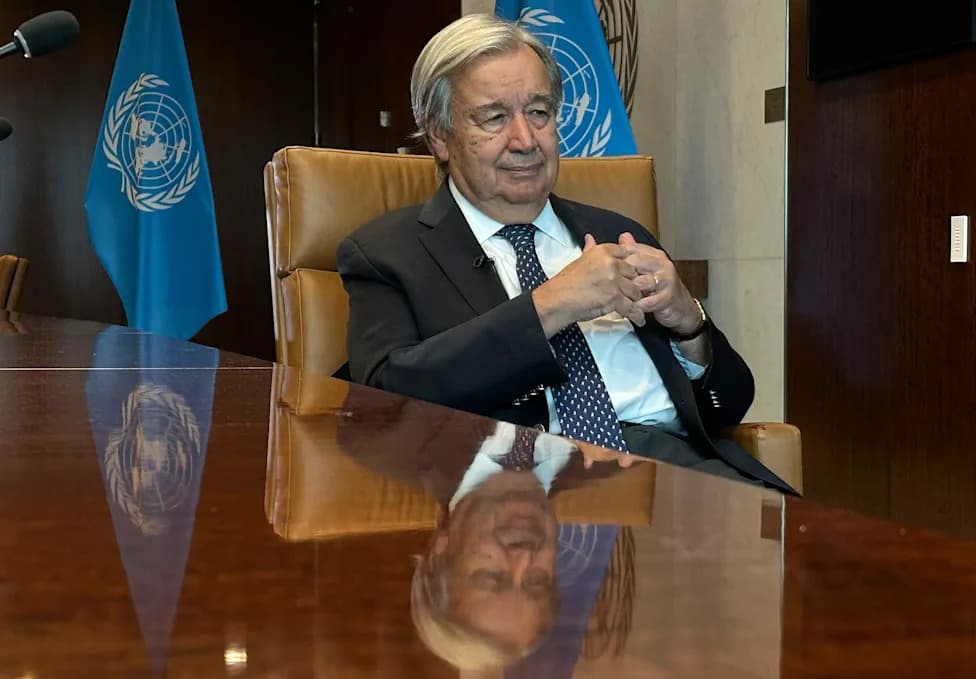
The United Nations Secretary-General Antonio Guterres speaks during an interview with The Associated Press at the United Nations headquarters, Thursday, Sept. 17, 2026. (AP Photo/David R Martin)
United Nations Secretary-General António Guterres, who will step down at the end of the year after nearly a decade in office, told The Associated Press that despite deep global divisions and a Security Council often paralyzed on peacemaking, he still sees a path forward — but only if governments cooperate.
Three Existential Challenges
Speaking four days before leaders from the U.N.'s 193 member states arrive in New York for the annual General Assembly, Guterres — long known for stark warnings about the planet’s trajectory — said he retains hope for the coming years only if nations act together to confront three existential threats: runaway artificial intelligence, rapidly worsening climate change, and surging inequality that fuels instability and conflict.
“I believe in a number of fundamental things that need to be done, and need to happen for the world to be better — and I'm determined to fight to make those things happen,” he told the AP, urging leaders to take these threats seriously and to pursue coordinated solutions.
Security Council Paralysis and Impunity
Guterres warned that a “huge geopolitical divide” and paralysis in the Security Council have created an environment of impunity in which powerful states flout international law and the U.N. Charter. He cited Russia’s invasion of Ukraine and what he described as U.S. actions involving Iran as examples of how veto-wielding members can undermine global norms.
“Many countries say, ‘If superpowers can violate the law, why can't we?’” Guterres said. “And so what we are seeing around the world is more and more situations in which countries simply do not care. They do whatever they want, knowing that there will be total impunity.”
Human Cost and Economic Fallout
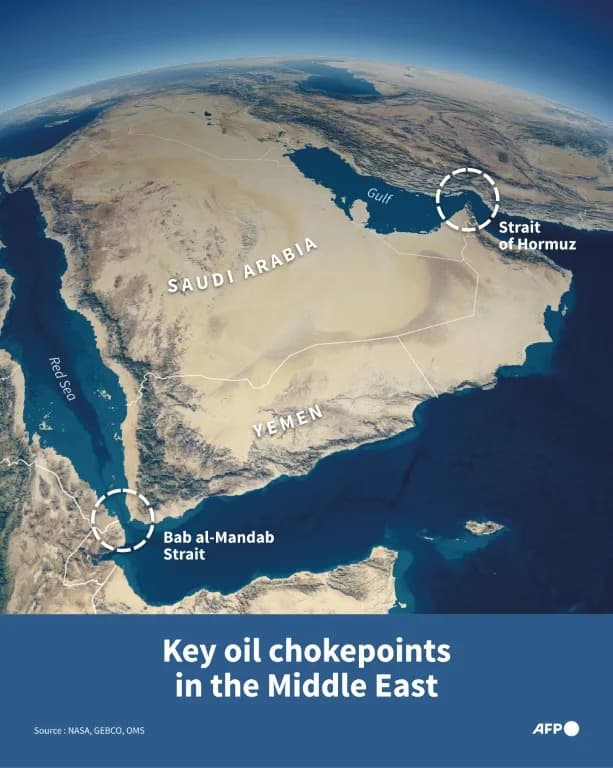
He said these violations have caused massive death and destruction. The twin shocks of the Russia-Ukraine war and broader conflicts in the Middle East are having “a dramatic impact” on the global economy: food and energy prices are rising, interest rates are climbing, and developing countries face growing difficulty responding to the needs of their people.
Guterres expressed hope that the scale of these crises will convince leaders that no nation can solve such problems alone and that renewed international cooperation is indispensable.
Reforming Global Institutions
The secretary-general argued that institutions created by the victorious powers after World War II — notably the U.N., and within it the Security Council, as well as the International Monetary Fund and World Bank — must be updated to reflect 21st-century realities, including the rise of emerging economies and shifting centers of influence.
As U.N. chief, Guterres acknowledged practical limits — the office has no armed forces, no independent intelligence apparatus and limited funds — but emphasized its two key strengths: moral voice and convening power.
AI: A Universal Problem
Guterres has been outspoken about the risks posed by artificial intelligence, calling it “a universal problem.” He urged countries developing advanced AI to exchange information, establish transparency mechanisms, adopt guardrails and work toward a multilateral framework that can help avoid catastrophic risks.
Finances and U.S. Relations
The U.N. is also dealing with serious fiscal strains — largely because of unpaid U.S. contributions to both the regular operating budget and the separate peacekeeping budget — but Guterres said the organization has avoided a financial meltdown and is undergoing major reforms. He defended the U.N.’s record on stewardship of public funds.
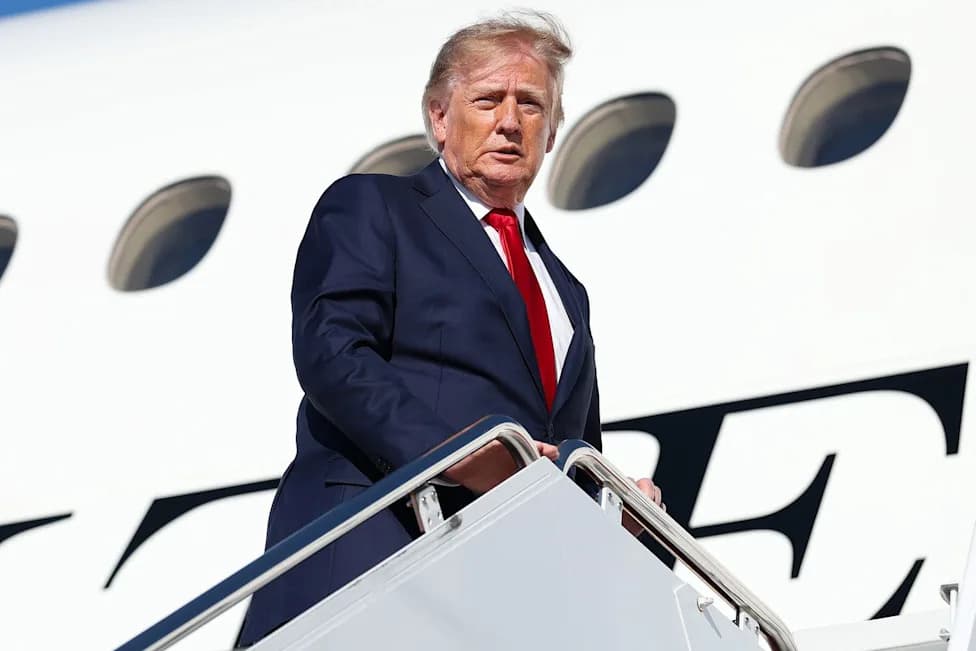
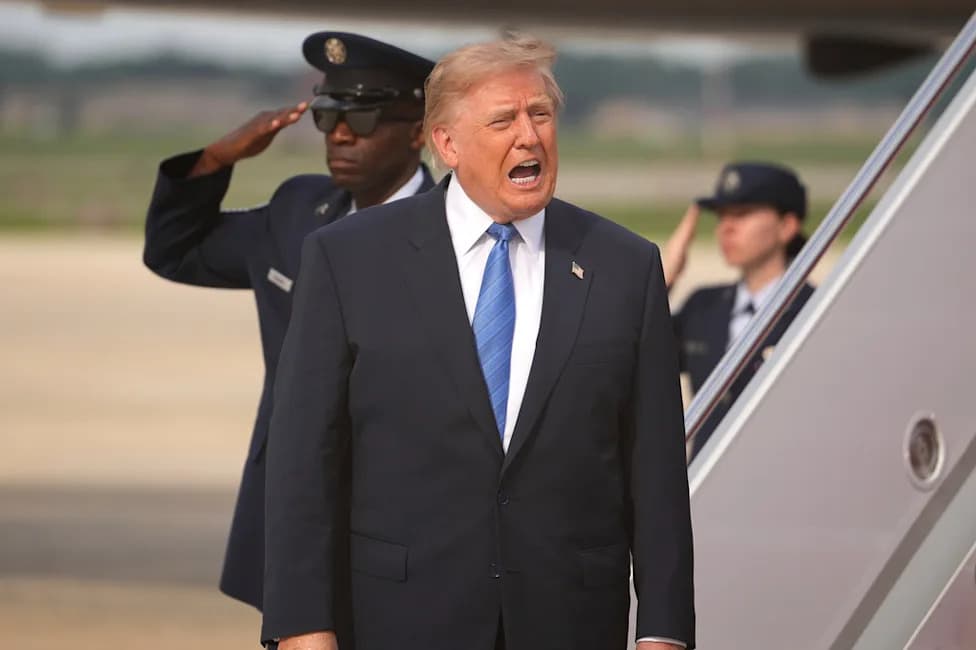
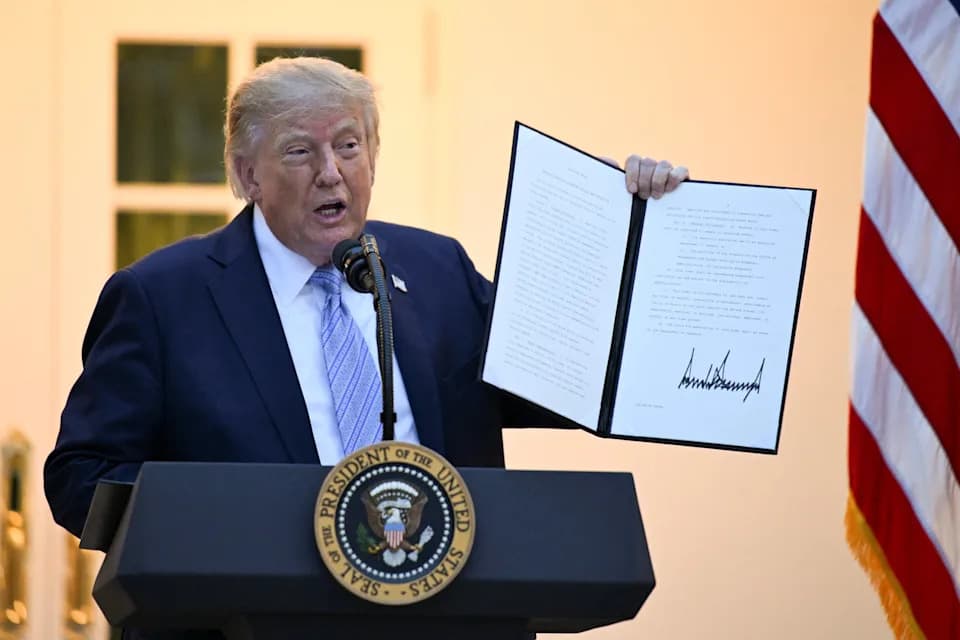
Reflecting on relations with the United States, Guterres said the partnership has sometimes been difficult and at other times cooperative. He noted current collaboration with the U.S. on peace talks in Western Sahara and elsewhere, and said he plans to raise peace efforts in Ukraine and the Middle East when he meets President Donald Trump on the opening day of the General Assembly.
Principles Over Transactional Politics
Guterres emphasized that the United Nations should not adopt a purely transactional approach to politics. It must remain a reference point for values and the rule of law, he said, because “someone must affirm that the law of force cannot prevail over the force of law.” That principled stance, he acknowledged, can sometimes limit the U.N.'s ability to negotiate with parties that refuse to acknowledge clear violations.
As he prepares to leave office, Guterres called on world leaders to move beyond geopolitical divides, update global governance structures, and build the international cooperation and safeguards necessary to confront the major challenges of this century.
Edith M. Lederer has covered international affairs for The Associated Press for more than half a century.
Help us improve.