Nearly 200 Russians who fought in Ukraine are front and center in the State Duma campaign, promoted as a new "true elite" to be rewarded in civilian life. Analysts say the push is largely symbolic, aimed at recruitment and legitimacy, while few combatants are likely to receive real power. Selective programs like "Time of Heroes" have accepted only a tiny fraction of applicants, and independent reporting suggests many appointments go to those with prior political ties.
Russia Showcases Ukraine Veterans In Wartime Duma Campaign — Symbolism Over Real Power?
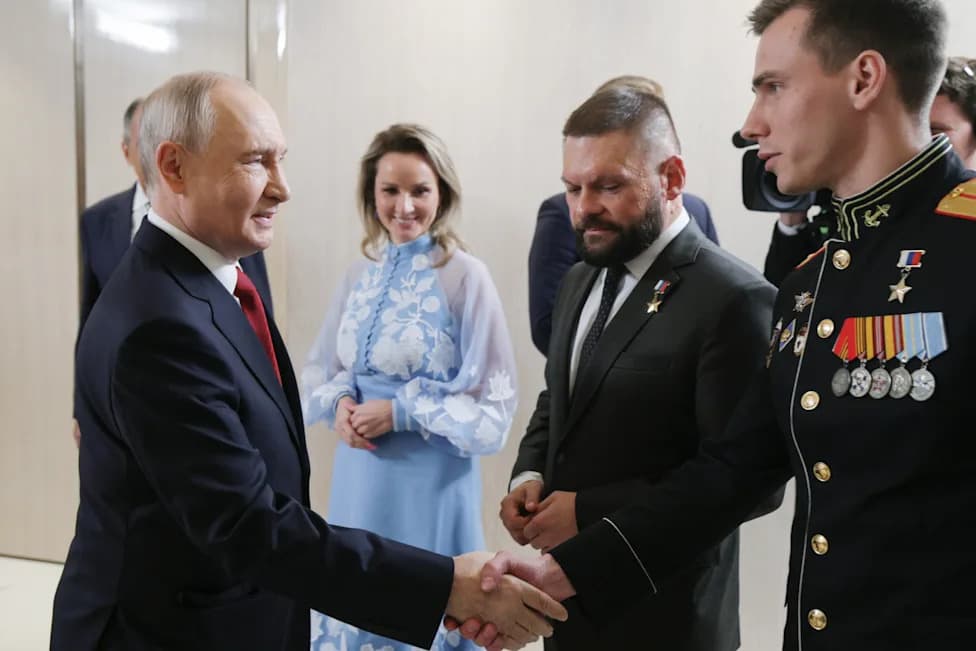
FILE - Russian President Vladimir Putin, left, greets Vladislav Golovin, right, during a meeting with the leaders of the United Russia political party as Presidential Commissioner for Children's Rights Maria Lvova-Belova, center, and military correspondent Yevgeny Poddubny, second right, in Moscow on Saturday, Sept. 5, 2026. (Gavriil Grigorov/Sputnik, Kremlin Pool Photo via AP, File)(Gavriil Grigorov/Pool Sputnik Kremlin via AP)
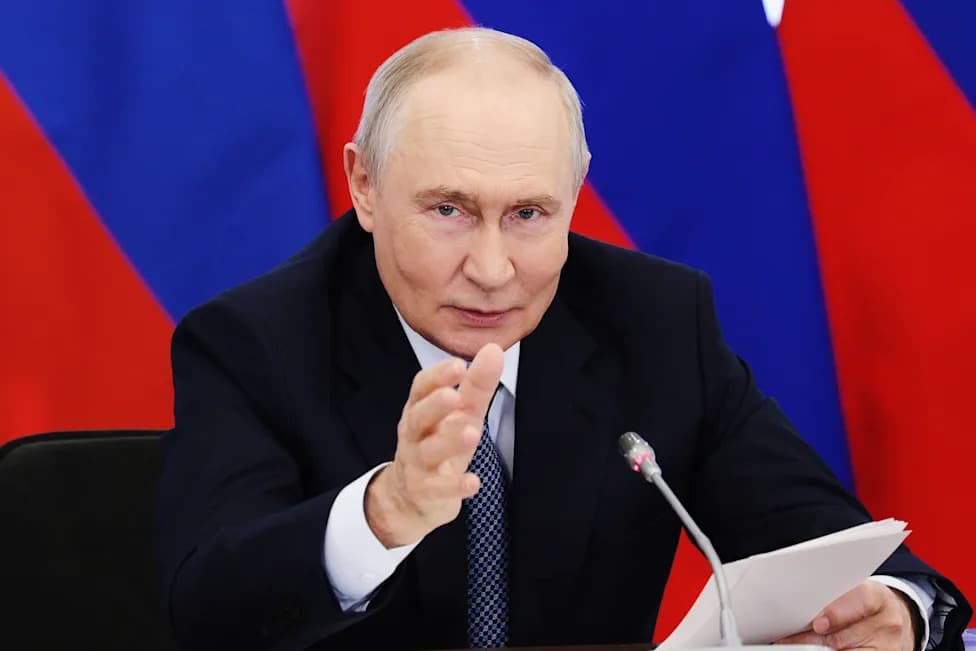
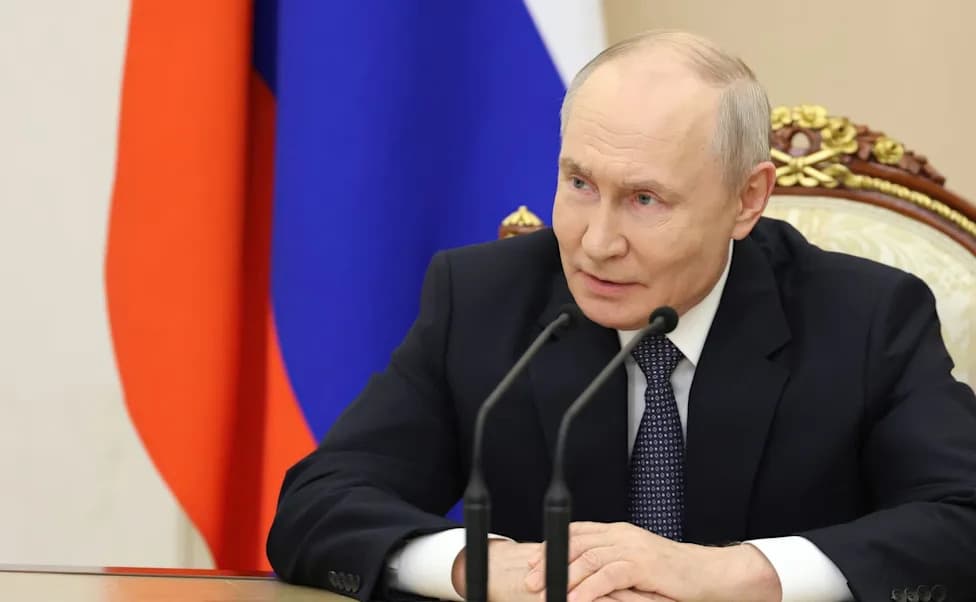
Russians who fought in Ukraine are being prominently promoted in the State Duma election campaign: they top party lists, star in campaign videos and appear in televised debates. Election authorities say nearly 200 candidates have combat experience in Ukraine, and the Kremlin presents them as a postwar "true elite" that will be honored in civilian life.
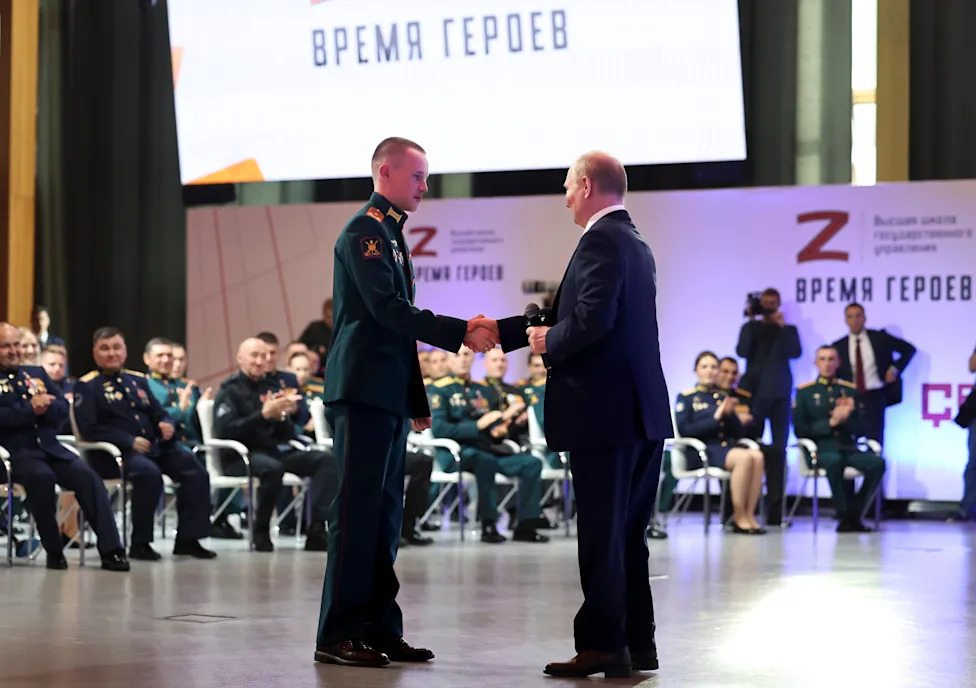
FILE - Russian President Vladimir Putin, right, congratulates Stepan Belov, who was named a Hero of Russia, during a meeting with participants of the "Time of Heroes" project designed to help veterans become government administrators, at a venue outside Solnechnogorsk, Russia, on Friday, June 14, 2024. (Alexander Kazakov, Sputnik, Kremlin Pool Photo via AP)(Alexander Kazakov/Pool Sputnik Kremlin via AP)
Election Context
The vote — the first State Duma election since the full-scale war began — will also be held in parts of Ukraine that Moscow captured and later annexed. The Kremlin is tightly managing the campaign to reinforce a narrative of broad domestic support for the war and to provide a veneer of legitimacy for its actions.
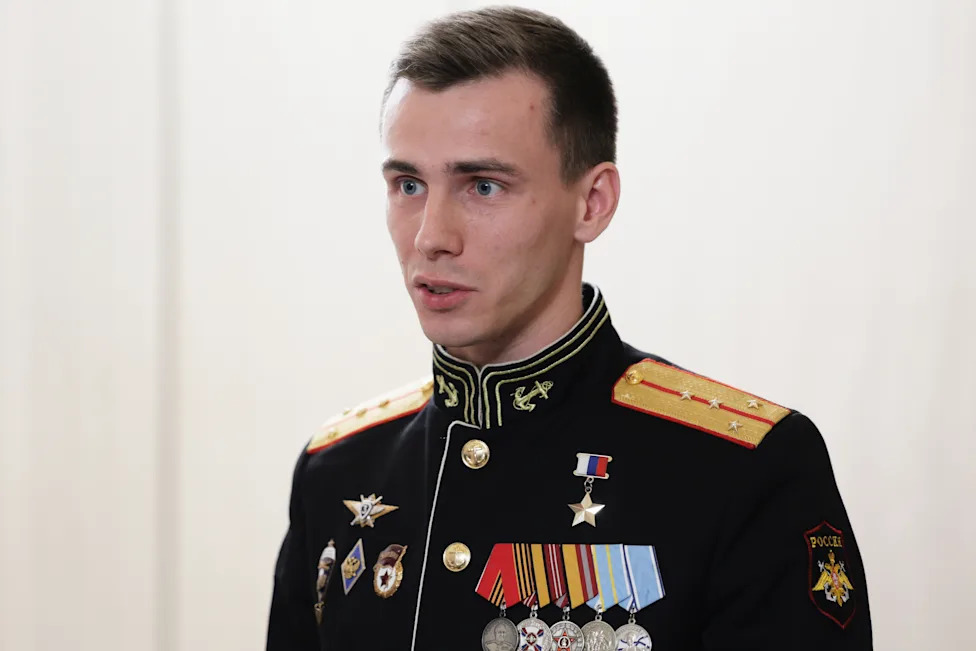
FILE - Vladislav Golovin, one of the leaders of the United Russia political party, attends a meeting with Russian President Vladimir Putin in Moscow, Saturday, Sept. 5, 2026. (Gavriil Grigorov/Sputnik, Kremlin Pool Photo via AP, File)(Gavriil Grigorov/Pool Sputnik Kremlin via AP)
Who Are These Candidates?
Most Kremlin-aligned parties have fielded candidates identified as participants in the SVO (Russia's official term for its "special military operation" in Ukraine). Notable figures include:
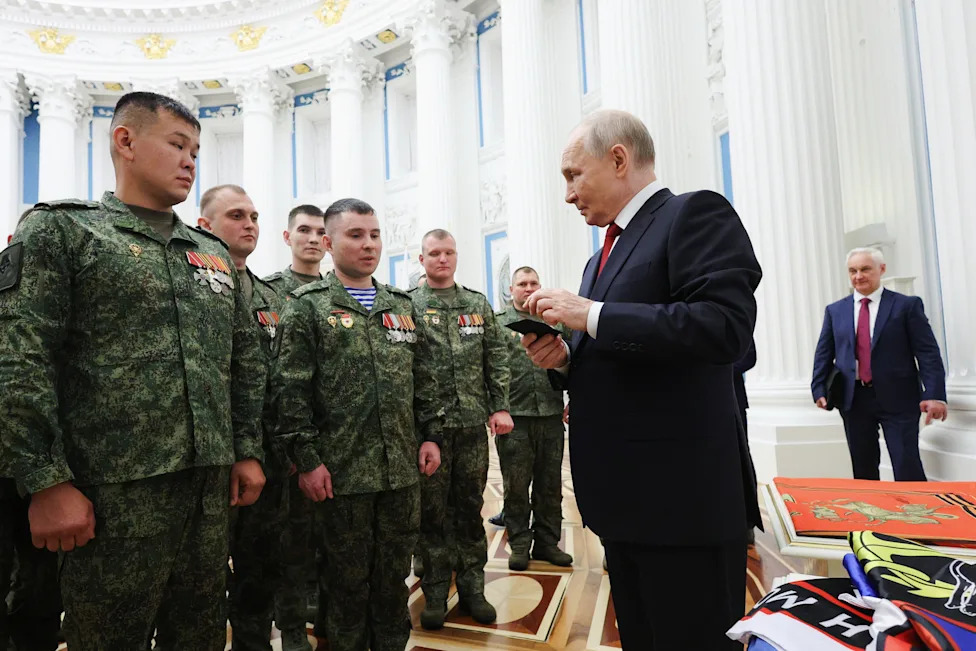
FILE - Russian President Vladimir Putin, foreground right, speaks with members of the military in the Kremlin in Moscow on Friday, June 12, 2026, as Defense Minister Andrei Belousov, right, stands nearby. (Vyacheslav Prokofyev, Sputnik, Kremlin Pool Photo via AP, File)(Vyacheslav Prokofyev/Pool Sputnik Kremlin via AP)
- Vladislav Golovin — A 29-year-old United Russia candidate who fought in the siege of Mariupol, lost part of his leg and has been awarded the Hero of Russia. He took part in Putin's "Time of Heroes" program and now leads the Young Army, a military-patriotic youth organization.
- Yevgeny Poddubny — A state TV war correspondent and United Russia candidate who was wounded by a Ukrainian drone.
- Alexei Vereshchagin — A leading candidate for the ultranationalist Liberal Democratic Party, described as having fought with Moscow-backed separatists since 2014; Ukrainian authorities say they are investigating him for alleged abuses in recaptured territory.
- Yevgeny Pervyshov — Tambov regional governor and United Russia candidate who served in a 2022 special unit; U.K. officials later said the unit disproportionately included party insiders and was deployed on safer drone operations.
- Alexei Zhuravlyov — Rodina party leader and Duma deputy who has reported serving at the front while retaining his parliamentary seat.
Analysts' Assessment
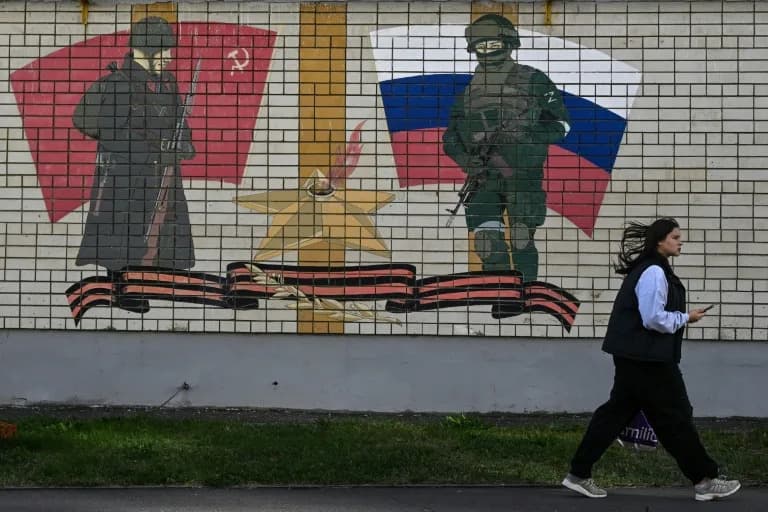
Many analysts view the Kremlin's promotion of veterans as largely symbolic. The effort aims to boost recruitment and public support for the war by suggesting battlefield service leads to postwar rewards, but observers say most veterans will not gain meaningful power.
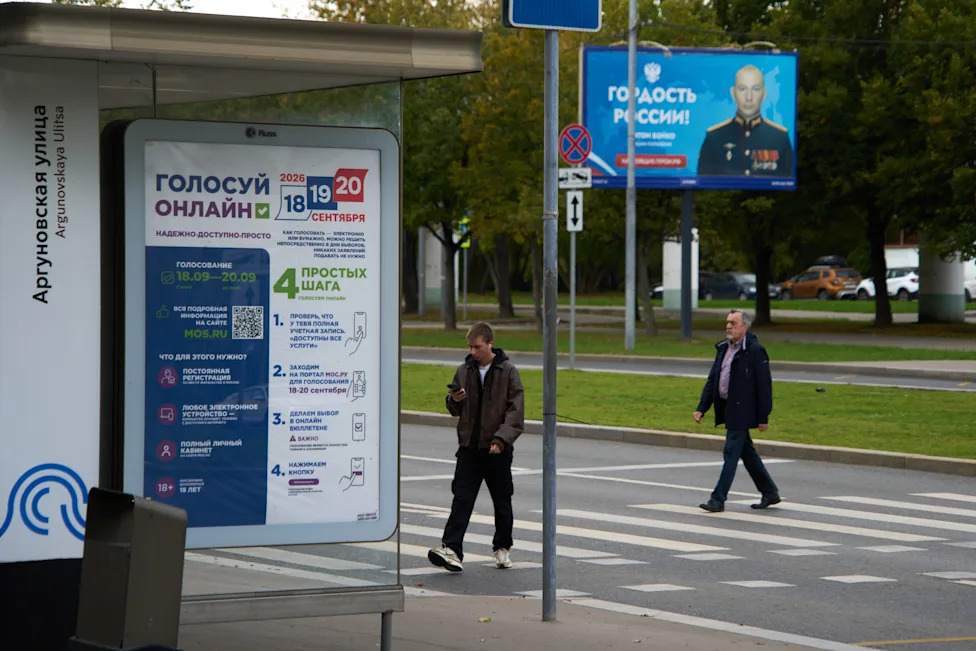
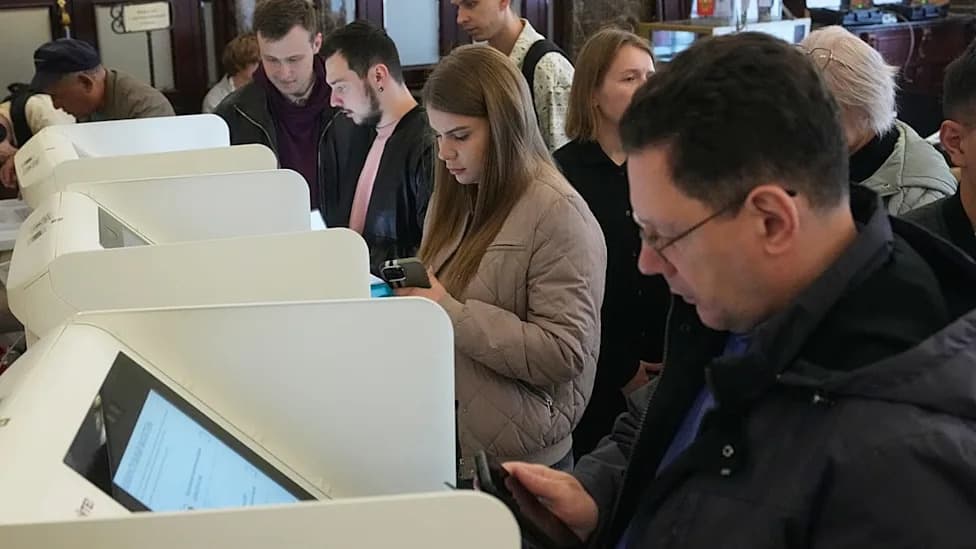
FILE - A sign reading "Vote online, reliable, affordable, simple" for Russia's parliamentary election is displayed at a bus stop in Moscow, Russia, Monday, Sept. 14, 2026, with a billboard in the background showing a soldier with the words "Russia's Pride." (AP Photo/Alexander Zemlianichenko, File)(AP Photo/Alexander Zemlianichenko)
'Russia doesn\'t really know what to do with those who return from the battlefield,' said Nikolay Petrov of the NEST Centre, noting that most returnees are offered symbolic or low-power posts while the authorities favor those already in public office.
Former Kremlin speechwriter Abbas Gallyamov dismissed the push as "empty talk," arguing that promises of payments, flattery and career prospects are aimed at recruiting more fighters. Researcher Ivan Filippov added that many pro-war activists are disappointed after seeing that actual beneficiaries tend to be people with prior political ties.
Programs, Numbers And Outcomes
Official and media figures paint a mixed picture of reintegration. Presidential administration official Sergei Novikov said about 167,000 servicemen have returned from Ukraine, while warning that "tens of thousands" remain unemployed. Independent reporting suggests the true number may be higher.
Putin's "Time of Heroes" program is highly selective: of more than 65,000 applicants in 2024-25, only 168 were accepted and roughly 80 later received appointments at national, regional or municipal levels. The independent outlet Meduza reported at least 1,300 veterans have been placed in government posts or state-backed companies, but noted around 850 of them already had prior public-sector experience.
Implications
Promoting veterans serves multiple Kremlin goals: to boost recruitment, craft a patriotic narrative and highlight loyalty. But analysts warn of a growing risk: a large number of returnees without steady jobs or meaningful roles creates social and security challenges. Authorities seem inclined to absorb compliant, bureaucratically skilled veterans while keeping real power within the established ruling class.
(Reporting draws on interviews and findings by The Associated Press, Meduza and other public sources.)
Help us improve.