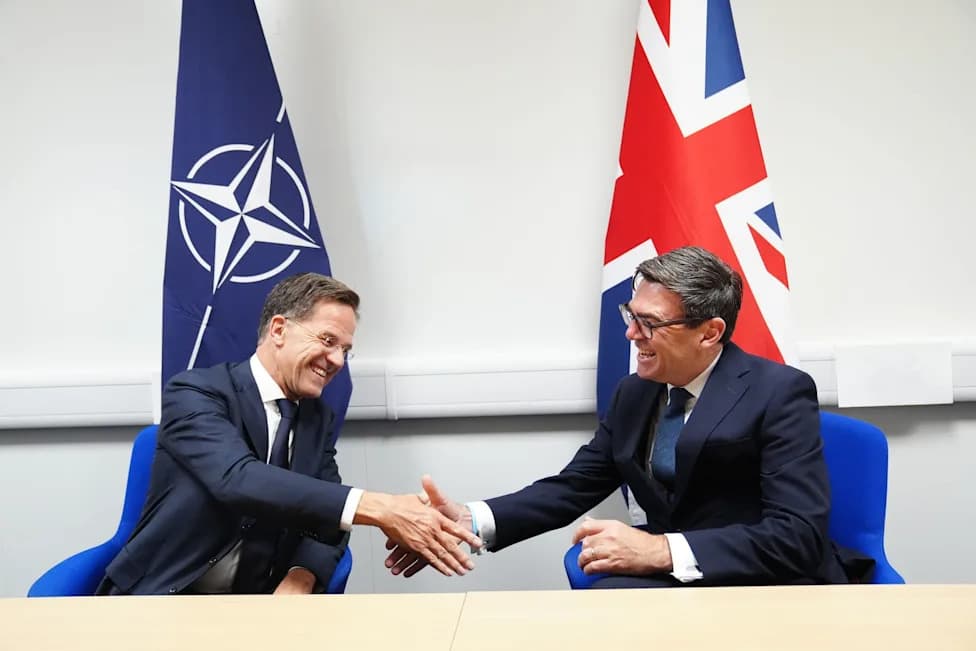
Mark Rutte, Nato secretary-general and former Dutch prime minister, said the UK must present a credible, year-by-year plan to reach Nato’s 3.5% of GDP defence-spending target by 2035. He welcomed ministers’ acceptance of incremental increases and said the precise pathway will be set out in next year’s spending review. Rutte also argued defence spending should be considered separately from welfare policy and warned allies about recent Russian moves in Ukraine and Houthi activity in the Red Sea.
Nato Chief Urges UK To Set Out Credible, Incremental Path To Hit 3.5% Defence Target
[BBC]
Editor’s note: Please verify the current official title of Mark Rutte if using this article for publication.
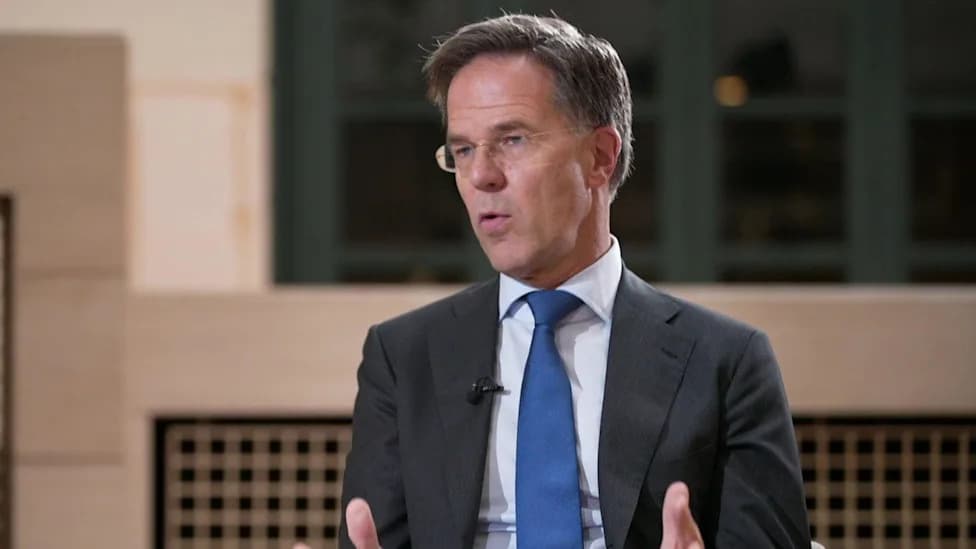
Nato secretary-general Mark Rutte said he is confident the UK government recognises the need for a clear, credible path of annual increases to raise defence spending to 3.5% of GDP by 2035.
Speaking to the BBC after meetings in London with Defence Secretary Wes Streeting and Foreign Secretary Ed Miliband, Rutte welcomed British ministers’ acceptance that the target requires steady, yearly progress rather than a single large increase just before the deadline.
"I am absolutely confident that when it comes to the 3.5% they are there. I am absolutely confident that when it comes to the yearly increments, they totally take it and accept it, that they have to be there," Rutte said. "There has to be a credible path. What that credible path exactly will be, we will see with the spending review next year."
Labour mayor Andy Burnham has reiterated the UK’s commitment to the Nato goal, pledging to aim for 3.5% by 2035. Current estimates put UK defence spending at roughly 2.6% of GDP this year. Burnham said he will announce a date for an interim 3% target next spring, when long-term departmental budgets are set.
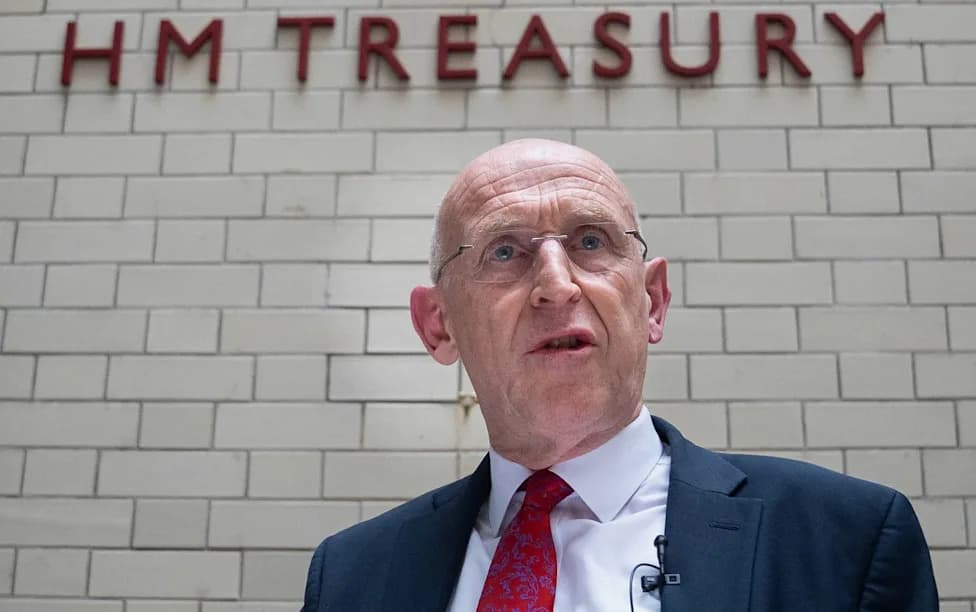
Burnham has faced calls from some colleagues and opposition figures to move faster. His chancellor and former defence secretary, John Healey, has argued that meeting Nato milestones sooner — potentially by the end of the decade — would demonstrate Britain’s seriousness about its defence commitments. Conservative ministers, meanwhile, have urged financing higher defence budgets through cuts to welfare spending.
Rutte urged policymakers to treat defence spending separately from social-welfare policy and emphasised the importance of economic growth in funding both military commitments and domestic priorities. "One is, indeed, spending on defence, but the other is... making sure that the economy is growing enough, so you can distribute the success of a growing economy amongst various income groups," he said.
He acknowledged the political difficulty of tough fiscal decisions, drawing on his own 14 years as prime minister, and cautioned against last-minute large increases that merely meet a target on paper.
Rutte also commented on recent security concerns in Europe and beyond. He said recent Russian military activity in western Ukraine — which prompted Poland to temporarily close two airports — suggested Vladimir Putin was "increasingly desperate" about the war. Asked whether Russia might launch an attack requiring a Nato response, Rutte warned against underestimating potential actions: "If you are willing to sacrifice 1.2 million of your own people in this crazy unprovoked fight, let's not be naïve about what Putin could do."
He added that Nato allies would discuss developments in the Red Sea, where Iran-aligned Houthi forces have seized parts of Yemen’s coast along a vital shipping route. Riyadh has relied on the Red Sea for oil exports since the Strait of Hormuz was effectively disrupted by wider regional conflicts. "I would not be surprised if some phone calls were taking place between European allies, 'hey, how are we going to deal with this?'" Rutte said. "Let's see what happens, and if Nato can help, we will always be helpful."
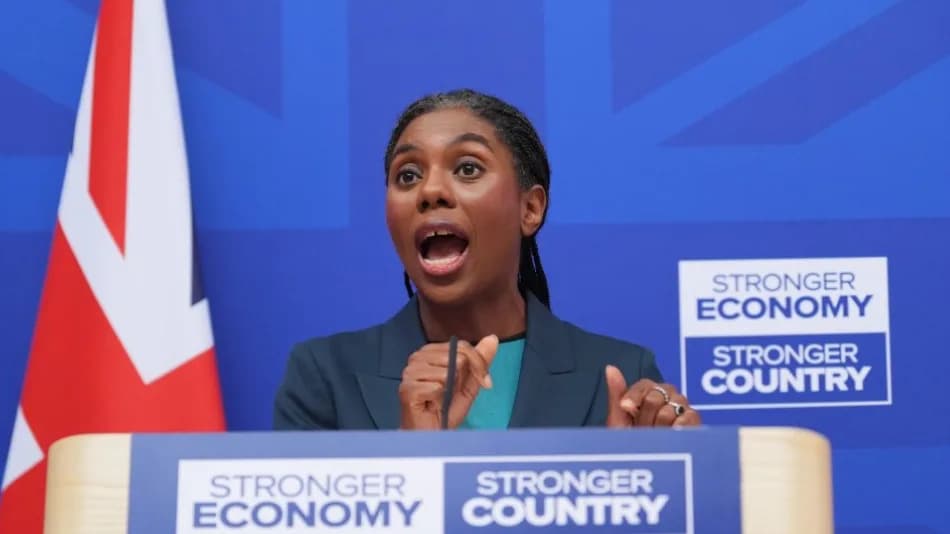
Conservative cabinet minister Kemi Badenoch accused Burnham of delaying decisions on defence spending and said Sir Keir Starmer had left a "mess" of defence commitments for Burnham to resolve.
What Comes Next
The UK’s detailed route to 3.5% is expected to be clarified in next year’s spending review. That process will set multi-year departmental budgets and should indicate whether the government will adopt a steady incremental plan or pursue faster increases to meet Nato expectations sooner.
Help us improve.