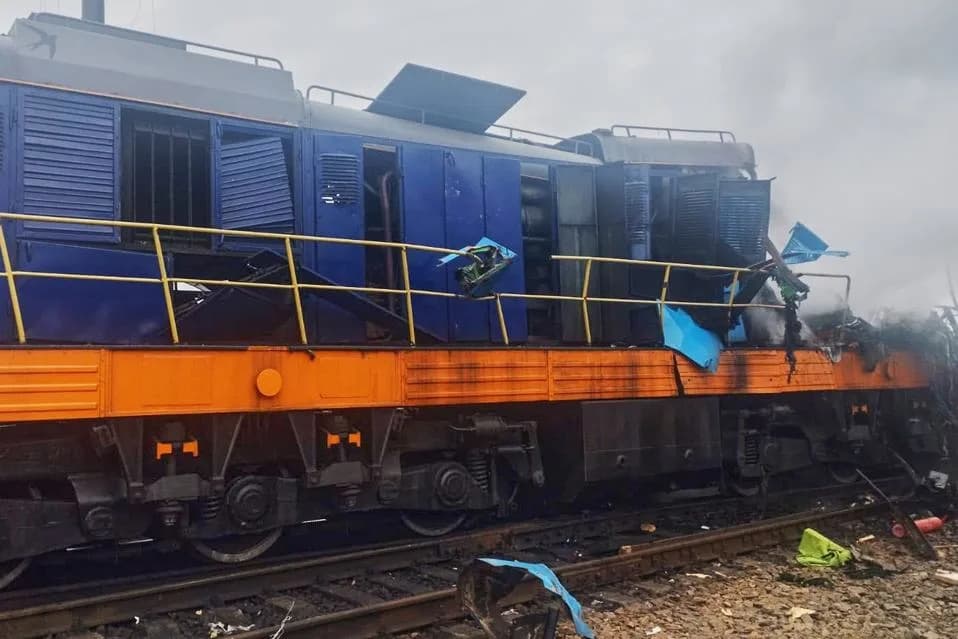
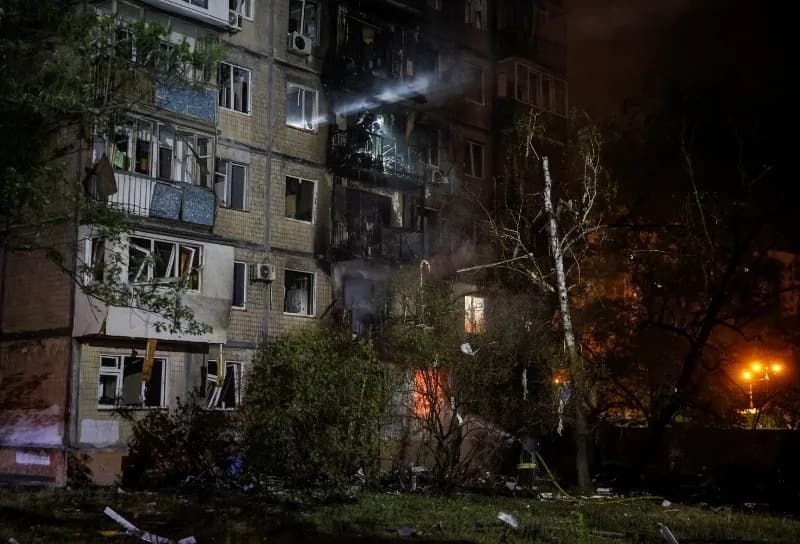
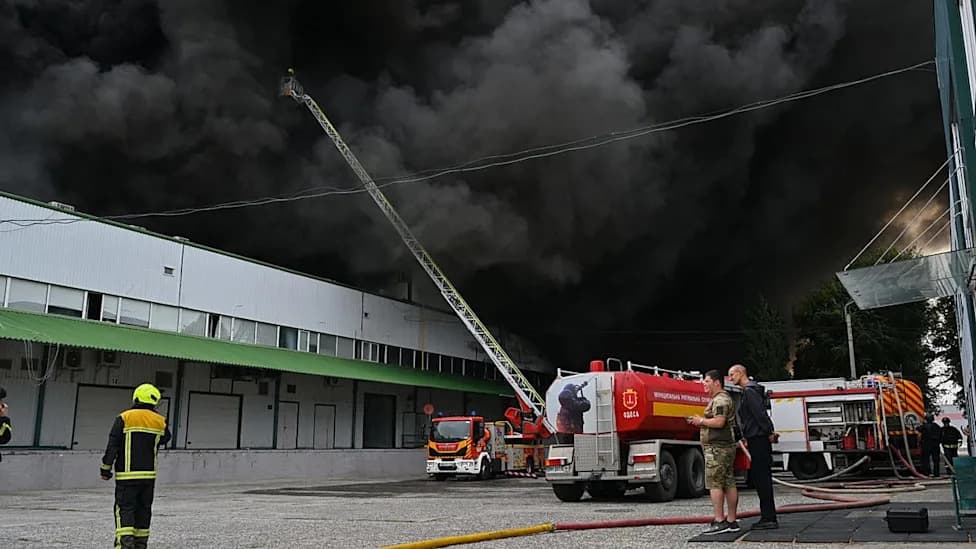
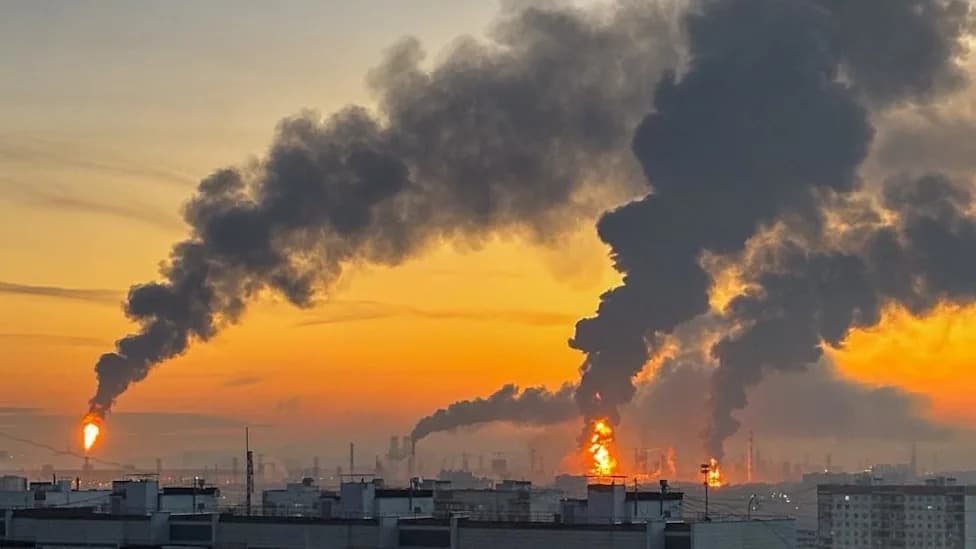
Kherson, a frontline city on the Dnipro River liberated in November 2022, faces relentless Russian attacks — artillery, guided bombs and thousands of small attack drones — causing hundreds of civilian casualties and massive infrastructure damage. Authorities report at least 1,502 dead and 9,625 wounded in the region since February 2022, and record large-scale drone launches in recent months. The destruction of the city’s remaining heat-and-power plant has created a severe energy crisis ahead of winter. Local leaders warn that a ceasefire without strong security guarantees would leave civilians exposed and could merely freeze the conflict.
Kherson Under Siege: Daily Drone, Missile and Bomb Attacks Persist as Peace Talks Stall
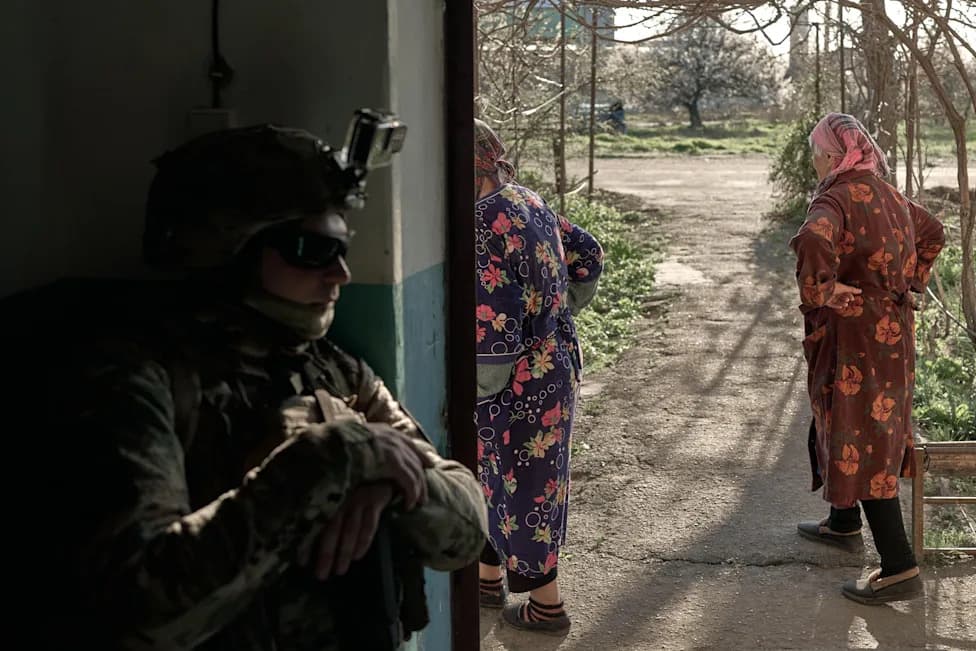
Ukrainian frontline city faces non-stop Russian attack amid White House peace push
Kherson — a frontline city on the Dnipro River liberated by Ukrainian forces in November 2022 — endures near-daily bombardment from across the river: artillery, missiles, guided aerial bombs and swarms of small attack drones. Residents, aid workers and local officials say the attacks have become part of everyday life, with deadly consequences and deepening humanitarian needs.
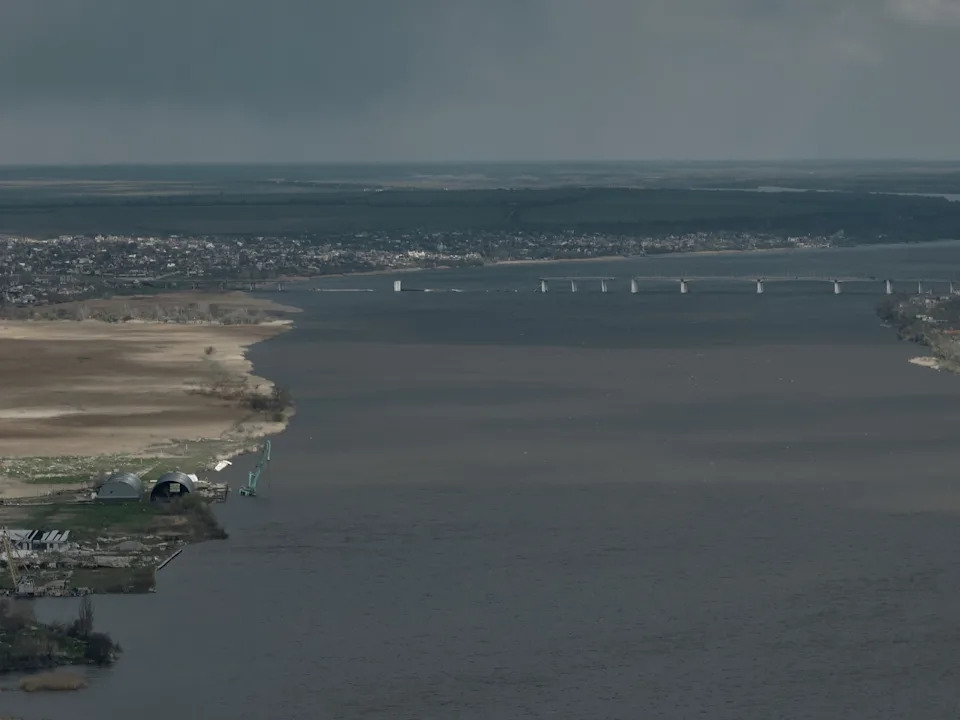
Libkos/Getty Images - PHOTO: A drone view shows the Antonivskyi Bridge spanning the Dnipro River, with damaged buildings visible across the city of Kherson amid ongoing Russian attacks on the southern Ukrainian frontline city on April 7, 2026 in Kherson, Ukraine.
Close Calls and Civilian Fear
Humanitarian coordinator Natalia Sergienko, director of the Kherson Power of the South public organisation, recounted two recent near-misses to ABC News. While driving through the so-called 'red zone' — areas Russian military-linked Telegram channels label as open-fire despite heavy civilian presence — a drone flew past her car before being shot down. Days later, an attack drone approached her humanitarian office and forced her to run to the basement, which she credits with saving her life.
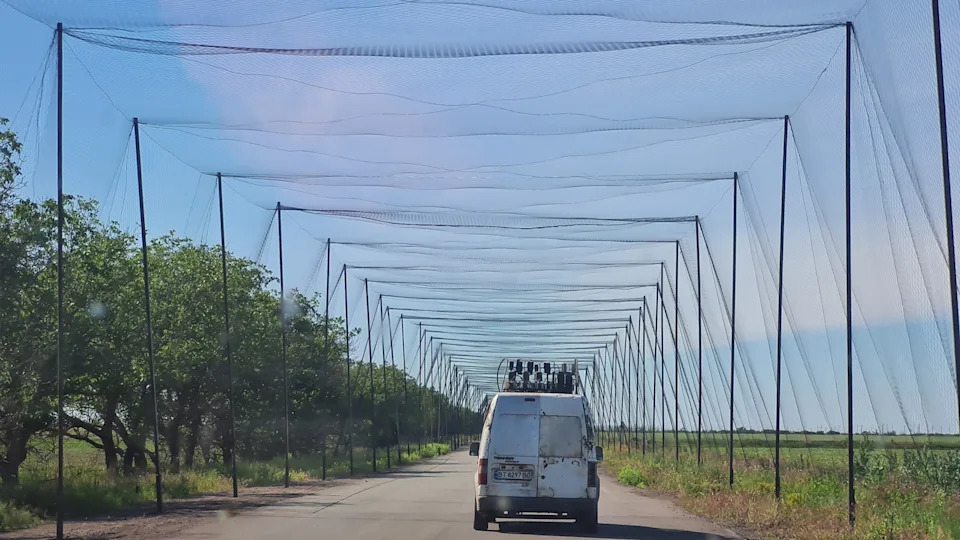
Global Images Ukraine via Getty - PHOTO: A vehicle equipped with electronic warfare equipment drives under an anti-drone net on a road through an agricultural field on June 2, 2026 in Kherson, Ukraine.
Scale and Human Cost
Local officials say Russian strikes kill or injure roughly 20 people in the city each day. Regional government figures shared with ABC News report at least 1,502 people killed — including 40 children — and 9,625 wounded in the Kherson region since February 2022. Damage to civilian infrastructure is vast: authorities estimate at least 46,900 facilities damaged or destroyed, including more than 44,500 homes and apartment buildings.
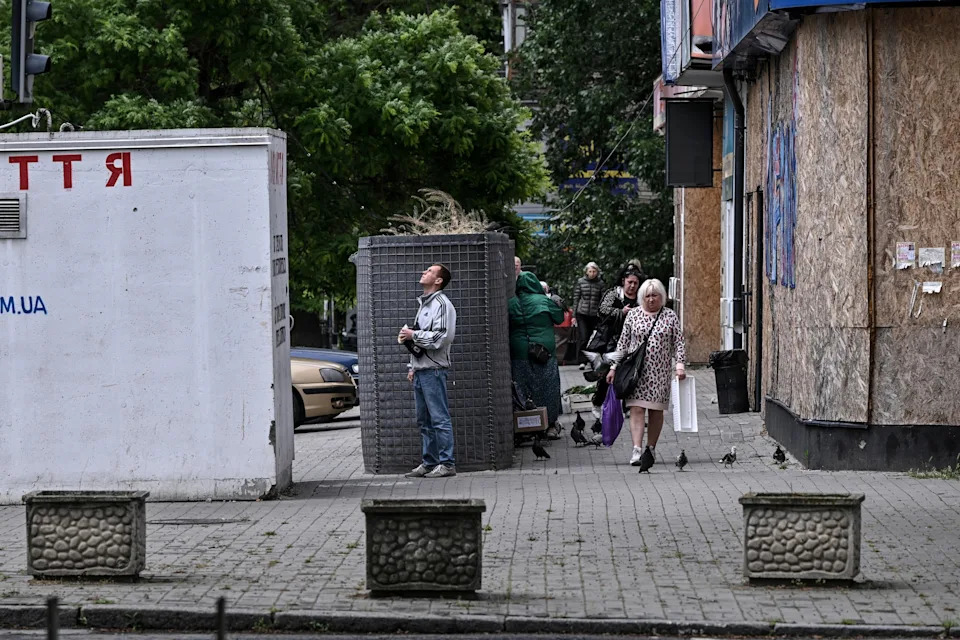
Nurphoto/NurPhoto via Getty Images - PHOTO: Residents of Kherson walk past a mobile concrete shelter in the city's "red zone," considered the most dangerous area due to frequent military operations, in Kherson, Ukraine, on June 3, 2026.
FPV Drones and 'Human Safari' Tactics
First-person-view (FPV) drones, which can be piloted to target people and vehicles, have been described locally as tools of deliberate terror. Videos of such attacks circulate widely on pro-Russian channels; the U.N. Independent International Commission of Inquiry on Ukraine has concluded that attacks on civilians of this nature can amount to crimes against humanity. Oleksandr Tolokonnikov, deputy head of the Kherson Regional Military Administration, says authorities recorded 27,210 Russian drones launched across the Dnipro in August alone and estimate roughly 6,500 drone launches against Kherson each week. In August, FPV drones were blamed for 80% of civilian casualties that month, killing 30 and wounding 393.
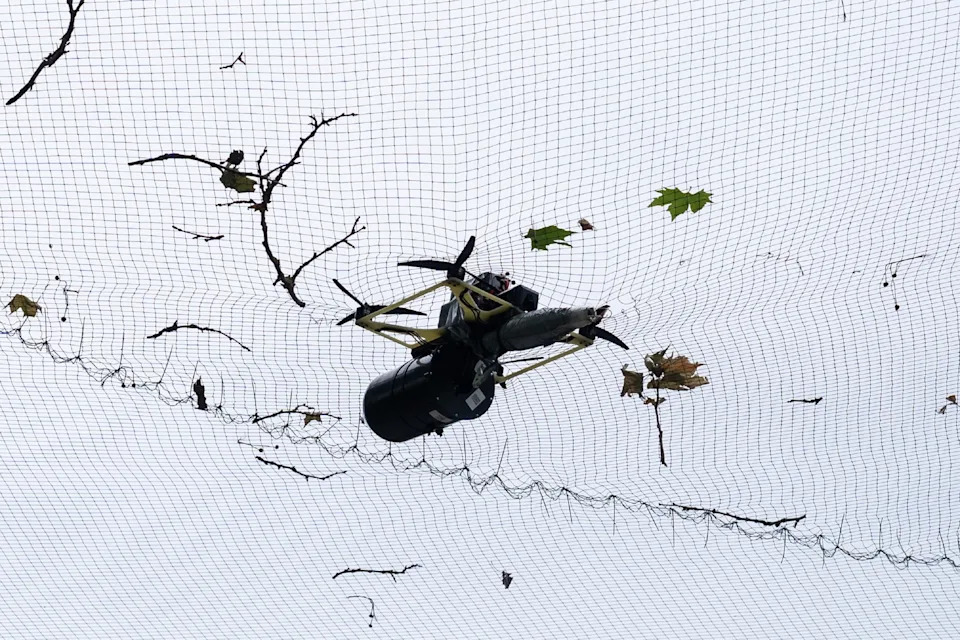
Global Images Ukraine via Getty - PHOTO: A Russian drone carrying a munition lies on anti-drone netting on June 3, 2026 in Kherson, Ukraine.
Energy Crisis and Winter Risks
In August, guided aerial bombs destroyed Kherson’s remaining heat-and-power plant. Officials warn the city faces a severe energy shortfall heading into winter: Kherson’s current electricity supply has been compared to the level provided to a single Kyiv supermarket. Authorities expect 10–15% of the remaining residents may leave for the winter, with more fleeing if conditions worsen. Ukrainian leaders say Russia has repeatedly targeted energy infrastructure in prior winters to pressure civilians and the state.
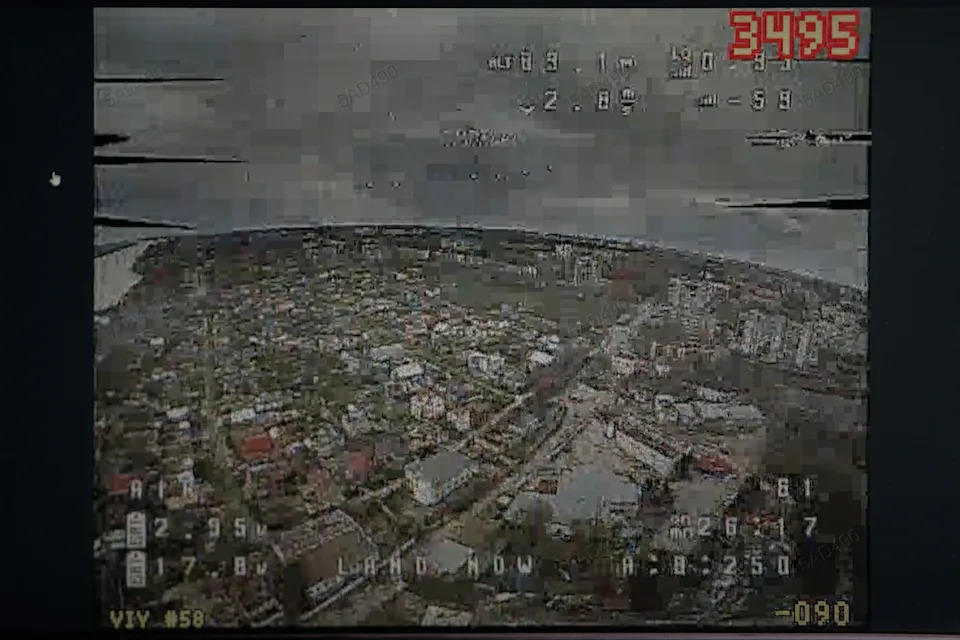
Libkos/Getty Images - PHOTO: A screen displays an intercepted live feed from a Russian FPV drone as it flies on a course toward the city on April 7, 2026 in Kherson, Ukraine.
Displacement and Life Under Occupation
Almost 80% of Kherson’s pre-war population of about 283,000 has left — during the initial invasion, the occupation, or after liberation. On the Russian-held east bank of the Kherson region (around 75% of the territory), residents face shortages of food, water, medicine, gas and electricity; reports also cite prioritisation of Russian troops for medical care, forced mobilisations, and pro-Moscow indoctrination in schools.
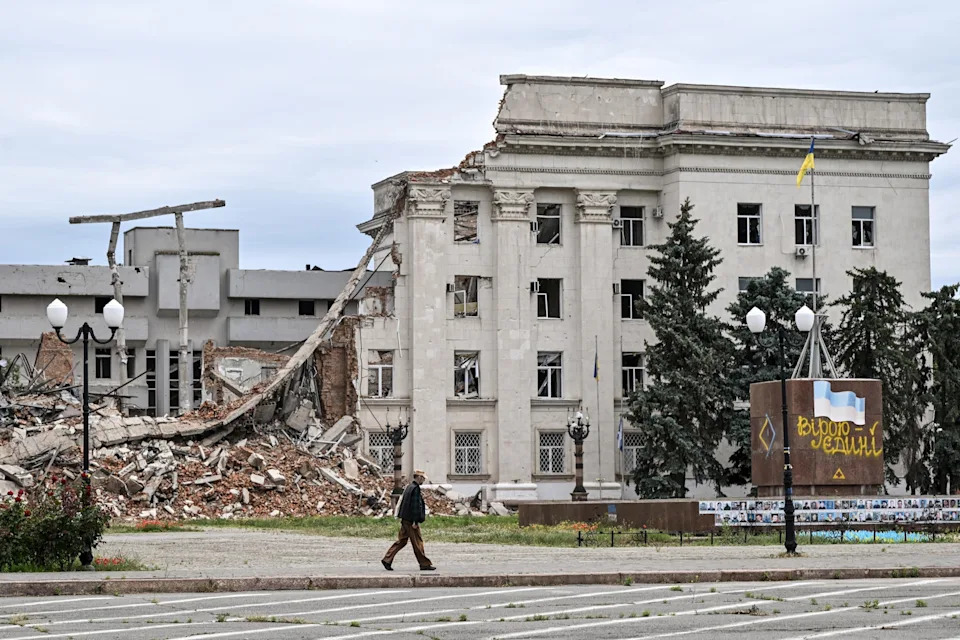
Nurphoto/NurPhoto via Getty Images - PHOTO: A man walks past the destroyed building of the Kherson Regional Military Administration in Kherson, Ukraine, on June 3, 2026.
Diplomacy, Ceasefire Concerns and Local Views
Recent shuttle diplomacy by U.S. envoys, including special envoy Steve Witkoff and Jared Kushner, produced no clear breakthrough. Moscow officials insist that control over Kherson and other occupied regions is 'undeniable and non-negotiable.' Many in Kherson fear any negotiated pause could merely freeze the conflict along the current 754-mile front line, leaving civilians exposed to continued attacks. Sergienko warned that a ceasefire would not equal peace without enforceable guarantees: 'Even if a ceasefire is reached, it will likely be temporary,' she said.
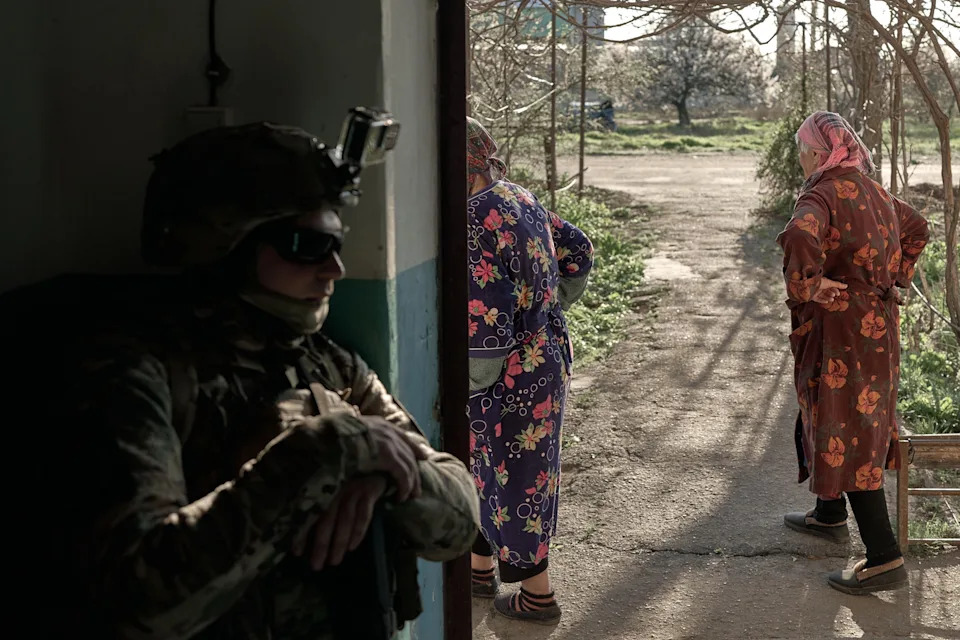
Libkos/Getty Images - PHOTO: Two women hide from an FPV drone circling overhead, listening to the sky and trying to locate it, as police officers inspect residential neighborhoods in Kherson's red zone, on April 5, 2026 in Kherson, Ukraine.
Outlook
Local officials stress that while Kherson’s liberation in 2022 showed Ukrainian forces can achieve difficult objectives, recovery will be long and security fragile. Tolokonnikov urged realistic expectations: if an agreement leaves the region divided, the plight of people on the occupied bank must be resolved and those territories ultimately liberated. For now, residents and aid workers say a durable end to fighting — not a temporary pause — remains the most urgent priority.
Sources: Interviews with local officials and humanitarian workers; regional government data shared with ABC News; reports from the U.N. Independent International Commission of Inquiry on Ukraine.
Help us improve.