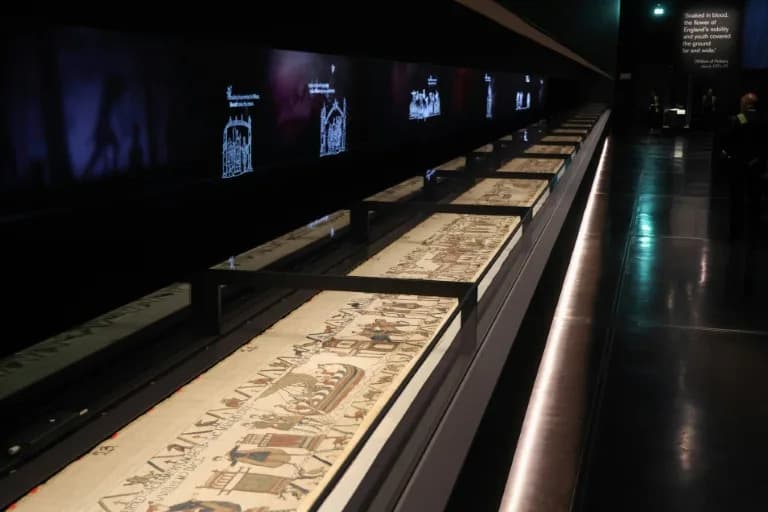
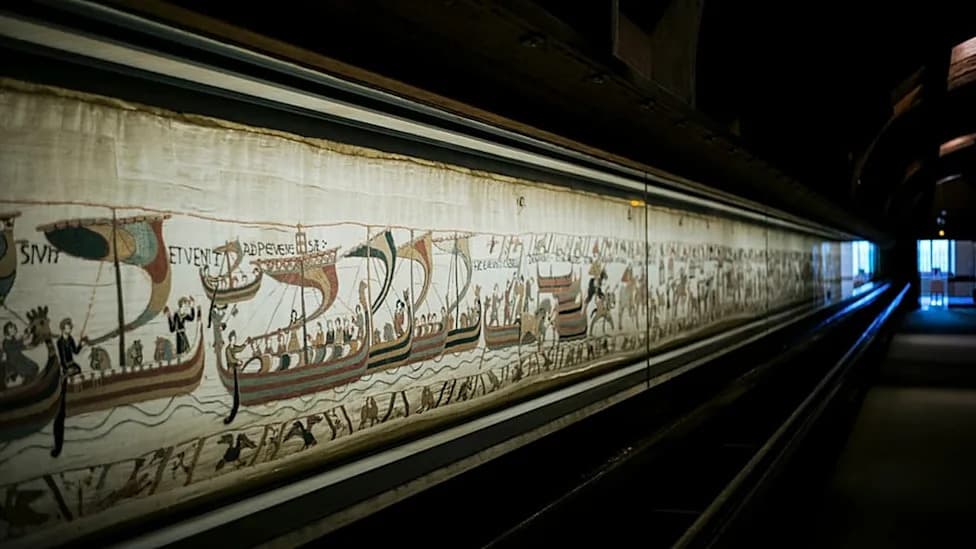
Reading Museum houses a near-exact, full-size woven replica of the Bayeux Tapestry made by 35 women from a Victorian embroidery society in Leek between 1885 and 1886. The replica toured internationally before going on display in Reading in 1895 and is believed to be the only full-size woven reproduction known to exist. Attention around the original 11th-century tapestry’s loan to the British Museum has increased public interest in Reading’s version, which Carr describes as a masterpiece of the Arts and Crafts movement and still powerfully relevant in its depiction of civilian suffering in war.
Hidden in Reading: A Full-Size Bayeux Tapestry Replica Steps Into the Spotlight
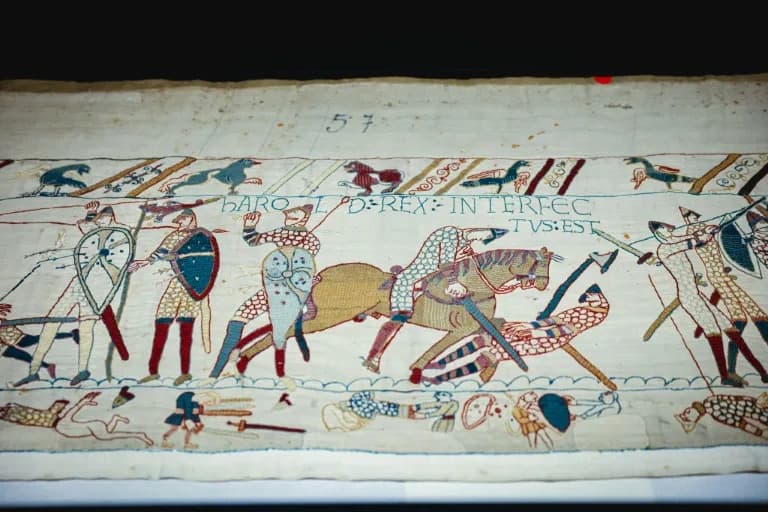
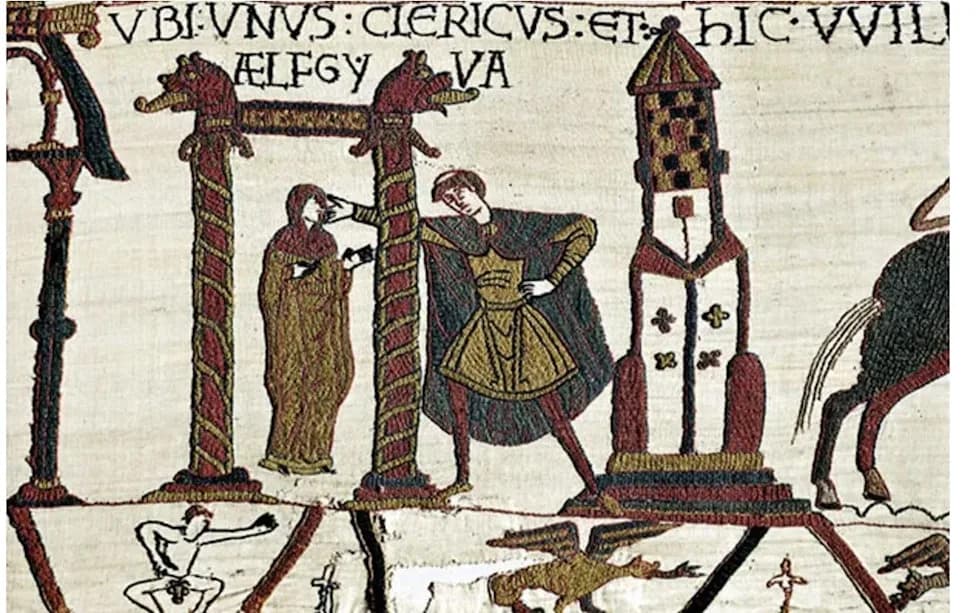
The scene depicting King Harold's death on the original Bayeux Tapestry (Adrian DENNIS)
In Reading Museum, a long, finely embroidered cloth stretched across two galleries tells the dramatic story of the Norman conquest of England — but it is not the famous 11th-century Bayeux Tapestry on loan to the British Museum. This is Reading’s near-exact, full-size woven replica, quietly displayed for roughly 130 years.
Believed to be the only full-size woven copy in existence, the Reading tapestry was produced by 35 women from a Victorian embroidery society in Leek, Staffordshire. Working from photographs of the original between 1885 and 1886, each stitcher took responsibility for a section of the cloth. After completion the replica toured internationally — from the United States to South Africa — before it was installed in Reading in 1895.
Arts and Crafts Heritage
Curator Brendan Carr describes the work as "a masterpiece of the Arts and Crafts movement," a late-19th-century revival of handcrafted arts that reacted against industrial mass production. Carr argues that the Reading replica offers more than a second-rate experience, providing an accessible, historically interesting companion to the original now on display in London.
Nudity Removed
The replica is almost identical to the medieval original, but with several small alterations. Most notable is the censoring of nudity: where the 11th-century cloth shows a "rather well endowed figure," the Reading version displays faint traces of undergarments. Some historians suggest that the embroiderer Margaret Ritchie may have suspected alterations to the original and chose not to fully participate in that modification.
Why It Matters Today
Beyond craft and provenance, the tapestry retains emotional power. One scene — one of only three women depicted — shows a mother fleeing as soldiers set fire to her home while she clutches a small child. Carr says the image remains "poignant, timeless and universal," reminding modern viewers that civilian suffering in war is a constant theme across centuries.
With the British Museum’s exhibition drawing large audiences and sold-out tickets, attention has turned back to Reading, where the replica offers a compelling, locally accessible window onto 1066 and Victorian craft culture.
Brendan Carr, Reading Museum: "The original coming to England has returned the favour — there’s now much more awareness of Britain’s reproduction."
The Reading tapestry invites visitors to consider questions of authorship, adaptation and the ways both medieval and Victorian viewers understood history — and to appreciate the skill and social history embedded in every embroidered scene.
Help us improve.