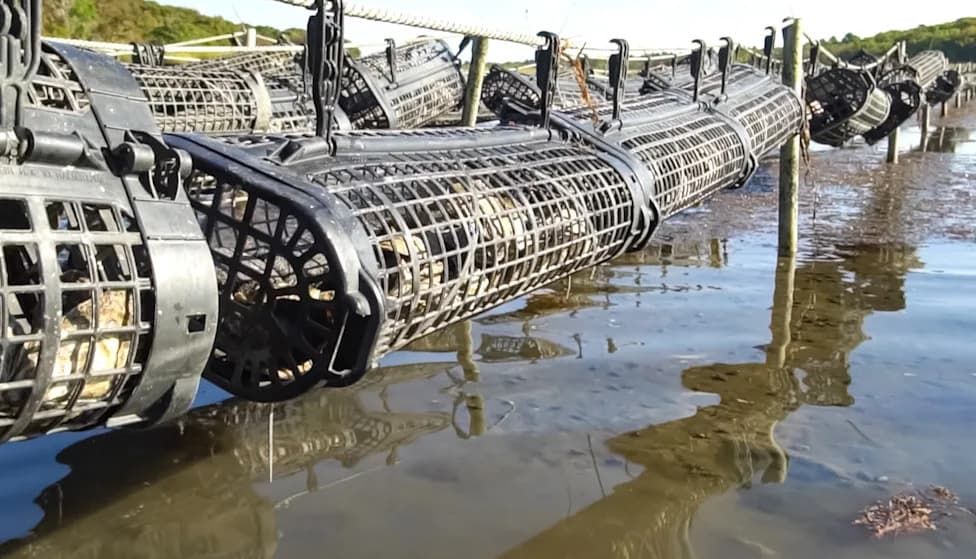
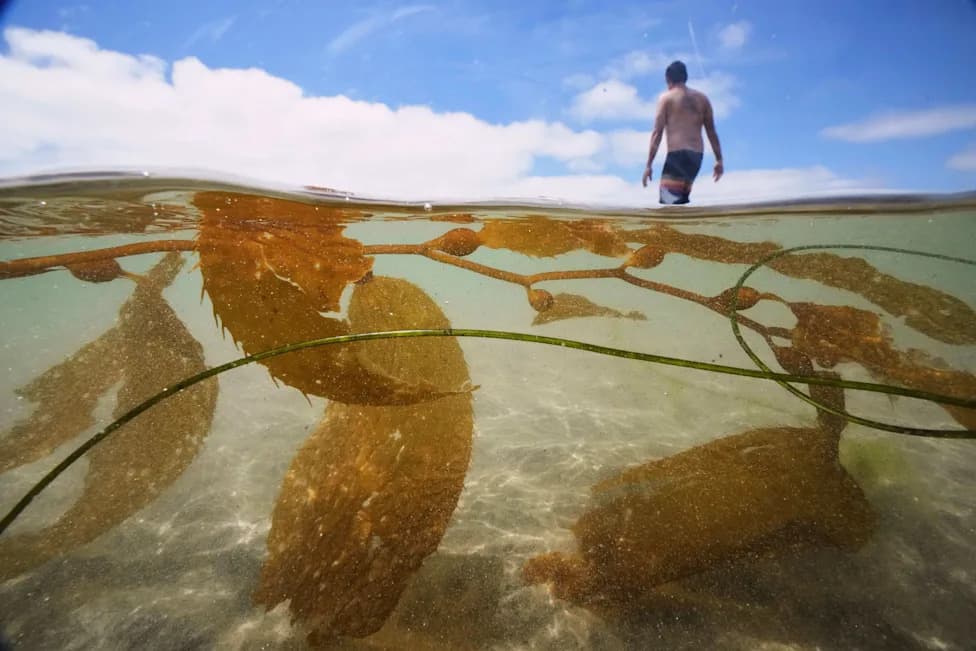
Jonesport voters approved amendments that give Kingfish Maine a longer window — from 24 to 30 months — to demonstrate a “substantial start” on its proposed $100 million, 22-acre land-based kingfish facility and exempt the project from the town’s usual 30% first‑year completion rule. The changes also let the Planning Board approve permit revisions without a full site-plan review, but the Maine DEP must review any shoreland zoning modifications before they take effect. Local fishermen voiced strong environmental concerns — especially about the project’s estimated ~28.5 million gallons-per-day water use — while Kingfish moves forward after winning key court challenges and completing a financial restructuring.
Jonesport Approves Special Variances, Extends Kingfish Maine’s Construction Window Amid Fishermen’s Concerns

Jonesport votes to allow Kingfish 30 months in which to show a "substantial start" to their project. Photo by Jessica Brockington.
JONESPORT — In a meeting attended by roughly 50 residents and notably few local fishermen or Planning Board members, voters on Wednesday approved ordinance amendments that create special variances applying only to Kingfish Maine, the land-based aquaculture project first proposed in 2019.
What Changed
The revised ordinances extend Kingfish’s deadline to demonstrate a “substantial start” on its planned $100 million, 22-acre recirculating aquaculture facility from 24 to 30 months and exempt the project from the town’s usual requirement that 30% of a project be completed within the first year. Under the new language, a “substantial start” must be demonstrated by visible, physical work at the site that is significant enough to show both intent and capacity to complete the project.

Frank Smith, standing, answers questions from a Jonesport voter. Sitting directly in front of Smith is Kingfish's lawyer, Adrian Kendall of Norman Hanson Detroy LLC, and in front of Kendall is Kingfish's communications consultant, Dianna Fletcher of Fletcher Media. Photo by Jessica Brockington.
A separate amendment gives the Planning Board authority to approve permit modifications for Kingfish without requiring a full site-plan review. Those changes must still be reviewed by the Maine Department of Environmental Protection (DEP) before they can take effect.
Timing And Legal Limits
Planning Board Chair Frank Smith initially told the meeting that the extended 30-month clock would begin with the voter approval, then corrected himself after the meeting: municipal votes cannot change shoreland zoning in ways that conflict with state DEP regulations without DEP approval. As a result, the 30-month clock will only begin once the DEP has reviewed and accepted any shoreland zoning changes.
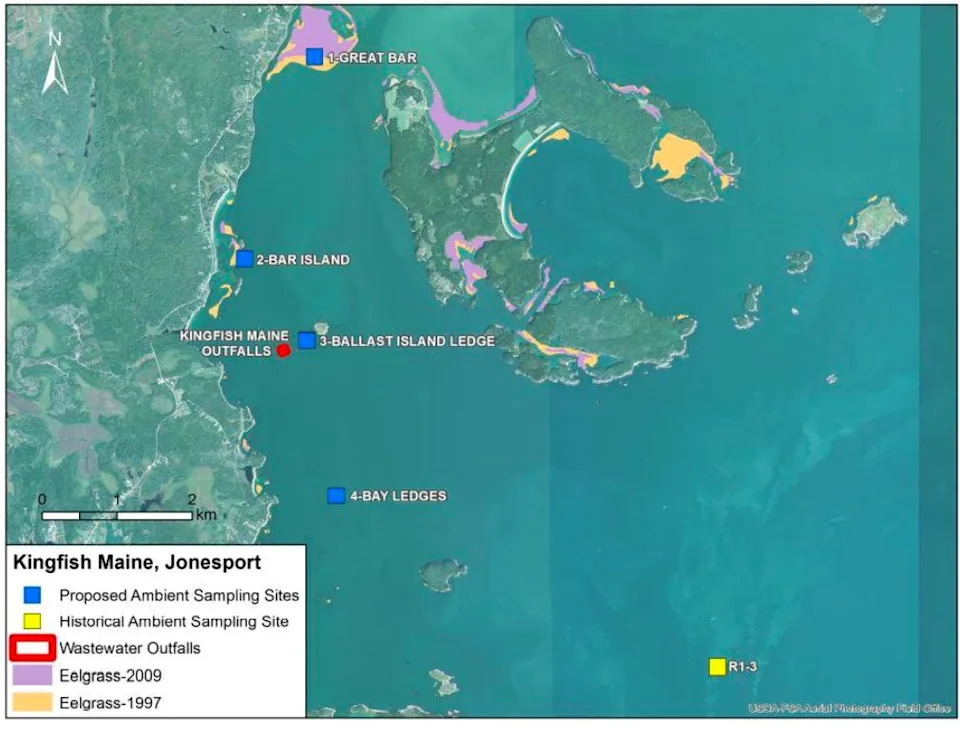
Kingfish has been conducting yearly water sampling since 2022. Source: Kingfish
Community Concerns
The proposal has drawn persistent opposition from environmental advocates and many local fishermen. Fishermen and community members at the meeting raised concerns about the facility’s proposed water intake and discharge, which Kingfish’s engineering documents peg at about 19,812 gallons per minute — roughly 28.5 million gallons per day — and the potential effects on plankton, eelgrass, larval stages of commercially important species and overall bay ecology.
"It's gonna kill plankton. It's gonna kill eelgrass," said Mary Look, whose family has operated from Old House Point since 1910. "It's a no-win situation for our fishermen."
Other outspoken critics include Glenda Beal, chair of the Beals Select Board, and longtime lobsterman Robert Beal, who fear algae blooms and long-term damage to the Mason's Bay area. John Drouin, vice president of the New England Fishermen's Association, warned that the scale of the intake merits far more public attention.
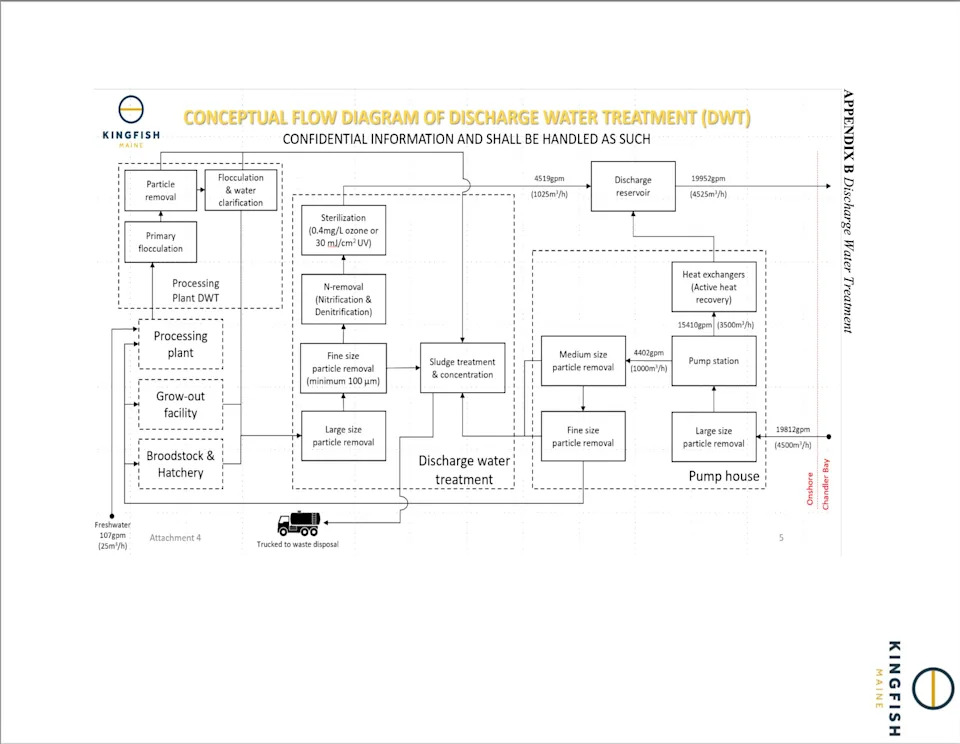
Flow chart submitted to the DEP as part of the Kingfish waste water discharge permit. "19,812 gpm" (gpm=gallons per minute) translates to 28,520 million gallons per day and many lobster fishermen are concerned about the impact on the fisheries in the Chandler Bay area. Source: Kingfish
Project Background And Status
Kingfish Maine proposed the recirculating aquaculture system in November 2019. The planned plant is designed to produce about 8,500 metric tons of yellowtail kingfish annually. The proposal triggered immediate environmental challenges and years of litigation; in April 2025 the Maine Supreme Judicial Court upheld the DEP permit and cleared Kingfish to proceed.
The company has been conducting annual water sampling since 2022. Its five-year Maine Pollutant Discharge Elimination System (MEPDES) permit is under review by the DEP, but that review is not expected until early 2027, according to an Aug. 3 email cited by a local opponent. If DEP review of the town’s ordinance changes is delayed and rolled into the MEPDES timeline, Kingfish could effectively have closer to 36 months to show progress.

The Billion Egg Challenge. Photo courtesy John Drouin.
Kingfish has also faced financial setbacks in recent years: it reportedly failed to meet certain financial obligations for two years and completed a corporate restructuring this summer. Following that restructuring, the Icelandic investment firm Eyrir Invest became the largest shareholder, holding 31.4% of the company.
What Happens Next
The voter-approved ordinances are now subject to DEP review before they can take effect. The DEP’s public record on the MEPDES renewal remains open for comment in the agency’s online project folder.
Key players at the meeting included Planning Board Chair Frank Smith, Kingfish counsel Adrian Kendall of Norman Hanson DeTroy LLC, and communications consultant Dianna Fletcher of Fletcher Media.
Help us improve.