The Narraguagus River in downeast Maine recently lost a decades-old ice-control dam, replaced with a nature-like fishway designed to restore passage for Atlantic salmon and other migratory fish while maintaining ice and flood protection. Years of local and regional habitat work — from culvert replacements to adding in-stream wood — set the stage, but recovery faces major hurdles: high ocean mortality and warming rivers that stress salmon. Hatcheries currently sustain the population, but long-term success will require increased wild returns, genetic diversity and broader ocean and watershed improvements.
Dam Removed, Fishway Built: Will Atlantic Salmon Return To Maine’s Narraguagus River?
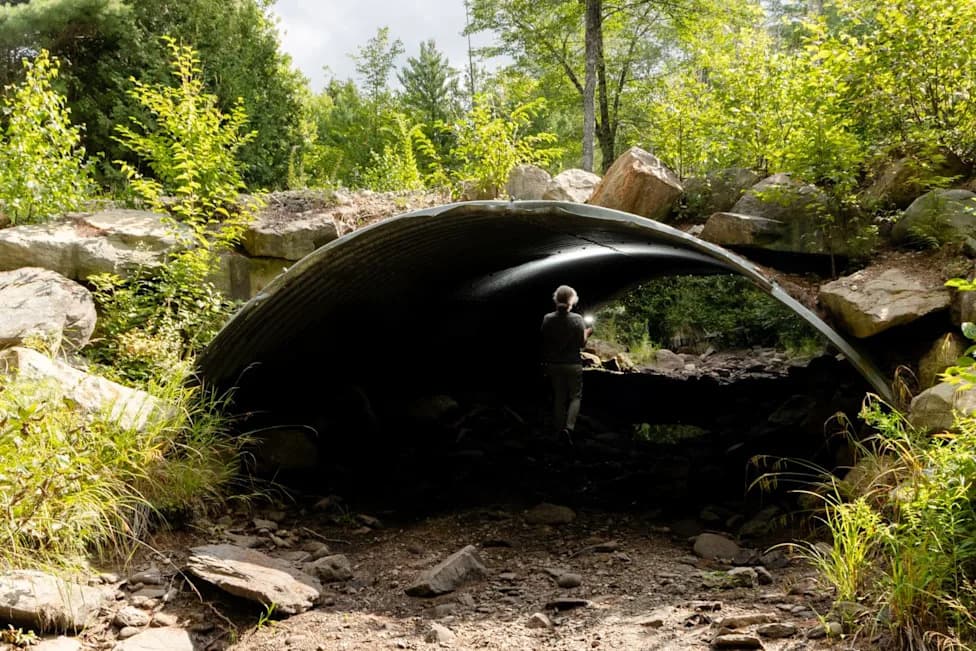
After the Cherryfield dam replacement, the Narraguagus River will be prime habitat for endangered Atlantic salmon. But as the climate changes, conservationists know there is still a long road ahead. Photo by Katherine Emery forThe Maine Monitor.
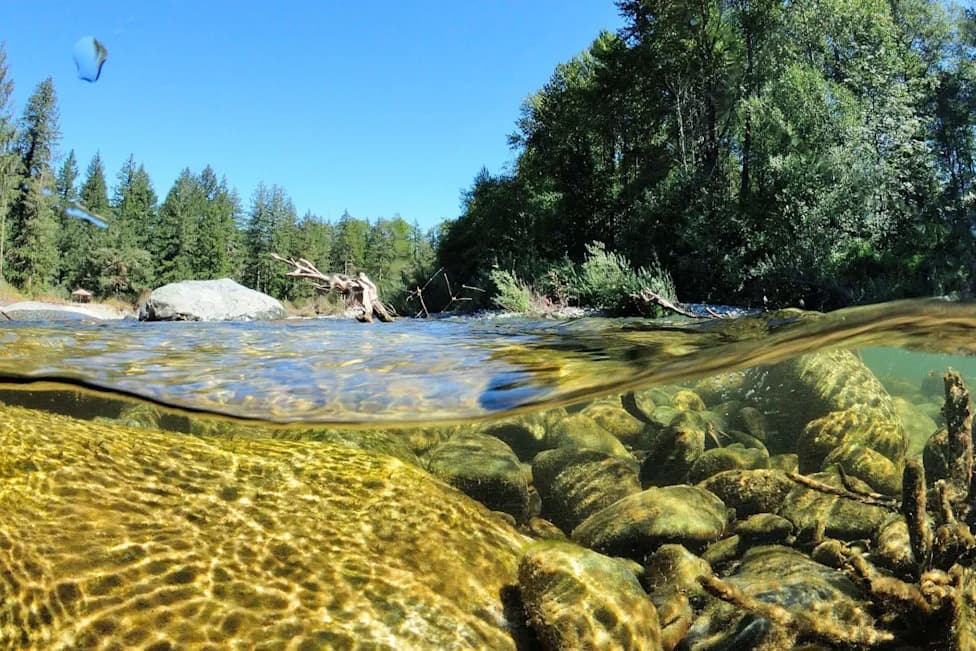
On a recent canoe trip into the remote upper reaches of the Narraguagus River, habitat specialist Ellie Mason found what looks like classic Atlantic salmon habitat: shaded, forested banks, cool pools and a rocky bottom that offers plentiful nesting sites for eggs. Yet wild adult salmon are largely absent from these stretches.
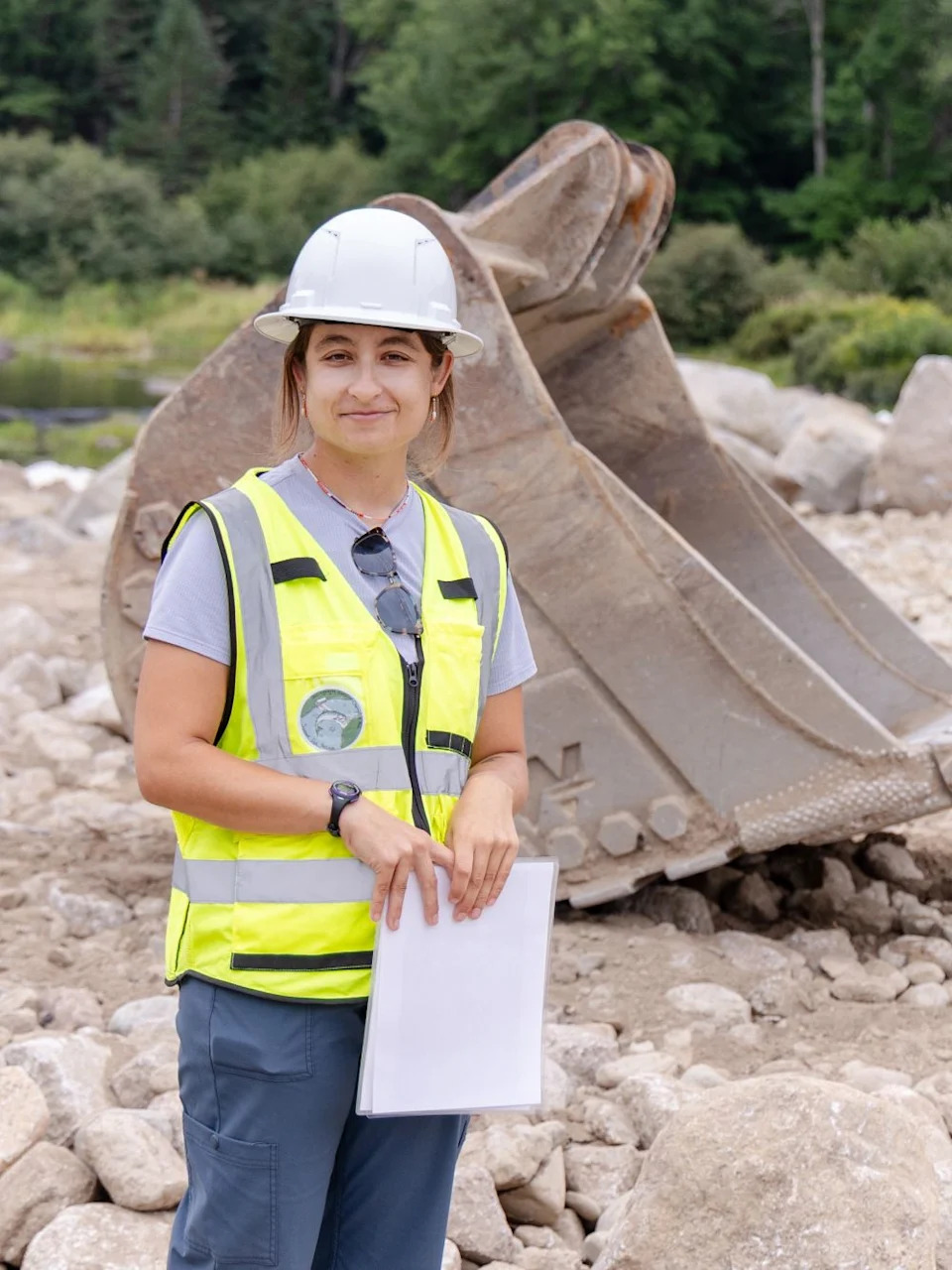
Ellie Mason, a habitat restoration project manager with the Downeast Salmon Federation, is providing a voice for salmon and other wildlife during all the day-to-day construction decisions. Photo by Katherine Emery forThe Maine Monitor.
A Major Barrier Comes Down
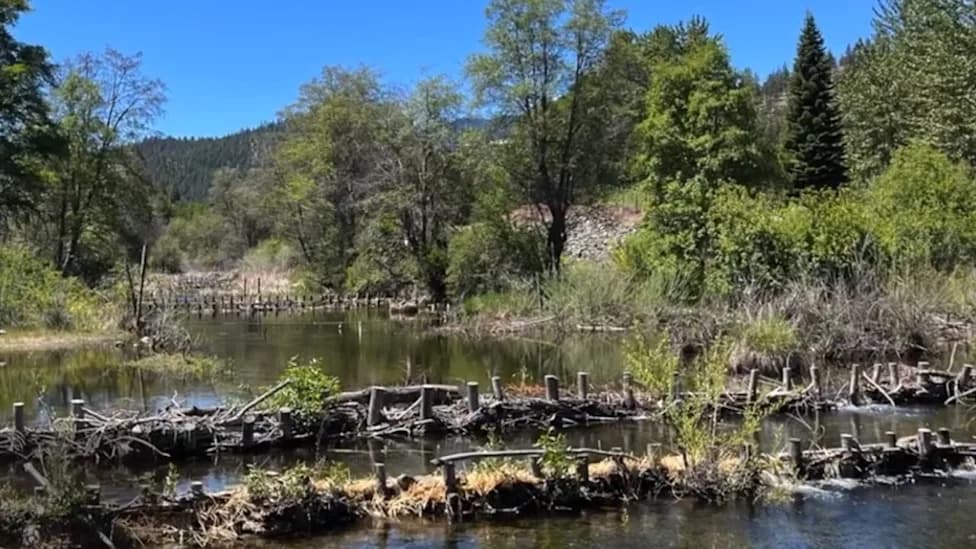
The Narraguagus main stem runs roughly 40 miles from its downeast lake sources to the head of tide at Cherryfield. For more than 60 years an Army Corps of Engineers ice-control dam built in 1961 blocked much of the river’s passage for migrating fish. After a unanimous 2023 town vote to take ownership, the dam has been removed and crews are building a "nature-like" fishway made of stair-stepping pools. The design preserves the dam’s ice- and flood-control functions while allowing salmon, river herring, shad and other anadromous species to move upstream more freely. Construction began in June and is expected to be completed by November.
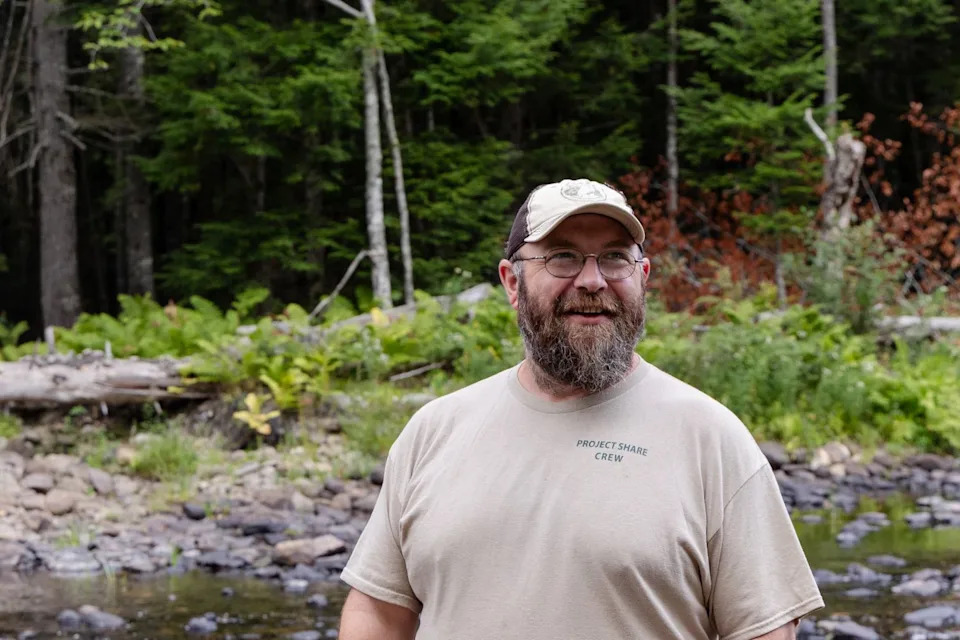
Christopher Federico, executive director of Project SHARE (left) began his salmon conservation career as an intern working under Ernie Atkinson (right), a fisheries biologist at the Maine Department of Marine Resources. Photos by Katherine Emery forThe Maine Monitor.
Local People, Regional Partners
The project reflects decades of collaboration between community members, conservation groups and private landowners. Project SHARE (Salmon Habitat And River Enhancement), the Downeast Salmon Federation, the Atlantic Salmon Federation, the Maine Coast Heritage Trust, The Nature Conservancy and local landowners have worked for years to restore connectivity on the Narraguagus — replacing dozens of blocked culverts and reintroducing large wood into channels to narrow, deepen and cool streams.
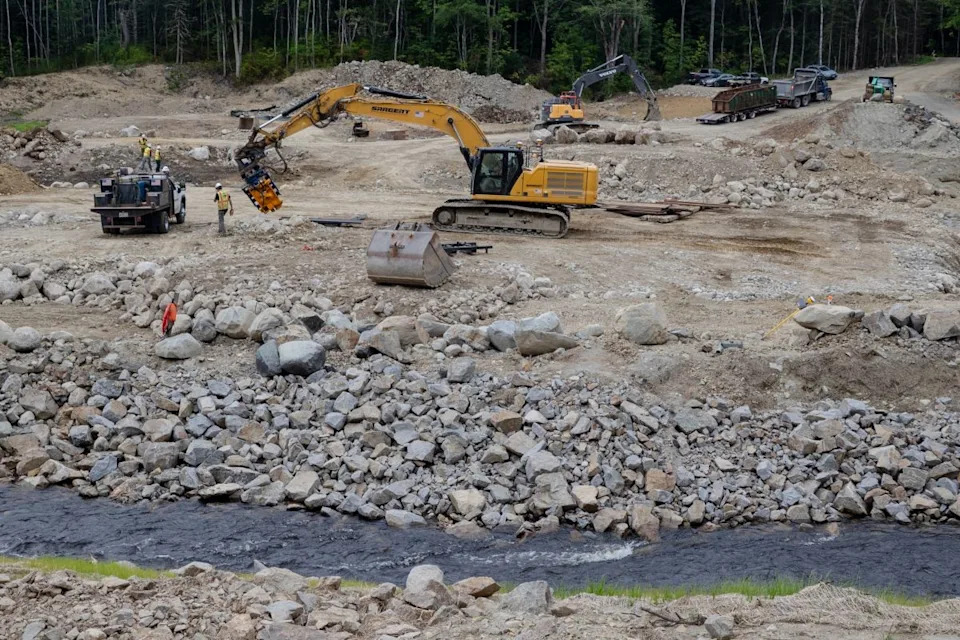
Left: A construction crew from Sargent Corporation and engineers from Inter-Fluve work on the "nature-like fishway" that's replacing a former ice-control dam on the Narraguagus River in Cherryfield. Right: An illustration shows what the finished work should look like. Photos by Katherine Emery forThe Maine Monitor.
Why Passage Matters — And Why It May Not Be Enough
Removing barriers is the first and essential step: fisheries biologists describe their work as being "in the connectivity business." But restored passage alone does not guarantee a comeback for Gulf of Maine Atlantic salmon. The regional population is listed as endangered under the federal Endangered Species Act. In recent decades only about 25 wild adult salmon returned to the Narraguagus annually, and roughly 1,000 adults return to Maine each year statewide.
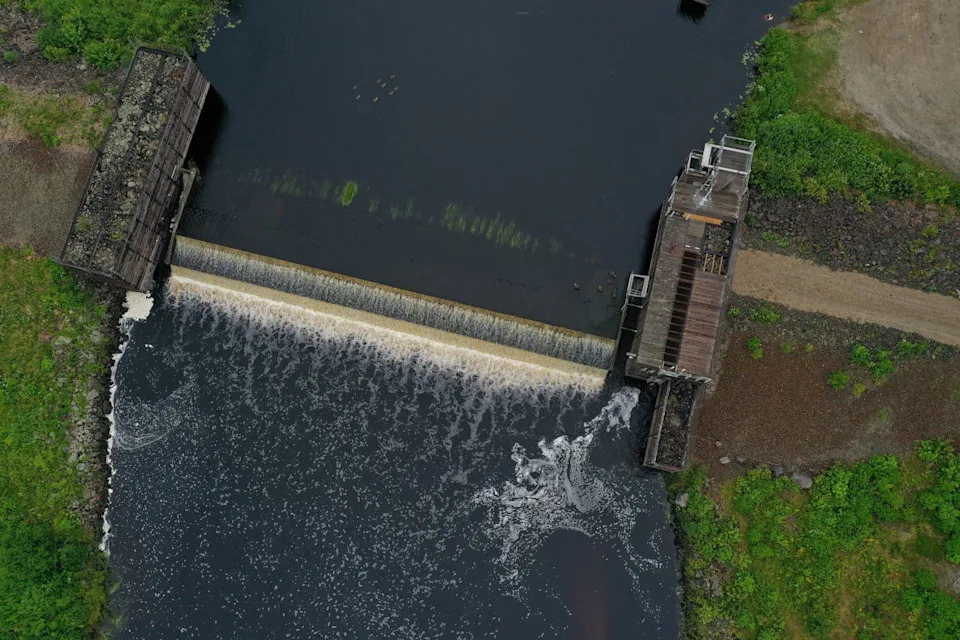
An aerial view of the former Cherryfield ice-control dam on the Narraguagus River, which has just been demolished. Photo courtesy Inter-Fluve and the Downeast Salmon Federation.
Scientists point to two stubborn problems: high marine mortality and a warming climate. Many researchers link elevated deaths at sea to ocean changes driven by climate change, while warming rivers reduce viable coldwater habitat. Atlantic salmon begin to experience thermal stress above about 68°F — a threshold the Narraguagus regularly exceeds in summer — though colder tributaries still provide important refuges.
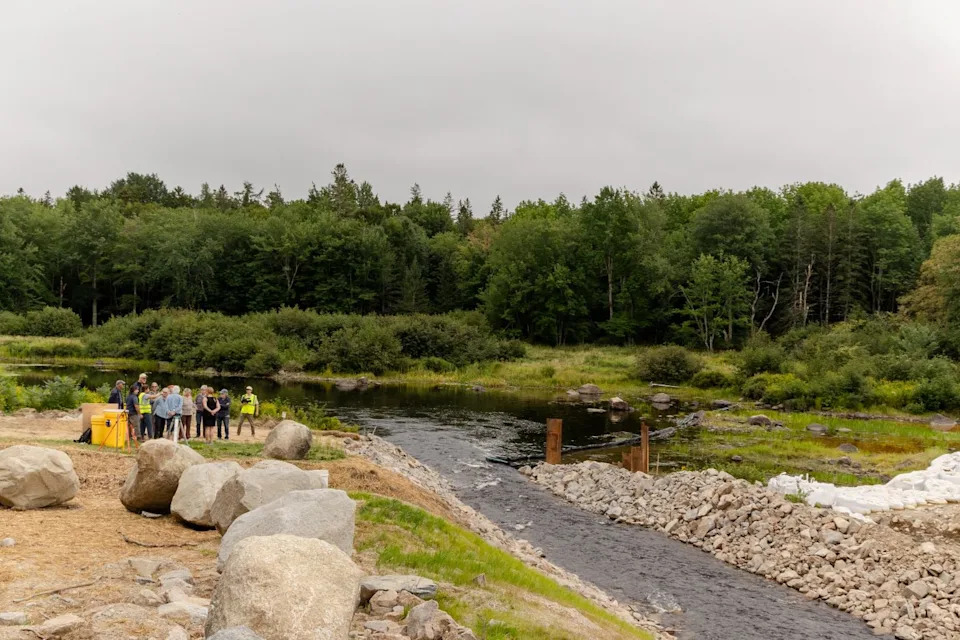
Left: Members of the Cherryfield community, who voted unanimously to replace their town's ice-control dam with a more natural alternative for fish, gather for a public tour of the project on August 28, 2026. Right: A sign shows the many groups involved in this project. Photos by Katherine Emery forThe Maine Monitor.
Hatcheries: Lifeline and Limits
For now, hatcheries help keep the population from collapsing. Federal and non-profit hatcheries release hundreds of thousands of juveniles into Maine rivers each year; scientists estimate about 1,700 of those reach smolt stage on average and migrate to sea, but fewer than a few dozen return as adults — under 1 percent. Managers warn that without this supplementation extinction would be a real possibility.
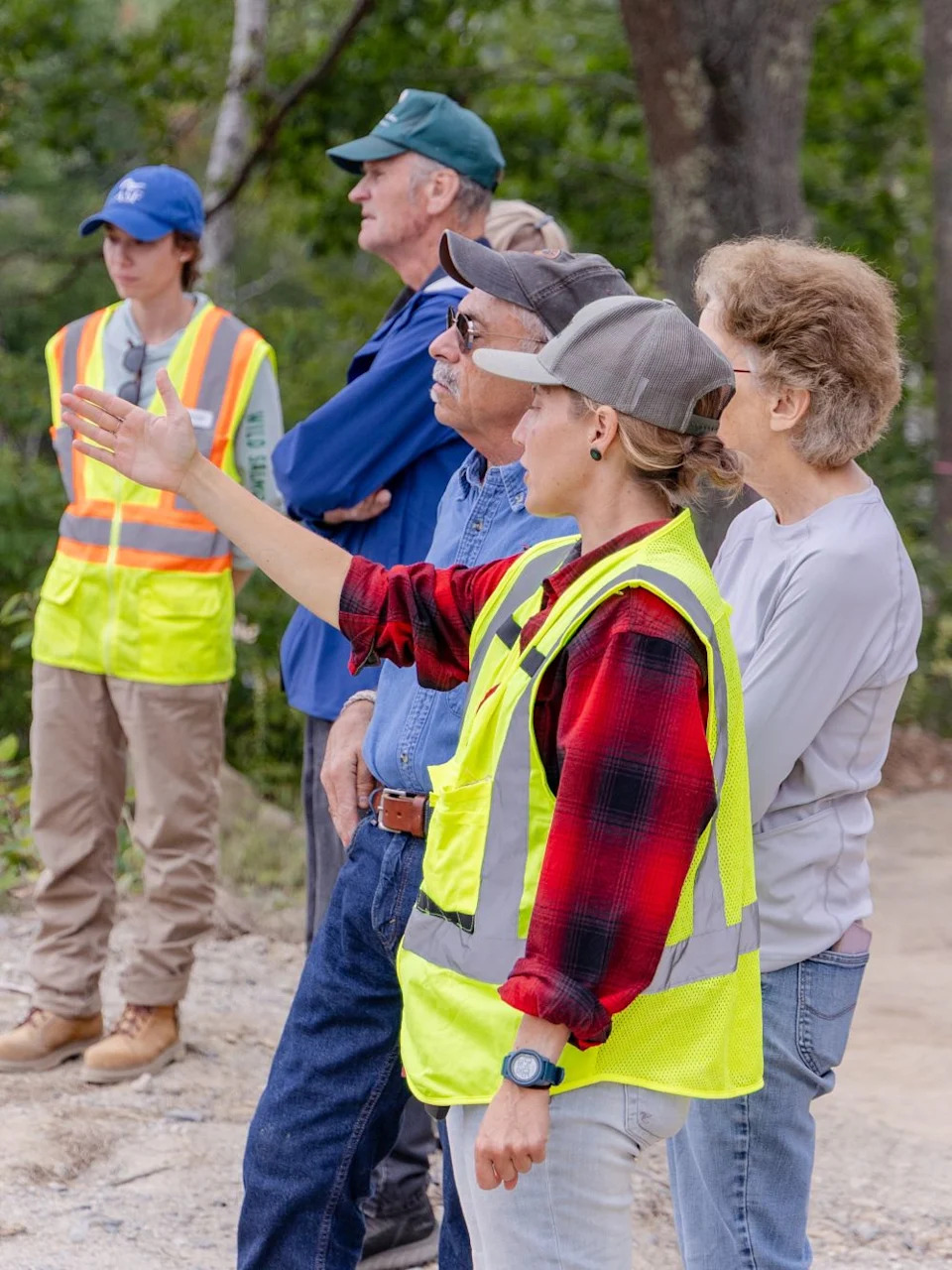
Cherryfield community members look at the ongoing construction to replace their former dam with a nature-like fishway. Photo by Katherine Emery forThe Maine Monitor.
Measuring Success
Researchers will use American shad as an early indicator of improved passage because shad are more abundant and highly sensitive to barriers. Teams are sampling environmental DNA (eDNA) above and below the former dam site to track changes; baseline results showed more shad DNA below the old dam, with hopes of greater parity after the fishway opens.
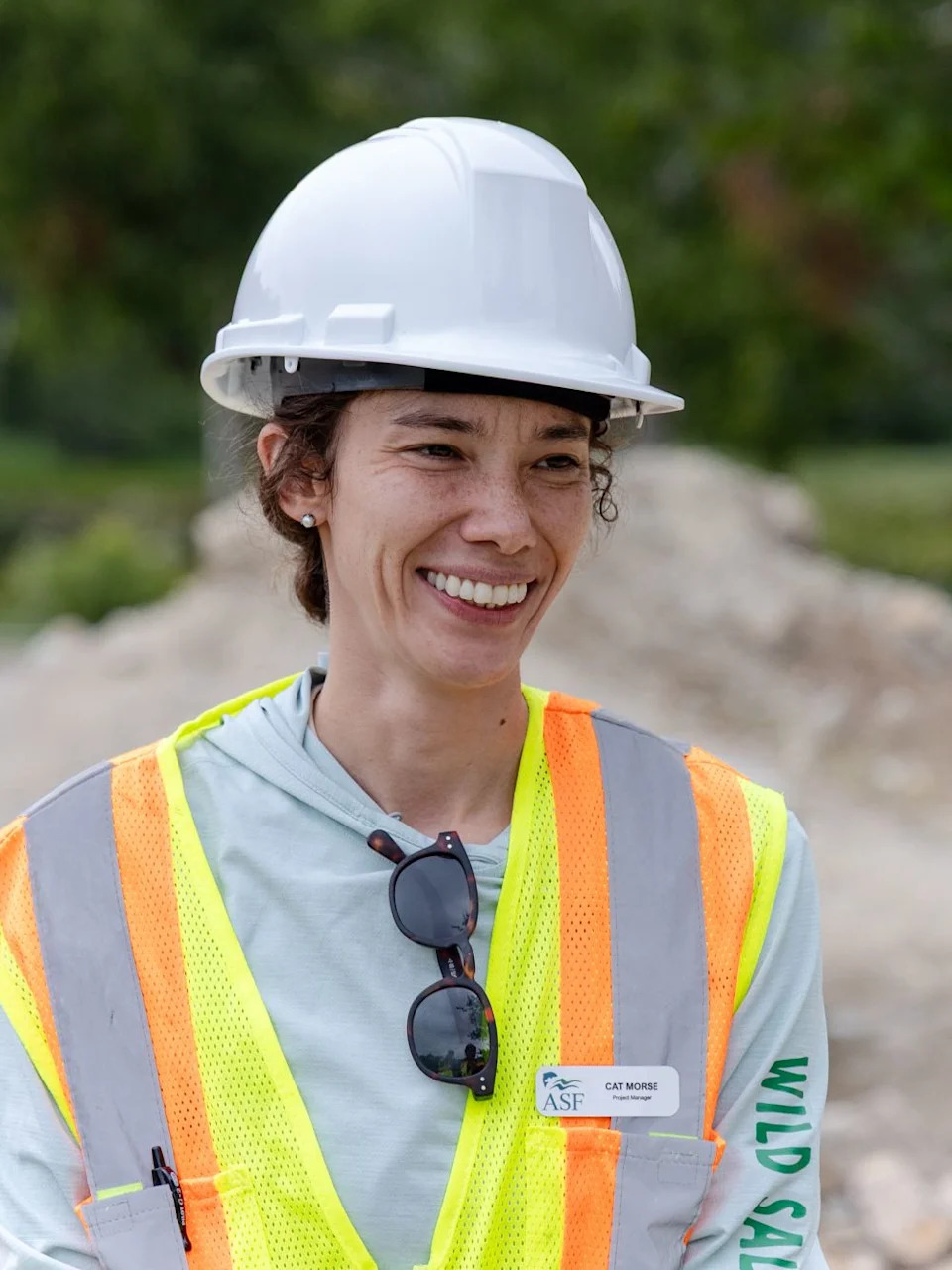
Catherine Morse's great-grandparents used to buy Cherryfield salmon for special occasions before the fishery closed. Now Morse, a habitat restoration project manager at the Atlantic Salmon Federation, is working to bring the salmon back. Photo by Katherine Emery forThe Maine Monitor.
Long Horizons And Big Investments
Federal recovery targets are ambitious: about 1,500 wild adult returns annually would be needed to reclassify the Gulf of Maine stock from endangered to threatened; full delisting would require roughly 6,000 wild adults returning across multiple watersheds with sustained population growth. The federal recovery plan estimates recovery could take decades — on the order of 15 salmon generations — and cost hundreds of millions of dollars. Advocates stress that these investments would benefit entire watershed ecosystems, not just salmon.
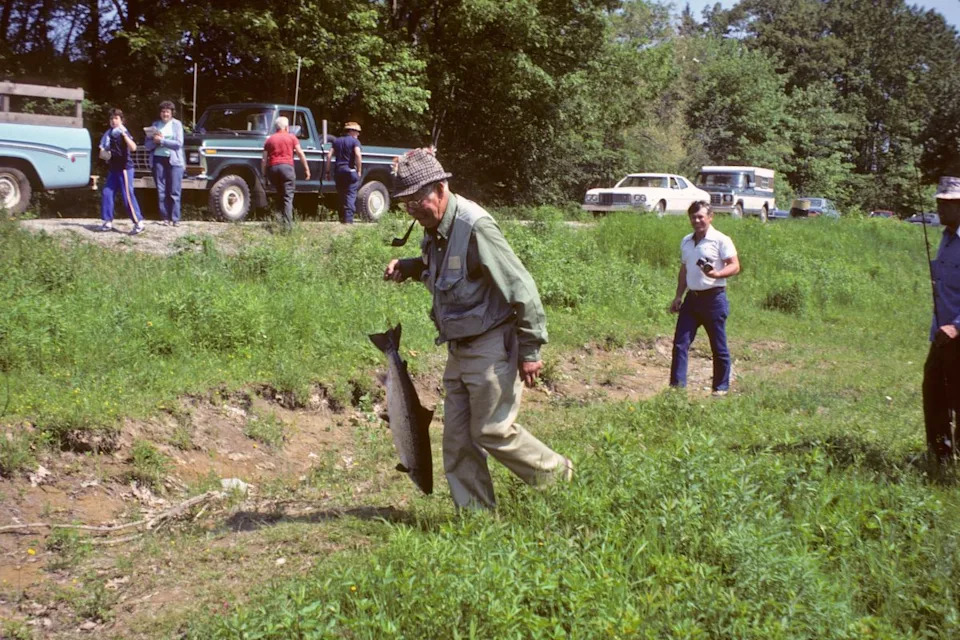
Men with Narraguagus salmon caught off Cable Pool Park in Cherryfield in the 1980s, before the recreational fishery closed and Atlantic salmon were listed as endangered. Photos by Jim Blakeslee, courtesy of the Downeast Salmon Federation.
What's Next
Restoration work on the Narraguagus is buying time and improving habitat connectivity, but long-term recovery depends on many moving parts: more wild returns to boost genetic diversity and adaptive capacity, better understanding of the ocean phase of salmon life, and, crucially, efforts to limit and reverse climate-driven changes to marine and freshwater ecosystems. Local residents and multigenerational conservationists say they are committed to the work even if the payoff will likely span decades.
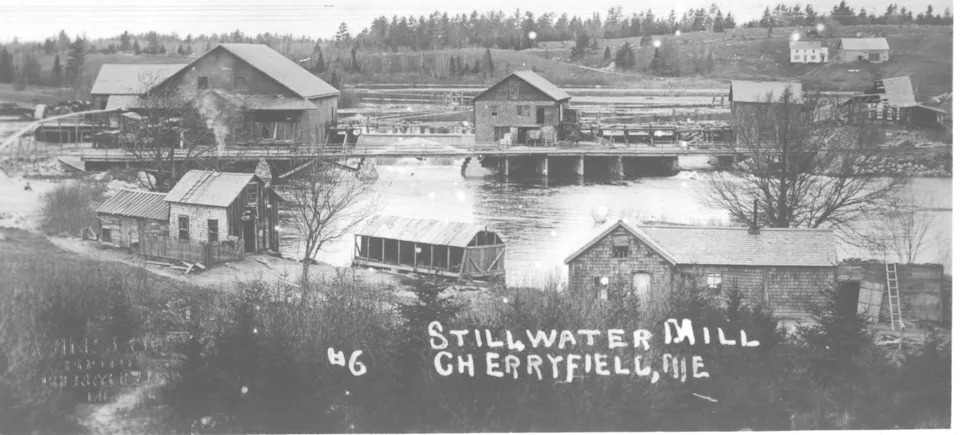
In the late 1800s, a one-mile stretch of the Narraguagus River near the head of tide in Cherryfield contained one of the largest concentrations of water-power-driven mills in Maine, according to a historical account by Phil Harriman published in 1977. Photo courtesy the Cherryfield-Narraguagus Historical Society and the Downeast Salmon Federation.
“All these restoration activities are fantastic. But we need fish, right?” — NOAA biologist James Hawkes.
Cherryfield community upgrades — added bathrooms, power, an amphitheater and a floating dock — aim to connect people to the river as well as to protect the town from ice-driven floods. Whether these combined social and ecological investments will return Atlantic salmon in numbers large enough to ensure long-term resilience remains uncertain, but the Narraguagus project offers a hopeful, pragmatic model of community-driven river restoration.
Help us improve.