Researchers at Virginia Tech report a chemical method to convert hard-to-recycle PVC into a thick oil suitable for industrial lubricants, in a study published in Nature. The process dissolves PVC with aluminum trichloride and alpha-olefins and heats the mixture to 158°F (70°C) for three hours to produce a high-viscosity lubricant base. Early trials produced gooey, low-performance material, but further chain-breaking refinements yielded a usable product. The team is now working to improve sustainability, scalability and cost-effectiveness for wider adoption.
Scientists Turn Hard-to-Recycle PVC Into Eco-Friendly Industrial Lubricant
Stripping chlorine from PVC helps transform it into a useful new industrial ingredient.
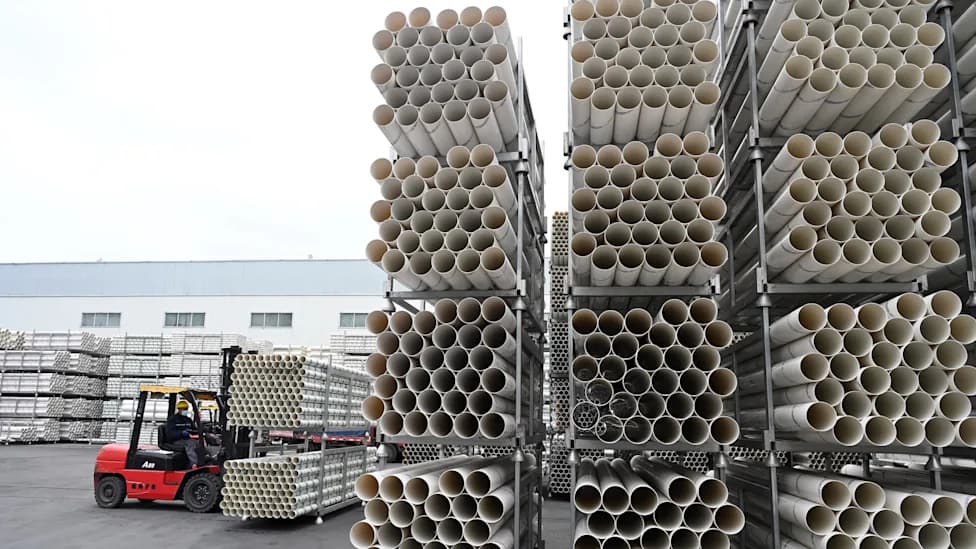
Polyvinyl chloride (PVC) — a common, chlorine-containing plastic found in pipes, credit cards, bottles and cable insulation — is notoriously hard to recycle. With roughly 40 million tons produced worldwide each year, most PVC ends up in landfills because of its additives and high chlorine content. A team led by researchers at Virginia Tech now reports a chemical route to break down PVC and convert it into a thick oil suitable for industrial lubricants, according to a study published in Nature.
How The Process Works
The researchers dissolve waste PVC in a solvent together with reagents such as aluminum trichloride (AlCl3) and alpha-olefins. The mixture is heated to 158°F (70°C) for three hours, after which the treated material yields a high-viscosity oil that can function as a lubricant base. Early iterations produced a soft, gooey product that did not meet performance targets, but further refinement — including breaking polymer chains down to shorter segments — produced a more robust, higher-performance oil.
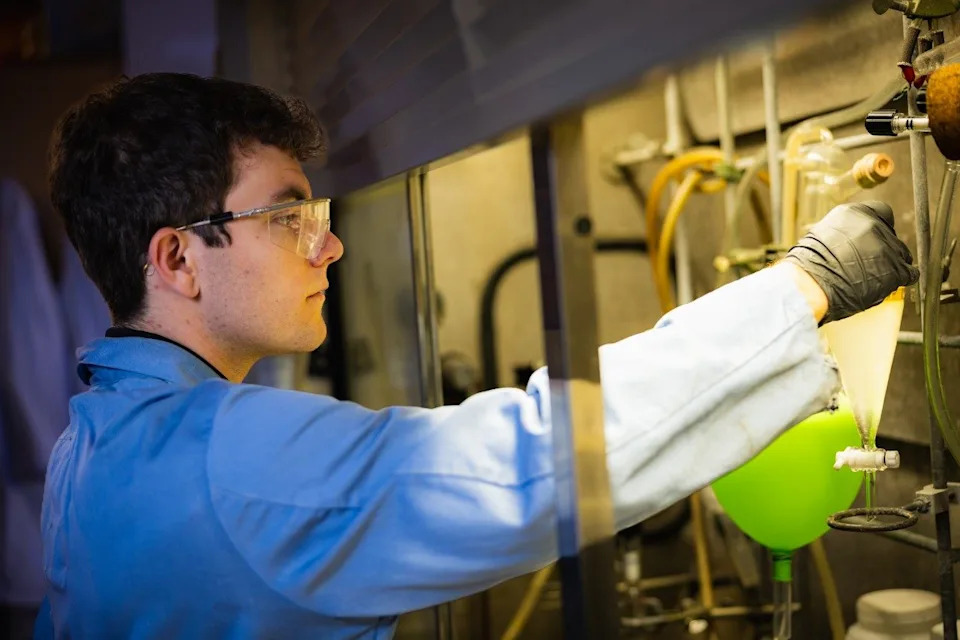
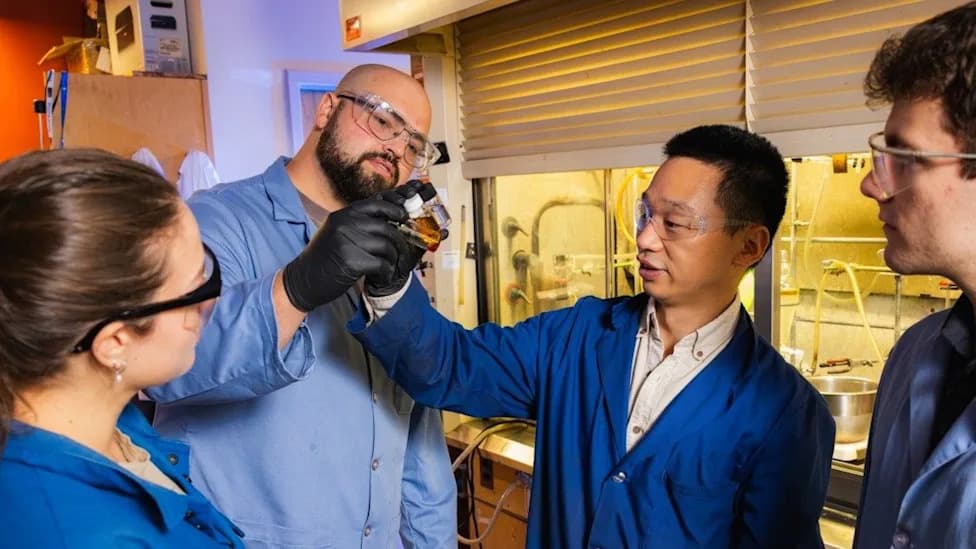
Graduate student Adrian DiMarco prepares a sample of engine oil created from upcycled plastic waste in Greg Liu's lab. Credit:Luke Hayes / Virginia Tech
"Number one, we have proved that it is feasible to use plastic waste to make high-performance lubricants," said Guioliang "Greg" Liu, a chemical engineer at Virginia Tech and co-author of the study. "Number two, these lubricants are green, and they can meet the emerging needs for sustainability by the market."
Why This Matters
The approach repurposes a major waste stream into a valuable industrial product, potentially reducing landfill volumes and creating economic value from otherwise discarded PVC. Because PVC contains chlorine and diverse additives, it is more challenging to recycle than many other plastics; converting it chemically into lubricant precursors sidesteps some of those obstacles.
Limitations And Next Steps
The team acknowledges that more work is needed to make the method greener, more scalable and cost-effective. Key challenges include optimizing reagent use, minimizing energy inputs and handling corrosive reagents safely at larger scale. The researchers are focused on improving sustainability and production economics before the process can be widely adopted.
Graduate student Adrian DiMarco prepared samples of engine oil derived from upcycled PVC in Liu's lab as part of the project. The work demonstrates a promising proof of concept: turning a difficult-to-recycle plastic into a potentially useful, lower-impact lubricant feedstock.
Help us improve.