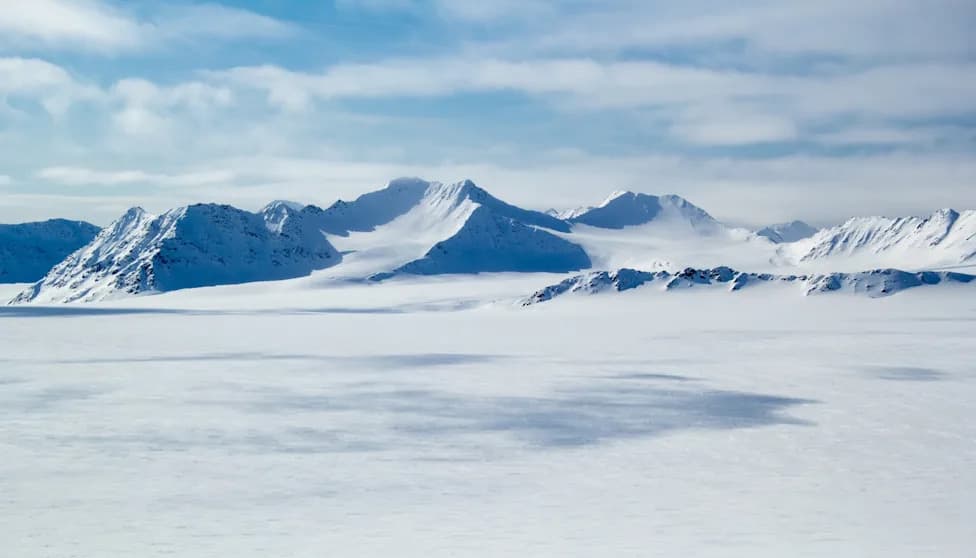
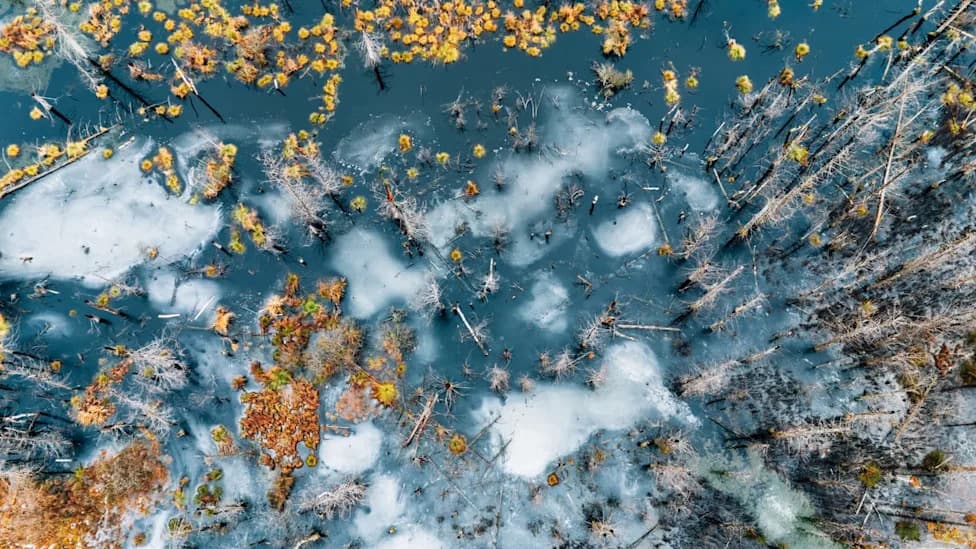
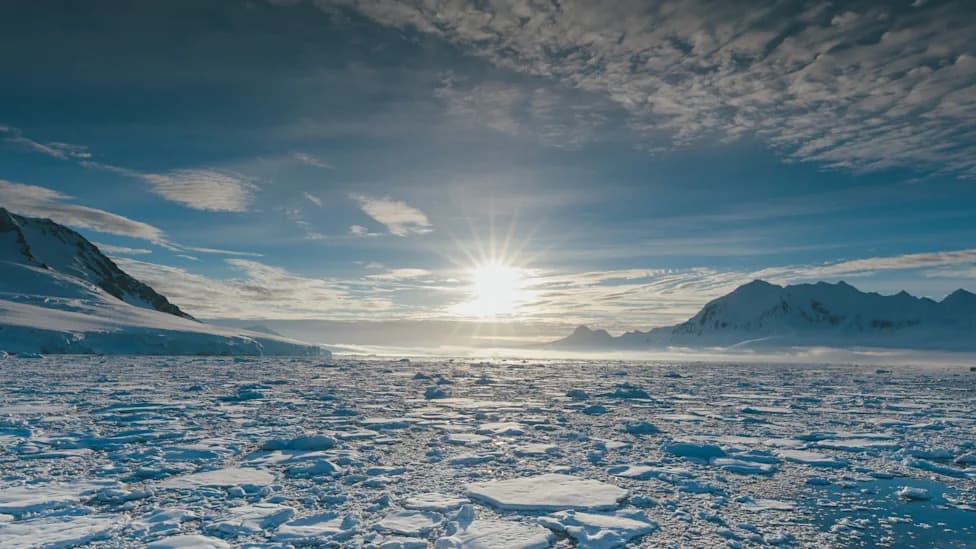
New research analyzing 724 lakes (2000–2022) finds that many Northern Hemisphere lakes may be near winter-temperature thresholds (7.3–19.8°F / −13.7 to −6.8°C) where modest warming triggers sharply accelerated ice loss. Beyond these bands, ice loss can increase up to 22×. Under a high-emission scenario, lakes past the thresholds could rise from ~23% to ~70% by 2100, shortening winter ice by about 40 days and threatening ecosystems and seasonal human activities.
Northern Hemisphere Lakes Near Warming Tipping Points — Winter Ice Could Shrink by ~40 Days
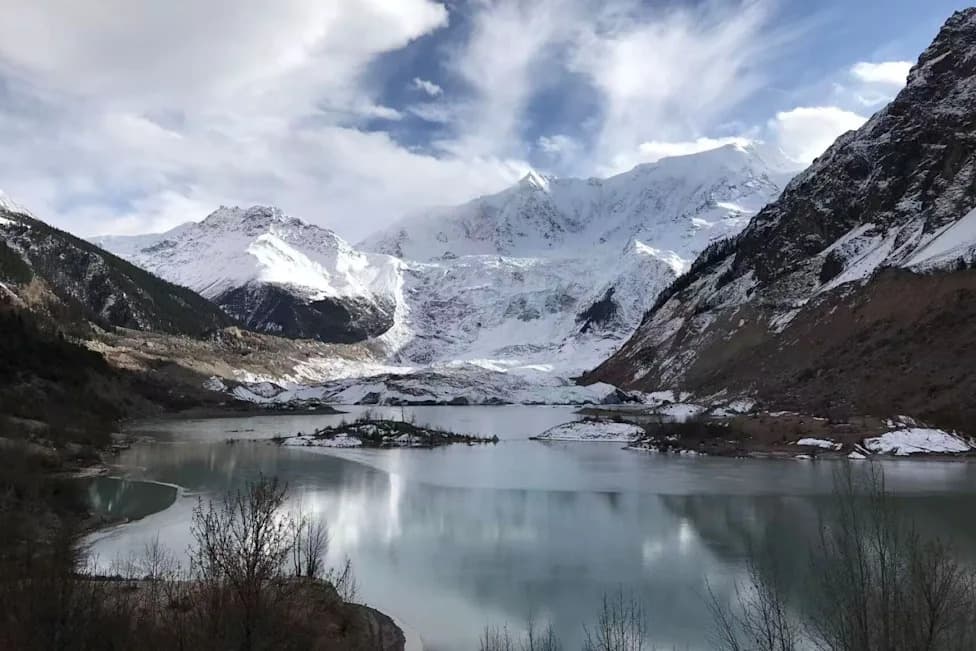
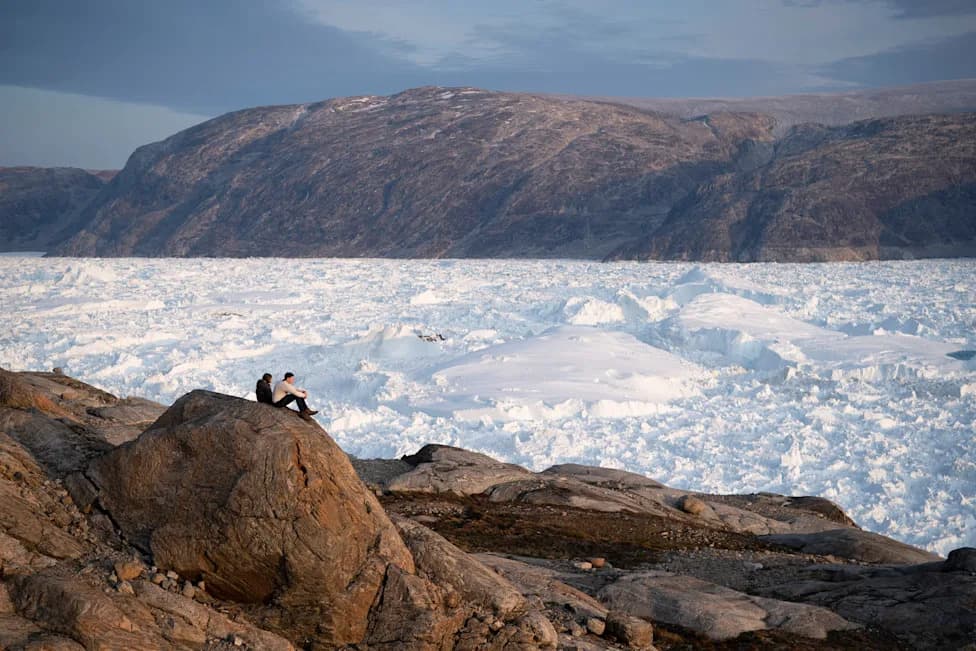
Photo Credit: Shi Kun
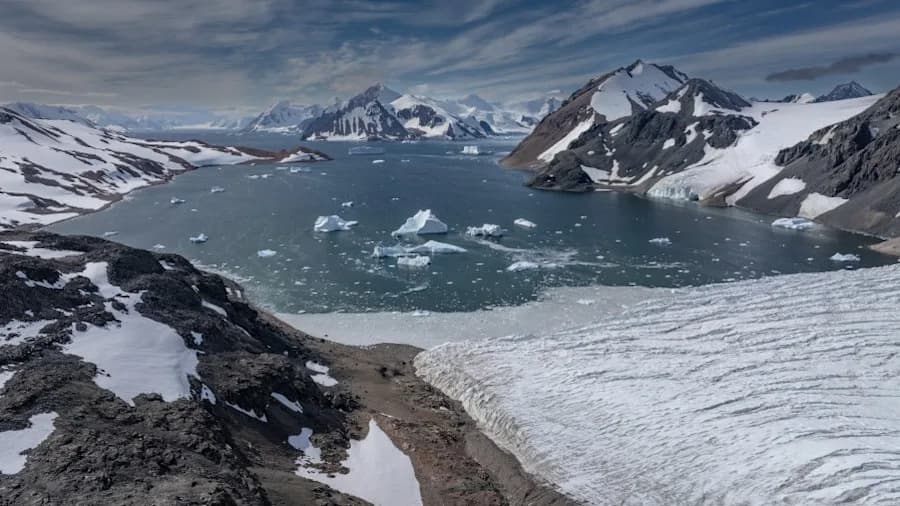
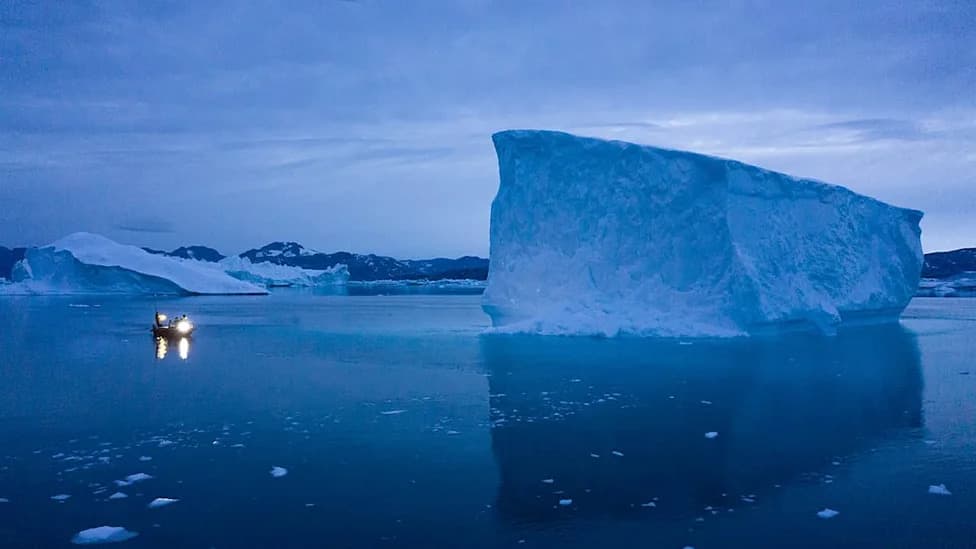
Winter ice on lakes is more than a seasonal backdrop: it regulates heat exchange, alters light penetration, and shapes habitat conditions beneath the surface. New research shows many Northern Hemisphere lakes may be close to temperature thresholds where a little extra warming produces much larger winter ice losses.
Study and Key Findings
A team led by the Nanjing Institute of Geography and Limnology analyzed ice records and winter air temperatures from 724 lakes spanning 2000–2022. Published in Proceedings of the National Academy of Sciences, the study finds that declines in lake ice are not always gradual. Instead, vulnerability can rise rapidly once mean winter air temperatures cross a specific band.
The researchers identified critical mean winter air temperature thresholds between 7.3 and 19.8 °F (−13.7 to −6.8 °C). When lakes move past that band, winter ice loss can accelerate dramatically — in some cases increasing by as much as 22-fold.
“Below these thresholds, ice cover responds to warming in a gradual manner. Once the threshold is crossed, the system enters a fundamentally different regime where each additional degree of warming triggers a disproportionately large loss of ice cover,” said Dr. Zhou Jian, first author of the study.
Timing Shifts
The team also found warming affects spring and autumn asymmetrically: spring melt advances more than fall freeze-up is delayed. As a result, ice tends to disappear earlier in spring than it returns in autumn, shortening the overall ice season.
Projected Impacts Under High Emissions
- Under a high-emission scenario, the share of Northern Hemisphere lakes that have crossed these thresholds could rise from about 23% today to roughly 70% by 2100.
- Average winter ice cover could shorten by about 40 days by century’s end for lakes that cross the thresholds.
Why This Matters
Seasonal lake ice is central to freshwater ecosystem function: it affects underwater light, heat storage, oxygen dynamics, and the timing of biological events. Shorter or less-stable ice seasons can alter water quality, disrupt fish and plant communities, and threaten human uses of frozen lakes — from food access and transportation to recreation and cultural practices.
Mechanisms and Modeling
The study finds these tipping thresholds are linked more closely to large-scale climate factors — especially winter air temperature and surface reflectivity (albedo) — than to individual lake shape or depth. The authors recommend next-generation climate and freshwater models incorporate these nonlinear sensitivities to improve projections of ecosystem change.
Takeaway: Many midlatitude lakes are approaching a state of heightened vulnerability where even modest additional warming could produce rapid and large losses of winter ice, with broad ecological and social consequences.
Help us improve.