In August 2024, satellite data revealed an 89,121 km² polynya in Breid Bay, East Antarctica — nearly the size of Portugal. A study led by Jeebanjyoti Swain (Geophysical Research Letters, 2026) links the event to six intense atmospheric rivers, Ekman‑driven upwelling of warmer deep water, and marine heatwaves that together suppressed winter sea‑ice formation. Researchers warn such polynyas could become more common as climate change strengthens atmospheric rivers and warms the Southern Ocean, raising risks to ice‑shelf stability and Antarctic ecosystems.
A Winter Hole Nearly the Size of Portugal Opened in Antarctic Sea Ice — Scientists Explain Why
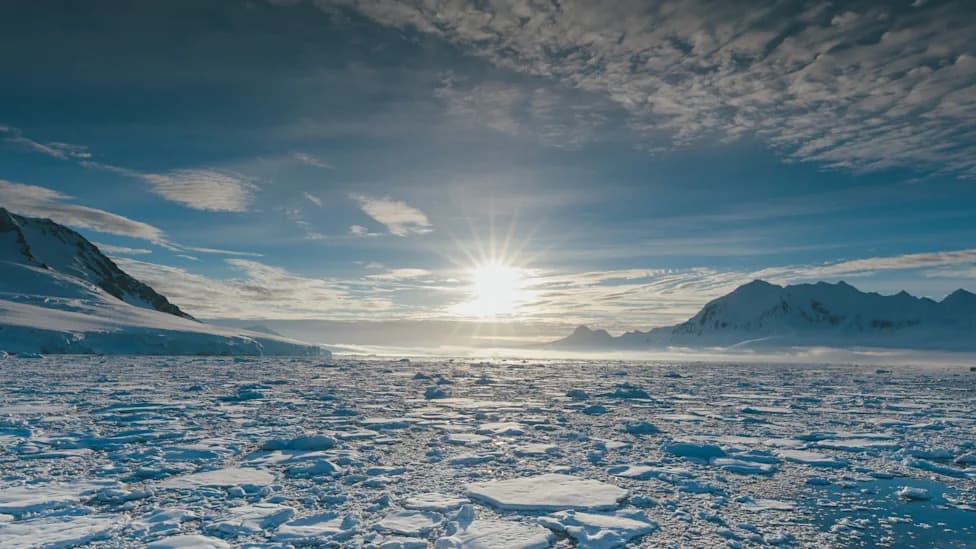
(David Merron Photography/Moment RF/Getty Images)
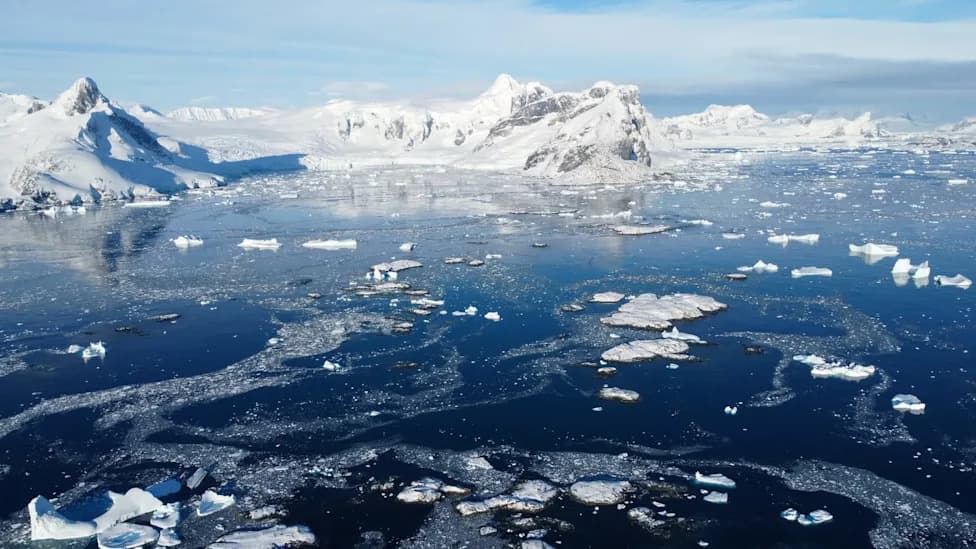
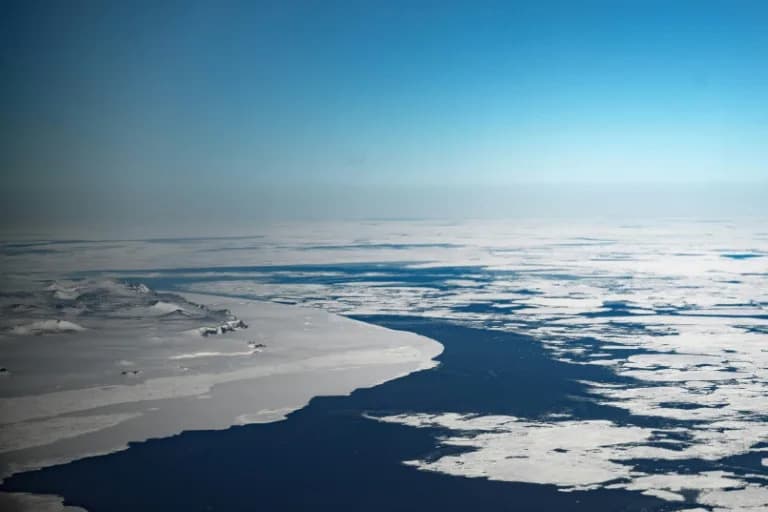
Satellite imagery in August 2024 revealed a startling feature in East Antarctica: a vast polynya — an area of open ocean surrounded by sea ice — over Breid Bay. At its maximum extent the open water covered about 89,121 km², an area only slightly smaller than the country of Portugal.
What Happened
A research team from India led by earth scientist Jeebanjyoti Swain analyzed the event and published their findings in Geophysical Research Letters (Swain et al., 2026). The team attribute the unusual mid‑winter polynya to the combined action of intense atmospheric rivers, marine heatwaves, and wind-driven ocean upwelling.
Key Physical Drivers
Atmospheric Rivers: Between July and August 2024, six unusually strong atmospheric rivers — often called “rivers in the sky” for their concentrated moisture transport — delivered warm, moist air into the Antarctic region. These events produced enhanced downwelling long‑wave radiation, atmospheric warming, and episodes of warm snowfall, all of which reduced the rate of sea‑ice growth.
Ekman Suction and Upwelling: Strong, persistent winds induced Ekman suction, displacing surface waters and drawing warmer subsurface waters upward. In this case, upper circumpolar deep water — warmer and more turbulent than the normal winter surface layer — reached the surface, contributing to sustained upper‑ocean warming.
Marine Heatwaves: The upper‑ocean warming was amplified by marine heatwaves, which further inhibited surface freezing and helped sustain the open water area.
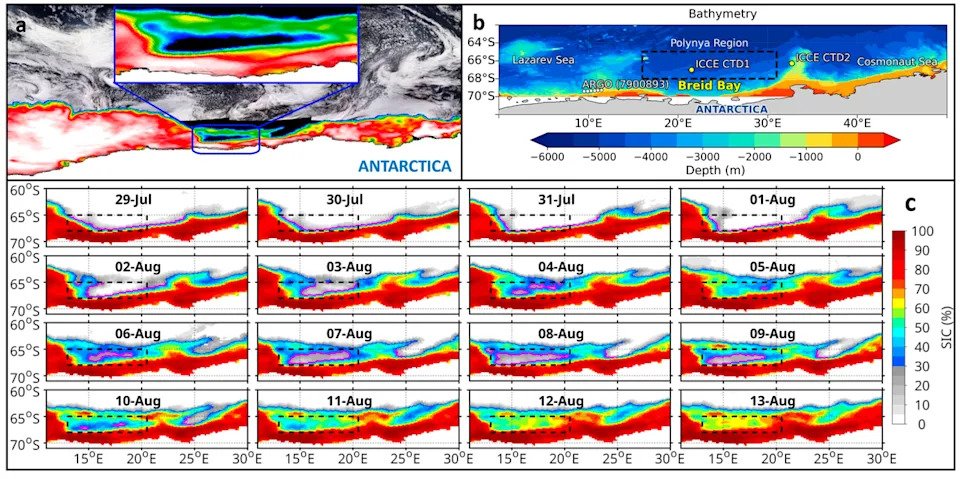
(a) Polynya event captured by NASA Worldview satellite, (b) Bathymetry of the Breid Bay, (c) Daily sea‐ice concentration showing the evolution of the open‐ocean polynya. The magenta contour denotes the 30 percent sea ice concentration threshold, and the dashed black rectangle highlights the same polynya region (16–31°E, 65–68°S) shown in panel (b) and (c). (Swain et al.,Geophysical Research Letters,2026)
Ekman Suction Explained: When wind stress acts on the ocean surface, friction and the Coriolis effect can cause net transport of surface water that draws deeper water upward. That upward motion brought warmer, deeper water into Breid Bay and slowed ice formation.
Context and Consequences
The Breid Bay polynya (approximately bounded by 16–31°E, 65–68°S in the study figures) is unusual because such a large open‑ocean polynya is normally not observed in mid‑winter. The event occurred amid a broader trend of unusually low Antarctic winter sea‑ice extent in recent years: several of the lowest winter extents on record have taken place within the past four years, including a record minimum in 2023 and another near‑minimum in 2024.
Although floating sea ice does not directly raise global sea levels when it melts, winter sea ice acts as a protective buffer for glaciers and ice shelves. Reduced winter sea ice leaves those grounded ice masses more exposed to warmer ocean waters, increasing the potential for ice‑shelf thinning and accelerated contributions to sea‑level rise.
Sea ice is also a foundation of Antarctic ecosystems: many food webs, from microscopic algae to larger predators, rely on the seasonal advance and retreat of sea ice. Persistent disruptions to sea‑ice seasonality and extent therefore risk cascading ecological impacts.
Looking Ahead
Swain and colleagues warn that as the climate warms, atmospheric rivers may become stronger and more frequent, marine heatwaves may become more common, and the Southern Ocean’s upper layers may warm — all factors that increase the likelihood of polynya events in regions once thought stable.
Study: Swain et al., Geophysical Research Letters (2026). Satellite imagery, sea‑ice concentration maps, and local bathymetry underpinned the team’s analysis.
Note: The reported 89,121 km² polynya and the role of six atmospheric rivers summarize findings from the cited study. Continued observations and modelling will clarify how frequently similar events may occur in a warming climate.
Help us improve.