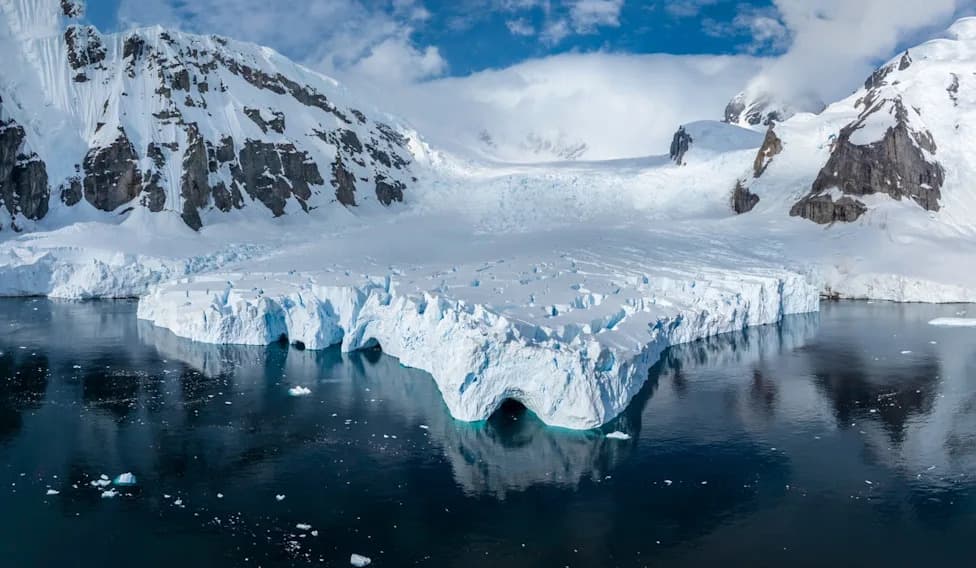
New research in Nature Geoscience used ISMIP6 simulations and a physics-informed machine-learning surrogate, constrained by satellite gravity data since 2002, to examine hundreds of thousands of Antarctic futures. The filtered results indicate Antarctica is likely to lose more ice than it gains this century, even under 1.5 °C warming. Under high emissions, Antarctica could contribute up to ~10 inches (25 cm) of sea-level rise by 2100; extra snowfall is unlikely to offset ocean-driven melting.
Antarctic Ice Loss Is Locked In — Extra Snow Won’t Stop Sea-Level Rise
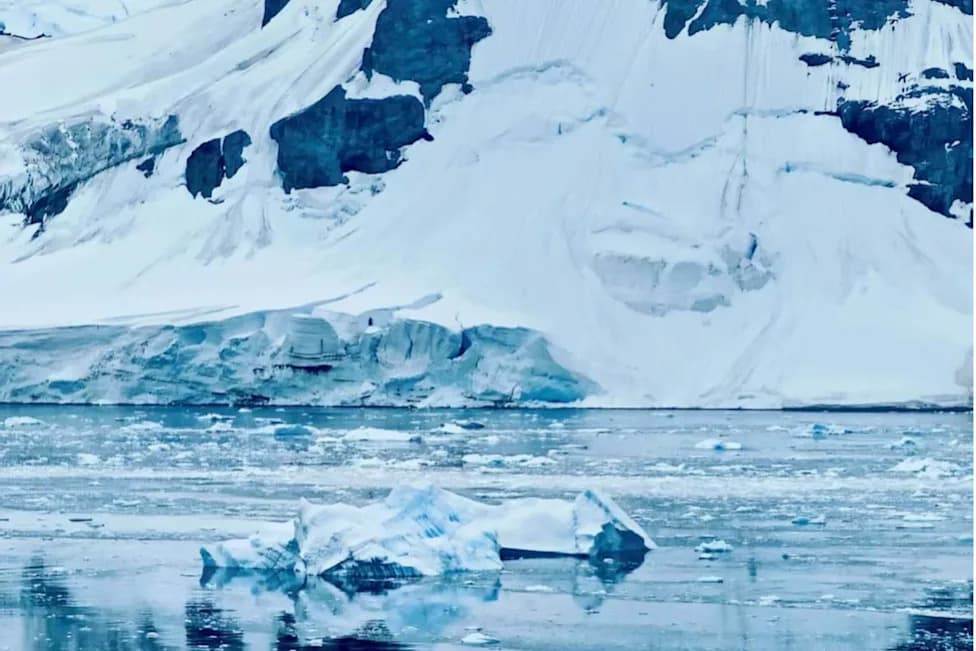
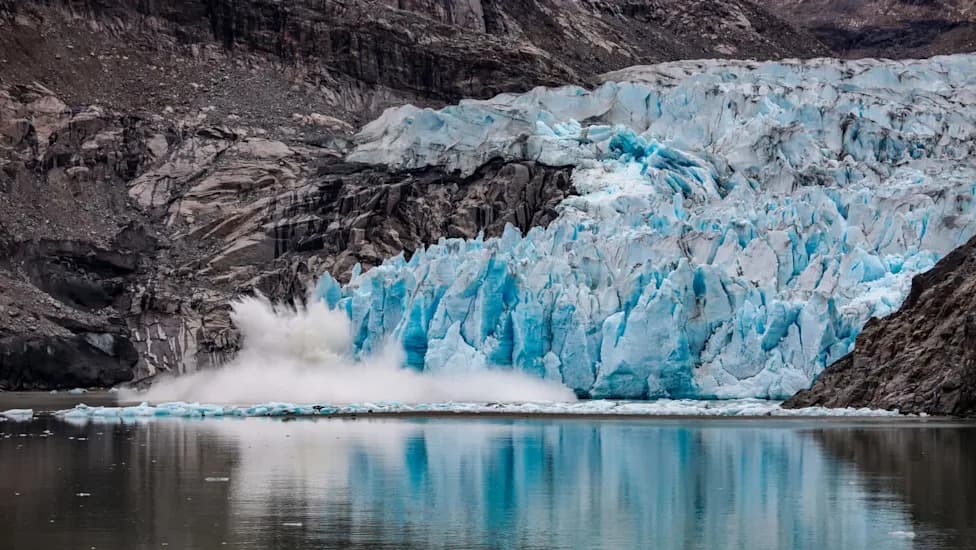
A glacier front meets the sea in Antarctica. The ice sheet holds enough water to raise global sea level by about 190 feet (58 meters). Qiyue Sun
Key finding: New research shows Antarctica is very likely to lose more ice than it gains this century, even if global warming is limited to 1.5 °C.
Sea-level rise is one of the clearest and most immediate consequences of climate change. About 1 billion people live in coastal zones worldwide, and roughly 100 million live within 1 metre (3.3 feet) of current sea level — placing them at high risk from more frequent and severe coastal flooding.
Over long timescales, Antarctica matters more than any other place: its ice contains the equivalent of about 190 feet (58 metres) of global sea-level rise. Scientists have debated whether increased snowfall on a warming planet might outweigh ocean-driven melting this century. A new study published in Nature Geoscience tested hundreds of thousands of possible futures and finds the answer is likely no.
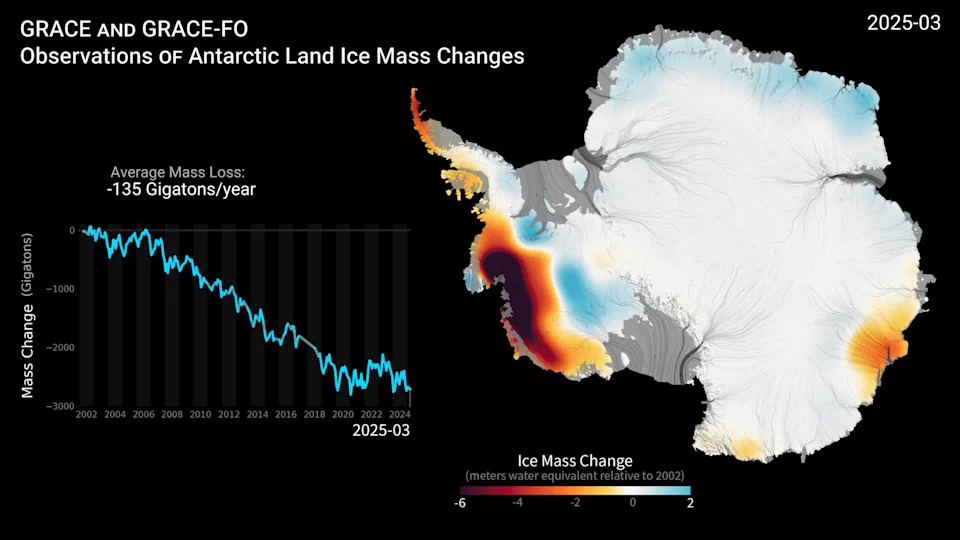
NASA's Grace satellite has tracked ice mass loss over the years.NASA
How the study worked
The research team combined a large archive of Antarctic ice-sheet simulations from the Ice Sheet Model Intercomparison Project (ISMIP6) with a physics-informed machine-learning surrogate model. Training the surrogate on thousands of detailed simulations let the team emulate each simulation’s outcomes in a fraction of a second — a huge speed-up compared with conventional runs that take days on supercomputers.
The team then ran millions of combinations of physical assumptions and emissions pathways, keeping only scenarios that matched satellite gravity observations (such as NASA's GRACE missions) of Antarctic mass change since 2002. That filtering produced a set of plausible, observation-constrained futures.
What they found
The scenarios consistent with satellite data overwhelmingly point toward net Antarctic ice loss this century, even under a 1.5 °C pathway. That Antarctic contribution would add to sea-level rise from Greenland melt, mountain glaciers, and thermal expansion of warming oceans.
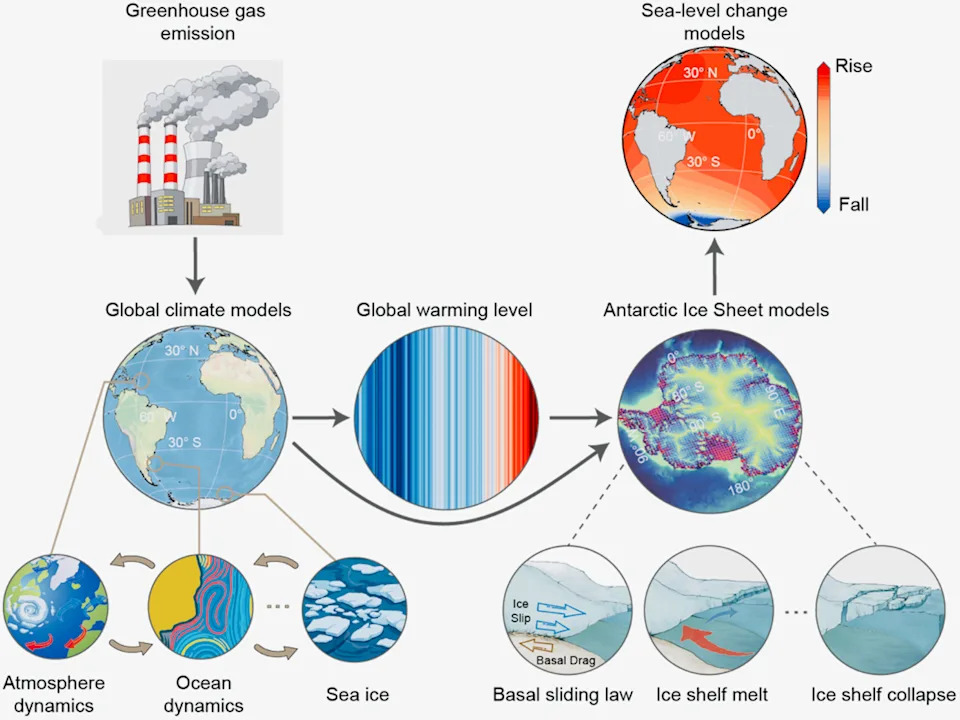
What different types of models help scientists understand about ice melt, and how they are connected to help predict the Antarctic ice sheet's future. On the left, how greenhouse gas emissions change the climate, including sea ice, ocean and atmospheric dynamics, which influence one another and levels of global warming. On the right, what goes into an ice sheet model, including ice shelf melt and collapse and how the ice slides. Every stage adds uncertainty. Yucheng Lin
Under a very high-emissions scenario, the study identifies a plausible rapid cascade: faster ocean warming thins ice shelves, weakened shelves fragment or collapse, and grounded glaciers accelerate into the ocean. Combined, these processes could add up to about 10 inches (25 centimetres) of global sea-level rise from Antarctica alone by 2100 — enough to permanently inundate the homes of more than 10 million people.
Uncertainties and missing processes
Of more than 20 modeled assumptions, three have the largest influence on projected sea-level contribution: how ice shelves respond to ocean warming, how easily ice slides over bedrock (basal sliding), and the pace of local ocean and atmospheric warming. Improving observations and process understanding in these areas would most reduce projection uncertainty.
Some important processes are still poorly represented or missing from contemporary simulations: mechanical fracturing and brittle failure of ice, hydrofracture, and the evolving behavior of subglacial rivers and lakes. Because the surrogate model can only learn from what is in the ISMIP6 archive, these missing processes could change the timing or magnitude of ice loss if they were better understood and included.
Implications
The study’s central policy message is straightforward: greenhouse-gas emissions matter. Every tonne of emissions avoided today lowers how much Antarctic ice is likely to be lost this century, slowing sea-level rise by amounts that persist for centuries. Extra snowfall on Antarctica is unlikely to offset ocean-driven losses on the timescale of this century.
Authors: Yucheng Lin (City University of Hong Kong) and Robert Kopp (Rutgers University). This article is republished from The Conversation.
Help us improve.