New research in Environmental Research Letters warns that underrepresented climate feedbacks — including thawing permafrost, warming wetlands and inland waters, and stronger wildfires — could boost human-driven warming by about 20%–30% by 2100. The study's simplified climate model estimates approximately 0.4°F (0.22°C) of extra warming under a net-zero pathway and 0.5°F (0.28°C) if emissions continue. Authors say including these feedbacks in models would shrink the remaining carbon budget and increase the urgency for faster emissions cuts.
Overlooked Climate Feedbacks Could Add Up to 30% More Warming by 2100, Study Warns
Photo Credit: iStock
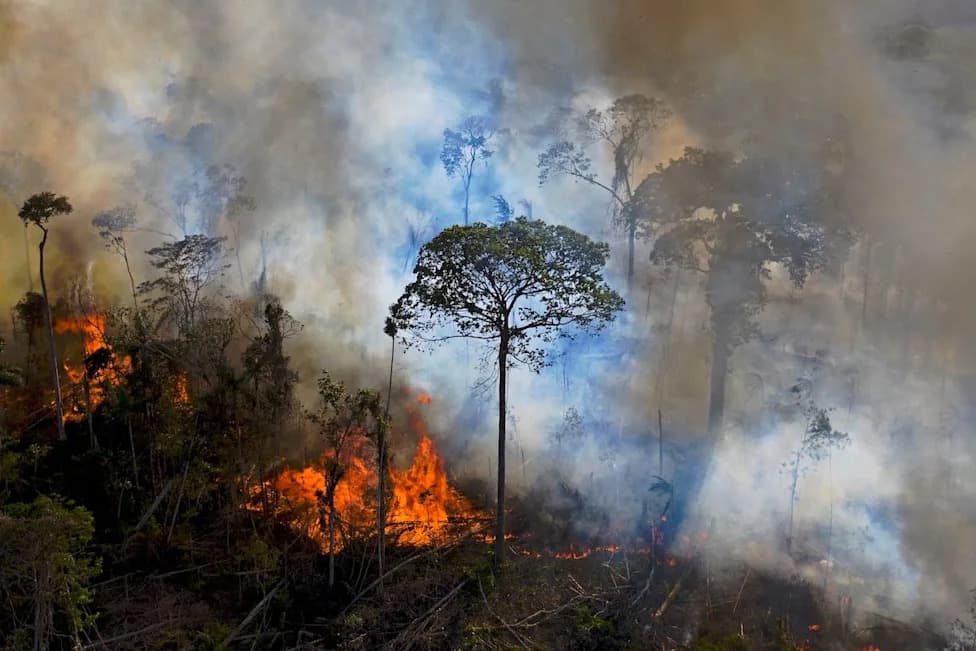
Researchers warn that a set of often-overlooked climate feedbacks could substantially amplify human-driven warming this century. A new paper in Environmental Research Letters finds that thawing permafrost, warming wetlands and inland waters, and more intense wildfires — processes not yet fully captured in many major climate models — could increase post-2020 human-caused warming by roughly 20%–30% by 2100.
The authors used a reduced-complexity climate model to estimate the cumulative effect of these feedbacks. Their results suggest these processes could add about 0.4°F (≈0.22°C) of extra warming by 2100 in a scenario that reaches net-zero emissions, and roughly 0.5°F (≈0.28°C) if emissions continue at current rates. The team reports that this corresponds to an approximately 20%–30% increase in human-driven warming measured after 2020, compared with projections that omit these feedbacks.
Climate feedbacks are mechanisms in which rising temperatures trigger additional greenhouse gas emissions or weaken natural carbon sinks, producing still more warming. While many models already account for feedbacks such as increased water vapor and the ocean's declining capacity to absorb carbon, land- and freshwater-driven emissions — from thawing permafrost, wetlands, inland waters and wildfire-related carbon release — are harder to represent comprehensively and are often underrepresented.
"This research makes clear that the Earth and climate system doesn't stand still while we debate policy," said Brian Buma, senior climate scientist at the Environmental Defense Fund. "Emissions from permafrost, wetlands, and wildfire could meaningfully erode our remaining time to warming thresholds—and they are unaccounted for in most scenarios."
The findings have direct implications for policy: if common climate scenarios undercount these feedbacks, the remaining carbon budget for limiting warming to targets such as 1.5°C (about 2.7°F) may be smaller than policymakers assume. That tighter margin increases the urgency of faster, deeper emissions cuts and improved model representation of natural feedbacks.
Why This Matters
Even modest additional warming can exacerbate heat extremes, worsen wildfire conditions, accelerate ecosystem losses, and raise risks to food security, infrastructure and public health. As Chris Bowen, Australia’s climate change and energy minister and president of COP31 negotiations, put it: "Every fraction of a degree of warming above 1.5 leads to increasing and increasingly severe climate impacts."
Robert Jackson, a Provostial Professor at Stanford University's Doerr School of Sustainability and a co-author of the study, called the results "a wake-up call," stressing the need to incorporate these feedbacks into the next generation of climate policies.
Updating climate models to better represent land and freshwater feedbacks would give governments and institutions more realistic information for setting carbon budgets and planning accelerated mitigation. The study underscores that even relatively small temperature contributions from natural processes can materially reduce the time available to avoid dangerous thresholds.
Note: Estimates reported here are model-based projections with inherent uncertainties. The study highlights plausible additional warming from specific feedbacks and calls for improved observation and model development to refine these estimates.
Help us improve.