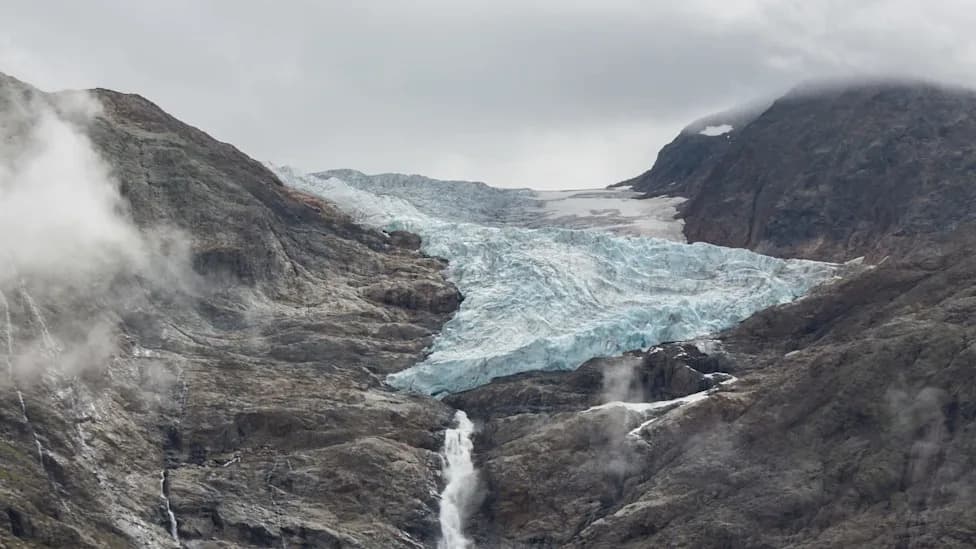
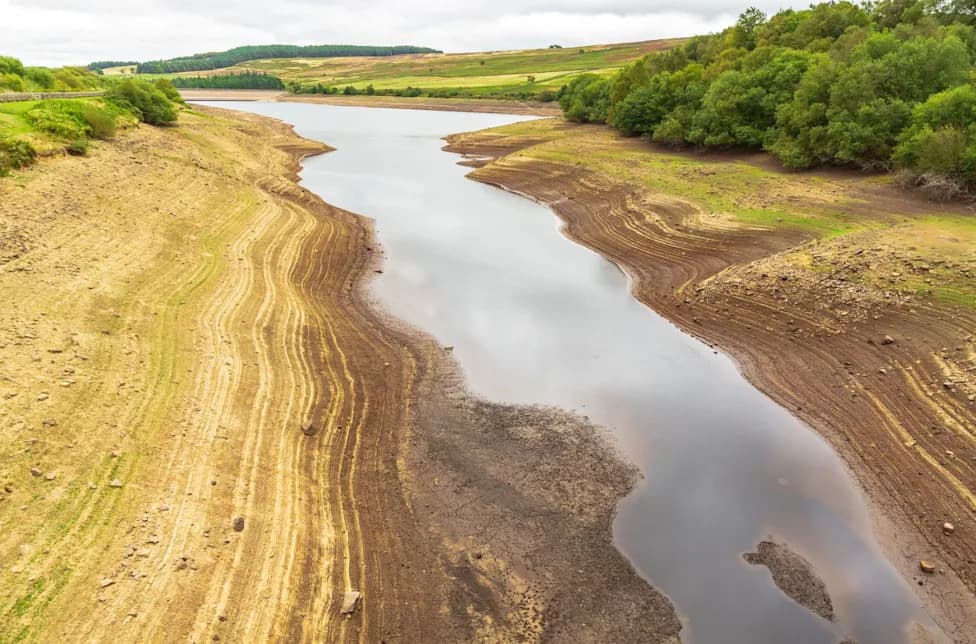
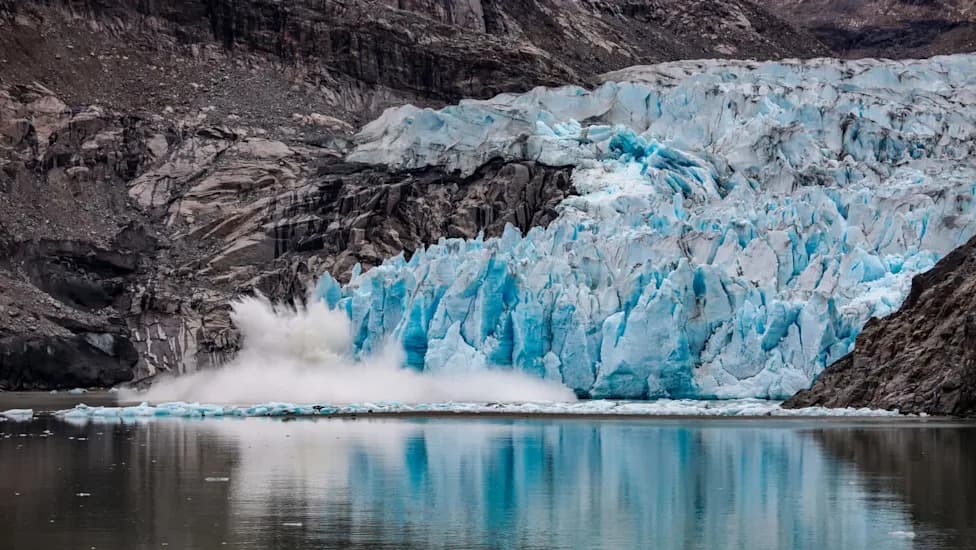
Swiss glaciers lost 5.5% of their ice volume in 2026 — the second-largest percentage decline on record — driven by heat waves and unusually low winter snowfall. Over the past five years, Swiss glacier volume has declined by nearly 20%, and scientists say current warming is entirely driven by human-caused emissions. The summer melt released about 2.2 trillion liters of water and thinned glaciers by several meters, with some tongues losing up to 10 meters, posing risks for hydropower and downstream water supplies.
Swiss Glaciers Shed 5.5% of Ice in 2026 as Heat Waves and Low Snow Accelerate Alpine Thaw
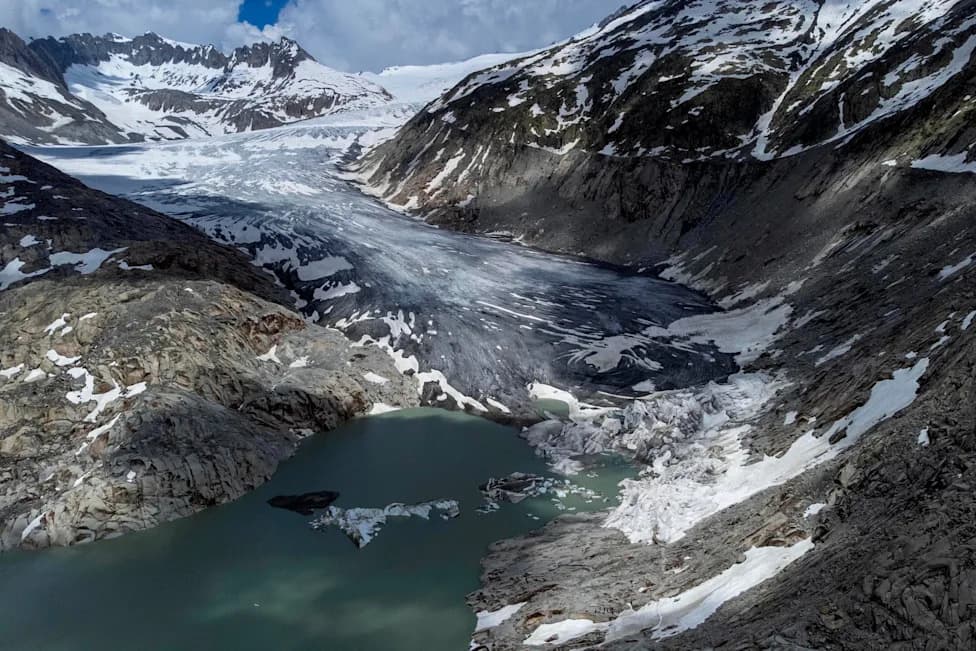
FILE — A lake of meltwater has formed on the tongue of the Rhone glacier near Goms, Switzerland, June 13, 2023. (AP Photo/Matthias Schrader, File)(AP Photo/Matthias Schrader)
ZURICH, Switzerland — Swiss glaciers, which make up the largest concentration of glacier ice in the Alps, lost an estimated 5.5% of their ice volume in 2026, the GLAMOS monitoring service and the Swiss Academy of Sciences reported. That percentage decline is the second-largest on record and experts attribute it to a string of heat waves and unusually low winter snowfall.
"Alpine glaciers have no chance of surviving in the long term under such conditions," the monitoring teams said in a statement released Thursday.
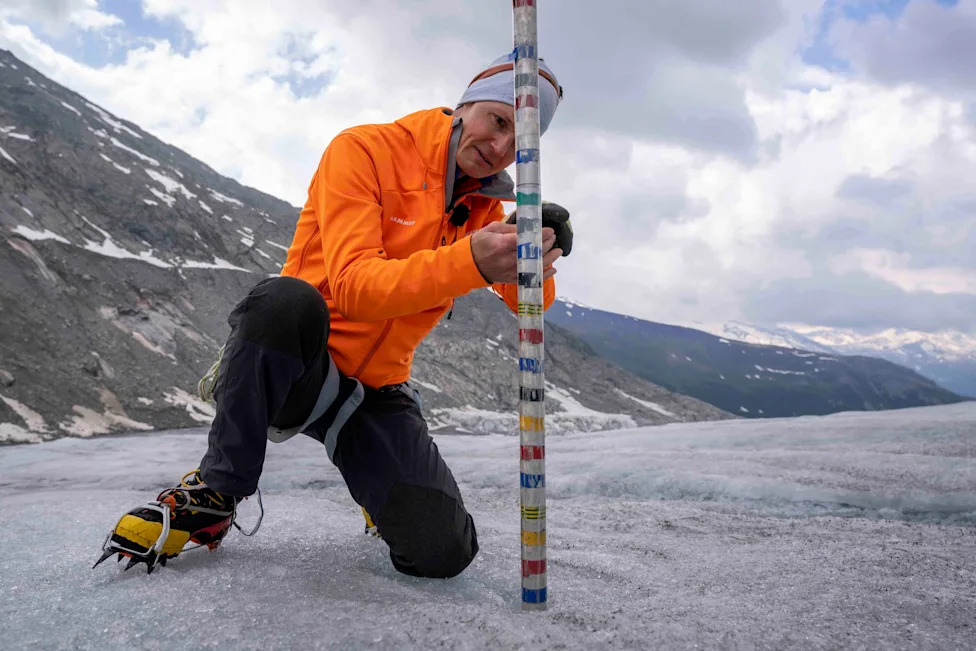
FILE - ETH (Swiss Federal Institute of Technology) glaciologist and head of the Swiss measurement network Glamos, Matthias Huss, checks the thickness of the Rhone Glacier near Goms, Switzerland, June 16, 2023. (AP Photo/Matthias Schrader, File)(AP Photo/Matthias Schrader)
The downward trend has accelerated in recent years: over the past five years, Switzerland’s glacier ice volume has fallen by nearly a fifth, underscoring the worsening impacts of a warming climate on Europe, which scientists say is warming faster than any other continent.
"The warming that we are experiencing now can be attributed 100% to anthropogenic climate change. It's as simple as that,"
— Matthias Huss, Head of GLAMOS and Professor of Glaciology at ETH Zurich.
Switzerland’s record retreat previously occurred in 2022, when intense summer heat, low winter snowfall and a heavy deposit of reddish Sahara dust darkened glacier surfaces, increasing solar absorption and melt. Huss emphasized that winter snow plays two crucial roles: it shields old ice from melting and, by accumulating at high altitude, it forms the future ice that sustains glaciers.
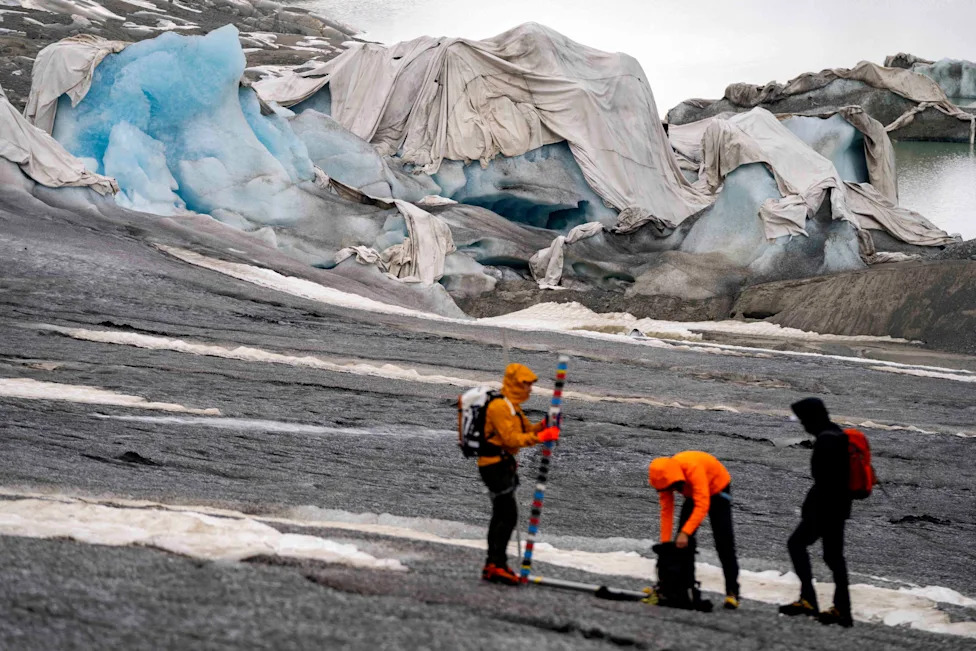
FILE — Swiss Federal Institute of Technology glaciologist and head of the Swiss measurement network 'Glamos', Matthias Huss, center, and his assistants arrive at the Rhone glacier near Goms, Switzerland, June 16, 2023. (AP Photo/Matthias Schrader)(AP Photo/Matthias Schrader)
Scale and Consequences of the Melt
From July through September alone, Swiss glaciers released an estimated 2.2 trillion liters (581 billion gallons) of water — roughly four times Switzerland’s annual domestic water consumption for its population of about 9.1 million. Hydropower provides more than half of the country's electricity, and changing glacier runoff patterns have implications for water resources and energy production.
Although the absolute volume lost in 2026 was smaller than in the extreme 2003 melt year, the percentage loss is larger now because total ice volume today is roughly one-third of what it was 23 years ago. In 2003 the relative loss was around 3.5% of Swiss glacier ice volume.
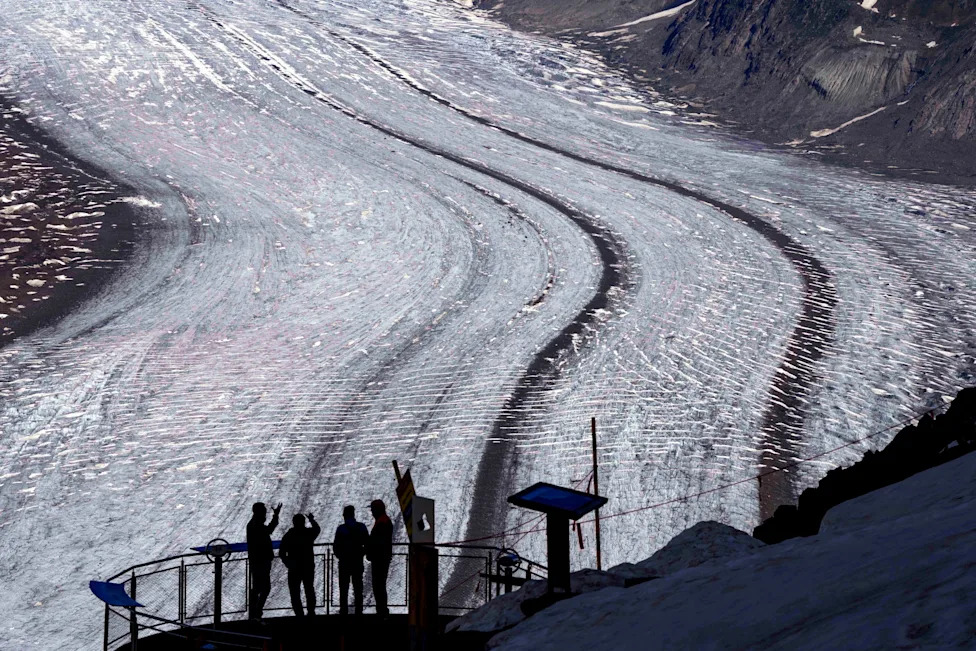
FILE — People enjoy the view at the Aletsch Glacier near Goms, Switzerland, June 14, 2023. (AP Photo/Matthias Schrader, File)(AP Photo/Matthias Schrader)
Experts reported an average thinning of individual glaciers between about 2.5 and 4 meters (8–13 feet) this year, with reductions of up to 10 meters (33 feet) on some glacier tongues. Field teams have been surveying runoff, crevasses and melt channels — sometimes introducing harmless red dye into streams to track water paths through the ice.
Regional and Global Context
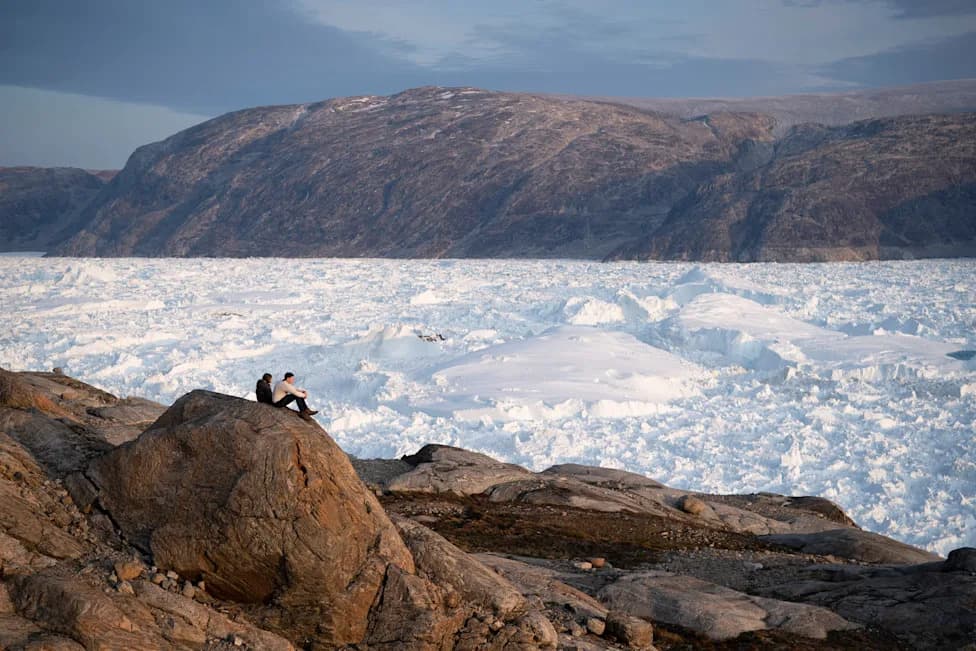
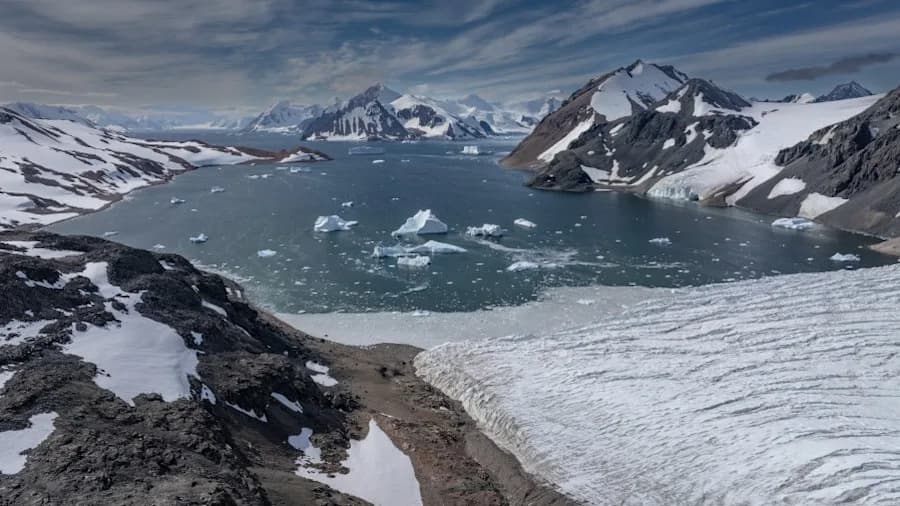
The accelerated thaw in the Alps reflects a broader global pattern. Scientists link warming to destabilizing slopes in the Himalayas — including a catastrophic collapse and floods in Nepal — and satellite records show dramatic glacier shrinkage in Greenland and Antarctica over recent decades.
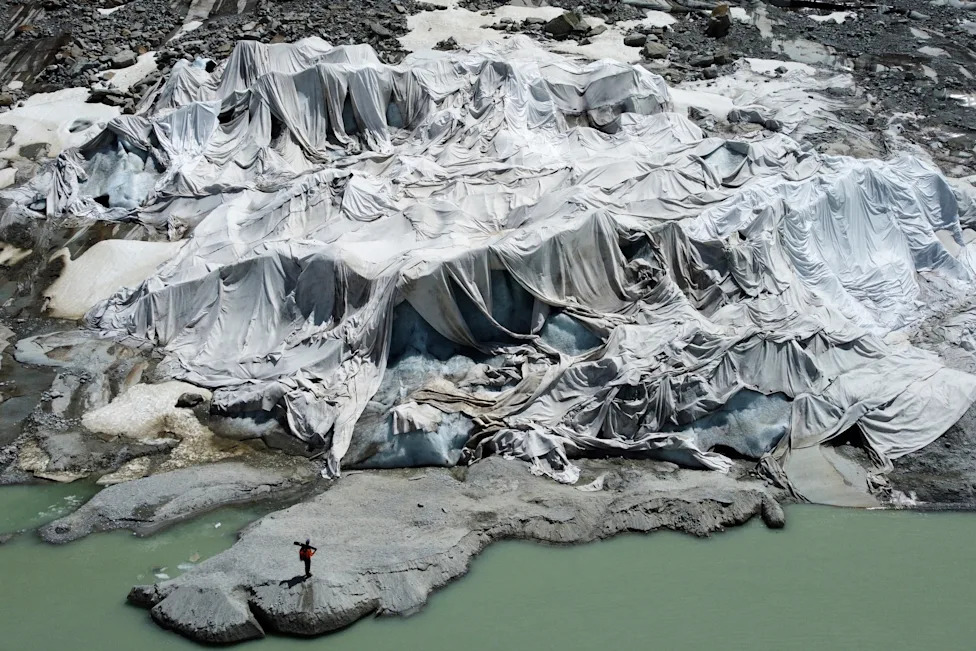
FILE — The Rhone Glacier near Goms, Switzerland, is partially covered with sheets as Matthias Huss, head of the Swiss glacier monitoring group GLAMOS, stands nearby, on June 10, 2025. (AP Photo/Matthias Schrader, File)(AP Photo/Matthias Schrader)
The loss of Alpine ice also has continental consequences: Switzerland acts as a major water tower for Europe, supplying headwaters to important rivers including the Rhine, Rhone, Po and Danube. Continued glacier retreat will reshape seasonal runoff, water availability and long-term river flows across the region.
The Allalin, Clariden, Rhone and Aletsch glaciers — the Aletsch being the largest in the Alps — were among those recording some of their biggest melt events on record this year.
Help us improve.