The Arabian Sea is home to about 80 endangered Arabian Sea humpback whales (ASHWs) that typically do not migrate. Using 14 satellite tags, researchers recorded just over 1,800 locations (average 53 days per tag) and found strong site fidelity between the Gulf of Masirah and Hallaniyat Bay. One female, Luban, made the first telemetry-confirmed crossing of the Arabian Sea—traveling roughly 4,350 miles and visiting productive Indian waters. The findings identify critical habitats, suggest prey-driven movements (sardines and krill), and underscore conservation needs as the Arabian Sea warms faster than the global average.
First Satellite-Tracked Humpback Crossing of the Arabian Sea Reveals New Conservation Priorities
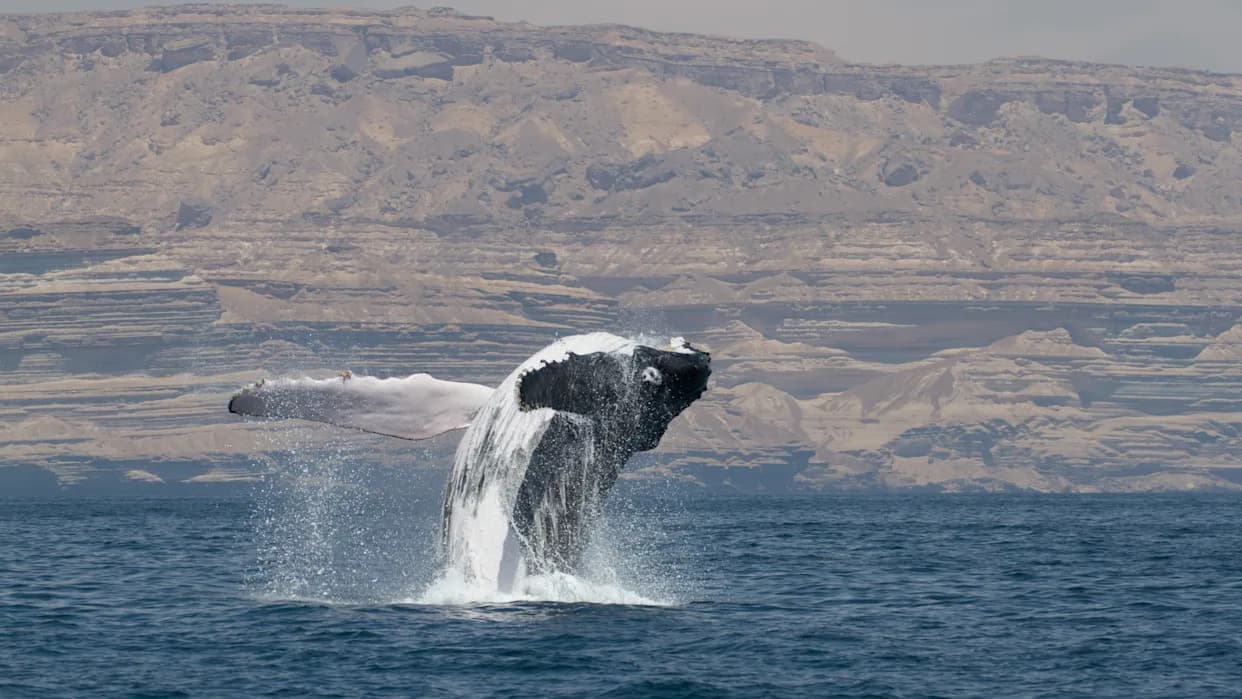
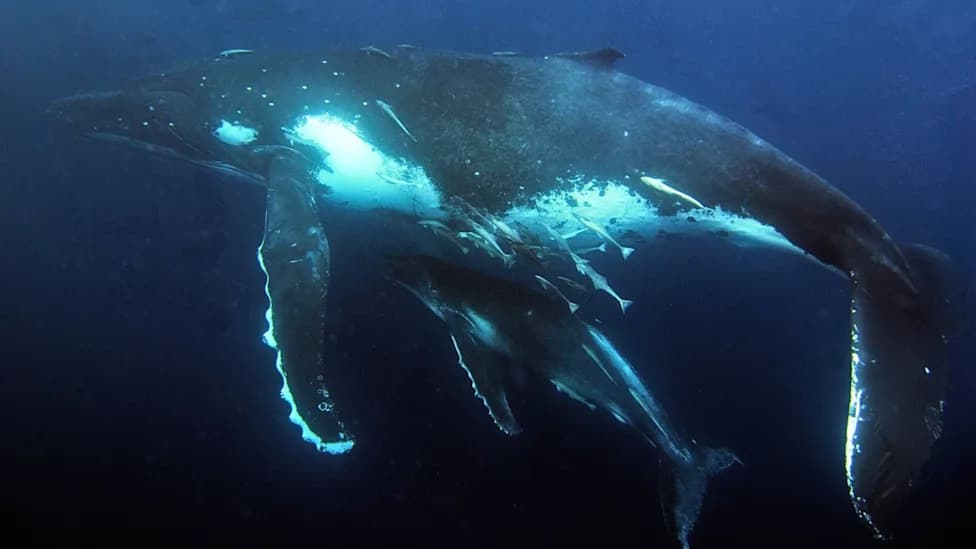
A humpback whale breaching in the Arabian Sea.
A small, isolated population of humpback whales lives year-round in the Arabian Sea, and new satellite tracking has revealed surprising long-distance movement that expands our understanding of their range and conservation needs.
About the Population
Roughly 80 endangered Arabian Sea humpback whales (ASHWs) inhabit waters off Oman and are thought to be the only humpback population that does not undertake regular, long seasonal migrations. Genetic and behavioral evidence indicates ASHWs diverged from southern-hemisphere humpbacks about 70,000 years ago.
Tracking Study
Researchers deployed 14 satellite tags in two main areas—Hallaniyat Bay in the north and the Gulf of Masirah to the south—to record dive behavior and locations. Tags transmitted for an average of 53 days and returned just over 1,800 locations across all tagged whales.
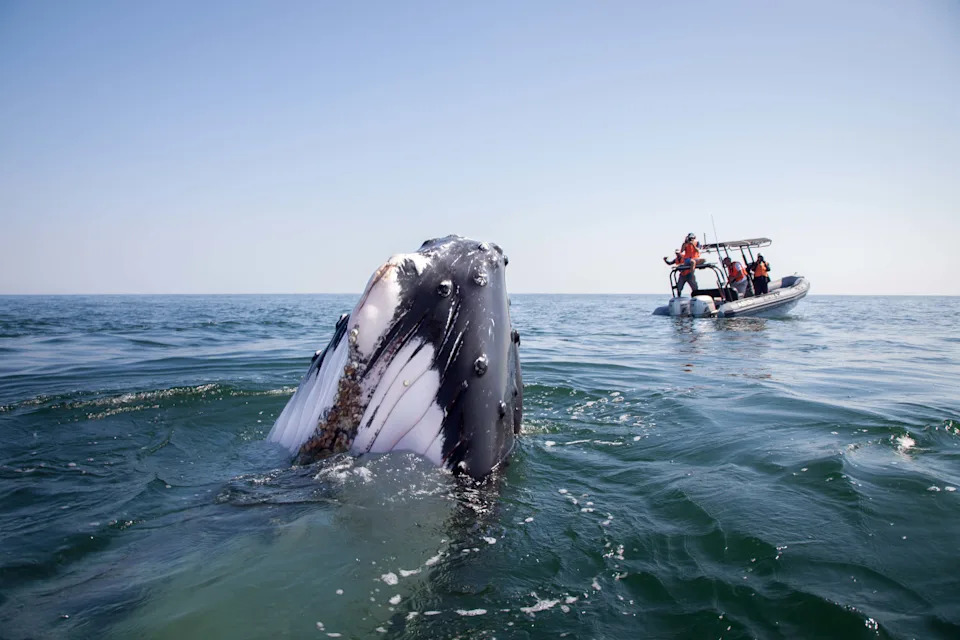
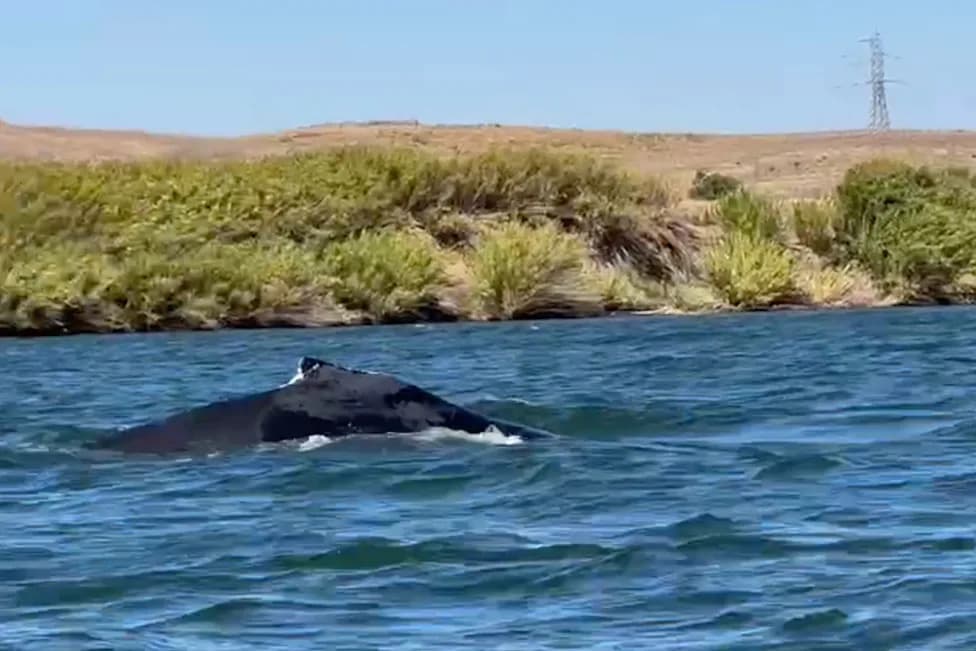
Humpback whale surfacing in front of a vessel with scientists.Image: Environment Society of Oman/D. MacDonald.Darryl MacDonald
Movement Patterns
Most tagged whales showed strong site fidelity. Of the animals tagged in the Gulf of Masirah, five remained locally while two moved south toward Hallaniyat Bay. All six whales tagged in Hallaniyat Bay moved among Hallaniyat, the Gulf of Masirah, and waters near northern Yemen. The Gulf of Masirah accounted for about 57% of location transmissions, and Hallaniyat Bay about 18%.
Ecology and Foraging
The western Arabian Sea experiences seasonal monsoon-driven upwelling that supports productive feeding grounds year-round. The research team suggests many whales track inshore prey—likely sardines—across the continental shelf, while deeper dives beyond the shelf may target prey such as krill.
A Notable Journey: Luban
One female, nicknamed Luban for a frankincense-shaped mark on her tail fluke, made the first telemetry-confirmed crossing of the Arabian Sea. Luban traveled east and was detected off the western coast of Goa, India; her round trip covered roughly 4,350 miles. She spent nearly a month in a highly productive feeding area off southern India before returning and was recently resighted in the Gulf of Masirah.
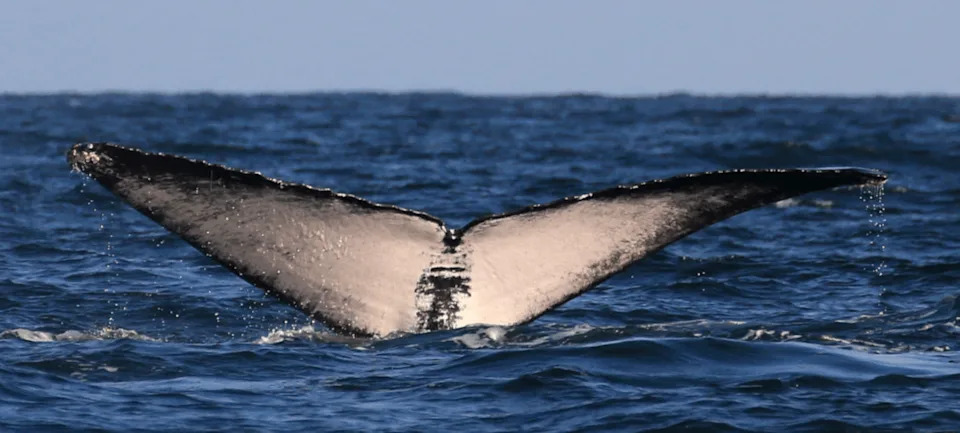
Luban’s fluke with a frankincense-shaped pattern.Image: Environment Society of Oman/Matt Leslie
“The Arabian Sea provides unique conditions allowing a once-migratory species to completely change its ecology,” said Suaad Al Harthi, co-author and executive director of the Environment Society of Oman. “It’s a testament to how extraordinary the region is.”
Conservation Implications
These tracking data identify critical habitats and suggest at least some ASHWs use waters beyond previously recognized boundaries. The population faces growing threats from warming seas—parts of the Arabian Sea are warming at roughly 1.5 times the global ocean average—as well as increasing human activity and fishing. The authors recommend further vessel surveys to validate habitat use and to better understand how climate change and human threats will affect ASHWs.
Researchers hope the results will guide spatial management to reduce whale-fishery overlap and support local conservation efforts. “Coastal fishing communities in Oman have revered and respected these whales for many generations,” said Aida Al Jabri of the Oman Environment Authority. The study brings the whales into clearer view as coastal societies modernize, which is critical for their protection.
Next Steps
While satellite telemetry has opened a new window on ASHW movements, tracking alone cannot answer every question. The team calls for more tagging, longer-duration tracking, and coordinated vessel surveys to map critical habitat, monitor population trends, and design effective conservation measures.
Help us improve.