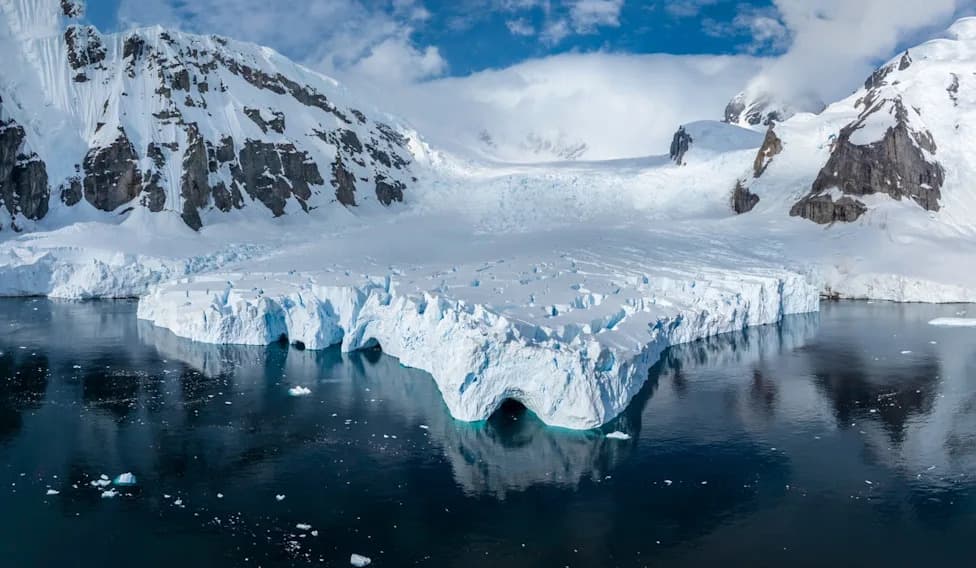
Satellite data reveal about 150,000 square miles of ocean off West Antarctica failed to refreeze after a winter heatwave — roughly the size of Montana. Sea ice in West Antarctica is estimated about 50% below the seasonal average, and Copernicus reports June 2025 sea ice at 12.6 million km², ~1.3 million km² below the 1991–2020 mean. Scientists link the shortfall to warmer air and ocean temperatures, strengthened westerly winds, and a low-pressure anomaly; they warn the change could increase contributions to global sea level rise from glaciers such as Thwaites.
Satellite Images Reveal Roughly 150,000 sq mi of West Antarctic Sea Failed to Refreeze After Winter Heatwave
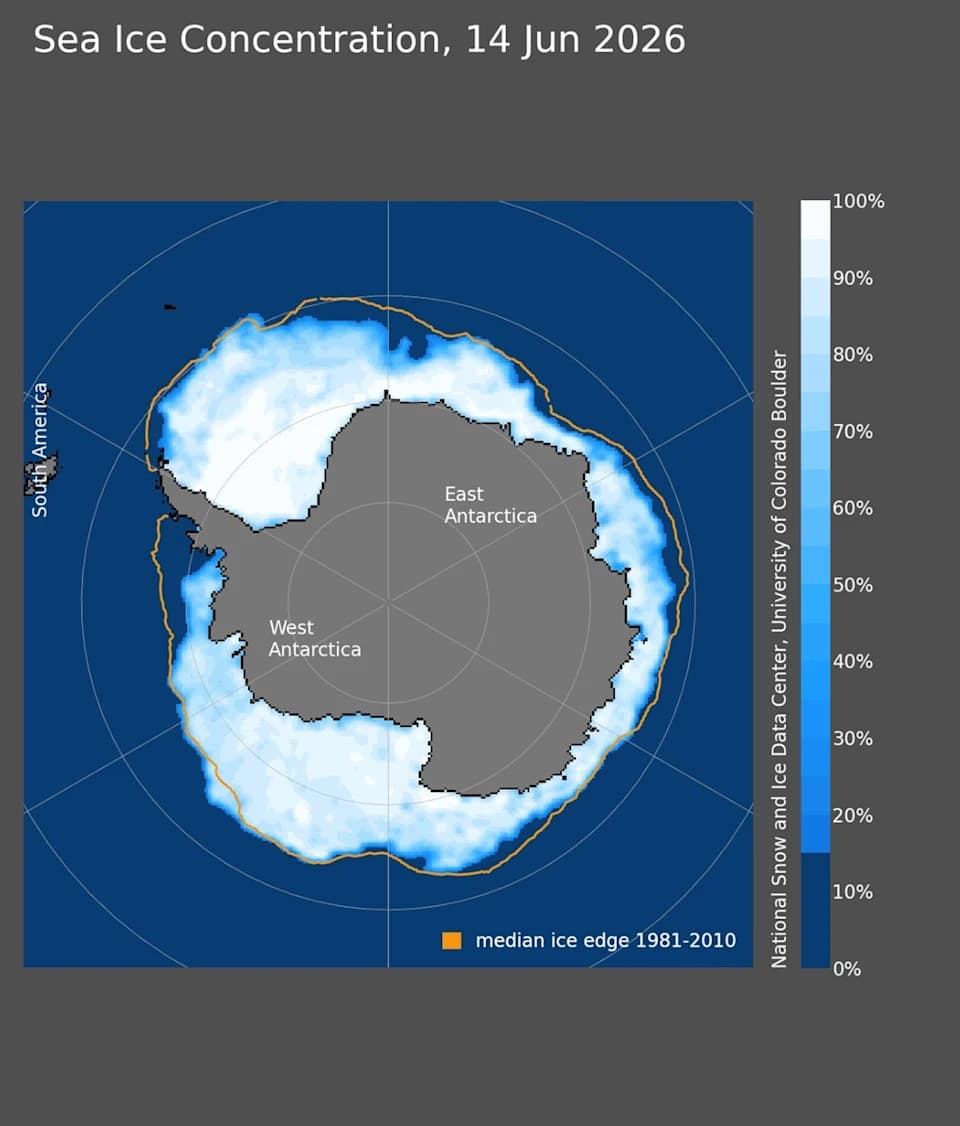
National Snow and Ice Data Center - PHOTO: Sea ice concentration, June 14, 2026.
Satellite imagery and climate data show an unusually large area of ocean off West Antarctica — about 150,000 square miles, roughly the size of Montana — has not refrozen following a winter heatwave. Scientists warn the shortfall in winter sea ice could accelerate ice-sheet losses and add to global sea level rise.
What the Observations Show
Graphics derived from satellite data at the University of Colorado Boulder’s National Snow and Ice Data Center (NSIDC) indicate a substantial gap in the typical mid-winter sea-ice cover in this region. Glaciologist Peter Neff (University of Minnesota) estimated sea ice in West Antarctica this season is about 50% below the long-term average for this time of year.
Why This Matters
Antarctic sea ice normally grows each winter and retreats in summer. But since around 2015, researchers say the annual winter refreeze has weakened, leaving the continent in "a new, much reduced state" of winter sea ice. Without the reflective surface of sea ice, the ocean absorbs more heat, reinforcing regional warming and reducing subsequent ice formation — a self-reinforcing feedback.
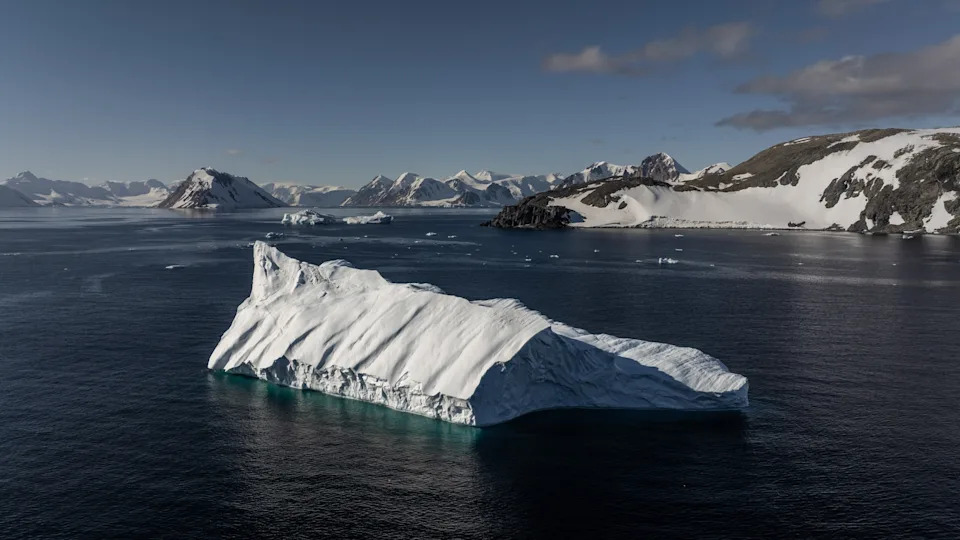
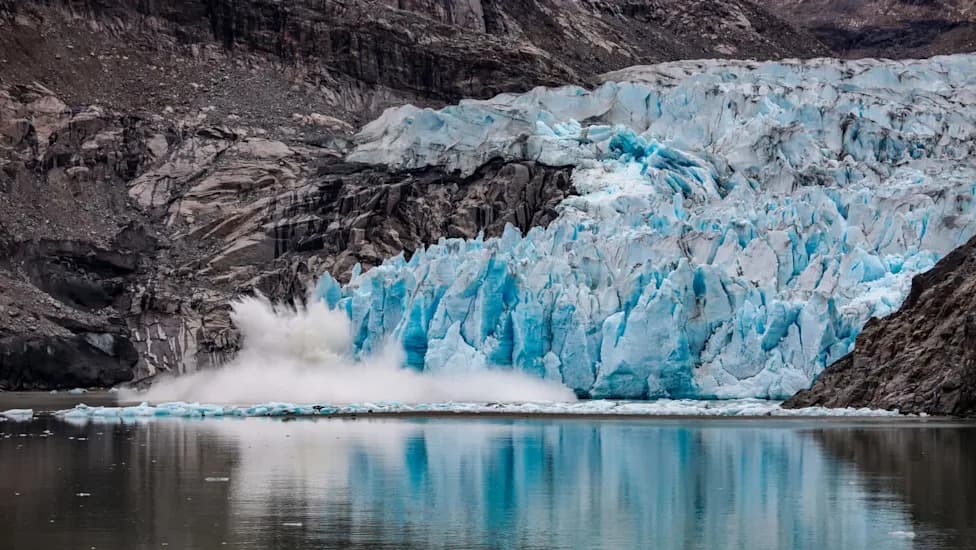
Sebnem Coskun/Anadolu via Getty Images - PHOTO: A view of a glacier during the 9th National Antarctic Science Expedition in Antarctica, March 6, 2025.
Drivers And Regional Conditions
Scientists point to several interacting causes: strengthened westerly winds linked to global warming, oceanic responses to those winds, and a persistent low-pressure anomaly north of the Bellingshausen Sea that has funneled warmer air into the Antarctic Peninsula region. Ellen Buckley (University of Illinois Urbana-Champaign) and others noted these patterns are inhibiting the usual winter freeze.
Ocean temperature records from the National Oceanic and Atmospheric Administration (NOAA) show the Bellingshausen Sea ran about 1.8–5.4°F above average from January through April, eased slightly in May (about 1.8–3.6°F above average), and remained above typical values in June. Forecasts at the time of reporting projected air temperatures over parts of the Bellingshausen Sea up to 18°F above seasonal averages for several days in late June.
Wider Implications
Data from the Copernicus Earth observation programme for June 2025 reported roughly 12.6 million km² of Antarctic sea ice — about 1.3 million km² below the 1991–2020 average. Researchers warn that reduced winter refreeze lowers the baseline of sea ice available to melt in spring and summer, increasing the risk of record-low extents.
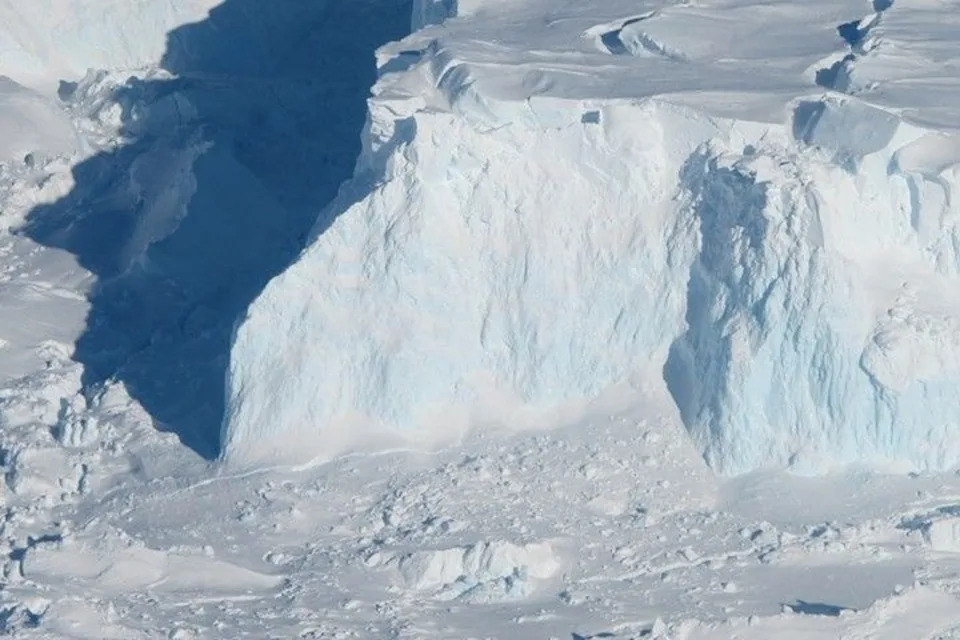
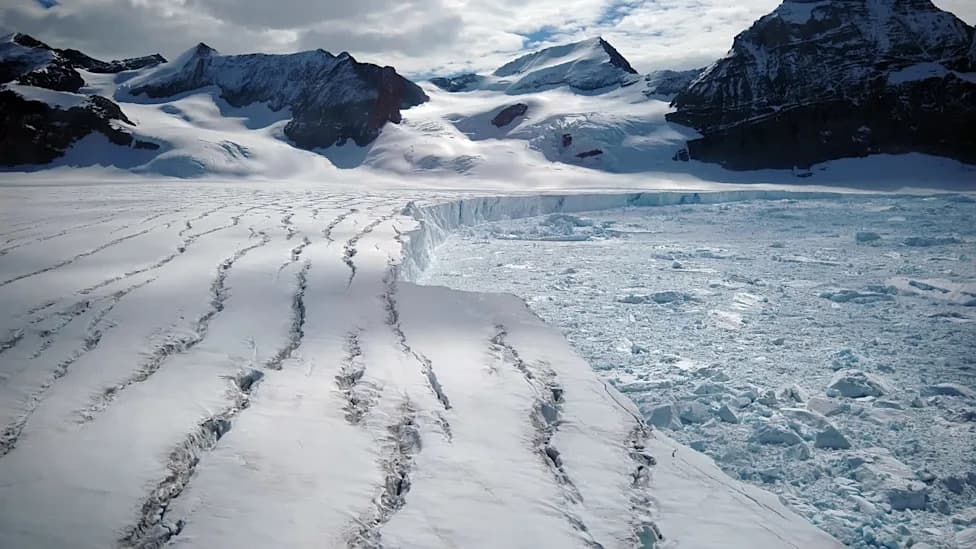
Jim Yungel./NASA - PHOTO: An edge of the Thwaites Ice Shelf.
Glaciologists are especially concerned about West Antarctica’s grounding-line glaciers. The International Thwaites Glacier Collaboration (2025) estimated that a full collapse of the West Antarctic Ice Sheet could raise global sea levels by more than 10 feet. Thwaites Glacier already contributes roughly 4% of current global sea-level rise, and its remaining floating ice shelf has been deteriorating rapidly; experts expect further calving in the coming weeks to months, which will raise sea level further even if it does not immediately destabilize the whole glacier.
Limits To Current Observations
Researchers emphasize that satellites provide excellent surface data but cannot directly observe subsurface ocean conditions that drive warm-water intrusion beneath ice shelves. Winter access for ship- or instrument-based observations is limited, making it harder to fully understand the ocean processes beneath the surface.
Outlook
The Antarctic Peninsula is warming at about five times the global average, and extreme warm events — such as March 2022, when regional temperatures were reported tens of degrees Fahrenheit above normal — are expected to occur more frequently. Scientists say understanding the changing freeze–thaw cycle in western Antarctica is a high priority because of the region’s outsized influence on global sea level.
Bottom line: A large, persistent winter shortfall in West Antarctic sea ice is both a signal of regional change and a contributor to future ice-sheet vulnerability and sea-level rise.
Help us improve.