The map — created from European Environment Agency data and shared publicly — links PM2.5 exposure to tens of thousands of premature deaths across Europe in 2023. North Macedonia’s Skopski region recorded the highest rate, with 301 premature deaths per 100,000 people. Hotspots generally occur where dense populations sit near industry, traffic and coal heating, and pollution can drift across borders. The EU’s 2030 standards aim to align legal limits more closely with WHO guidance; individuals should monitor local air quality and reduce exposure when levels are unhealthy.
Map Links PM2.5 To Tens Of Thousands Of Premature Deaths Across Europe — Skopski Region Hit Hardest
Photo Credit: iStock
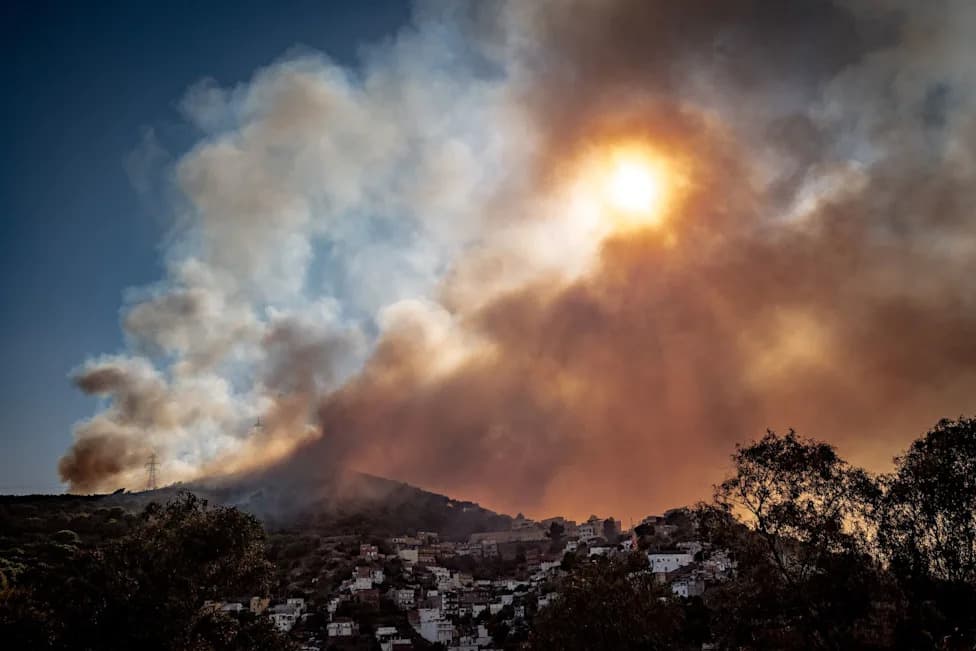
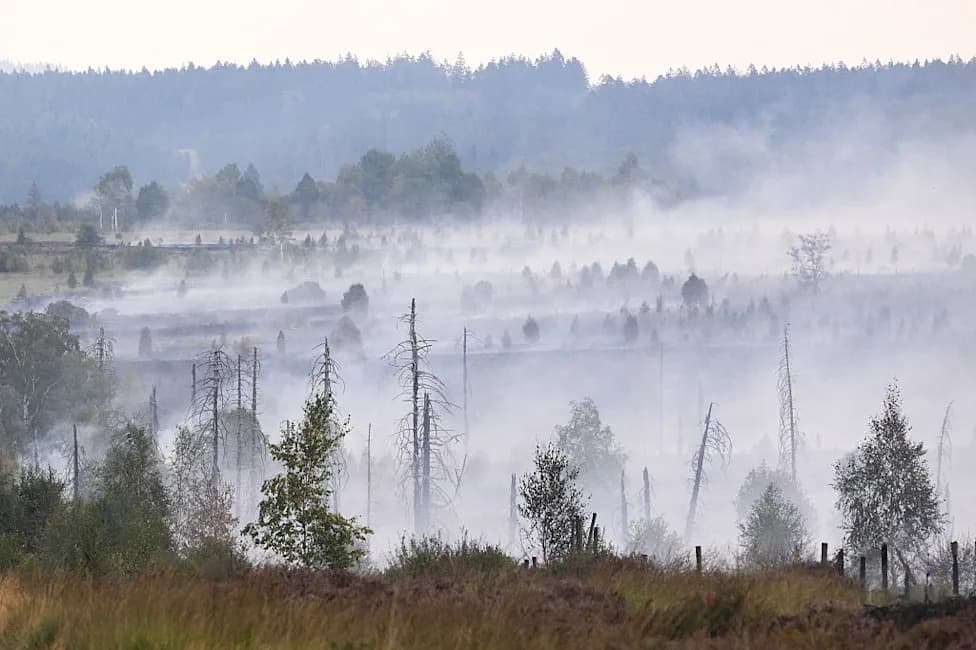
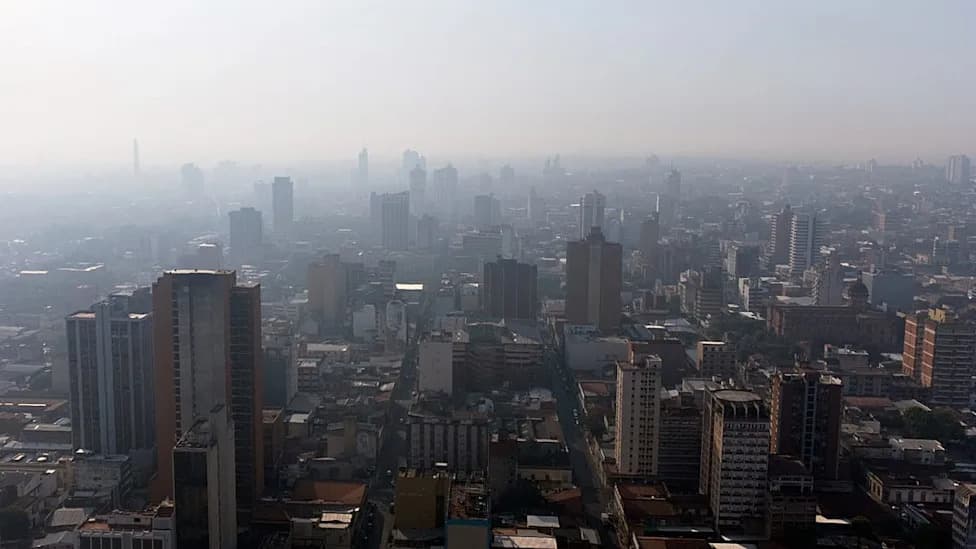
A new map built from European Environment Agency (EEA) data highlights how fine particulate matter (PM2.5) remained linked to tens of thousands of premature deaths across Europe in 2023. The visualization shows where dense populations overlap with major pollution sources — and where weather can trap contaminated air.
Where Impacts Are Worst
According to reporting based on the map, North Macedonia’s Skopski region recorded the highest rate: 301 premature deaths per 100,000 people attributed to PM2.5 exposure in 2023. Other notable hotspots include parts of Serbia — where coal burning was flagged as a major contributor — and regions in Italy where industrial emissions and local geography can keep polluted air circulating.
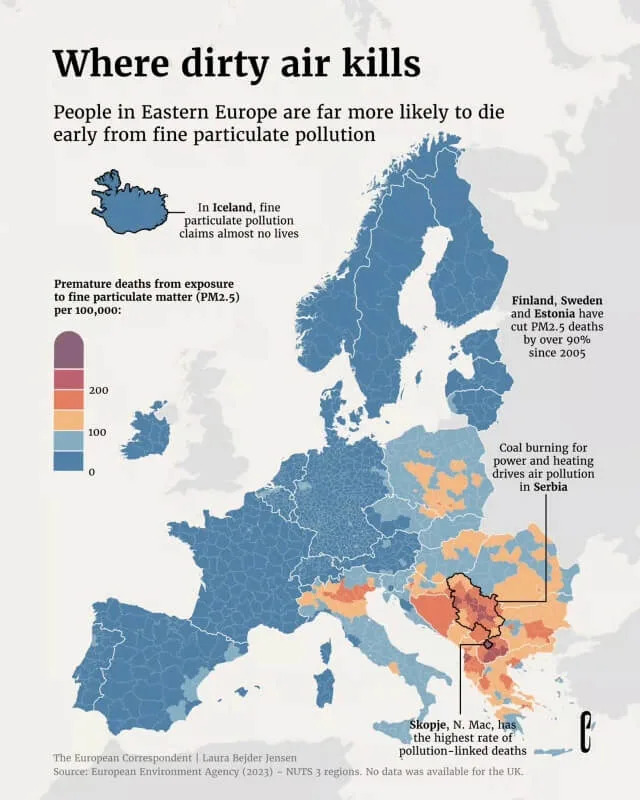
Photo Credit: Reddit
Why PM2.5 Is Dangerous
PM2.5 particles are extremely small (2.5 micrometers or less). They can be inhaled deeply into the lungs and may enter the bloodstream, increasing the risk of heart disease, stroke, respiratory illness and other serious health problems. Many people are exposed without realizing it: routine activities such as commuting, heating homes with wood or coal, and living near heavy traffic or industrial sites all contribute to regular exposure.
Cross-Border Pollution And Policy
Air pollution crosses national borders, so emissions cut in one country may still affect neighboring areas. That explains why some hot spots stretch across regions rather than stopping at political boundaries. In response to these risks, the European Union is tightening limits: the EU’s 2030 air-quality standards aim to move legal thresholds closer to World Health Organization recommendations.
How To Protect Yourself
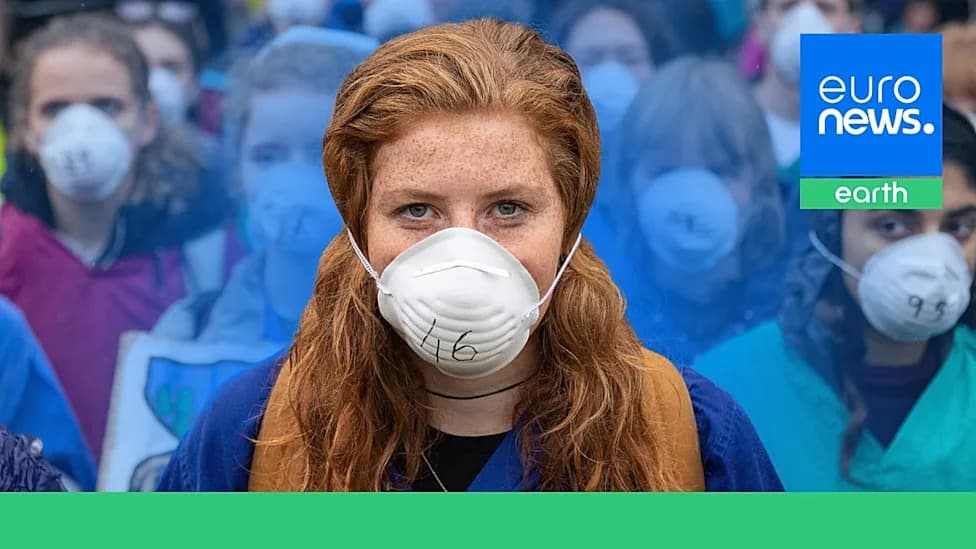
To reduce personal risk: monitor your local air quality index (AQI); limit outdoor activity when levels are unhealthy; avoid exercising near heavy traffic; and if you must be outside during high pollution, consider wearing a well-fitting, high-quality mask (for example, an N95/FFP2 or better). Local authorities often publish alerts and advice during pollution episodes — follow them when available.
Note: The map provides a regional view of health impacts linked to PM2.5 in 2023 using EEA data; individual risk varies by age, health status and personal exposure.
Help us improve.