UNEP/CCAC analysis: Investing jointly in climate and air-quality measures could return about $15 for every $1 spent and prevent an estimated 144 million premature deaths by 2050. The study evaluates 25 proven measures across energy, industry, transport, agriculture, household cooking and waste. Full implementation could halve CO2 emissions and cut methane by ~60% by mid-century, but fragmented governance and weak enforcement remain major barriers.
New Study: Joint Climate and Clean-Air Action Delivers Huge Health and Economic Returns

A man wears a surgical face mask while crossing a street in the South of Market (SoMA) neighborhood of San Francisco, California, October 13, 2017. Smoke from the 2017 Napa wildfires caused air quality in much of the San Francisco Bay Area to reach historic lows, prompting some citizens to wear masks when venturing outside. (Photo by Smith Collection/Gado/Getty Images)Getty Images
Key finding: A new analysis from the UN Environment Programme (UNEP) and the Climate and Clean Air Coalition (CCAC) finds that every $1 invested in a combined climate-and-clean-air strategy could yield roughly $15 in economic benefits and prevent millions of premature deaths.
What the study examined
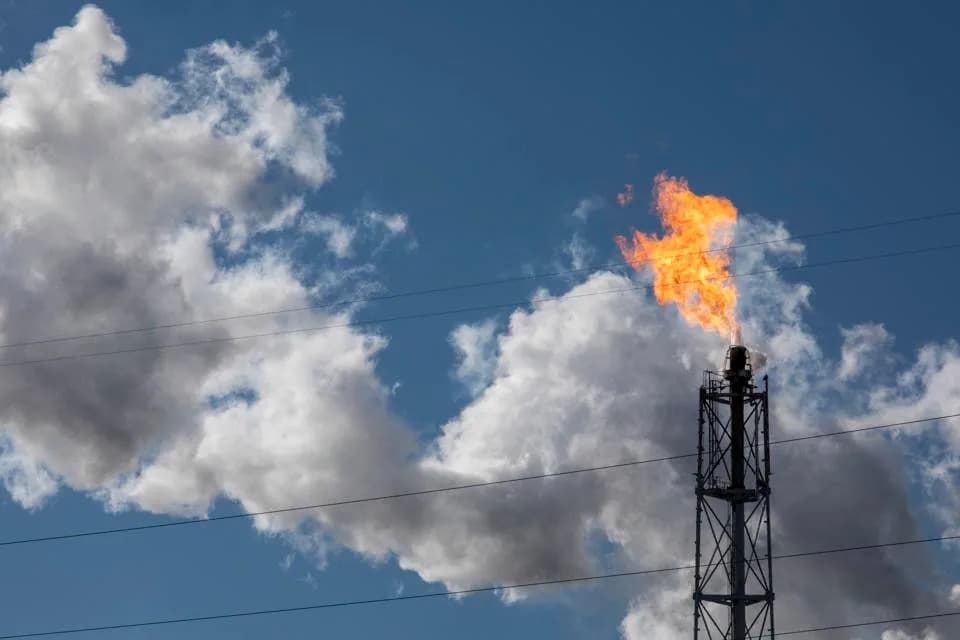
The report evaluates 25 proven interventions across energy, industry, transport, agriculture, household cooking and waste management. These measures include accelerating the shift to renewable power and low-emission transport, cutting methane emissions in fossil fuels, agriculture and waste, and raising energy efficiency in factories, homes and vehicles.
Major findings
According to the authors, full implementation of the 25 measures could:
- Deliver an estimated ~$15 in economic benefits for every $1 invested;
- Prevent about 144 million premature deaths linked to air pollution by 2050, including roughly 96 million deaths from outdoor (ambient) air pollution;
- Reduce global CO2 emissions by roughly half and cut methane emissions by about 60% by 2050;
- Produce many measurable domestic health and economic benefits within a single government term.
Regional differences
Returns vary by region. Africa shows the highest returns among regions assessed — Southern Africa could see about $26 in benefits per $1 invested. Latin America and the Caribbean are estimated to receive roughly $9 per $1 invested.
Experts and quotes
"Run the agendas separately and that value simply does not appear," said Professor Simon Dietz (London School of Economics), co-chair of the report, at an online press briefing.
Martina Otto, head of the CCAC secretariat at UNEP, urged governments to embed air quality and climate goals into national plans, fiscal frameworks and investment decisions: "Clean cooking, methane controls, transport and air quality measures can all deliver benefits within a single term of government."
"Governments have a unique opportunity here: a policy choice that is good for the climate, good for the economy, and for the people's health. We need to act now to seize this triple win," said Dr Rachel Huxley (Wellcome Foundation).
Jane Burston, CEO of the Clean Air Fund, noted that reducing short-lived climate pollutants (like black carbon and methane) can lower temperatures faster than decarbonisation alone while delivering rapid health benefits through cleaner air.
Barriers to implementation
The report identifies key obstacles: fragmented decision-making across agencies, limited enforcement capacity, and weak intergovernmental coordination. These governance challenges must be addressed for countries to realize the report's projected health, climate and economic gains.
Policy implications
The authors recommend prioritizing interventions that are within national control (for example, clean cooking, methane controls and transport measures), mainstreaming climate and air quality into economic strategies, and strengthening institutional coordination and enforcement to unlock near-term benefits.
Photo context: The report highlights real-world impacts of air pollution, such as the 2017 Napa wildfires that drove San Francisco Bay Area air quality to historic lows and led residents to wear masks outdoors.
Originally published on Forbes.com
Help us improve.