Pando — a single clonal aspen grove in Utah covering about 100 acres and weighing an estimated 6,000 metric tons — has produced audible vibrations recorded by a hydrophone placed near its roots. Artist-researcher Jeff Rice captured faint sounds that swelled into a low rumble during a storm and even recorded a thump from a branch about 90 feet away. Researchers say acoustic monitoring could offer a non-destructive way to study root connections, water movement and ecosystem health, though controlled experiments are still needed. Conservationists warn Pando is declining due to human impacts and predator removal, increasing the urgency for study and protection.
Scientists Capture Eerie Rumbles From Pando, The World's Largest Living Organism
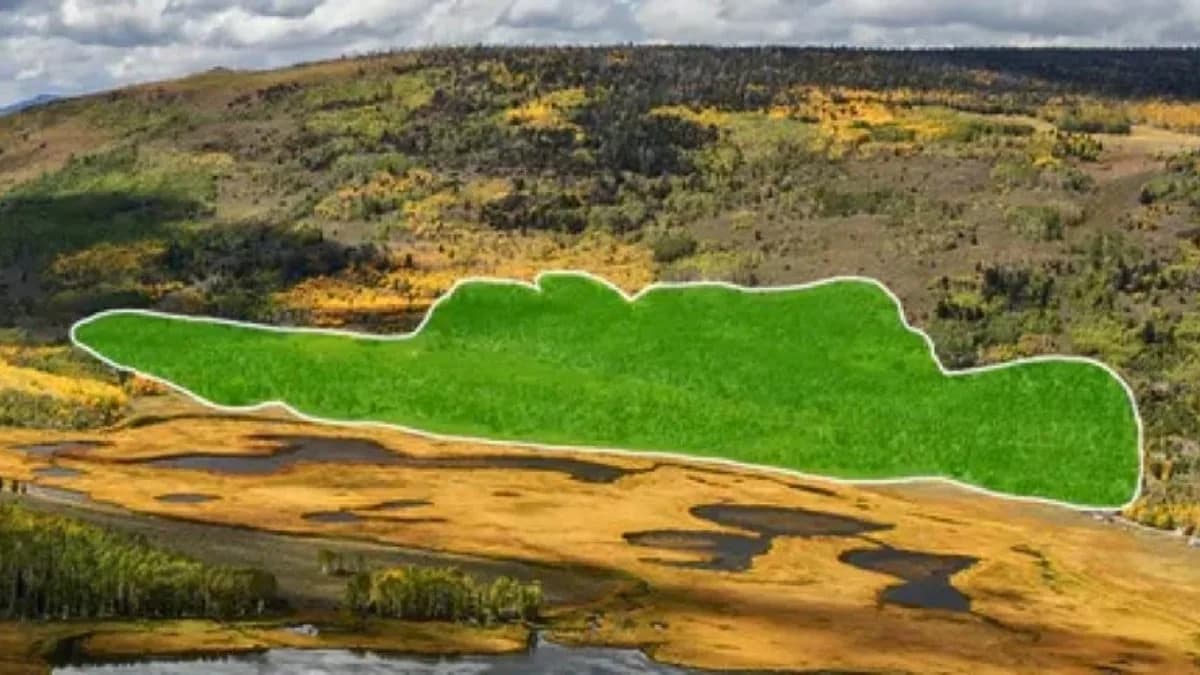
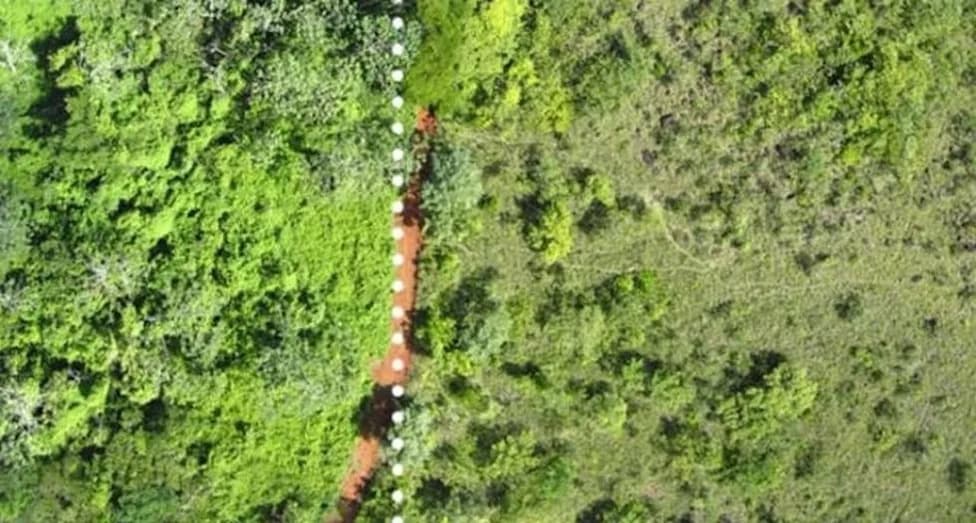
Aerial outline of Pando. (Lance Oditt/Friends of Pando)
Pando — a vast clonal stand of quaking aspen in Utah long considered the world's largest living organism by mass — has yielded audible vibrations recorded by a hydrophone placed toward its root zone. The recordings reveal low, rumbling sounds and subtle knocks that suggest vibrations travel through the grove's shared structure, offering a potential non-destructive way to probe the tree's hidden systems.
YouTube Thumbnail
Background
Pando (Latin for "I spread") is a single clonal quaking aspen (Populus tremuloides) colony that covers roughly 100 acres (40 hectares). It produces about 47,000 stems that share one extensive root system. Estimated at around 6,000 metric tons and possibly up to 12,000 years old, Pando's stems can reach roughly 24 metres (80 feet) tall, making it unique in size and antiquity.
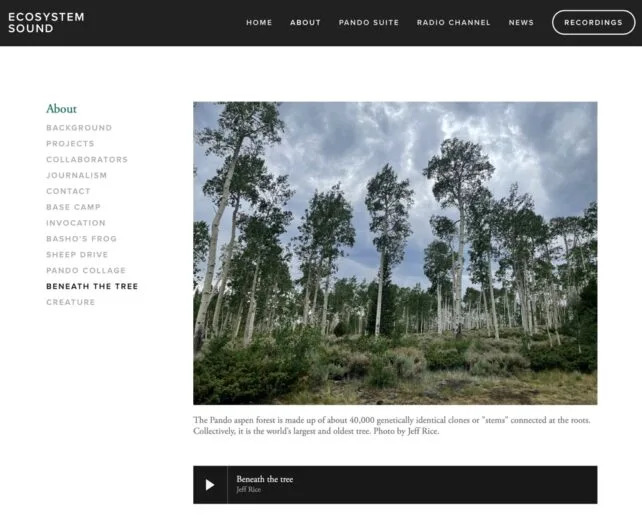
You canlisten to the recording at this website. (Ecosystem Sound)
How the Sounds Were Captured
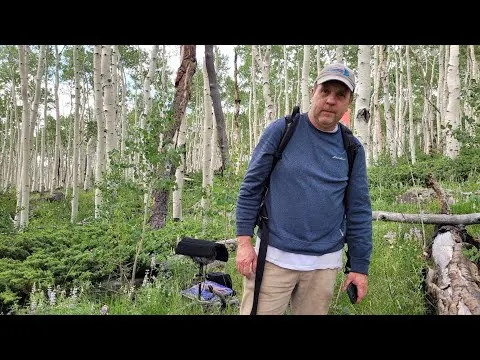
Sound artist and researcher Jeff Rice inserted a hydrophone down a hollow at the base of a branch and guided it toward the root zone. "Hydrophones don't just need water to work," Rice said. "They can pick up vibrations from surfaces like roots as well, and when I put on my headphones, I was instantly surprised. Something was happening. There was a faint sound." During a thunderstorm, those faint signals swelled into a deep rumble.
YouTube Thumbnail
Key Findings
The hydrophone recorded:

Subscribe to ScienceAlert's free fact-checked newsletter
- Low-frequency rumbling consistent with the collective vibration of millions of leaves and stems driven by wind.
- Localized knocks and thumps — including a recorded tap on a branch roughly 90 feet (≈27 metres) away — that were not audible through the air at that distance but registered on the device.
"The findings are tantalizing," said Lance Oditt, founder of Friends of Pando. "While it started as art, we see enormous potential for use in science. Wind, converted to vibration (sound) and traveling the root system, could also reveal the inner workings of Pando's vast hidden hydraulic system in a non-destructive manner."
Scientific Value and Caveats
Rice presented the recordings at the 184th Meeting of the Acoustical Society of America and suggested that acoustic monitoring might help map root connections, document water movement and provide a baseline of ecosystem health. However, researchers note that controlled experiments are still required to confirm whether the vibrations travel primarily through the interconnected root network or through the soil itself.
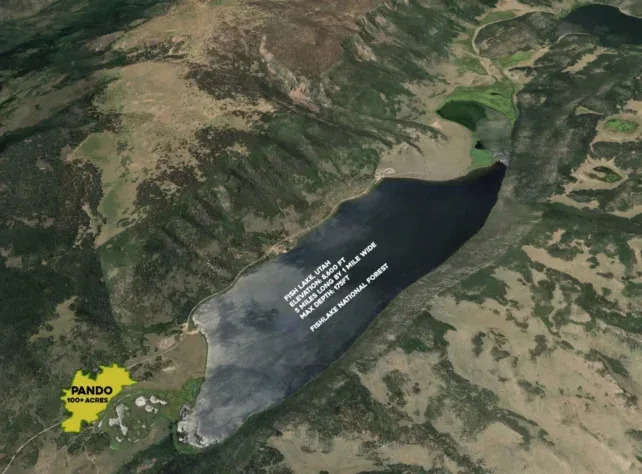
Aerial view of Pando's home. (Paul Rogers & Daren McAvoy/Friends of Pando)
Conservation Concerns
Pando is in decline. Human activities — including land clearing and the removal of predators that keep herbivore populations in check — have contributed to heavy browsing and reduced regeneration. Conservationists say the more we learn about Pando's internal dynamics, the better we can protect this ancient and irreplaceable living archive.
Next Steps
Friends of Pando plans to expand recordings and pair acoustic data with systematic experiments to map root connectivity, study water flow, investigate insect colonies and estimate root depth. The project began as a blend of art and exploration, but it is increasingly seen as a promising tool for non-invasive ecological research.
Note: While the recordings are compelling, definitive confirmation of vibration pathways will require controlled, repeatable experiments.
Help us improve.