A privately documented case in Frontiers in Neuroscience describes an 80‑something woman with advanced Alzheimer’s who, after a supervised 5‑gram dose of a potent psilocybin mushroom strain, regained speech and autobiographical memory about 19 hours later. Improvements in working memory, mood, motor control and bladder function persisted for days to weeks, and a smaller second dose produced additional, transient gains. This single, non‑controlled report is not evidence of a cure but highlights a potential avenue for further clinical research.
After Five Years of Near Silence, Psilocybin Briefly Restored Speech and Mobility in an 80‑Year‑Old With Alzheimer’s

Treating an Alzheimer's patient with "magic mushrooms" yielded some promising results.
Summary: A privately documented case described in Frontiers in Neuroscience reports that a high, supervised dose of psilocybin was followed by a striking, though temporary, recovery of speech, memory recall and motor function in an octogenarian with advanced Alzheimer’s disease. The single-case report raises questions for future research but is not evidence of a cure.
Background
Psychedelic research has a long and interrupted history. LSD was first synthesized in the late 1930s and, within a few years, researchers noticed its powerful hallucinogenic effects. Early clinical work explored potential therapeutic uses for LSD and, later, other psychedelics such as psilocybin and DMT. Much of that research halted in the 1960s and 1970s after these substances were criminalized, but interest and rigorous clinical study have resurged in recent years.
The Case
The paper presents a case of a Japanese‑American woman in her 80s who had exhibited symptoms of Alzheimer’s disease for about a decade and had been largely nonverbal for five years. In a supervised, private clinical session she received a high dose—five grams—of a potent psilocybin mushroom strain known as Enigma. That dose is generally considered large and can produce intense perceptual effects.
In the hours following the dose the patient appeared deeply sedated, with sweating and a transient fever. Approximately 19 hours after dosing she regained lucidity and began speaking in extended, autobiographical conversation. Caregivers documented hours of verbal recall and a range of behavioral and functional improvements that persisted for days to weeks.
Reported Improvements

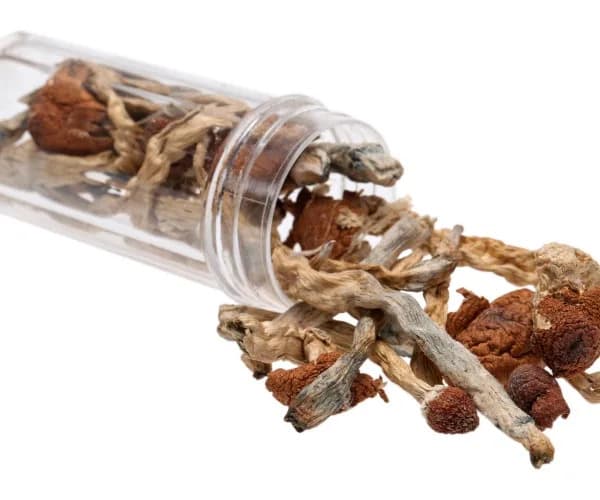
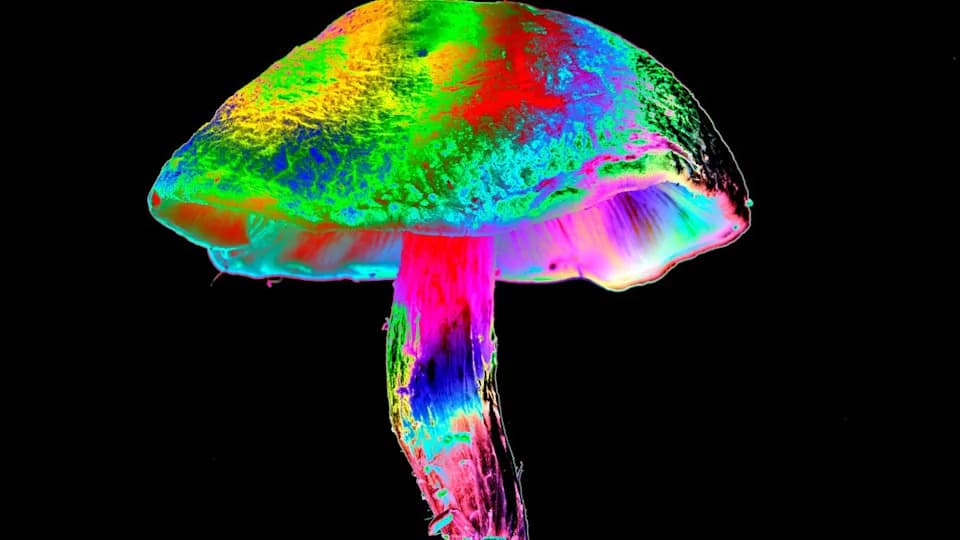
Psilocybin mushrooms are showing promising therapeutic effects. Photo Credit:Wikimedia Commons
- Restoration of spontaneous speech and autobiographical memory recall
- Improved working memory, sustained eye contact and increased smiling
- Improved motor control, regained bladder control and ability to dress independently
- After a second, smaller supervised dose, additional transient gains including greater verbal expressivity, facial mimicry, spontaneous humor, emotionally valenced imagery and improved gait
"It is pleasant to come here," the patient was recorded saying, and she described a vivid vision of surfing with her son.
Safety, Limitations and Context
Important cautions accompany this report. It is a single, privately arranged case study — not a randomized, placebo‑controlled clinical trial — and the improvements were described as transient rather than permanent. The patient experienced expected acute physiological effects (sweating, fever, prolonged sleep) before the later improvement. Because this is an n=1 report, the results cannot be generalized, and psilocybin carries risks that require medical oversight in controlled settings.
While most current Alzheimer’s treatments focus on slowing decline and managing symptoms, this case suggests that some cognitive capacities might be suppressed rather than irretrievably lost in at least a subset of patients. That hypothesis requires careful, systematic investigation before any clinical recommendations can be made.
Broader Implications
Recent controlled studies of psychedelics (including psilocybin for treatment‑resistant depression and MDMA‑assisted psychotherapy for PTSD) have spurred renewed scientific interest and changes in regulatory approaches in some jurisdictions. This case report adds an intriguing data point to a growing literature suggesting novel therapeutic mechanisms, but it should be viewed as hypothesis‑generating rather than conclusive evidence.
Conclusion
The Frontiers case study documents a remarkable, temporary improvement in speech, memory and motor function after supervised psilocybin administration in an elderly patient with advanced Alzheimer’s. It underscores the need for controlled clinical research to determine safety, reproducibility and mechanism. Until such studies are completed, clinicians and families should treat such reports with careful curiosity, not as proof of a therapeutic breakthrough.
Help us improve.