An 80-year-old woman with advanced Alzheimer’s briefly regained speech, personal memories, improved mobility and bladder control after a supervised 5-gram dose of psilocybin-containing mushrooms; further gains followed a 3-gram dose one month later. Improvements began about 19 hours after the first dose but were temporary. Researchers caution this single case does not prove causation, underline potential risks for older adults, and advise against using psilocybin outside authorized medical settings.
High-Dose Psilocybin Temporarily Restores Speech, Memory and Mobility in 80-Year-Old With Advanced Alzheimer’s
(Dreamstime)
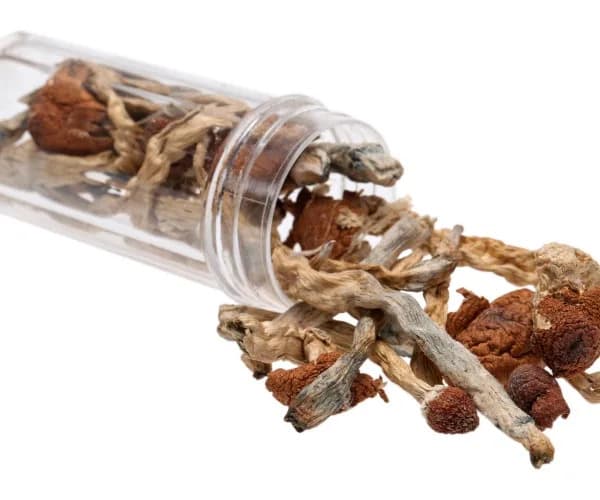
An 80-year-old woman with advanced Alzheimer’s disease experienced a striking, temporary recovery of speech, memory recall, mobility and bladder control after receiving supervised doses of psilocybin-containing mushrooms, according to a case report published in Frontiers in Neuroscience.
Case Overview
The patient had lived with Alzheimer’s for roughly a decade and had shown severe decline for about five years before the intervention. Before treatment she was largely nonverbal—communicating mostly in single syllables—relied heavily on caregivers for mobility and daily tasks, and had chronic urinary incontinence.
Treatment and Immediate Effects
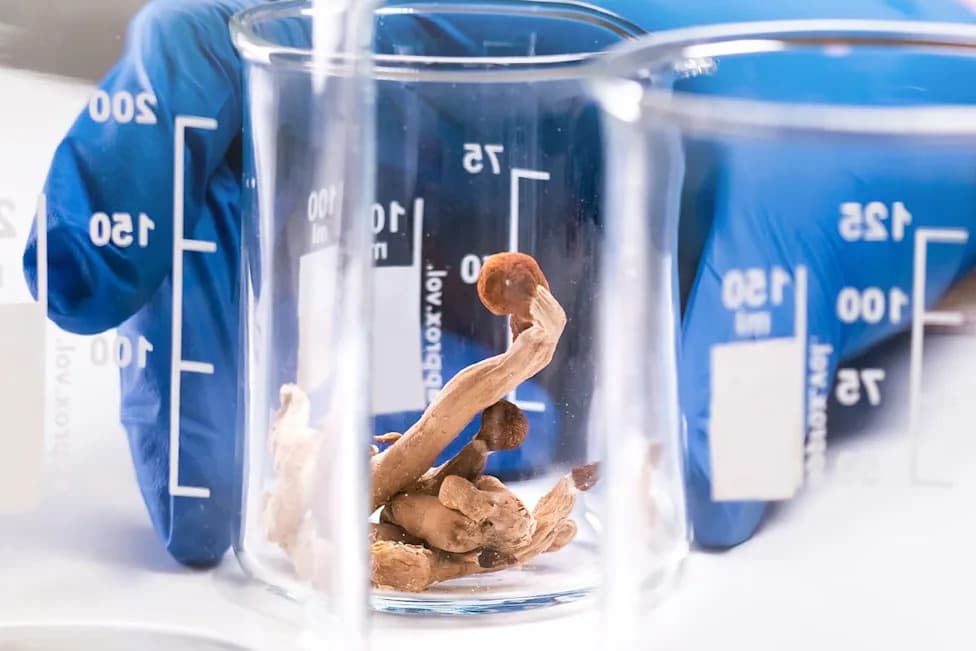
In a supervised clinical setting she received an initial 5-gram dose of psilocybin-containing mushrooms. Soon after dosing she became agitated, developed profuse sweating and entered a prolonged, deep sleep-like state. Approximately 19 hours after the first dose she began speaking spontaneously in full autobiographical sentences and recalling personal experiences that had not been accessed for years.
Subsequent Changes
Over the following days and weeks clinicians observed multiple functional gains: improved walking and mobility, increased independence in dressing, regained urinary continence and greater social and emotional responsiveness. Roughly one month later she received a smaller, 3-gram supervised dose; clinicians reported additional improvements in verbal expression, humor and mobility after the second dose.
Important: The improvements were temporary and the authors stress that this single case does not demonstrate that psilocybin reverses or treats Alzheimer’s disease.
Interpretation and Cautions
The researchers propose that severe neurodegeneration may sometimes leave residual functional capacity in the brain that could be transiently accessible under particular conditions. However, they emphasize that a single case cannot establish causation, predict who might respond similarly, or indicate how long any benefits might last.
Older adults with dementia may be especially vulnerable to adverse effects from psychedelics, including agitation, confusion, cardiovascular changes and falls. The report warns that psilocybin should not be used to treat Alzheimer’s disease outside appropriately authorized and medically supervised research or clinical settings.
Source
The case was reported in Frontiers in Neuroscience and summarized in media coverage. Further rigorous clinical research is needed to determine safety, mechanisms and whether any replicable benefits exist for people with Alzheimer’s disease.
Help us improve.