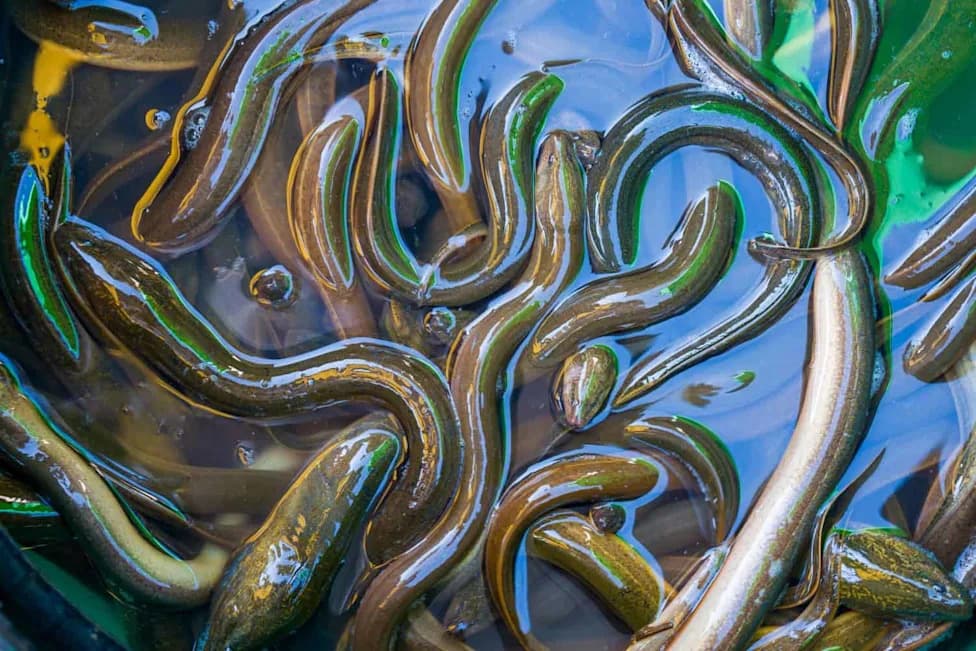
Wildlife officials on the U.S. East Coast are urging anglers to remove invasive northern snakeheads — nicknamed 'Frankenfish' — which can breathe air, survive briefly out of water and move over land. Maryland is promoting bowfishing and has distributed about $17,000 in reward funds, while New York confirmed the species' first capture on Long Island at Lily Pond and is searching other lakes. Management tools include electrofishing, tagging, targeted removals and a 2024 name change to 'Chesapeake Channa.' A study suggests raising mortality via bowfishing to roughly 25% could begin to reverse population growth.
Officials Urge Anglers To Target Invasive 'Frankenfish' — Maryland Promotes Bowfishing As New York Reports First Long Island Sighting
A dead snakehead is seen during the third Snakehead Derby in Middle River, MD.Credit: Wesley Lapointe for The Washington Post via Getty
Wildlife managers across the U.S. East Coast are ramping up efforts to remove invasive northern snakeheads — nicknamed 'Frankenfish' — that can breathe air, survive briefly out of water and even wriggle over land. Officials hope aggressive removal will protect native species and fragile freshwater ecosystems.
Why Snakeheads Are A Concern
Snakeheads (Channa argus) are native to Asia and were first documented in the Chesapeake Bay watershed in 2002, according to the U.S. Fish and Wildlife Service. These opportunistic predators can reach about three feet in length, possess a primitive lung that allows them to breathe air for up to four days, and can move across short stretches of land. A single mature female can release an estimated 15,000–50,000 eggs, enabling rapid population growth.
The United States Geological Survey warns that snakeheads can outcompete and eat native fish, amphibians and other wildlife. They have few established predators in the region, and their spread has been aided by factors such as warmer water temperatures, heavier rainfall events and human introductions from aquarium dumping or market releases.
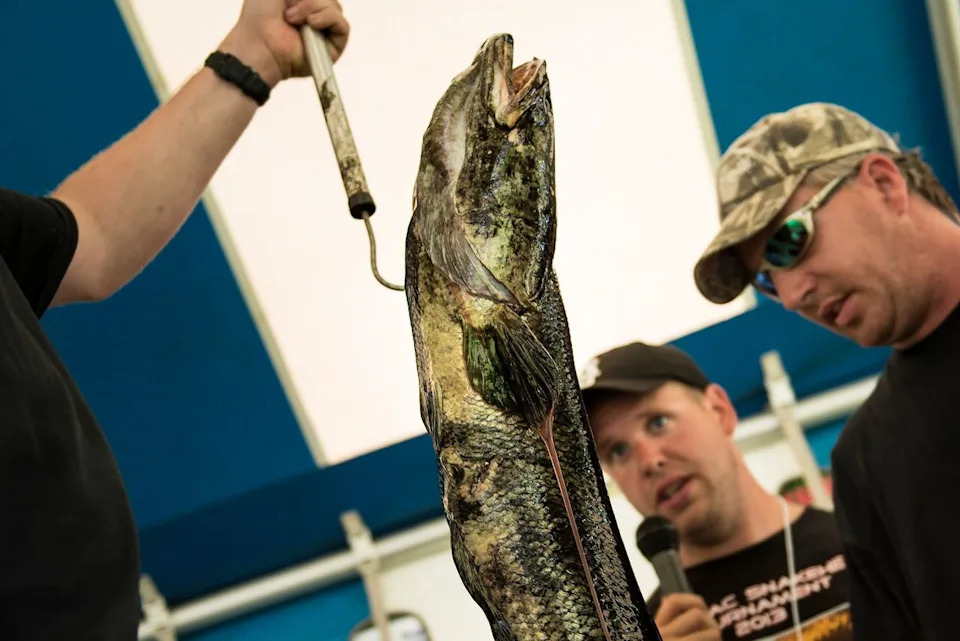
Snakehead fish are weighed in during the Potomac Snakehead Tournament at Smallwood State Park on June 30, 2013 in Marbury, Maryland.Credit: Brendan Smialowski/AFP via Getty
Management Actions Underway
Authorities are using a mix of community-driven and professional removal tactics. Maryland has publicly promoted bowfishing as one way to reduce numbers, and the state has distributed roughly $17,000 in federal reward funds to anglers who remove confirmed snakeheads. State teams and federal partners also use targeted electrofishing — boats that emit a controlled electric field to stun and remove invasive fish — followed by disposal of snakeheads and release of non-target species.
Some fish are tagged and released for monitoring, while others are incentivized for harvest. In 2024, Maryland legislators adopted a formal common-name change to 'Chesapeake Channa' (based on the scientific name Channa argus) in an effort to reduce stigma and encourage consumption where appropriate.
Recent Developments: Long Island Sighting
New York officials confirmed the first documented Long Island capture at Lily Pond last week. The New York State Department of Environmental Conservation (DEC) is now searching additional water bodies, including Lake Ronkonkoma, and plans targeted electrofishing efforts in Lily Pond to remove any remaining individuals.
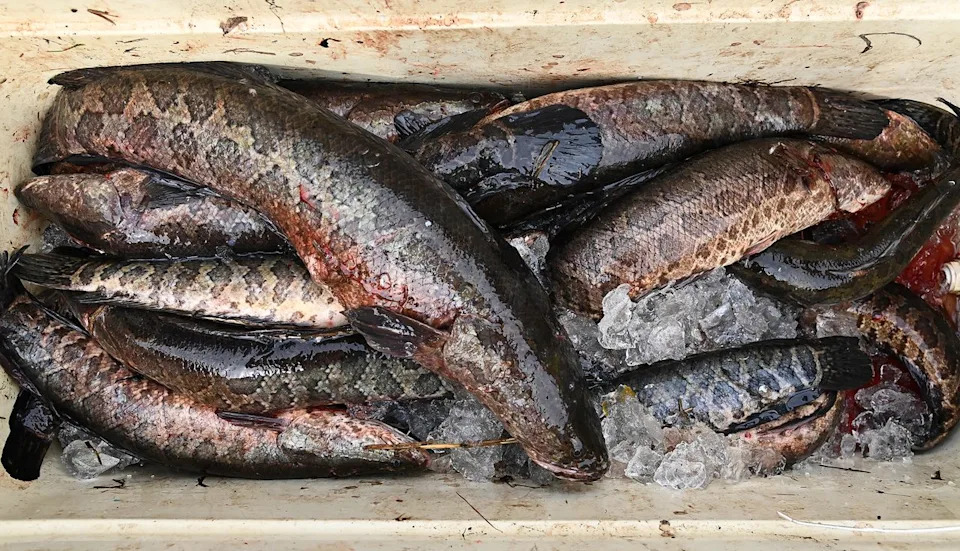
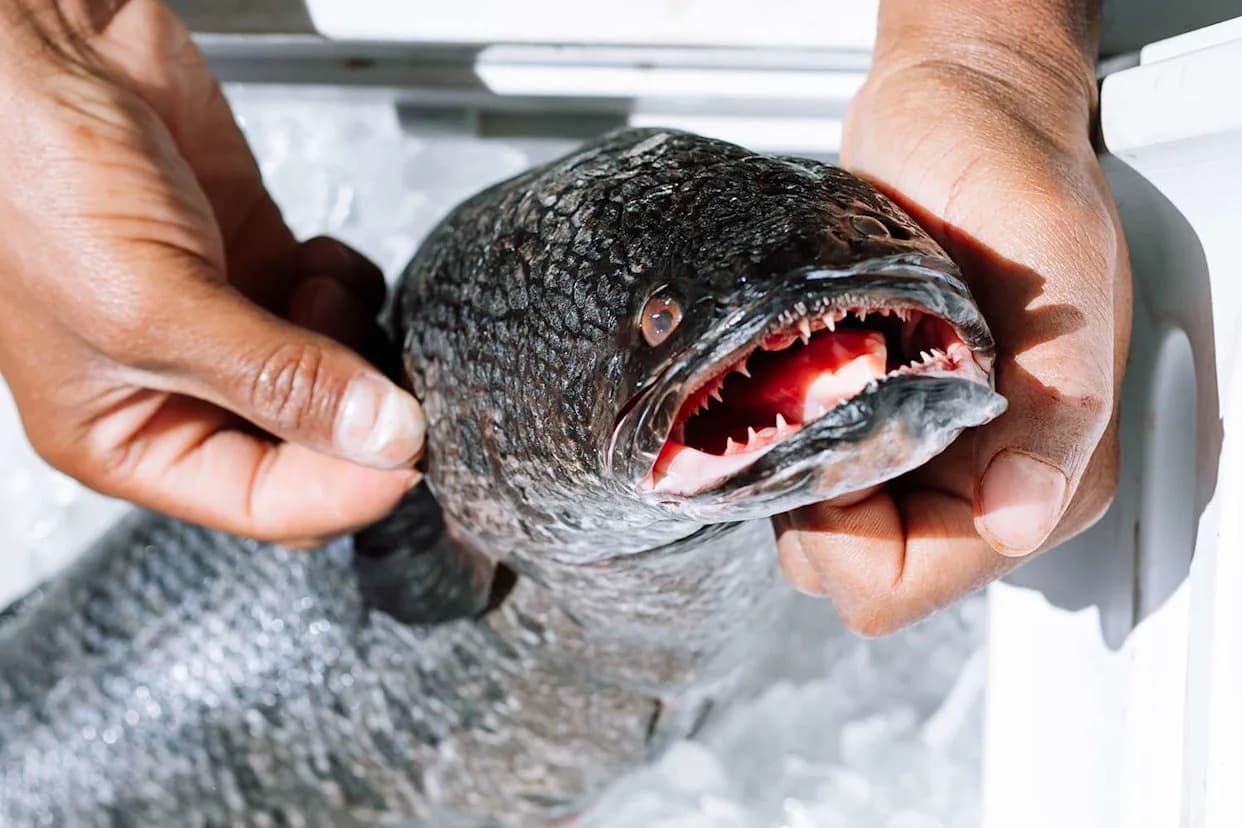
A cooler filled with a fresh catch of Northern Snakehead sits outside the Woolford Country Store on April 13, 2022 in Woolford, Md.Credit: Ricky Carioti/The Washington Post via Getty
Joseph Love, a fisheries biologist with the Maryland Department of Natural Resources, described the species as 'crafty' and adept at moving through shallow water and across short stretches of land.
Researchers report that community removal efforts may be making a difference. A peer-reviewed study by Joseph Love found that increased bowfishing could raise overall snakehead mortality to roughly 25%, a level experts say could begin to reverse population growth in affected waters.
What Anglers And Communities Should Know
Officials are urging anglers to report and, where permitted, harvest snakeheads when encountered. If you catch a suspected northern snakehead, follow state guidance for identification, handling and reporting. Local agencies emphasize rapid response — early detection and removal give the best chance to protect native fisheries.
Sources: Reporting from The New York Times and local outlets; U.S. Fish and Wildlife Service; U.S. Geological Survey; Maryland Department of Natural Resources; New York DEC.
Help us improve.