The Blue-fronted Lorikeet, endemic to Buru Island, Indonesia, was photographed and confirmed in April — the first verified images in more than a decade and only the second confirmed record in over 100 years. First described from seven specimens in the 1920s, the species likely persists in restricted high-elevation forests. Experts warn it remains vulnerable to deforestation, hunting and trade, and call for coordinated conservation action to protect its upland habitat and establish population data.
Nearly Lost for a Century: Blue-fronted Lorikeet Rediscovered on Indonesia’s Buru Island
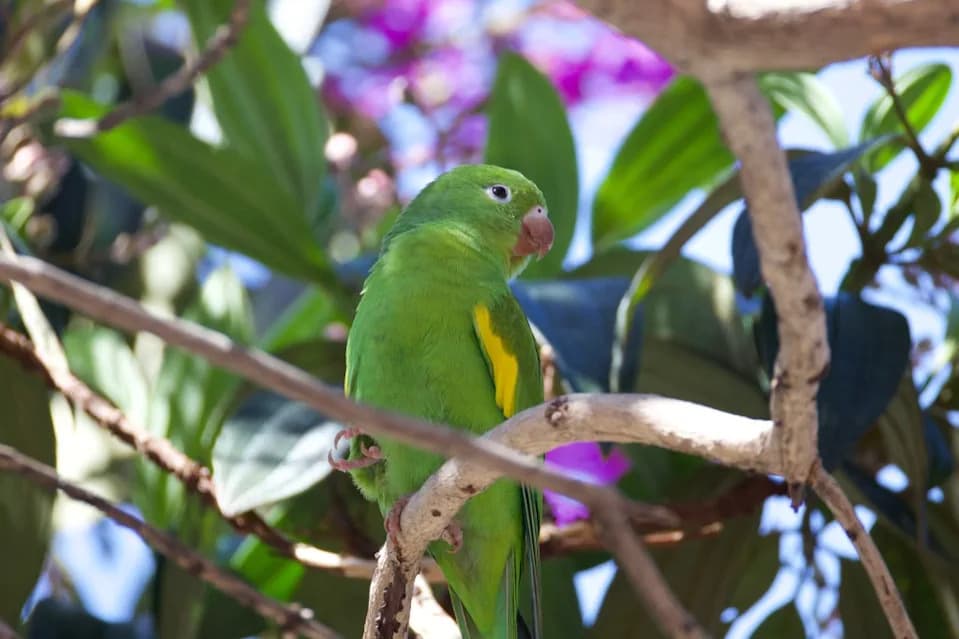
Stock green: A green and yellow parrot perched on a branch.
Conservationists and researchers have confirmed the rediscovery of a bird long absent from scientific records: the Blue-fronted Lorikeet, a parrot endemic to Indonesia’s Buru Island. Photographs taken in April by a field team working with local experts provide the first confirmed images in more than a decade and only the second verified record in over 100 years.
First described in the 1920s from just seven museum specimens, the Blue-fronted Lorikeet is a small parrot notable for its lime-green plumage, orange bill, blue hindcrown and pointed tail. Despite repeated searches of the forests where those early specimens were collected, the species largely vanished from observation and remained one of Indonesia’s least understood birds.
The lorikeet briefly reappeared in 2014 when it was photographed during a Birdquest tour led by Craig Robson, but confirmed sightings then ceased until the April documentation. The recent images were taken by a team of researchers and knowledgeable local guides, marking only the second verified record of the species in more than a century.
“When we saw the Blue-fronted Lorikeet, I couldn’t hold back my tears,” said Sumaraja, a guide and tour leader with BirdtourAsia. “Every day, I almost cried with joy at seeing that these birds still exist.”
Part of the discovery’s importance lies in how little is known about the lorikeet’s ecology and distribution. The IUCN currently lists the species as Data Deficient, reflecting substantial gaps in knowledge. The Search for Lost Birds initiative named it a “lost species” in 2024, and prior assessments at times classified it as Critically Endangered because confirmed records were so scarce.
Recent evidence suggests the lorikeet is likely restricted to higher-elevation, upland forest on Buru — landscapes that have been less surveyed and are harder to access. That remoteness may have helped the species persist, but a restricted range and likely small population leave it vulnerable.
“Rare sighting records suggest a highly restricted habitat use,” said Benny Siregar, Maluku coordinator at Burung Indonesia. He cautioned that the lorikeet probably exists in very small numbers amid continuing habitat pressures.
Surveys conducted between 2023 and early 2025 documented potential threats including forest loss, local hunting and illegal trade. Conservationists stress that the full scale of threats is not yet known and call for coordinated, rapid action to protect the species’ remaining habitat and to establish baseline population data.
“There is a need for a collective approach and action from all stakeholders to protect the remaining habitat of this incredible bird,” said Dwi Agustina, conservation program coordinator for Konservasi Kakatua Indonesia.
For now, the Blue-fronted Lorikeet occupies an uncertain status: no longer considered lost, but far from secure. The rediscovery renews hope and underscores the value of targeted surveys, community engagement and habitat protection on Buru Island so scientists can better understand and safeguard this rare parrot.
Help us improve.