Rwanda’s Volcanoes National Park is piloting environmental DNA (eDNA) to detect wildlife from genetic traces in soil and water, offering a less intrusive complement to camera traps and ranger surveys. The African Wildlife Foundation and Rwandan authorities hope eDNA will create a national species inventory to guide conservation amid climate and land-use pressures. Challenges include estimating population sizes, lab capacity and limited African reference DNA libraries, but local training and region-specific databases are underway.
How eDNA Sampling in Rwanda’s Volcanoes Park Could Revolutionize Conservation
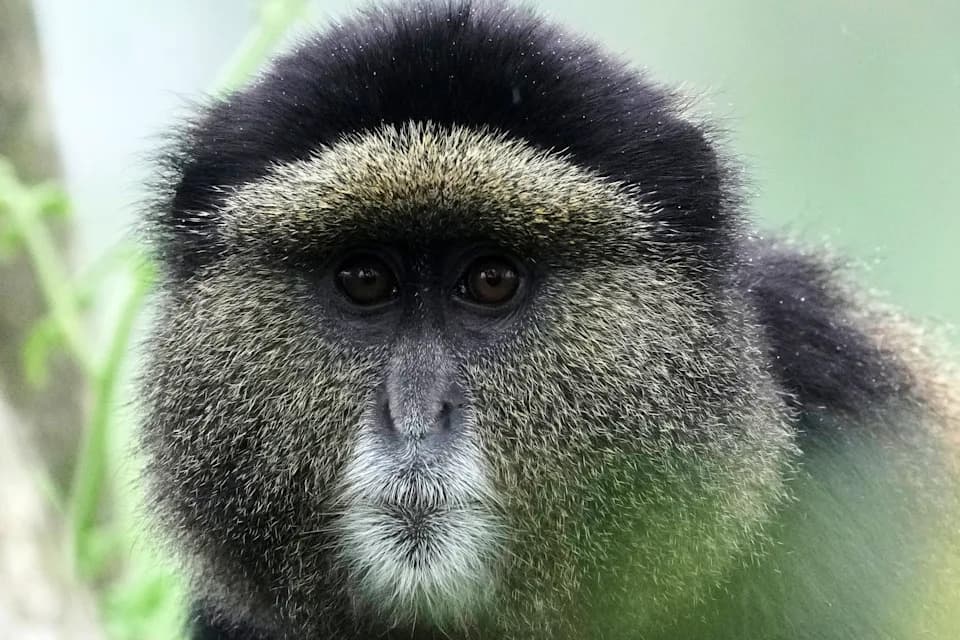
A golden monkey is seen in Volcanoes National Park in Kinigi, Rwanda, Thursday, March 19, 2026. (AP Photo/Brian Inganga)(AP Photo/Brian Inganga)
A tracker in Rwanda’s mist-shrouded Volcanoes National Park used familiar grunts and clicks to reassure endangered golden monkeys he posed no threat — a small scene in a larger story about how conservationists are turning to new technologies to locate and protect wildlife.
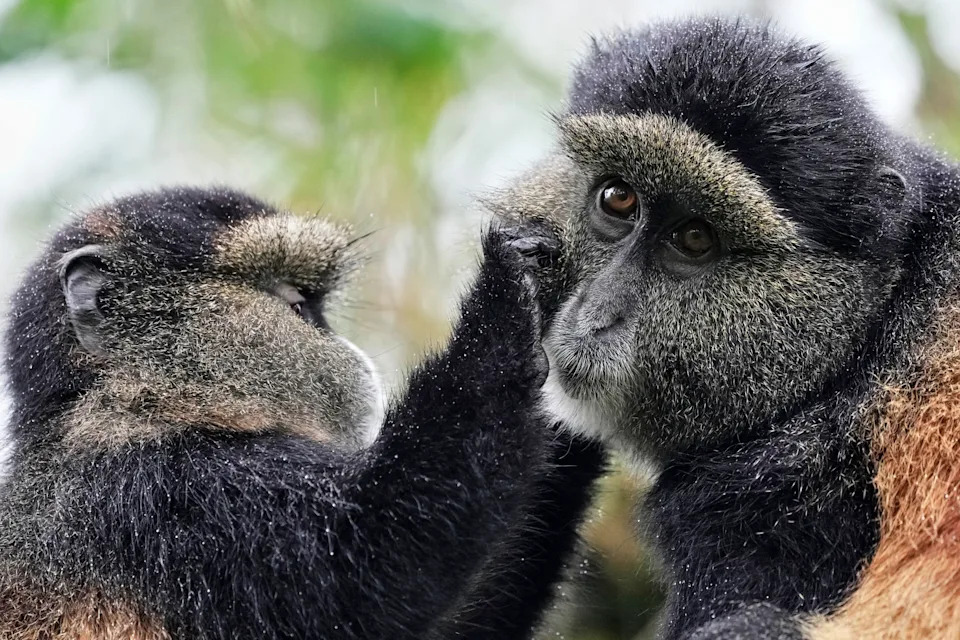
Golden monkeys groom each other, removing debris and parasites from their fur, in Volcanoes National Park, in Kinigi, Rwanda, Thursday, March 19, 2026. (AP Photo/Brian Inganga)(AP Photo/Brian Inganga)
What Is eDNA?
Environmental DNA (eDNA) is genetic material shed by animals — hair, feces, skin cells or other biological traces — that accumulates in soil and water. Scientists can sequence that DNA to identify which species have been present without needing to see or capture the animals themselves. The technique has been widely used in marine work and is now being adapted for terrestrial ecosystems.
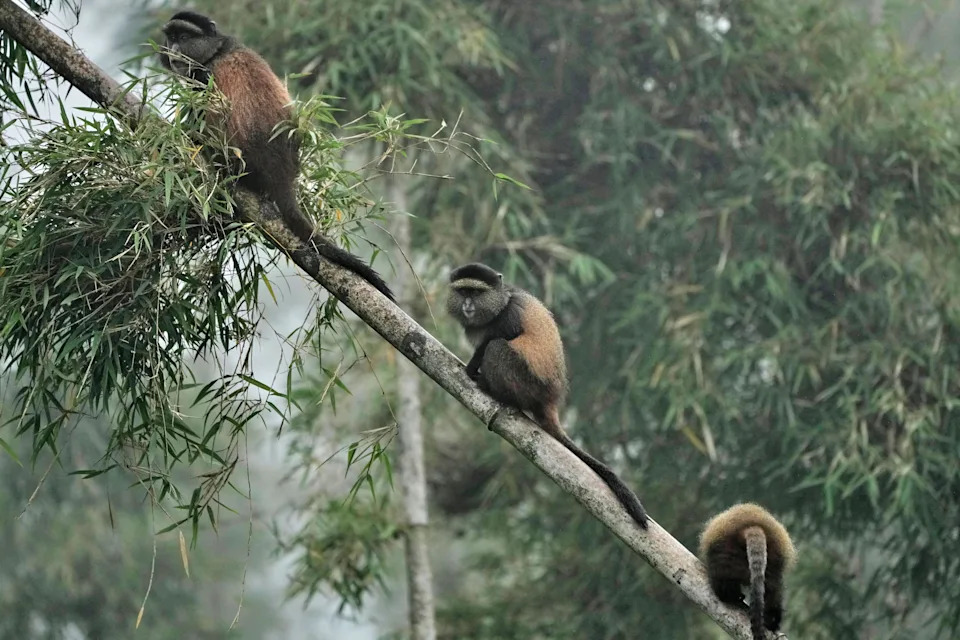
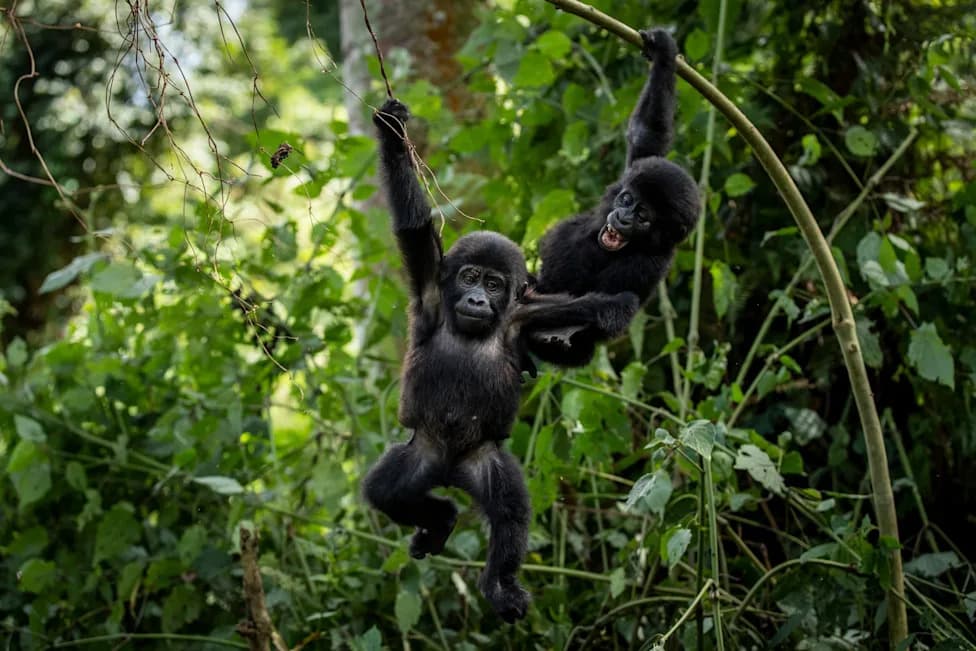
Golden monkeys play on a bamboo tree in Volcanoes National Park, Kinigi, Rwanda, Thursday, March 19, 2026. (AP Photo/Brian Inganga)(AP Photo/Brian Inganga)
How It’s Being Used In Rwanda
The African Wildlife Foundation, in partnership with the Rwandan government and local research groups including the Dian Fossey Gorilla Fund, has begun using eDNA in Volcanoes National Park to build a comprehensive species inventory. Teams collect samples from likely collection points — for example downstream ponds that gather runoff from higher ground — and send them to laboratories for analysis. The goal is a national baseline of biodiversity to help guide conservation as climate change and human land use reshape habitats.
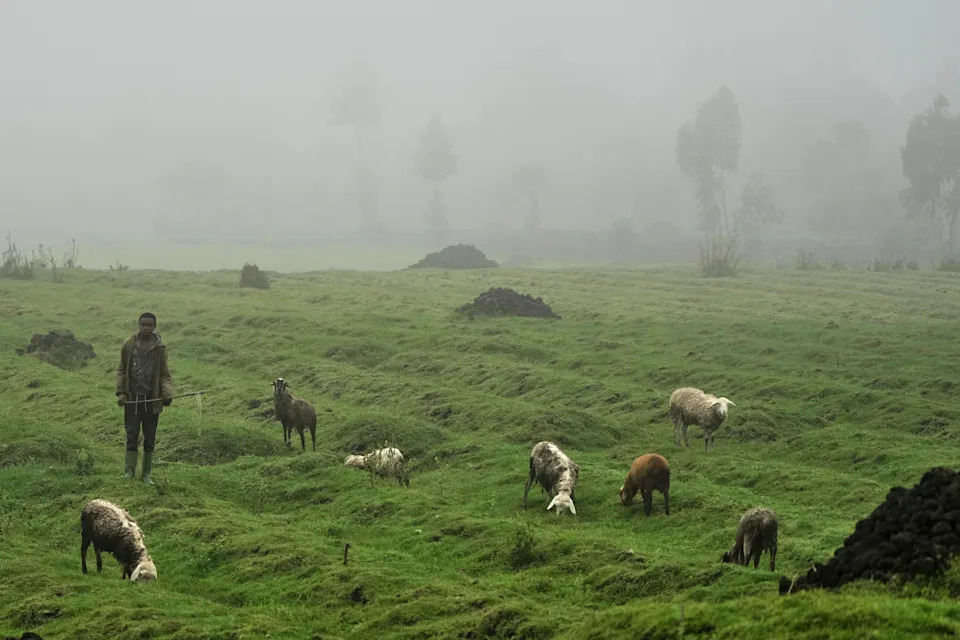
A boy tends livestock near Volcanoes National Park, Kinigi, Rwanda, Thursday, March 19, 2026. (AP Photo/Brian Inganga)(AP Photo/Brian Inganga)
Benefits
- Broad Detection: A single eDNA sample can reveal mammals, birds, amphibians and other taxa present in a landscape.
- Less Intrusive: eDNA reduces the need for disruptive field encounters in steep, foggy, or densely vegetated terrain where camera traps and direct sightings are difficult.
- Conservation Planning: Regular sampling can show how species recolonize restored land, detect invasive species early, and help focus anti-poaching patrols by indicating areas where threatened species occur.
Limitations And Challenges
eDNA is not a silver bullet. It cannot reliably estimate population sizes because DNA can persist in the environment long after an animal has moved on. Fieldwork and lab logistics present practical hurdles: samples need cold storage, strict contamination controls, and timely processing. The Rwanda project’s first samples were sent to European labs, highlighting local capacity gaps.
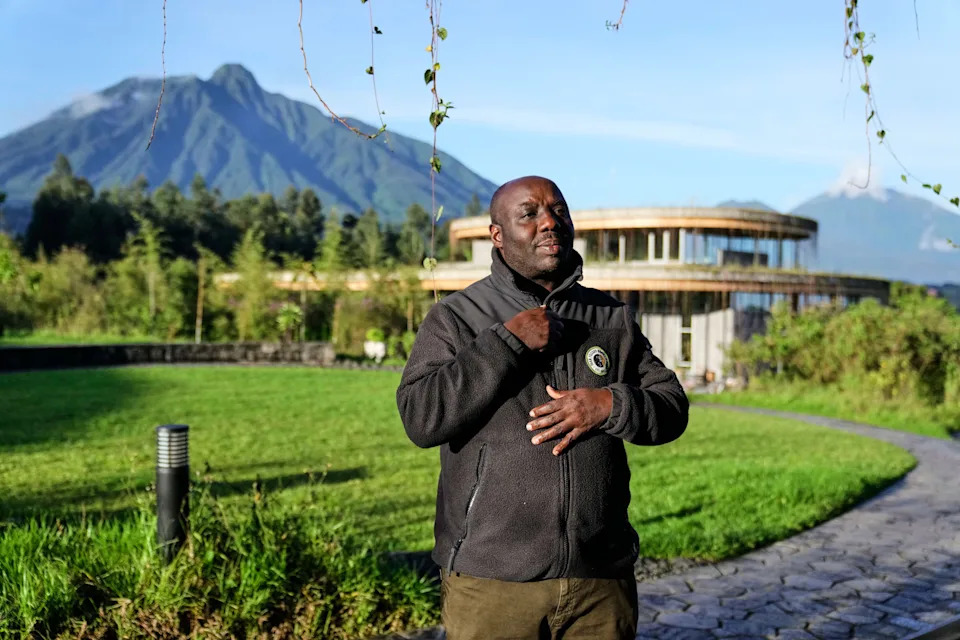
Deogratias Tuyisingize, a biodiversity researcher with the Dian Fossey Gorilla Fund, speaks during an interview in Volcanoes National Park, Kinigi, Rwanda, Thursday, March 19, 2026. (AP Photo/Brian Inganga)(AP Photo/Brian Inganga)
Another key constraint is data: matching eDNA reads to species requires genetic reference libraries. Many global reference databases are biased toward species from Europe and the Americas, so Africa-specific reference sequences are being gathered to improve identification accuracy.
Building Local Capacity
Project partners have prioritized training rangers and local community members to collect samples, expanding participation and reducing long-term costs. Researchers are also working to build regional DNA databases and to develop local lab capabilities so samples can be processed in Rwanda in the future.
“We selected eDNA as a new technology to bring solutions and to complement existing methods used in ecological monitoring,” said Patrick Nsabimana of the African Wildlife Foundation. Deogratias Tuyisingize of the Dian Fossey Gorilla Fund emphasized that eDNA should augment — not replace — camera traps and ranger surveys.
As Rwanda rehabilitates former agricultural land and expands protected areas, eDNA offers a scalable way to track how wildlife returns to restored habitats. While technical and data challenges remain, the approach is already proving a cost-effective complement to traditional monitoring methods in rugged and security-sensitive landscapes like the Virunga mountains.
The Associated Press’ climate and environmental reporting is supported by multiple private foundations. AP retains editorial control of coverage.
Help us improve.