An international team has described seven new species of diamond frogs in the genus Rhombophryne, bringing the genus total from 20 to 27. Researchers combined DNA from modern samples and decades-old museum specimens with calls, morphometrics and micro-CT scans to resolve complex taxonomy. The study estimates 24 of 27 species are threatened, with two possibly Critically Endangered, and its findings are already informing protected-area planning.
Seven New 'Diamond' Frogs (Rhombophryne) Reveal Madagascar’s Hidden Biodiversity
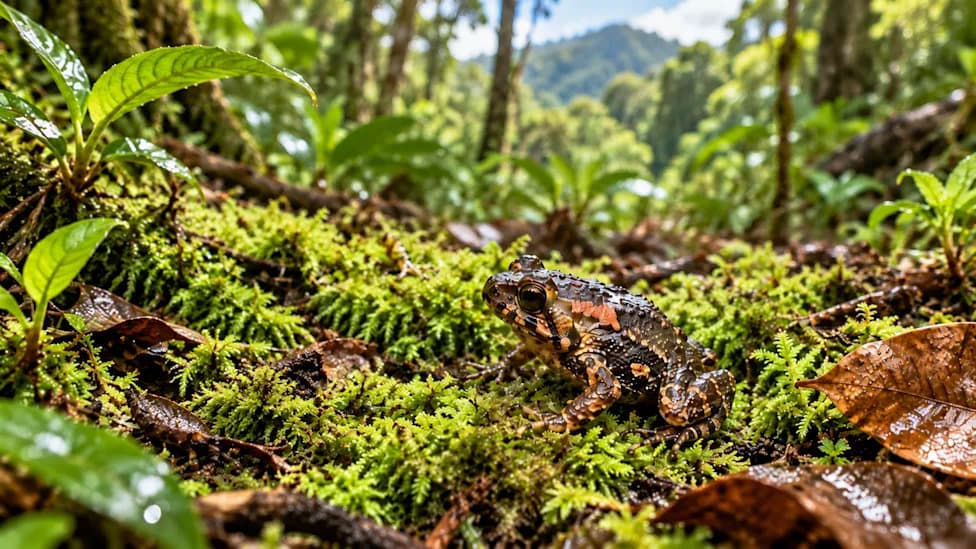
Scientists name seven new diamond frogs in Madagascar, raising the genus to 27 species and revealing urgent conservation risks. (CREDIT: Shutterstock)
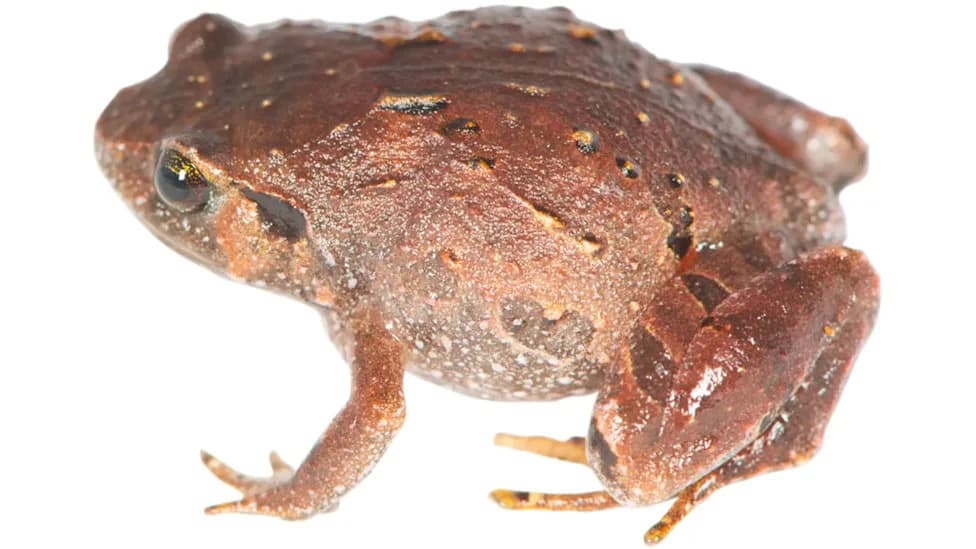
A largely unseen world beneath Madagascar’s forest floor has just become richer. An international team of scientists has formally described seven previously unknown species of diamond frogs in the genus Rhombophryne, raising the recognised total from 20 to 27. The revision highlights both the island’s extraordinary amphibian diversity and the urgent conservation challenges many of these species face.
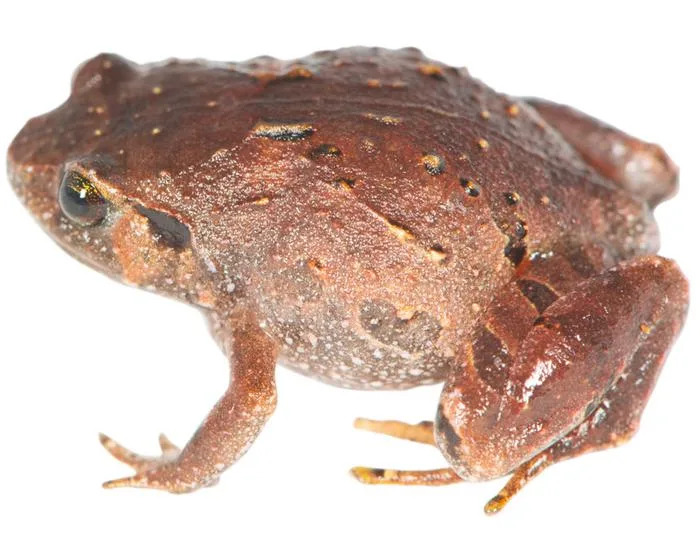
Researchers describe seven new diamond frog species in Madagascar, revealing hidden diversity in forests under growing threat. (CREDIT: Mark D. Scherz, Natural History Museum Denmark)
What the Researchers Found
The study names seven new species: Rhombophryne maraorao, R. mavokely, R. anatiala, R. kotrobaratra, R. sonaliae, R. kilonjy and R. quentini. Together with careful re-assessment of historical material, the work brings the genus total to 27 species. The authors estimate that 24 of these 27 species are threatened; two (R. kilonjy and R. matavy) may qualify as Critically Endangered.
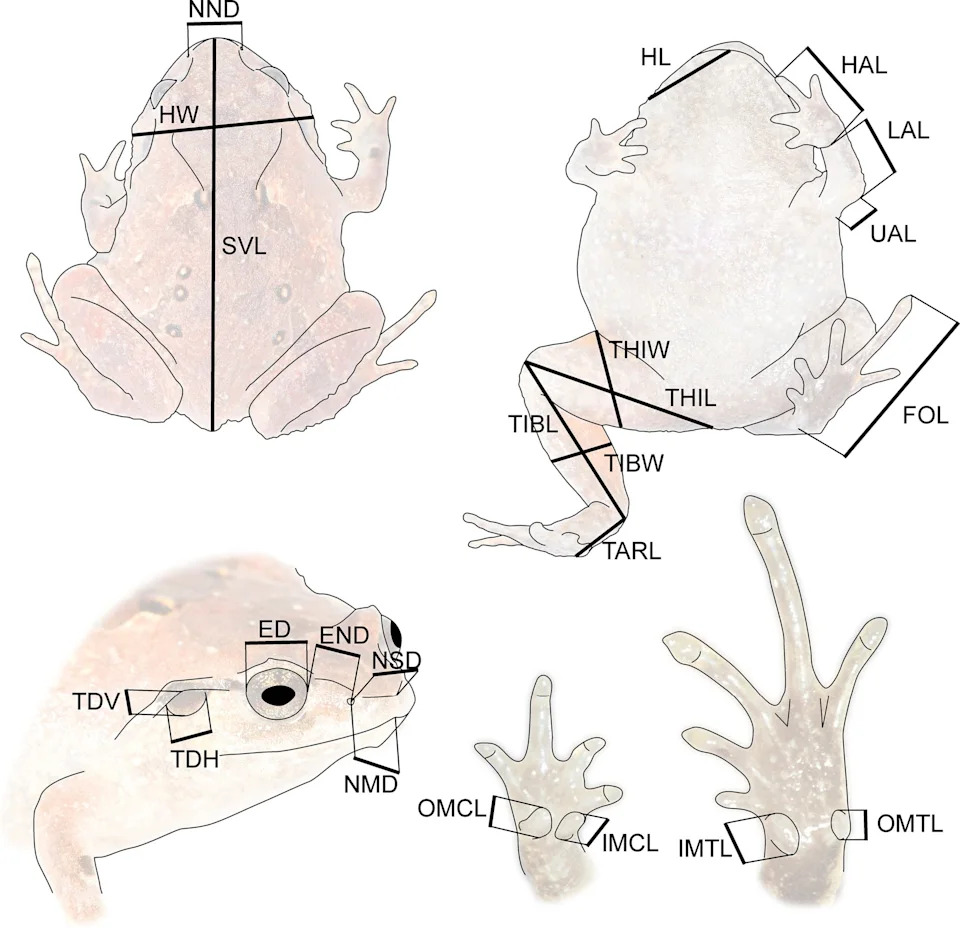
The morphometric scheme used herein. (CREDIT: Vertebrate Zoology)
How They Untangled Complex Taxonomy
The team used an integrative approach: combining DNA from modern field collections and decades-old museum specimens (museomics), recordings of male advertisement calls, detailed body measurements (morphometrics), and non-destructive micro-CT scans of skeletal anatomy. Genetic analyses used 204 DNA sequences overall — including 77 newly generated sequences — and a principal genetic tree incorporating 100 Rhombophryne individuals.
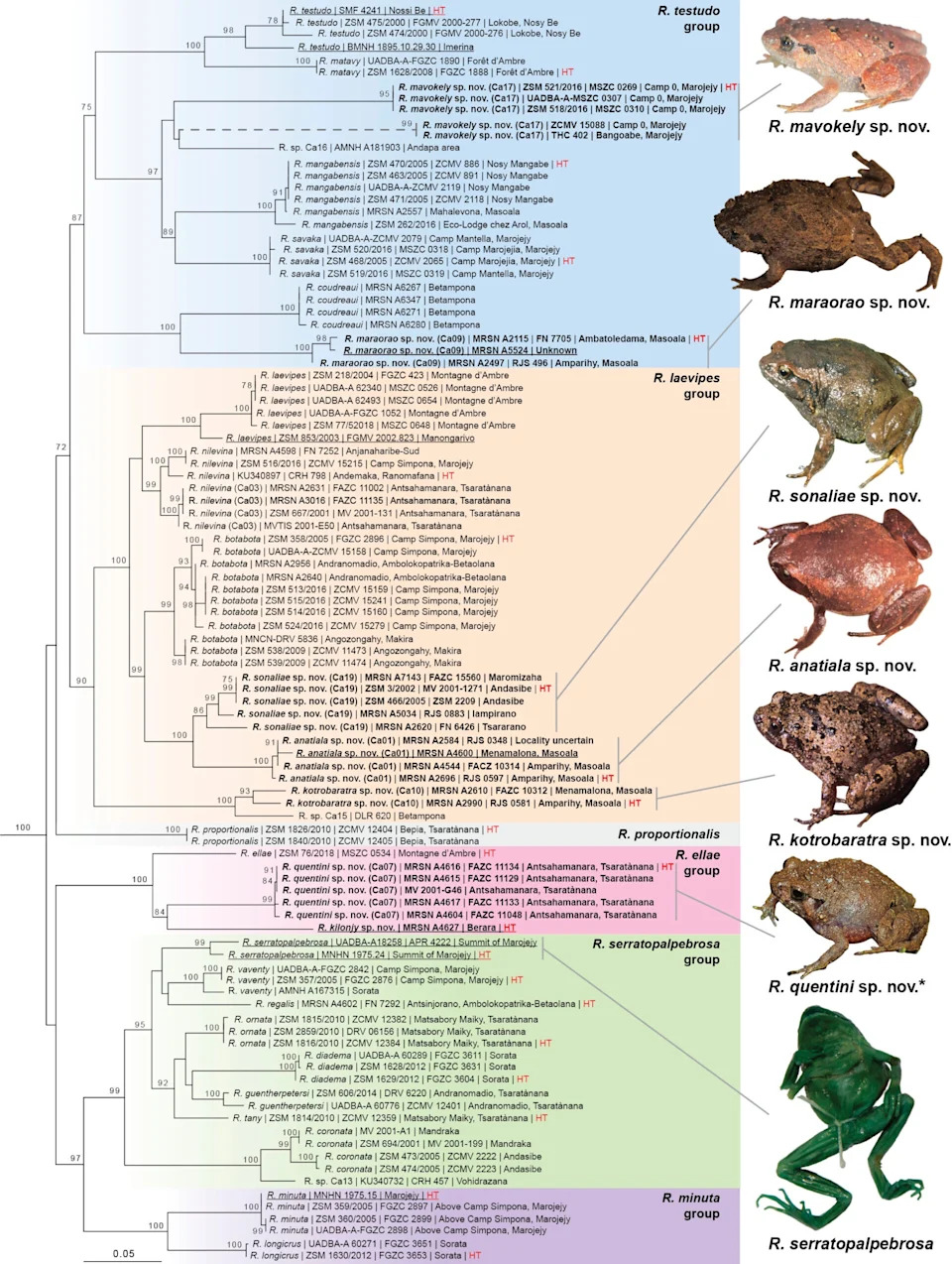
Maximum likelihood phylogeny inferred from the mitochondrial 16S rRNA gene, showing genetic relationships among all members of the genus Rhombophryne. (CREDIT: Vertebrate Zoology)
“Museum collections are far more than archives of the past — they are essential scientific resources for understanding biodiversity today,” said Dr. Alice Petzold, who led the museomics component.
Biology and Diversity
Diamond frogs are often small, secretive, and ground-dwelling. Within Rhombophryne, adult sizes range from roughly 12 mm in the smallest species to about 60 mm in the larger ones. The study recognises six principal species groups (e.g., the burrowing, short-limbed R. testudo group and the highly miniaturised R. proportionalis group) that reflect varied ecologies and body plans.
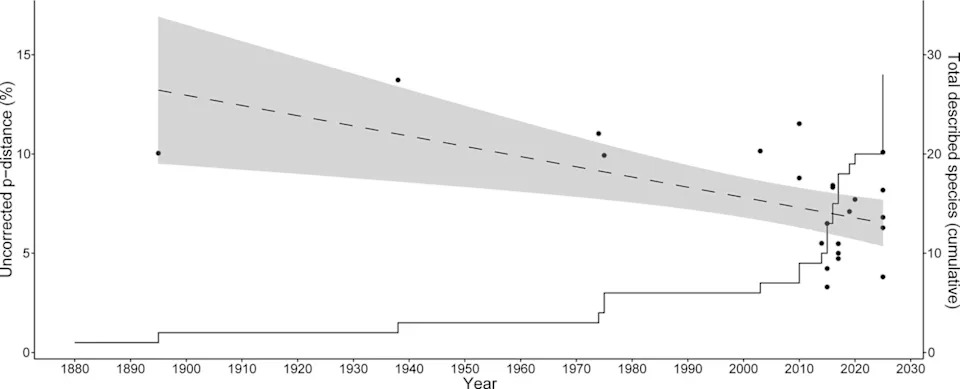
Number and genetic distinctiveness of newly described Rhombophryne species over time. (CREDIT: Vertebrate Zoology)
Conservation Implications
Most Rhombophryne species inhabit humid and subhumid forests of northern, northeastern and eastern Madagascar; the genus appears absent from western and southern regions. Many species have very small known ranges or are known from only a few specimens, making them vulnerable to ongoing deforestation and habitat fragmentation. The new taxonomic clarifications are already influencing conservation planning — for example, the formal recognition of R. quentini helped justify proposals to strengthen protection of specific forest tracts during a protected-area workshop in March 2026.
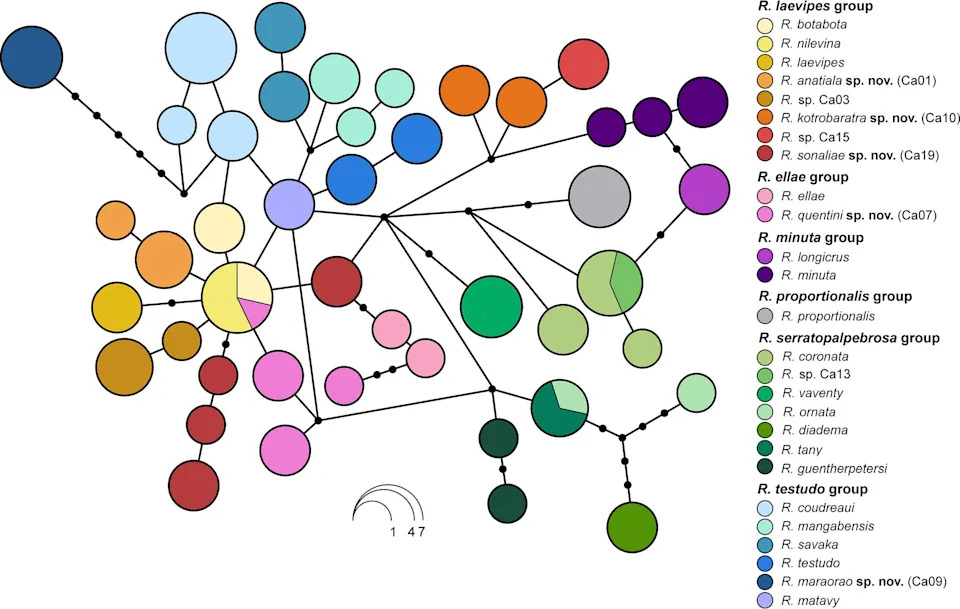
Haplotype network reconstruction (based on 315 bp, haplotypes inferred using the PHASE algorithm); all available RAG1 sequences for the nominal and candidate species of the genus Rhombophryne were used. (CREDIT: Vertebrate Zoology)
Why This Matters
Accurate taxonomy gives conservation its map. By linking historical type specimens to contemporary genetic lineages, the researchers avoided misnaming or duplicating species and provided a stronger basis for threat assessments and protected-area decision-making. The study also supplies an identification key for field teams to improve future surveys.
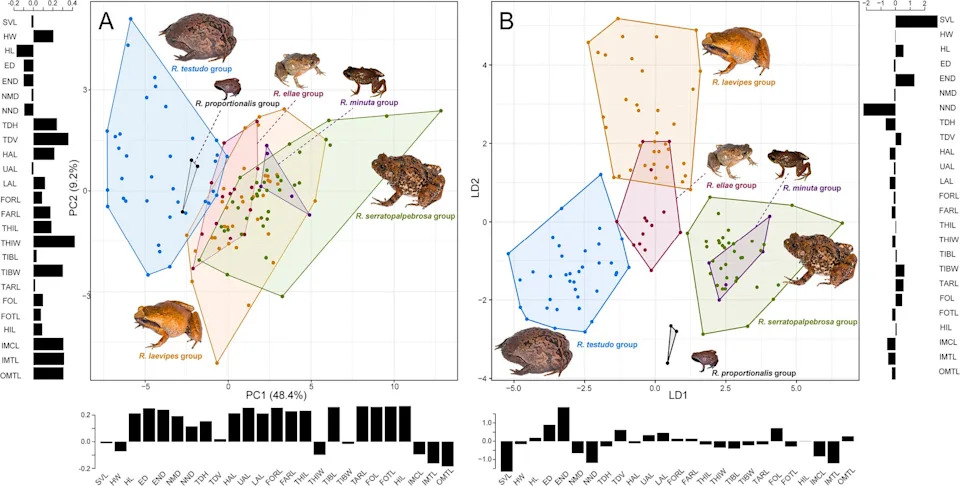
Dimensionality reduction ordinations of Rhombophryne morphometrics, coloured by species group. (CREDIT: Vertebrate Zoology)
Where To Read More
The full research appears in Vertebrate Zoology. The story summarised here was originally reported by The Brighter Side of News. Earlier related studies demonstrated the value of micro-CT imaging, osteological revisions, and DNA recovery from archival specimens in resolving Malagasy frog taxonomy.
Help us improve.