The authors combined ship surveys and Argo float data using machine-learning to reconstruct monthly Southern Ocean heat over four decades. They find circumpolar deep water has thickened nearer Antarctica and migrated poleward—particularly in the upper 2,000 metres—raising the risk of basal melting of ice shelves. The team estimates a circumpolar mean migration of 1.26 km/yr and an increase in heat content of 2.81 TW within 60–65°S. These observations match model predictions and carry major implications for ice stability, sea-level rise and global ocean circulation.
Warm Deep Water Is Creeping Toward Antarctica’s Ice Shelves — Melt Risk Is Rising
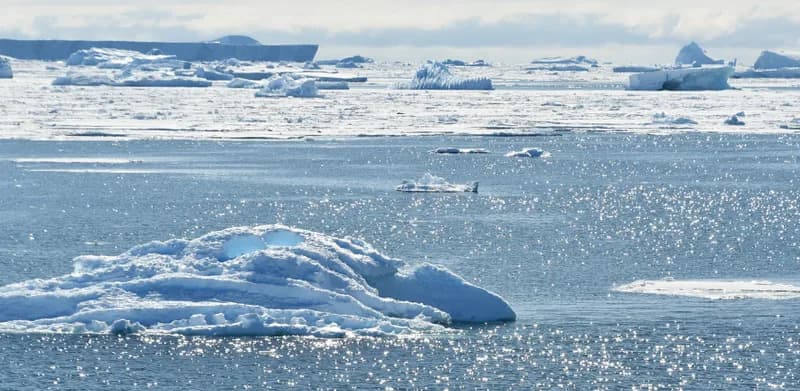
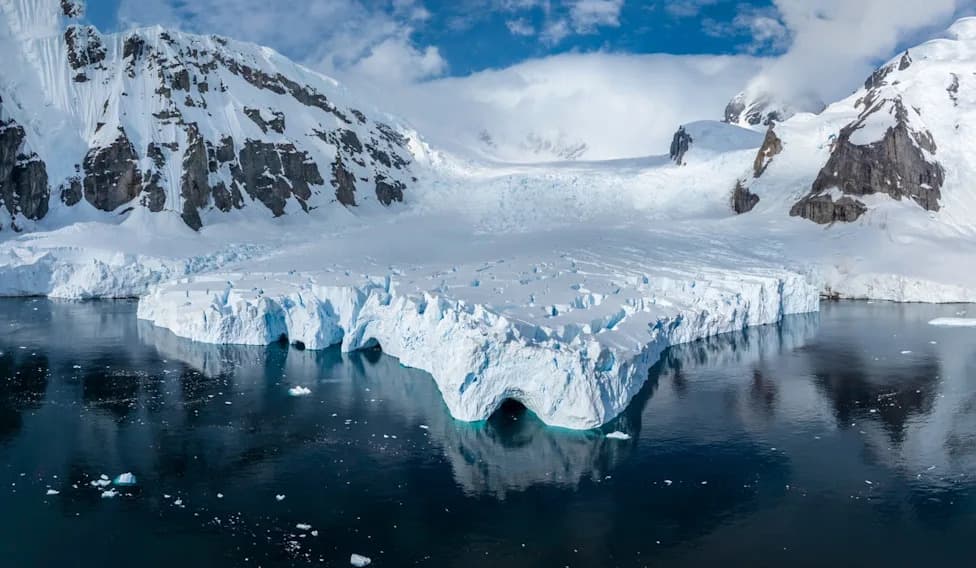
Ice shelves in Bellinghausen Sea, Antarctica, taken onboard the R/V Falkor (too) in 2025. (CREDIT: Laura Cimoli, University of Cambridge)
New observational evidence shows a predicted—but until now sparsely observed—shift of relatively warm deep water toward Antarctica’s continental margin, with worrying implications for ice-shelf melt and global sea level.
Researchers led by the University of Cambridge combined decades of ship-based ocean surveys with continuous measurements from Argo floats and applied machine-learning reconstruction to produce monthly snapshots of Southern Ocean heat over roughly four decades. The merged record reveals that circumpolar deep water (CDW), a comparatively warm water mass, has both expanded and migrated poleward toward Antarctica’s continental shelf during the past 20 years.
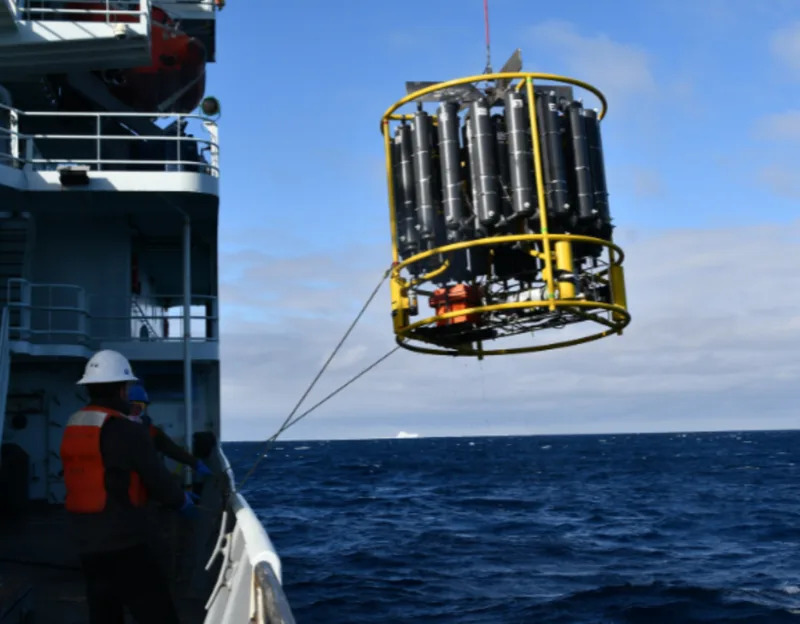
A ship deploying a set of sensors as part of long-running ocean monitoring campaign. Ship-based measurements capture a detailed picture of the entire water column, but data is collected infrequently. (CREDIT: Laura Cimoli, University of Cambridge / Scripps Institution of Oceanography, UC San Diego)
“It’s concerning, because this warm water can flow beneath Antarctic ice shelves, melting them from below and destabilizing them,” said Joshua Lanham, lead author and researcher at Cambridge Earth Sciences.
Ice shelves act as buttresses at the edge of the Antarctic continent, restraining inland glaciers and ice sheets. Those grounded ice reserves hold enough freshwater to raise global sea level by roughly 58 metres if fully released, so any process that undermines ice-shelf integrity is a global concern.
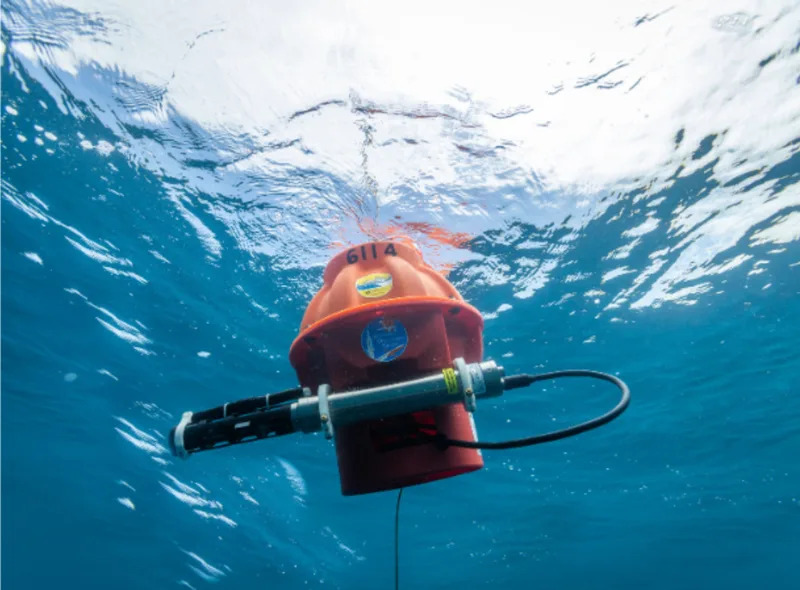
Argo floats are robotic devices that drift through the upper water column gathering continuous snapshots of ocean data, but the programme hasn’t been running as long as ships have been collecting hydrographic sections. (CREDIT: Laura Cimoli, University of Cambridge / Scripps Institution of Oceanography, UC San Diego)
How the shift was detected
Ship transects provide detailed vertical profiles of temperature, salinity and nutrients but were typically repeated only about once a decade, leaving long temporal gaps. Argo floats provide continuous, frequent coverage in the upper ocean but do not extend as far back in time as the ship record. By fusing these complementary data streams with machine-learning techniques, the team reconstructed monthly distributions of heat and identified a broad rearrangement of water masses in the Southern Ocean.
What changed
The largest changes were concentrated in the upper 2,000 metres. Close to Antarctica, the warm-water layer thickened; farther north it thinned. This pattern indicates a poleward migration of the CDW. The authors estimate a circumpolar mean poleward migration of the warm-water boundary of 1.26 kilometres per year (95% CI: 0.53–1.98 km/yr). Regional rates were highest in the Weddell Sea (2.39 km/yr), intermediate in East Antarctica (1.31 km/yr), and lower in West Antarctica (0.80 km/yr).
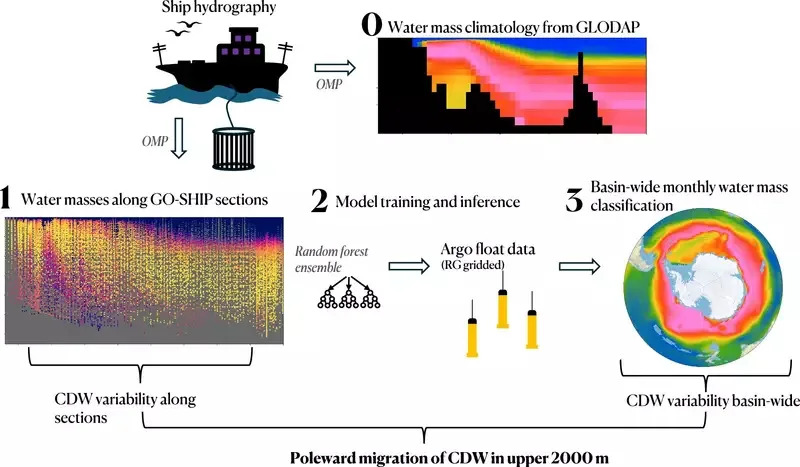
Schematic overview of the analysis workflow used in this study, illustrating the main processing steps. (CREDIT: Communications Earth & Environment)
Within the 60–65°S latitude band, heat content in the CDW layer increased at a rate of 2.81 terawatts (95% CI: 2.0–3.6 TW).
Why it matters
Historically, Antarctic ice margins were protected by a "cold bath"—dense, very cold waters such as dense shelf water and Antarctic Bottom Water that limited access of warmer deep waters to ice-shelf bases. The new analysis shows this barrier has weakened in places: in the Weddell Sea and parts of East Antarctica the expansion of CDW near the continent coincides with a contraction of Antarctic Bottom Water and dense shelf water. In West Antarctica, where cold upper-ocean waters are less prominent, CDW expansion instead pairs with reductions in Antarctic Intermediate Water.
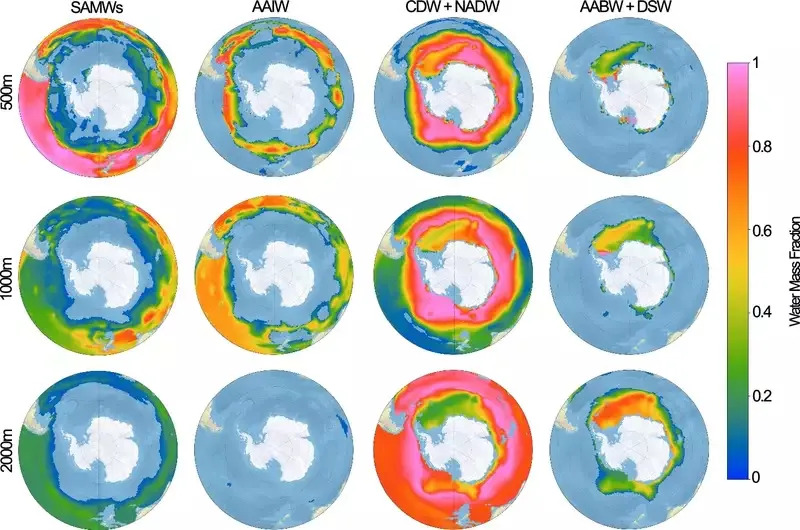
Circumpolar distribution of Southern Ocean water mass fractions. (CREDIT: Communications Earth & Environment)
As CDW moves closer to the continent, more ocean heat is positioned to reach the undersides of floating ice shelves. Thinning or weakening of those shelves would allow inland glaciers to accelerate into the ocean, contributing to global sea-level rise. Beyond this, changes in Southern Ocean heat distribution affect global heat and carbon storage and the planet's deep overturning circulation.
“We can now see this scenario is already emerging in the observations,”
— Joshua Lanham, Cambridge Earth Sciences
Causes and uncertainties
The study does not assign the shift to a single cause. Possible contributors include reduced formation of dense Antarctic waters (weakening the cold barrier) and changes to Southern Ocean wind patterns—specifically stronger, poleward-shifting westerlies observed in recent decades and projected by climate models. The authors note limitations: some biogeochemical end members were assumed constant during the Argo era, and choices about source-water representation carry uncertainty. However, the main findings were robust across sensitivity tests and alternative model setups.
Implications
Because circumpolar deep water is the principal ocean heat source at the continental margin, its poleward advance increases the risk of basal melting of ice shelves now—not just in future model projections. The observations align with long-standing model predictions and point to emerging changes in how heat, carbon and nutrients circulate through the global ocean system.
Publication: The study is published in Communications Earth & Environment. Reporting and analysis were led by Cambridge Earth Sciences in collaboration with teams from UCLA and UCSD.
Help us improve.