Chinamaxxing is a viral social-media trend in which young Americans adopt Chinese aesthetics and daily rituals, from hot-water rituals to fashion inspired by traditional styles. The trend reflects greater exposure to Chinese media and tech, China’s post-Covid reopening and migration to platforms like Xiaohongshu, but also reveals dissatisfaction with conditions in the U.S. While often ironic and sometimes criticized as cultural appropriation, the movement may nonetheless strengthen aspects of China’s cultural influence.
Why Young Americans Are ‘Chinamaxxing’ — And What It Means for China’s Soft Power
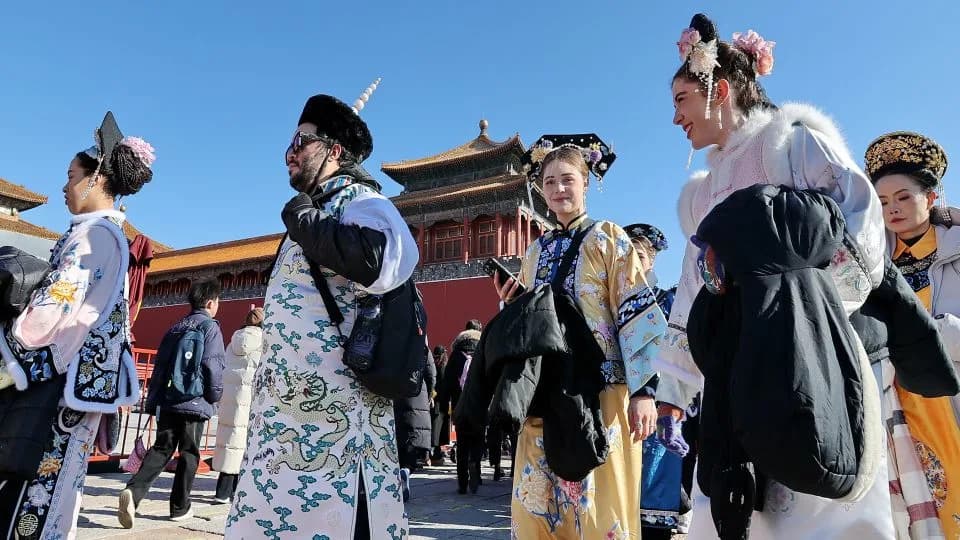
Domestic and foreign tourists in Chinese traditional costume visit the Palace Museum in Beijing, China, on January 10, 2025. - Wang Xin/VCG/Getty Images
Social media feeds are filling with a new trend: "Chinamaxxing," where young Americans mimic everyday Chinese aesthetics and routines — from sipping hot water and padding around in slippers to wearing viral Adidas jackets styled to resemble traditional Chinese clothing.
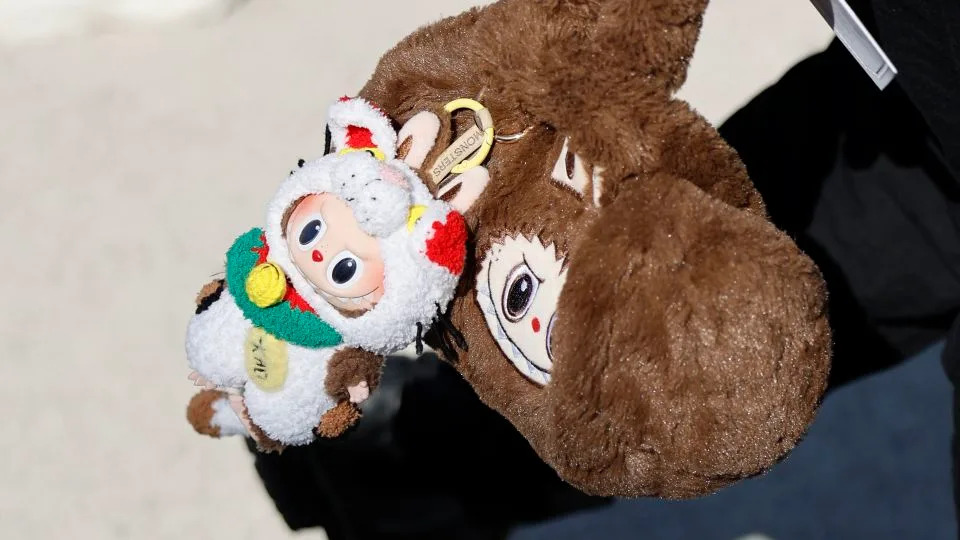
A guest wears brown fur Labubu bag with Labubu charm attached, outside Dior, during the Womenswear Spring Summer 2026 as part of Paris Fashion Week in Paris, France, on October 1, 2025. - Claudio Lavenia/Getty Images
Creators often treat these rituals as ironic or playful ways to "become Chinese," but the phenomenon points to a wider shift in how parts of the West perceive China and its culture.
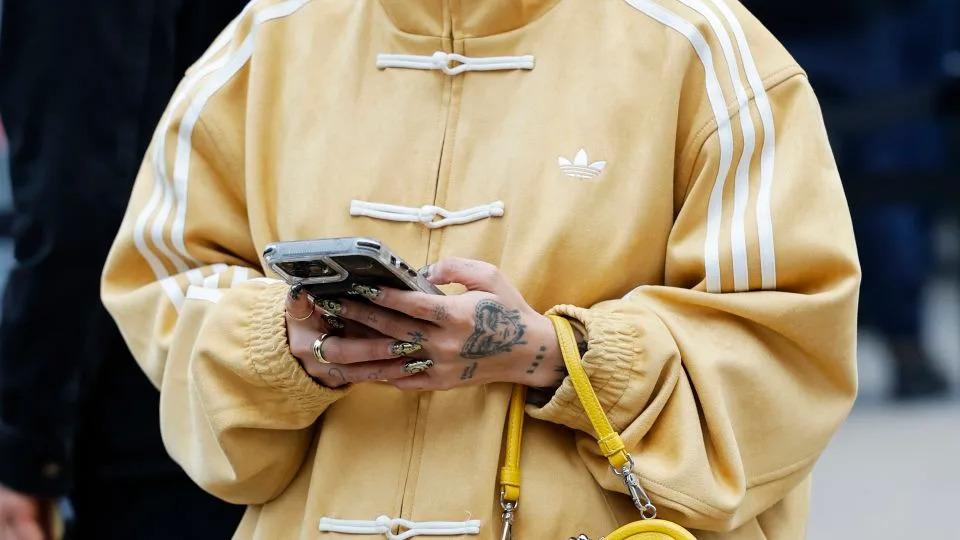
A guest wears dark sunglasses, a mustard yellow suede Adidas Tang jacket with white toggle closures, oversized beige cotton trousers, and a bright yellow Vivienne Westwood heart-shaped leather handbag, outside Jeanne Friot, during the Menswear Fall/Winter 2026-2027 as part of Paris Fashion Week on January 20, 2026 in Paris, France. - Claudio Lavenia/Getty Images
What Chinamaxxing Looks Like
Videos tagged with the trend range from lighthearted morning routines to clips showing people boiling apples to make fruit tea — a clip that had amassed more than 2.4 million views as of late February. Other popular posts spotlight sweeping skylines in Chongqing and Shanghai, neon-lit architecture, drone shows, and advanced transport systems. Many posts also emphasize Chinese advances in electric vehicles and renewable energy.
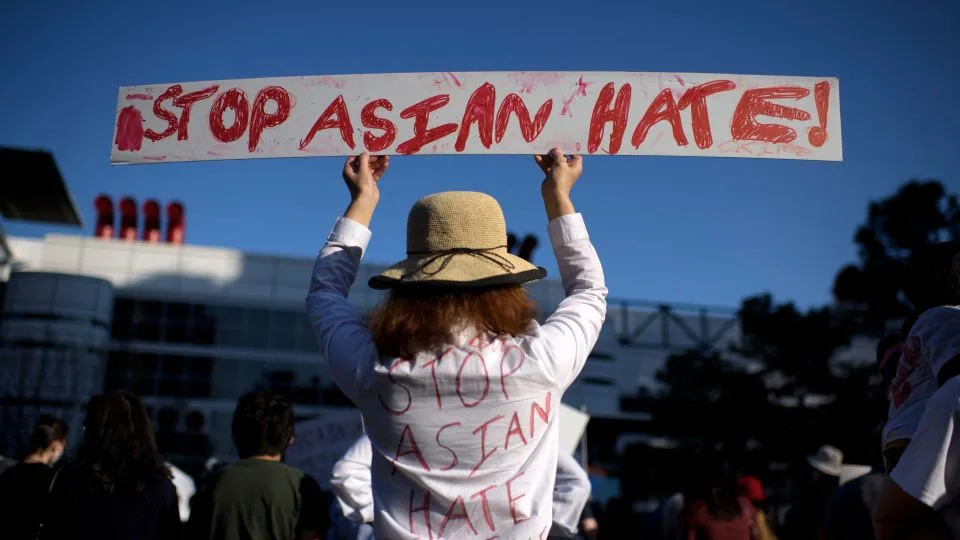
Sally Sha holds up a sign during a Stop Asian Hate rally at Discovery Green in downtown Houston, Texas, on March 20, 2021. - Mark Felix/AFP/Getty Images
Why It’s Gaining Traction
Experts say several forces are converging. Tianyu Fang, a PhD student at Harvard’s Department of the History of Science, notes growing exposure to Chinese media, films and video games, plus the migration of many users to China-based platforms like Xiaohongshu (Little Red Book) after U.S. threats to ban TikTok. That direct cultural exchange is reshaping impressions.
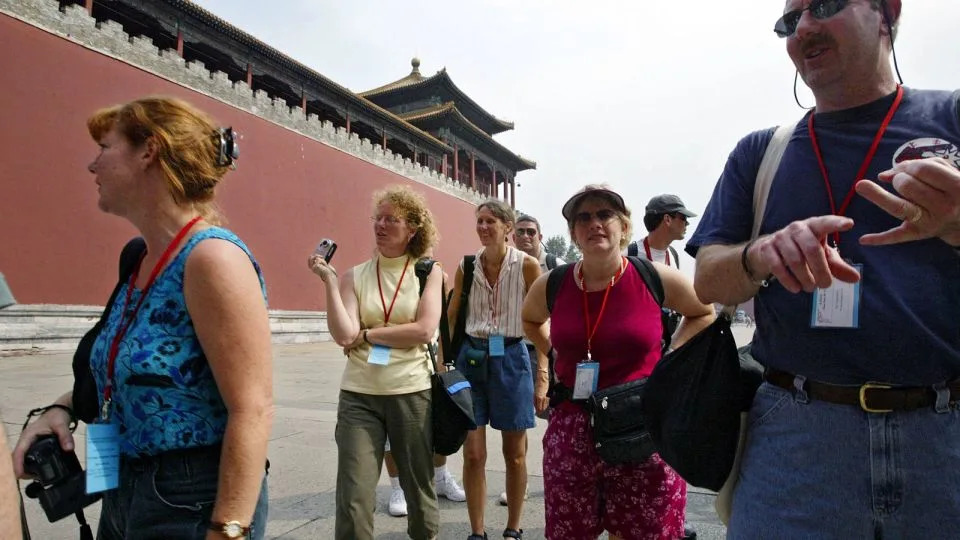
A group of American tourists from Minnesota wait for entry to the Forbidden City in Beijing, China, on 25 August 2003. - Mark Ralston/South China Morning Post/Getty Images
“The current trend tells us more about what Americans feel about America, than what Americans feel about China,” Fang said, pointing to domestic frustrations that are making alternative visions of modern life more appealing.
Many young Americans are reporting disillusionment with political turmoil, gun violence, immigration tensions and high living costs at home. Against that backdrop, glossy portrayals of Chinese cities and infrastructure can feel like an appealing contrast.
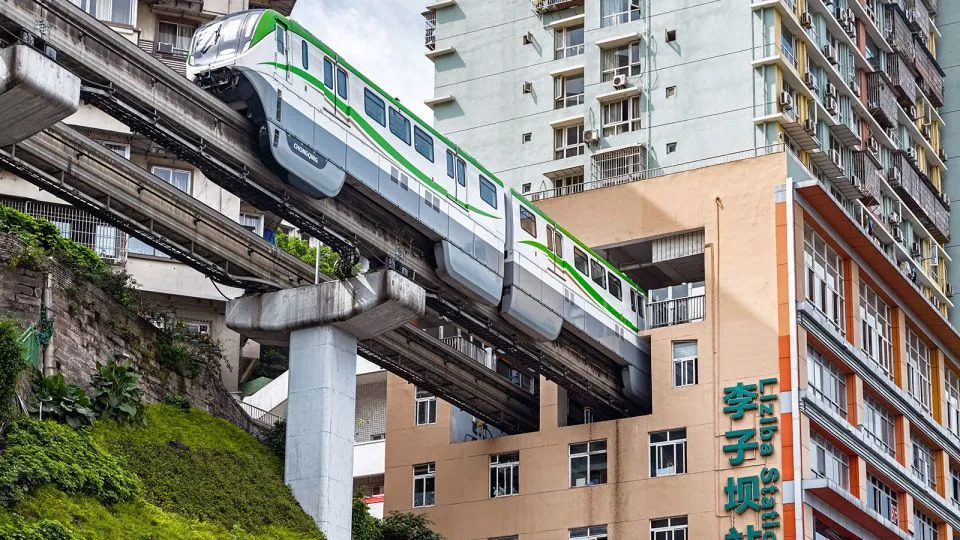
Chongqing Rail Transit Line 2 passes through Liziba Station, where the track runs directly through a residential building. - Sky_Blue/iStock/Getty Images
Context And Caveats
This wave is different from earlier Asian cultural exports like K-pop or J-dramas in one key way: China is an authoritarian strategic rival to the U.S., not a close democratic ally. That raises questions about the trend’s political implications and durability.
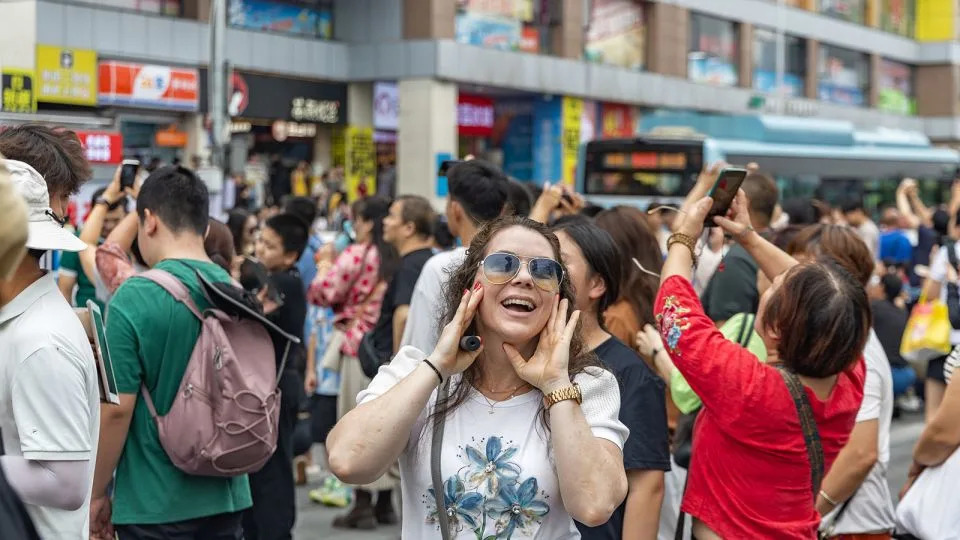
A Serbian tourist has fun at the viewing platform around the Liziba Station of Chongqing Rail Transit in Yuzhong District of southwest China's Chongqing, on October 3, 2025. - Xinhua News Agency/Getty Images
And the viral portrayals are simplifications. While housing costs in some Chinese cities may be lower than in the U.S., average wages are often lower as well, and daily life includes trade-offs the clips rarely show.
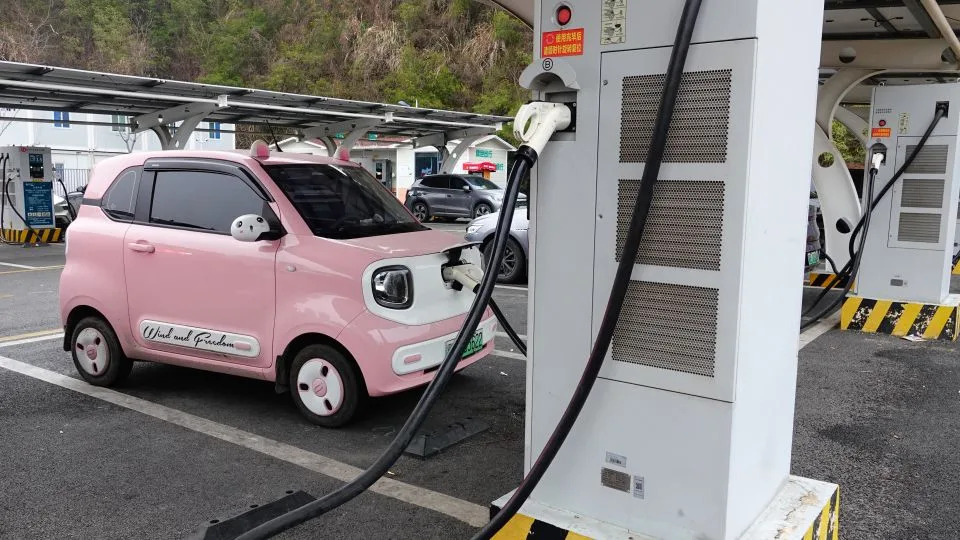
An electric vehicle charges at a charging station in Yichang, Hubei, China, on January 21, 2026. - NurPhoto/NurPhoto/NurPhoto via Getty Images
Critics — including members of the Chinese diaspora — have also called out aspects of the trend as culturally insensitive or appropriative. For many participants, however, Chinamaxxing began as ironic online play, not a serious political statement.
Soft Power — Temporary Meme Or Lasting Shift?
Beijing has long invested in both hard and soft power across parts of Africa, Latin America, Southeast Asia and the Pacific. As Chinese products and technologies become more visible globally, some Americans are simply noticing their quality and appeal.
Whether Chinamaxxing is a fleeting meme or a sign of a deeper cultural pivot remains uncertain. Internet trends move quickly, but even short-lived cultural moments can alter perceptions and open new channels of exchange — for better or worse.
For readers: This trend is less a straightforward embrace of another country’s politics and more a reflection of what some young Americans find attractive or aspirational in an uncertain moment at home.
Help us improve.