Utah Valley University's independent after-action report found Turning Point USA pushed for Charlie Kirk to speak outdoors on Sept. 10, 2025, despite security concerns. The university failed to conduct a formal security assessment, write an event action plan, or adequately coordinate with the speaker's security and law enforcement. Investigators said those lapses left Kirk vulnerable to a rooftop sniper more than 400 feet away; Tyler Robinson surrendered and has pleaded not guilty to aggravated murder.
Report: Turning Point USA Pushed Outdoor Venue for Charlie Kirk; University Security Planning Found Lacking

A drone view taken on September 11, 2005, shows the scene where Charlie Kirk was fatally shot during an event at Utah Valley University, in Orem, Utah. - Cheney Orr/Reuters
An independent after-action report released by Utah Valley University found that Turning Point USA insisted Charlie Kirk speak outdoors for a Sept. 10, 2025 campus event despite security concerns, and that the university failed to fully evaluate several key risks — including the possibility of a rooftop shooter.
The external review examined planning conversations between Turning Point USA and university officials, the campus's event preparations, and the university's response after the attack that killed Kirk. Investigators concluded the university did not perform a formal security assessment, did not create a written event action plan, and delegated critical safety decisions to the event organizer.
Key Findings
The report highlighted multiple shortcomings in event planning and protective operations:
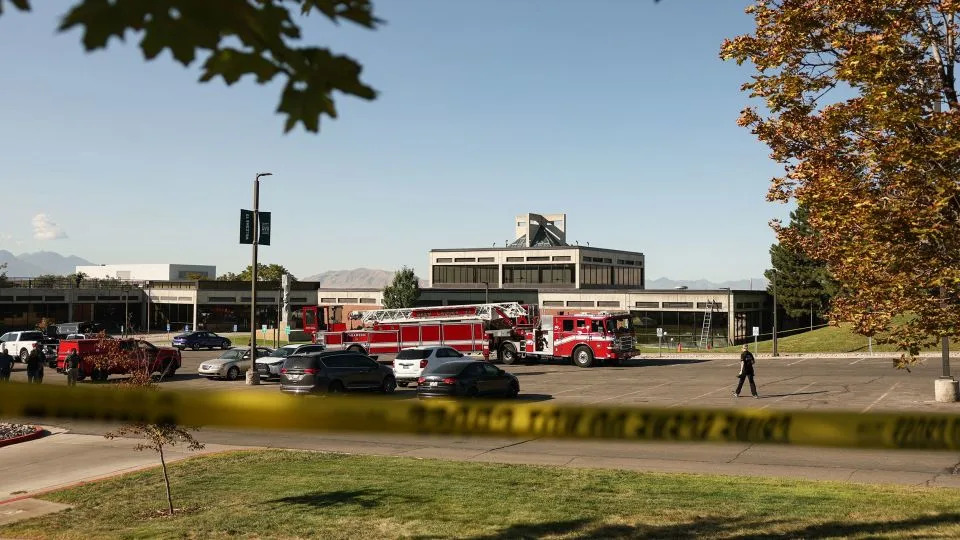
Law enforcement officials, including members of the FBI, investigate near the crime scene where political activist Charlie Kirk was shot and killed at Utah Valley University in Orem, Utah, on September 11, 2025. - Patrick T. Fallon/AFP/Getty Images
- Location Choice: A Turning Point USA representative urged that the event be held in a familiar outdoor courtyard surrounded by tall buildings; some university staff raised reservations but the event proceeded at that site.
- No Formal Security Assessment: Officials did not complete a documented threat or line-of-sight assessment for the outdoor venue.
- Missing Written Plan and Briefings: There was no written event action plan, no documented pre-event briefing, and no security walk-through involving all stakeholders.
- Poor Coordination: The review found insufficient coordination between the university, the speaker's private security team, and external law enforcement.
- Standard Protective Measures Not Used: Campus police staffing was below recommendations for a school of that size; investigators noted there were no drone rooftop checks, bag checks, or metal detectors for the crowd of roughly 3,000 attendees.
Authorities say Kirk, 31, was killed by a sniper positioned on a rooftop more than 400 feet from the courtyard where he debated students. Utah resident Tyler Robinson surrendered to authorities the day after the shooting and has pleaded not guilty to aggravated murder; a judge ordered the case to proceed toward trial, but a date has not been set.
Context and Aftermath
Earlier in the month, Kirk's family filed a wrongful-death notice with Utah officials alleging a series of "reckless" decisions by the university left him vulnerable. The university report placed responsibility for planning shortcomings on both the event organizer and the university, saying those decisions were "consequential" to the protective environment around the event.
Investigators recommended comprehensive, documented threat assessments for high-profile events, clearer lines of authority for safety decisions, formal event action plans, routine coordination with local and federal law enforcement, and deployment of available technology and screening measures when risks are elevated.
The findings underscore broader questions about campus event security, organizer responsibility, and interagency coordination when high-profile speakers draw large crowds in venues with potential vantage points for attackers.
Help us improve.