The Florida Fish and Wildlife Conservation Commission reported that 5,195 green iguanas were collected statewide under Executive Order 26‑03 after a rare cold snap allowed residents to turn in cold‑stunned reptiles without permits. Most animals (3,882) were dropped off in Sunrise; others were turned in at Tequesta, Marathon and Fort Myers. Live iguanas were transferred to permitted handlers for authorized uses when possible; those that could not be rehomed were humanely euthanized by trained staff. Officials reminded residents not to bring cold‑stunned iguanas indoors and noted the emergency order has expired.
Florida Collected 5,195 Cold‑Stunned Invasive Iguanas; Those Not Rehomed Were Humanely Euthanized
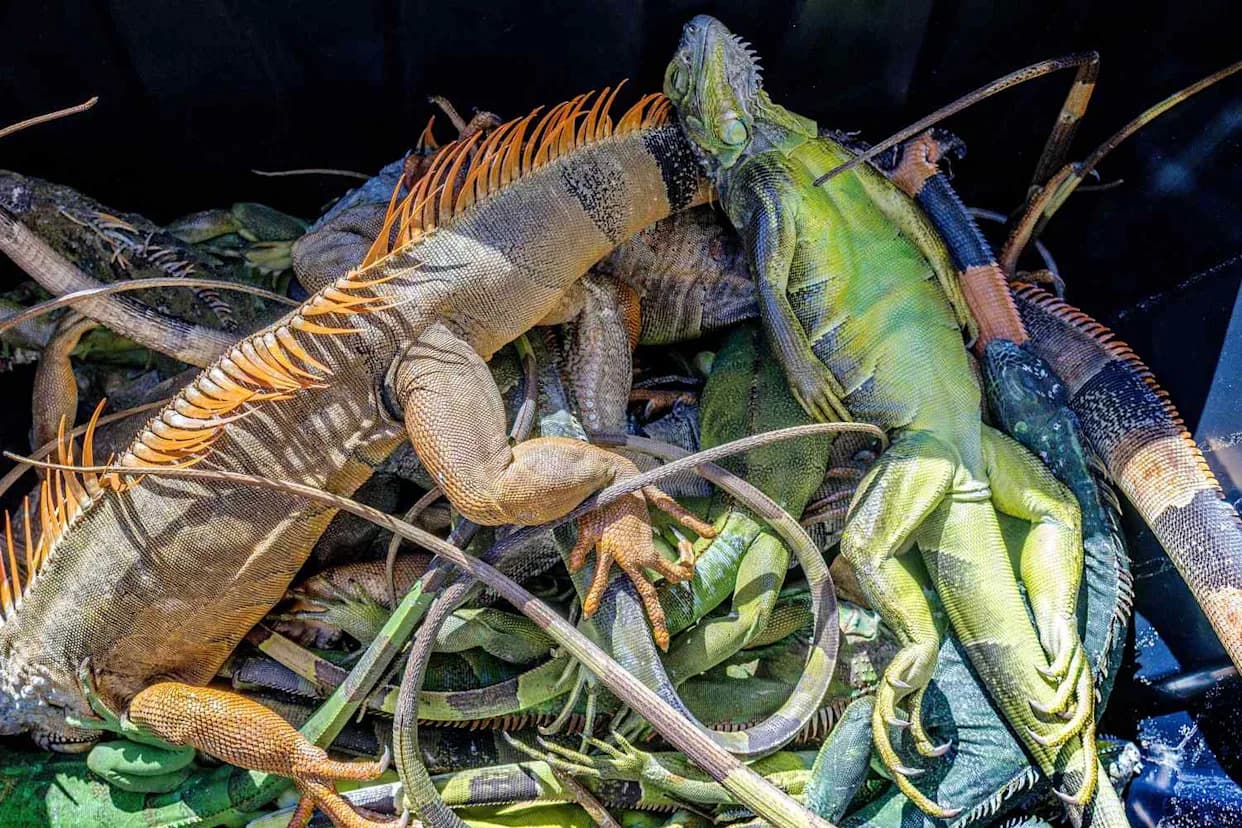
Iguanas lie in a box, motionless, after an unusually cold night in Sunrise, Florida, February 2, 2026.Cristobal Herrera-Ulashkevich/EPA/Shutterstock
Florida wildlife officials say they removed 5,195 invasive green iguanas statewide after an unusual cold snap prompted a short‑term emergency order allowing residents to turn in cold‑stunned reptiles without permits.
How the Collection Worked
The Florida Fish and Wildlife Conservation Commission (FWC) enacted Executive Order 26‑03 during a stretch of unusually cold weather in South Florida. Under the order, members of the public were permitted to capture live, cold‑stunned green iguanas from private property and deliver them to designated FWC offices on Feb. 1 and Feb. 2 without the usual possession permits. Cold temperatures can immobilize these tropical reptiles—native to Central and South America—when readings fall below about 50°F.
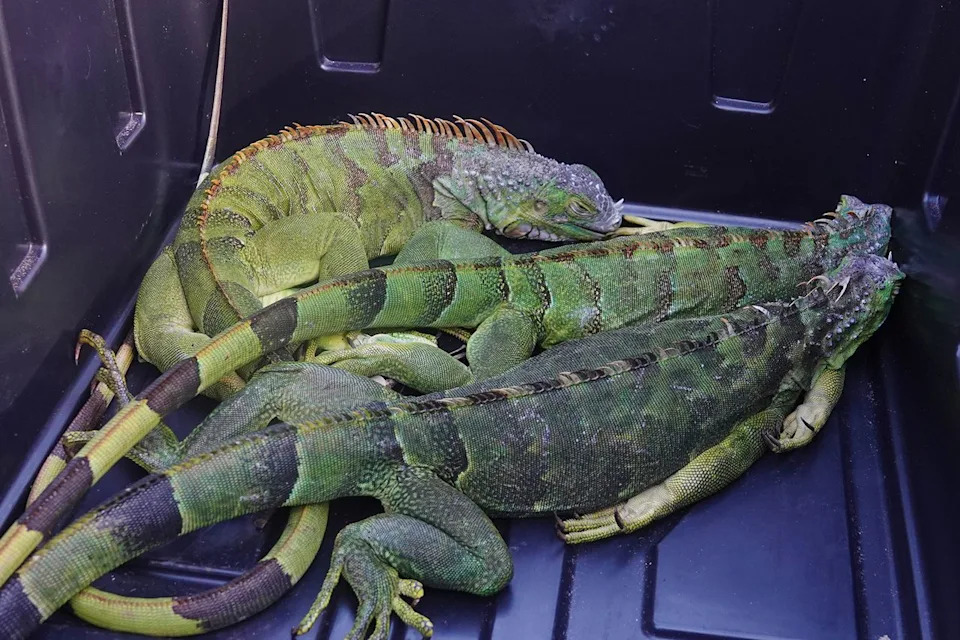
Iguanas are seen ready to be handed over to the Florida Wildlife Commission, Sunday, Feb.1, 2026, at the field office in Sunrise, Florida.Joe Cavaretta/South Florida Sun Sentinel/Tribune News Service via Getty
Numbers, Locations and Timeline
At its Feb. 4 commission meeting in Tallahassee, the FWC reported that 5,195 green iguanas were collected under the emergency order. The largest drop‑off site was the FWC facility in Sunrise, where 3,882 iguanas were turned in. Other totals included 1,075 in Tequesta, 215 in Marathon and 23 in Fort Myers. The temporary order has since expired and the agency is no longer accepting live iguanas from the public.
What Happened to the Iguanas
FWC staff coordinated transfers of live iguanas to permitted wildlife handlers for authorized uses, including transport and sale outside Florida where permitted. Green iguanas are classified as a prohibited species in Florida and cannot be possessed without a permit. According to the agency, any iguanas that could not be transferred to permitted handlers were humanely euthanized by trained staff in accordance with state anti‑cruelty standards.
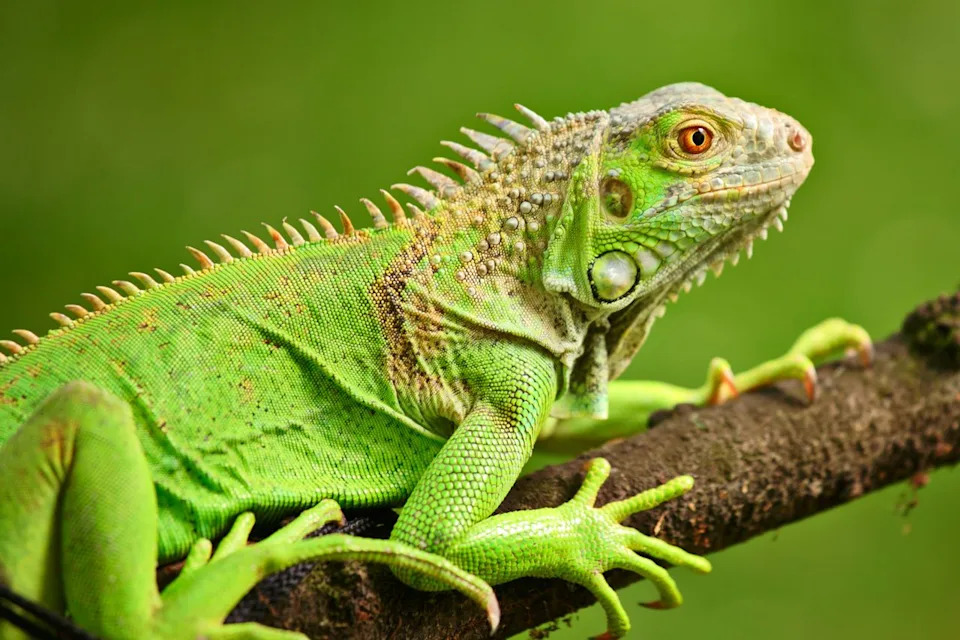
An iguana on a tree branch.Getty
"The special regulations under EO 26‑03 provided a unique opportunity for members of the public to remove cold‑stunned green iguanas from their property during the recent unusual cold weather and bring them to the FWC, no permit required," said FWC Executive Director Roger Young.
Guidance for Residents
The FWC emphasized that green iguanas are not protected in Florida aside from general anti‑cruelty laws and may be humanely killed year‑round on private property with the landowner's permission. Officials warned residents not to bring cold‑stunned iguanas indoors: the animals can recover quickly as temperatures rise and may become defensive, using their tails, teeth and claws.
Context on Invasive Species
Florida is home to more than 600 nonnative fish and wildlife species, the agency noted, with roughly 80% introduced through the live animal trade. Of those, 139 species are established and reproducing in the wild. The FWC said invasive species management is a high priority because of environmental damage, economic costs and potential risks to human safety.
Help us improve.