Former detainees are testifying in Fort Myers as a federal judge reviews whether the Everglades detention site known as “Alligator Alcatraz” denies adequate access to lawyers. Civil rights attorneys seek a temporary injunction, saying lawyers must book visits three days in advance, detainees are transferred after appointments and scheduling delays have caused missed legal deadlines. State and federal officials deny constitutional violations, arguing rules are needed for security and staffing; ICE deputy Juan Lopez Vega is expected to testify. The dispute is one of three federal lawsuits tied to the facility, including challenges over federal authority and an environmental review.
‘Alligator Alcatraz’ Under Scrutiny: Former Detainees To Testify On Restricted Legal Access
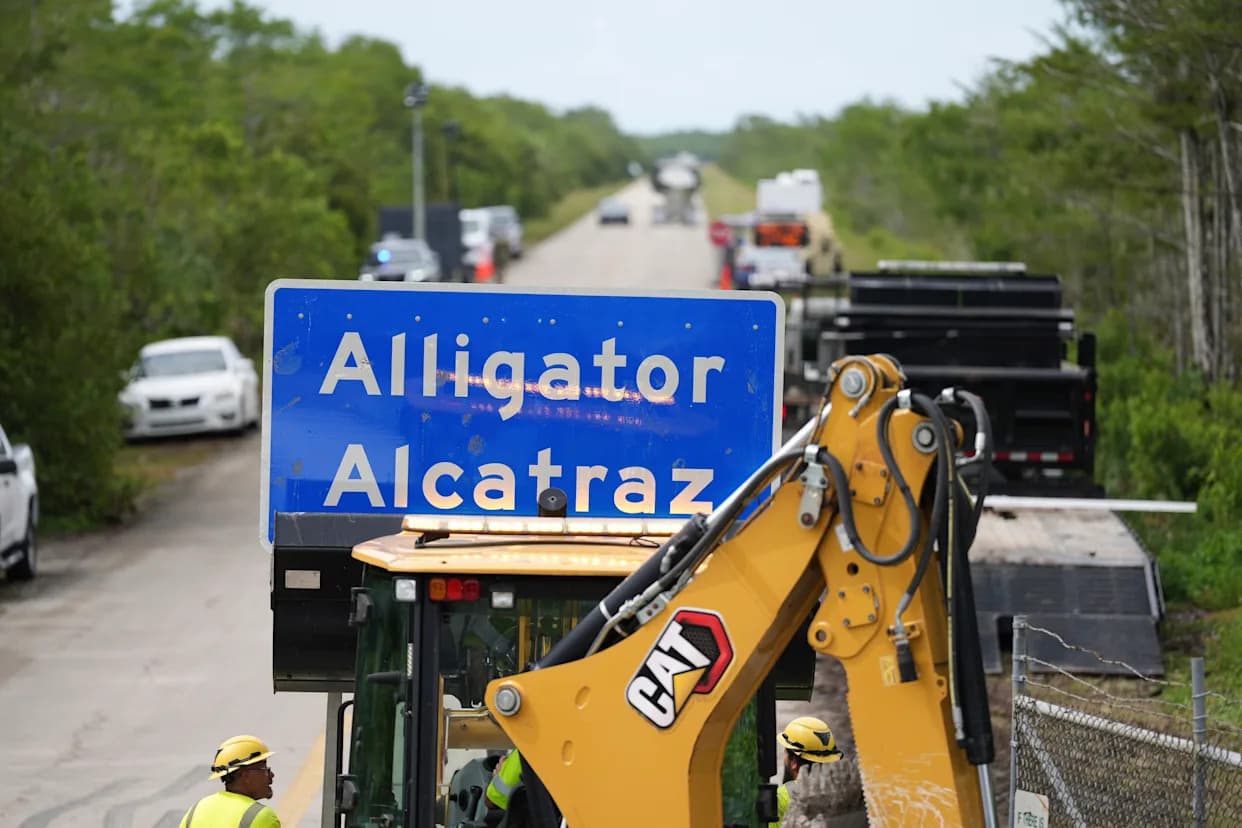
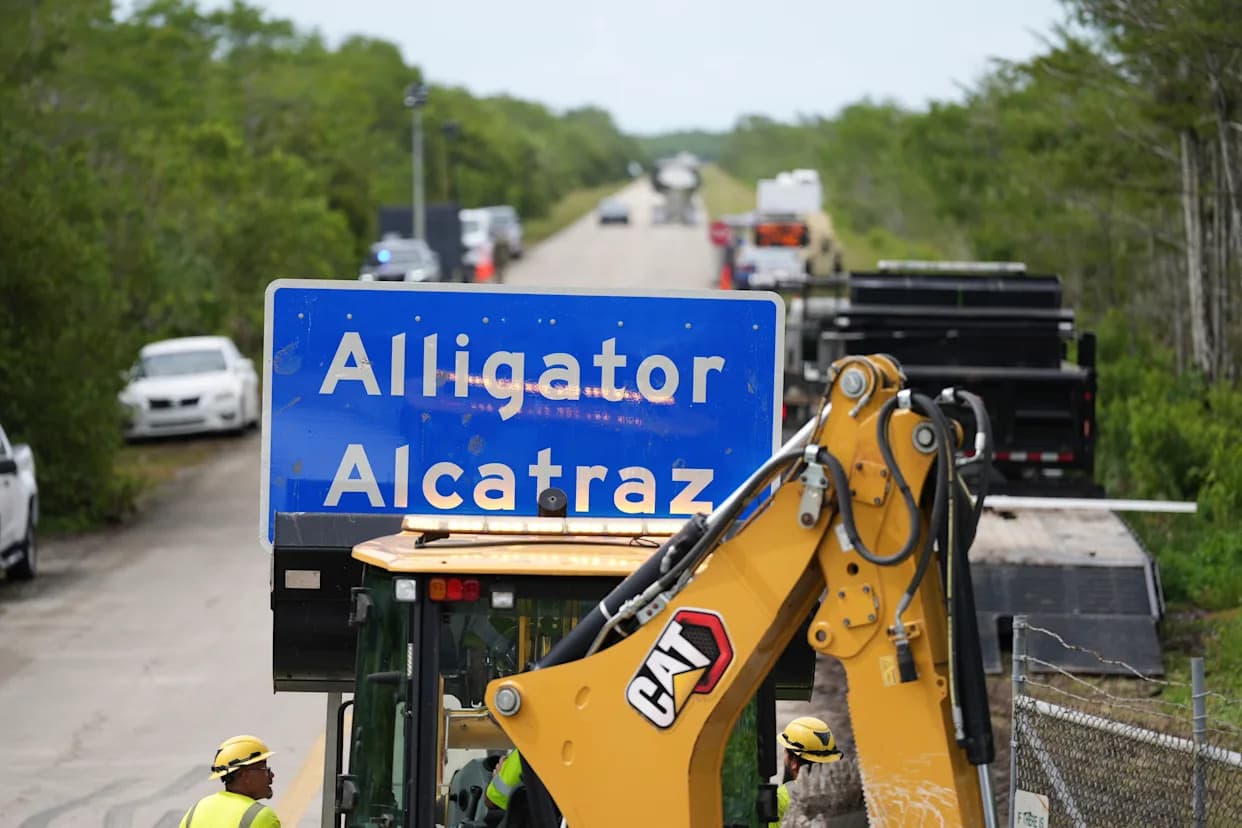
FILE - A loader holds a sign reading "Alligator Alcatraz" in its bucket as workers install it at the entrance to a new migrant detention facility at Dade-Collier Training and Transition facility, July 3, 2025, in Ochopee, Fla. (AP Photo/Rebecca Blackwell)(ASSOCIATED PRESS)
FORT MYERS, Fla. — Former detainees were expected to testify Wednesday about conditions at a remote immigration detention site in the Florida Everglades nicknamed “Alligator Alcatraz,” as a federal judge holds a two-day hearing to determine whether people held there receive adequate access to the legal system.
Court Battle Over Access To Counsel
Civil rights attorneys for the former detainees have asked U.S. District Judge Sheri Polster Chappell in Fort Myers for a temporary injunction that would require the state-run Everglades facility to provide detainees the same attorney access afforded at federally run immigration centers. The facility was built last summer on a remote airstrip by the administration of Republican Gov. Ron DeSantis.
The lawsuit alleges that detainees’ First Amendment rights are being violated because attorneys face unusual restrictions at the Everglades site. Plaintiffs say lawyers must make appointments three days in advance to see clients, whereas attorneys at many other immigration facilities may appear during visiting hours without lengthy advance scheduling. They also allege frequent transfers of detainees after attorney appointments are made and scheduling delays long enough to cause detainees to miss critical legal deadlines.
“Access to counsel at Alligator Alcatraz is dramatically more restrictive than at other immigration facilities and runs afoul of the requirements that Immigration and Customs Enforcement has in place for detention facilities,”
State officials named as defendants denied that they have curtailed attorney access, saying procedures are necessary for security and to ensure adequate staffing. Federal defendants likewise rejected claims of constitutional violations, arguing in filings that any policies governing attorney-detainee communications are lawful so long as they reasonably relate to legitimate penological interests.
Witnesses And Wider Legal Challenges
One witness expected to testify was Juan Lopez Vega, deputy field office director for ICE Enforcement and Removal Operations in Miami, who unsuccessfully attempted to quash a subpoena ordering him to appear in court this week.
The access case is one of three federal lawsuits challenging practices at the Everglades detention center. Another suit filed in Fort Myers argued that immigration enforcement is a federal responsibility and that Florida agencies and private contractors lacked authority under federal law to run the facility; that challenge ended earlier this month after the immigrant who filed the suit agreed to be removed from the United States. A third case in Miami led a judge last summer to order the facility to wind down operations over two months because officials had not completed an environmental impact review; an appellate court panel has since put that order on hold, allowing the site to remain open for now.
The hearing is expected to continue over two days as witnesses and attorneys present competing accounts of the facility’s policies and their effects on detainees’ access to counsel.
Follow reporter Mike Schneider on the social platform Bluesky: @mikeysid.bsky.social.
Help us improve.