Narva, an Estonian border town of over 50,000, has become a flashpoint of anxiety as Russia’s war in Ukraine enters its fourth year. The historic "Friendship Bridge" is fortified and Tallinn has tightened domestic security and citizenship policies that have strained the large Russian-speaking and stateless communities. Analysts warn these moves could be used in propaganda narratives to justify intervention, while many local residents and voluntary defence units say they are prepared to defend the town.
Narva on Edge: Estonia's Border Town Fortified Amid Fears of Russian Pressure
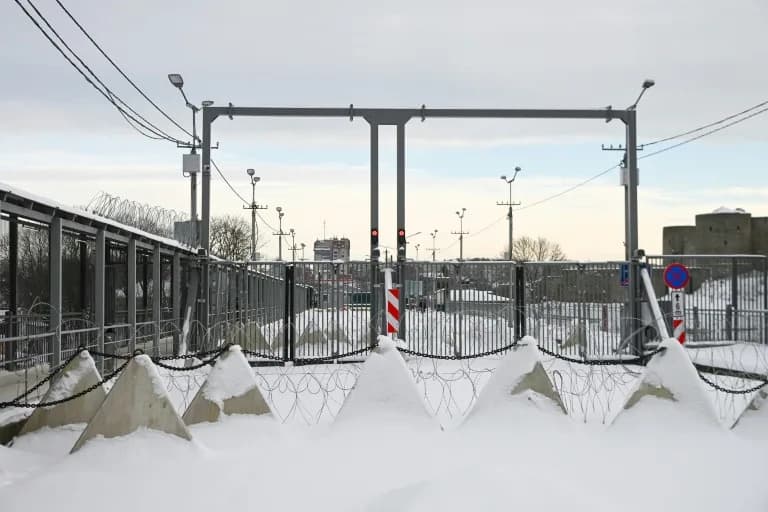
Once a symbol of cooperation, the 'Friendship Bridge' has been reinforced with rows of razor wire and anti-tank obstacles (STR)(STR/AFP/AFP)
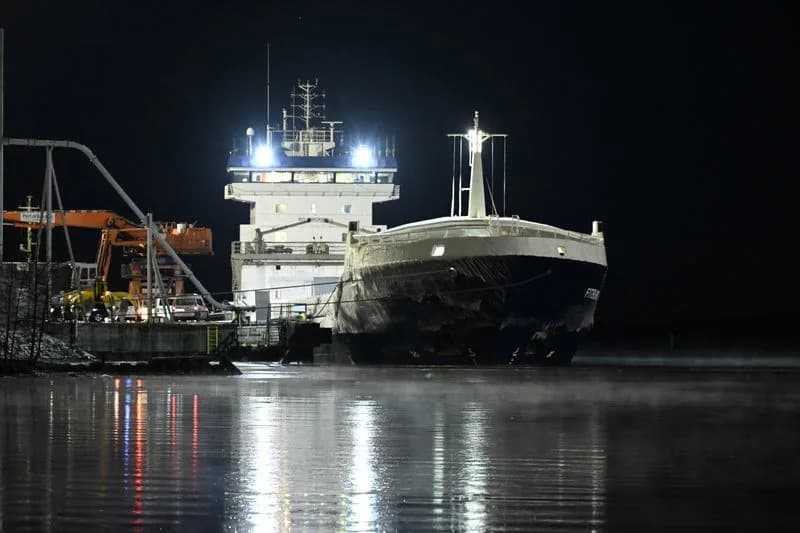
Two medieval fortresses face each other across the Narva River, the waterway that marks the border between Estonia and Russia on Europe’s eastern flank. Once a symbol of cross-border ties, the so-called "Friendship Bridge" linking the snow-blanketed banks has been reinforced on the Estonian side with coils of razor wire and concrete “dragon’s teeth” anti-tank obstacles.
"The name is kind of ironic," regional border chief Eerik Purgel told AFP in Narva, the Russian-speaking Estonian town that looks across the river at Russia. What was once a routine crossing for shoppers and relatives is now closed to traffic; travellers haul luggage across the span on foot.
As Moscow’s war in Ukraine approaches its fourth anniversary, a sense of unease has deepened in Narva, a town of more than 50,000 people made up of ethnic Estonians, Russian citizens and several thousand stateless residents.
'On The Edge Of Europe'
"Here at the edge of Europe the war feels different," Mayor Katri Raik said, noting that residents can literally see Russia across the border. "We're all thinking about what comes next," she added inside a renovated 17th-century town hall surrounded by the town’s Soviet-era apartment blocks.
Security Measures And Domestic Reforms
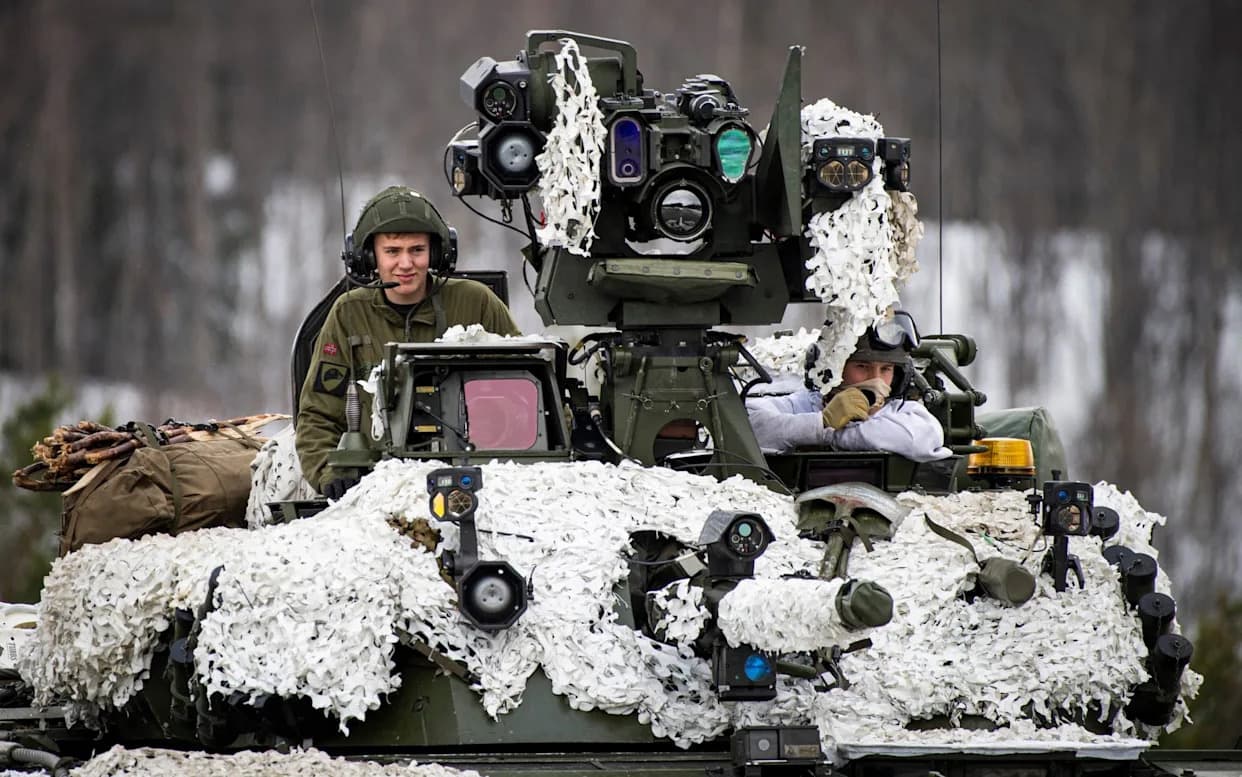
Since Russia’s 2022 invasion of Ukraine, Estonia and its Baltic neighbours have stepped up defence preparations. The defence ministry says just under 44,000 personnel could be mobilised to defend the country if required, supplemented by roughly 2,000 allied NATO troops stationed in Estonia.
At home, Tallinn has enacted policies aimed at strengthening national cohesion: it has removed voting rights in local elections from many Russian citizens and numerous stateless residents, and moved dozens of schools from Russian-language instruction to Estonian. Those measures, combined with high unemployment, rising energy costs and the collapse of routine ties with Russia, have intensified local tensions in Narva.
Identity, Loyalty And Local Voices
Narva remains historically multi-layered: over centuries it was ruled by Danes, Germans, Russians, Swedes and Estonians. Today roughly half the population are ethnic Estonians, about one-third hold Russian passports, and approximately 7,000 residents are stateless. That mixed identity fuels debate about loyalties and belonging.
"I am European, but we sometimes joke that we do not understand what our homeland is," said Vladimir Aret, a 32-year-old hotel manager and town councillor.
Views in Narva vary: some residents watch Russian television and express nostalgia for the Soviet past, while others, including volunteers in the Kaitseliit (the voluntary defence organisation), insist they are ready to defend Estonia. "We are ready to defend our country, we are not afraid," said 18-year-old Kaitseliit member Jelisei Solovjov.
Propaganda Risks And Strategic Concerns
Russian officials regularly accuse Estonia of "growing Russophobic madness," while some local Russian speakers say they feel discriminated against. Conversely, others living in Narva say they do not feel disadvantaged and are pursuing Estonian citizenship.
German analyst Carlo Masala has warned that policies limiting political rights for Russian citizens and stateless people could be exploited by Moscow as a pretext for intervention, citing parallels with narratives used in eastern Ukraine. In a hypothetical scenario in his book, Masala imagines Russian forces seizing Narva in a rapid operation to destabilise the Baltics—a scenario many experts see as unlikely but useful as a warning about information and hybrid-war risks.
Local Preparedness And Official Confidence
Estonian officials reject the notion that Narva is uniquely vulnerable to a Russian assault. Border service head Egert Belitsev pointed out that many European cities host large Russian communities, and any pretext could be invoked broadly. Still, the town’s fortifications and the presence of local defence volunteers mean any military action would be complex.
Back at the Narva crossing, Purgel remained defiant: "It's our town, we will protect it with our lives," he said.
Reporting by AFP; translated and edited for clarity and context.
Help us improve.