The Census Bureau's 2026 field test for the 2030 census is using American Community Survey items — including the question, "Is this person a citizen of the United States?" — prompting alarm from experts. Critics say the ACS has never been used in a census field test and that substituting it weakens the test's ability to simulate 2030 operations. The test was scaled back from six sites to two, and the move revives legal and political disputes over whether noncitizens should be excluded from apportionment counts under the Constitution.
Census Field Test Uses Form With Citizenship Question, Prompting Legal and Methodological Concerns
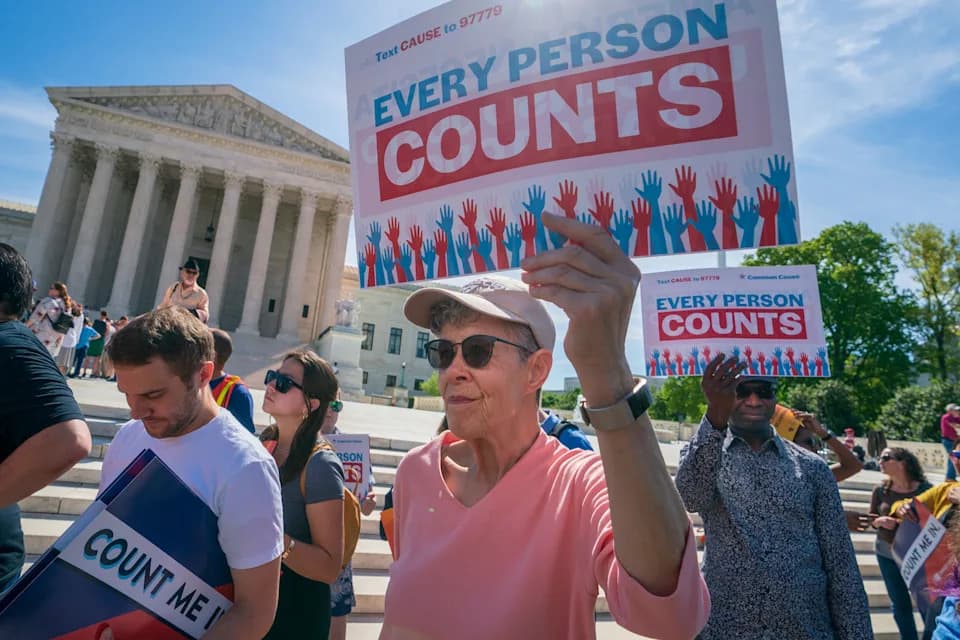
FILE - Immigration activists rally outside the Supreme Court as the justices hear arguments over the Trump administration's plan to ask about citizenship on the 2020 census in Washington, April 23, 2019. (AP Photo/J. Scott Applewhite, File)(ASSOCIATED PRESS)
The U.S. Census Bureau is using a survey form that includes a citizenship question as part of a 2026 field test intended to help prepare for the 2030 census, a move that has alarmed experts who warn it could signal a major shift in how the nation counts its population.
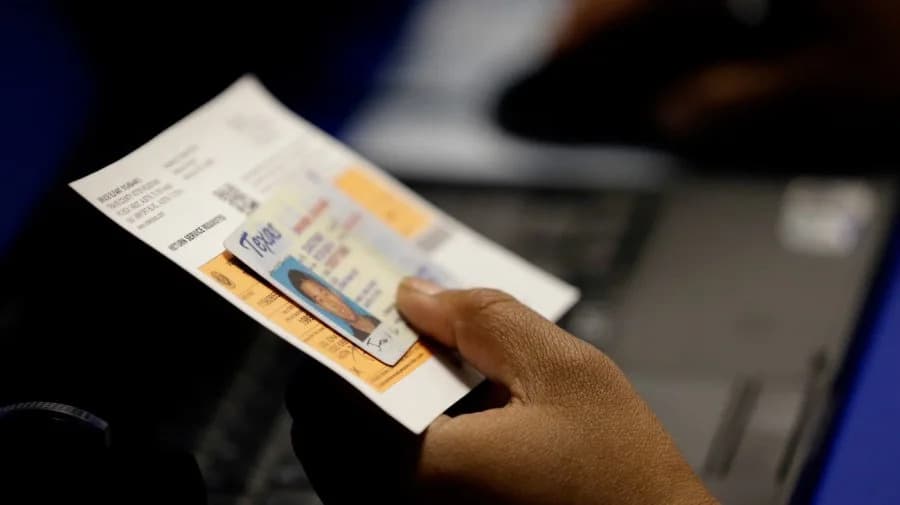
The exercise, under way in Huntsville, Alabama, and Spartanburg, South Carolina, is drawing questions from the American Community Survey (ACS) — the federal government's comprehensive, ongoing household survey — rather than the short form questions traditionally used in decennial census tests. One ACS item asks, "Is this person a citizen of the United States?" By contrast, census questionnaires have not included a citizenship question for roughly 75 years.
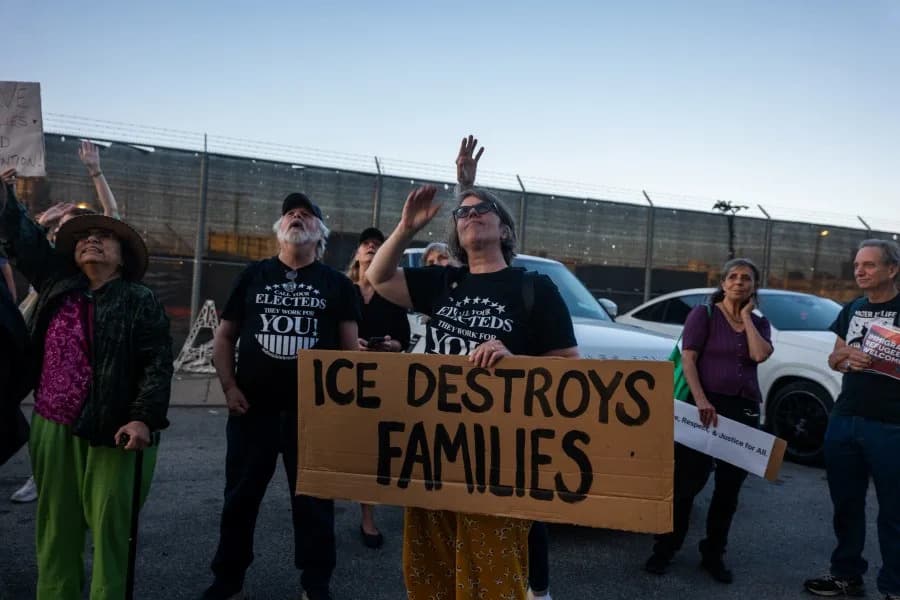
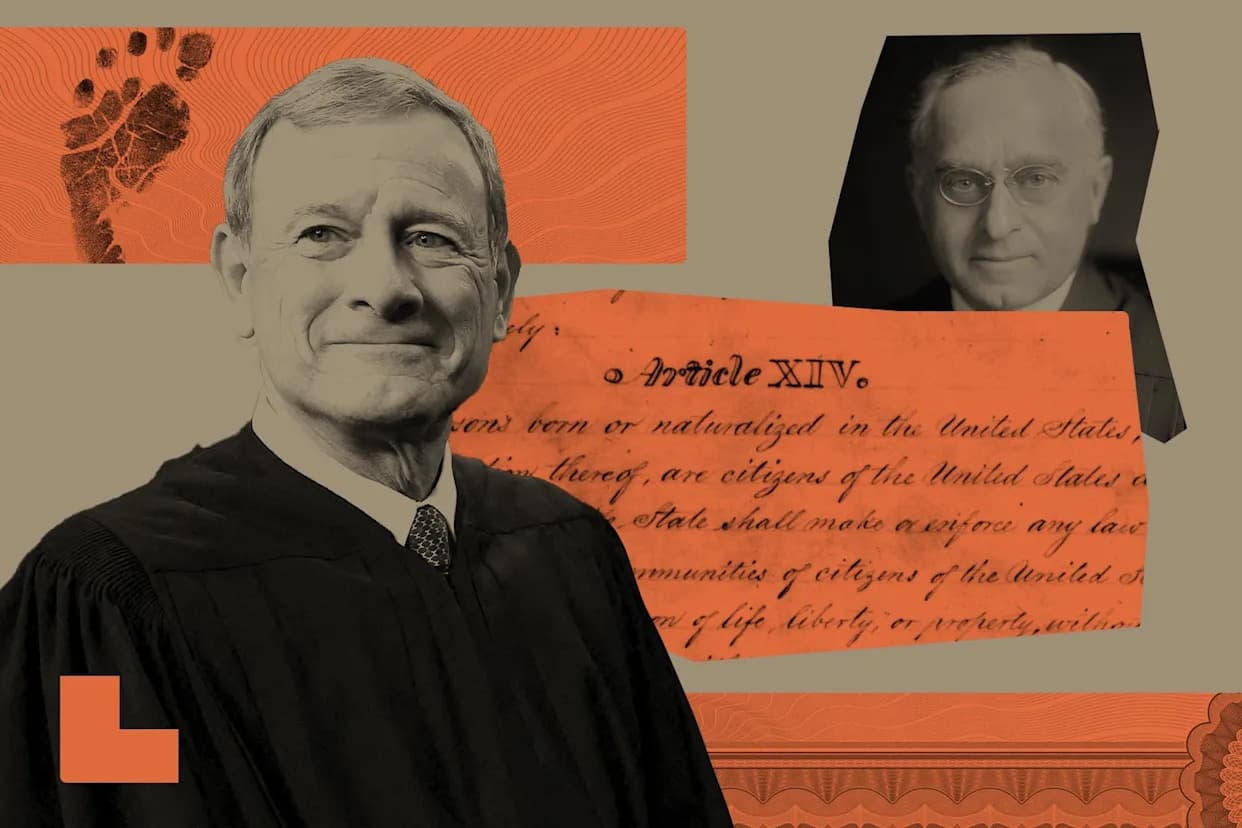
Last August, former President Donald Trump directed the Commerce Department to have the Census Bureau begin work on a new census design that would exclude people in the U.S. without legal status from apportionment figures. That plan raised constitutional concerns because the 14th Amendment requires counting "the whole number of persons in each state" for apportionment of congressional seats and Electoral College votes; the Census Bureau has long interpreted that clause to mean all residents regardless of immigration status.
The bureau did not provide an explanation for why ACS items are being used in the 2026 field test. Terri Ann Lowenthal, a longtime congressional aide and census consultant, said the ACS has never been used in a census field test and that the pared-down 2026 exercise — reduced from an originally planned six sites to two — has become "a shell of what the Census Bureau proposed" to properly prepare for 2030.
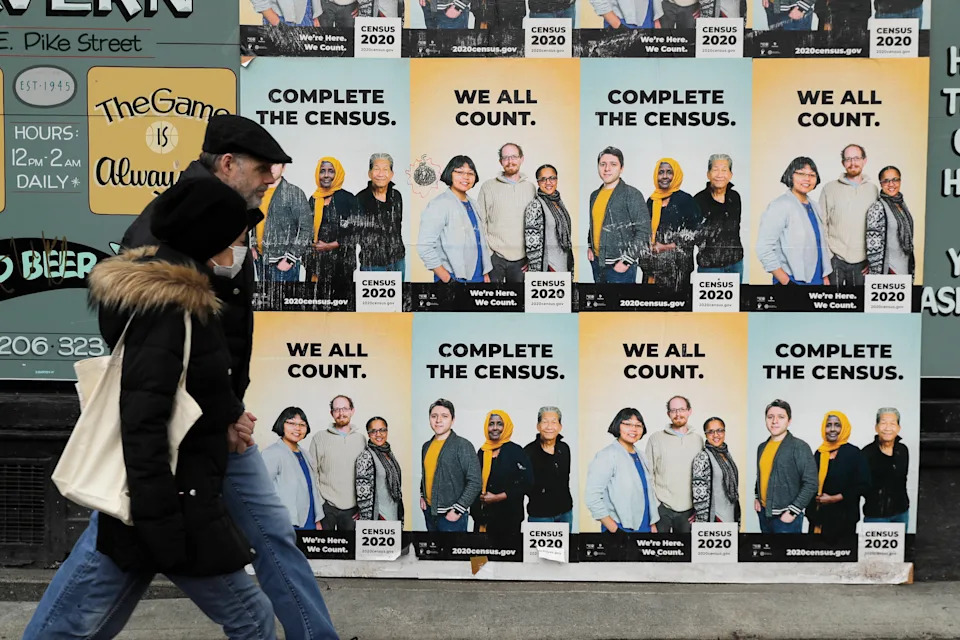
FILE - People walk past posters encouraging participation in the 2020 Census in Seattle's Capitol Hill neighborhood, April 1, 2020. (AP Photo/Ted S. Warren, File)(ASSOCIATED PRESS)
"This full pivot from a real field test is alarming and deserves immediate congressional attention," Lowenthal said.
Officials say the purpose of the field test is to refine methods to better count populations that were undercounted in 2020 and to trial operational changes planned for 2030. One innovation being tested is using U.S. Postal Service workers to perform tasks previously handled by census workers.
The Trump administration recently announced it had eliminated four planned test sites — Colorado Springs, western North Carolina, western Texas and tribal lands in Arizona — leaving only Huntsville and Spartanburg. Critics and methodologists worry that substituting the ACS form makes the test a poor proxy for the short-form operations and response patterns the decennial census will use.
Mark Mather, associate vice president at the Population Reference Bureau, said he would not speculate about political motives but emphasized the methodological problem: "The ACS form wouldn’t provide a valid test of 2030 census operations. It’s a completely different animal."
During his first term, President Trump unsuccessfully sought to add a citizenship question to the 2020 census form; the Supreme Court blocked that attempt. He also signed orders directing that undocumented immigrants be excluded from apportionment figures and that additional citizenship data be collected; those orders were later rescinded when President Joe Biden took office in January 2021.
More recently, Republican lawmakers have proposed legislation to exclude some noncitizens from apportionment counts, and several Republican state attorneys general have filed federal lawsuits seeking to add a citizenship question to the next census and to remove certain noncitizens from apportionment totals. The controversy has revived both legal battles and congressional scrutiny over the proper scope and methods of the decennial count.
Help us improve.